

I first made this Thai Spring Roll Pasta Salad on a humid July evening when I wanted the bright, fresh flavors of a Vietnamese spring roll but craved something more substantial that would feed a small gathering. It felt like making a deconstructed spring roll — rice noodles, crisp cabbage, shredded carrots, cucumber, herbs, and shrimp — all tossed in a creamy peanut-lime dressing. The aroma of lime and toasted sesame hit me before I even finished shredding the cabbage, and the first bite was that perfect balance of cooling veg, herb perfume, and the savory, slightly sweet dressing.
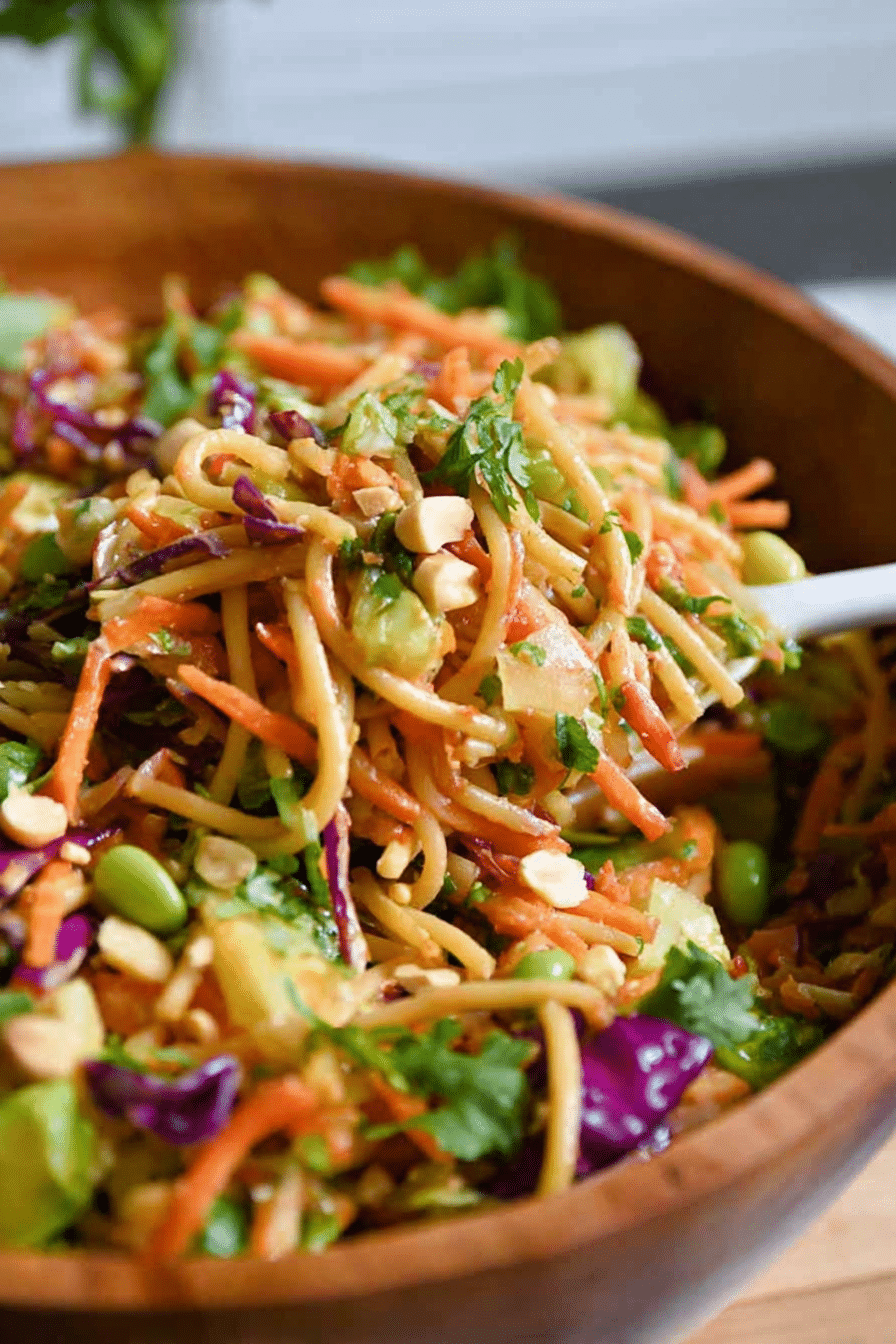
This salad is the kind of dish I turn to when I want something that looks light but satisfies. It travels well to potlucks, stacks beautifully in meal-prep containers, and plays nicely with dietary swaps. If you love the fresh flavors of spring rolls, take inspiration from our crispy lumpia when building fillings and textures for this pasta salad.
Ingredients You’ll Need
Below is a conversational ingredient guide — short, practical notes on each component and how it behaves in the salad.
- Rice noodles – the slippery, neutral base that soaks up dressing; use rice vermicelli or short rice noodles depending on texture you like.
- Purple cabbage – adds crunch, color, and a slightly peppery snap.
- Romaine lettuce – soft, mild green to bulk the salad without being watery.
- Cucumber – cooling and hydrating; deseed if you want less moisture.
- Carrots – sweet orange ribbons for color and crunch; shred or julienne.
- Cilantro – herbal lift; pick young leaves for brightness.
- Mint – a little goes a long way; it keeps the salad tasting fresh.
- Green onions – mild allium heat without overpowering.
- Bean sprouts – optional, for additional crunch and lightness.
- Shrimp – cooked, chopped shrimp brings savory body; swap for tofu or chickpeas to make it vegetarian.
- Peanuts – crunchy finish and textural contrast; toast lightly if you want extra aroma.
- Soy sauce – provides umami; use low-sodium tamari for gluten-free.
- Rice vinegar – bright acid to cut richness.
- Sesame oil – a little goes far; it gives a toasty fragrance.
- Garlic & ginger – aromatic backbone; mince finely so it disperses through the dressing.
- Peanut butter – the creamy base for the dressing; thin with water or a splash of warm liquid if needed.
- Sriracha or hot sauce – optional for a spicy kick.
- Honey or maple syrup – balances the acid and salt; use maple to make it vegan.
- Lime – fresh lime juice brightens everything and keeps the dressing lively.
- Water – to thin the dressing to your desired pourable consistency.
Full ingredient list with quantities (for reference): 2 cups cooked rice noodles; 1 cup shredded purple cabbage; 1 cup shredded romaine; 1 cup diced cucumber; 1 cup shredded carrots; 1/2 cup chopped cilantro; 1/2 cup chopped mint; 3 green onions, thinly chopped; 1 cup cooked bean sprouts (optional); 1 lb cooked shrimp, chopped; 1/3 cup chopped peanuts; 1/4 cup low sodium soy sauce; 3 tbsp rice vinegar; 1 tbsp sesame oil; 2 cloves garlic, minced; 1 inch fresh ginger (grated); 1/3 cup creamy peanut butter; 1 tsp sriracha (optional); 1 tbsp honey; juice of 1 lime; 2 tbsp water to thin.
Step-by-Step Instructions
This recipe is straightforward, but a few small choices make the difference between an OK pasta salad and one you keep making. Below are stepwise phases with tips I use every time.
Preparation:
- Read the recipe through so nothing surprises you — especially the dressing ingredients. Asian-style dressings come together quickly but need tasting and balancing.
- Chop the herbs and vegetables ahead of time: shred the cabbage and carrots, dice the cucumber, and chop cilantro and mint. I keep the herbs a little coarser than a chiffonade so they don’t wilt as quickly in the fridge.
- If using shrimp straight from the fridge, pat it dry so it doesn’t water down the salad.
- Cook the rice noodles according to package directions. Drain and rinse under cold water to stop the cooking and remove surface starch — this step prevents clumping. Toss with a teaspoon of sesame oil or neutral oil to keep them from sticking together.
Cooking / Dressing:
- Make the dressing in a medium bowl: whisk together soy sauce, rice vinegar, sesame oil, garlic, grated ginger, peanut butter, sriracha, honey, lime juice, and water. If your peanut butter is firm, microwaving it 15–30 seconds makes it much easier to whisk smooth. I learned that trick after a lumpy first attempt that left globs of peanut butter in the dressing.
- Taste and adjust. If the dressing tastes flat, try salt (or a splash more soy sauce), then acidity with lime, then sweetness. The order matters — acid brightens salt, sweetness softens acid.
- The right texture: it should be creamy but pourable. If it’s too thick, thin with more warm water or a splash of warm water from rinsing the noodles. If it splits, whisk in a tiny bit of warm water gradually to bring it back together.
Assembling:
- In a large bowl, layer cooled rice noodles, shredded cabbage, and romaine. Scatter cucumber, carrots, herbs, green onions, optional bean sprouts, and chopped shrimp on top.
- Drizzle the dressing over the salad (start with most of it, reserve a little for people who like it lighter). Toss gently but thoroughly so the noodles and veg get coated. Over-tossing wilts the herbs and lettuce; stop once everything is mixed and shiny with dressing.
- Finish with chopped peanuts for crunch. I always taste one bite after adding peanuts — the cold, creamy, crunchy mix is a reliable indicator the salad is balanced.
- Serving cue: serve immediately for peak crispness. If you need to hold it for a short time, keep the dressing separate and toss just before serving.
Need tips on cooking noodles so they stay firm in a cold salad? Our hibachi noodles recipe has useful methods that translate well to rice noodles or pasta.
Nutritional Information
Below are the core nutrition facts provided for the recipe and a quick breakdown of health benefits from key ingredients.
- Calories: 313 kcal per serving (based on the original recipe yield of 6).
- Fat: about 15 g — mainly from peanut butter, sesame oil, and peanuts (heart-healthy unsaturated fats when eaten in moderation).
- Carbohydrates: about 29 g — rice noodles and vegetables provide the bulk; consider shirataki or spiralized veg to lower carbs.
- Protein: about 18 g — shrimp contributes most; swap tofu or chickpeas for vegetarian protein.
- Fiber: moderate — from cabbage, carrots, and fresh herbs which also boost volume and satiety.
- Vitamins & minerals: High in vitamin C (lime, cabbage), vitamin A (carrots), and a good dose of minerals from peanuts and sesame oil like magnesium. Fresh herbs add micronutrients and antioxidants.
Notes on variations: choosing gluten-free tamari doesn’t materially change calories, but swapping shrimp for tofu slightly lowers protein and changes fat composition. Using a low-sugar or no-honey swap (maple or omit) reduces simple sugars but may require a touch more acid to balance the flavor.
Meal Prep Tips
I make this salad for lunches because components store well separately. Here’s how I prep it so textures stay crisp and flavors stay bright.
- Make-ahead strategy: Store the dressing in an airtight jar for up to 5–7 days. Keep the noodles, chopped vegetables, and herbs in separate containers in the fridge for 3–4 days. Cooked shrimp or other proteins should be kept separately and used within 2–3 days.
- Assembly for lunches: Layer noodles and sturdier veg in a container, place delicate herbs and lettuce on top, and keep dressing in a small screw-top jar. Pour and toss 10–15 minutes before eating so the salad stays crisp.
- Freezing: I don’t recommend freezing the assembled salad — lettuce and herbs will collapse and the dressing can separate. You can freeze cooked shrimp, however; thaw and pat dry before using.
- Portioning: This makes about 6 servings. For single portions, pack 1/6 of the noodles and veg with 1–2 tablespoons dressing, and a small bag of peanuts to add just before eating.
Variations and Substitutions
This recipe is designed as a template — pick a protein, a noodle, and a finishing crunch and you’re set. Below are tested swaps I’ve used over time.
- Protein swaps: Pan-fried tofu cubes (press and sear until golden), baked tempeh, chickpeas tossed in a little soy sauce, or edamame for a plant-protein boost. For a nut-free version, use toasted sunflower seeds instead of peanuts.
- Noodle swaps: Brown rice pasta, gluten-free corn/rice pasta, rice vermicelli, shirataki noodles for very low-carb, or spiralized zucchini for a raw, lighter bowl.
- Dressing swaps: Try a coconut-lime dressing or a lime-chili vinaigrette if you want something lighter. For a fruity, tangy dressing alternative that complements Thai flavors, try our sweet chili pineapple sauce.
- Regional twists: Add mango and cashews for a tropical edge, or include pickled shallots and a drizzle of fish sauce for a more Southeast Asian punch.
User-Generated Content and Reviews
I love seeing how people make this their own. If you make it, please share photos and notes — here are a few reader-style snippets I’ve received and saved (anonymized summaries):
- “Made this for a picnic — the dressing kept separately and it was perfect. Swapped shrimp for baked tofu and my vegetarian friends loved it.”
- “I overcooked my noodles first try; rinsing them in cold water and tossing with sesame oil fixed the texture for the next batch.”
- “Added sliced mango and lime zest — incredible. Leftovers were even better the next day.”
Share your tweaks, photos, and quick ratings in the comments below. Tag your photos with the recipe name if you post on social so others can find ideas and inspiration.
FAQ
Can I make this salad vegetarian or vegan?
Yes — swap the shrimp for pan-fried or baked tofu, tempeh, edamame, or chickpeas. Use a vegan peanut butter and replace the honey with maple syrup. For gluten-free, use tamari or coconut aminos instead of soy sauce.
How long will the salad keep in the fridge and can I meal-prep it?
For best texture, store components separately. Keep the dressing in an airtight container for up to 5–7 days. Noodles and chopped veggies will keep 3–4 days refrigerated; cooked shrimp or other protein should be eaten within 2–3 days. If you assemble with dressing, eat within 1–2 days for the best crunch.
What noodles can I use — are rice noodles gluten-free?
Rice noodles (used in this recipe) are naturally gluten-free. Other options: rice vermicelli, gluten-free pasta (brown rice or corn-based), shirataki noodles for low-carb, or spiralized zucchini for a lighter option. Regular wheat pasta is not gluten-free.
How do I prevent the rice noodles from sticking together?
Cook noodles according to package directions, then drain and rinse immediately under cold water to stop cooking and remove excess starch. Drain well and toss lightly with a teaspoon of sesame oil or neutral oil to keep them from clumping.
I have a peanut allergy — what can I use instead of peanut butter in the dressing?
Try sunflower seed butter (a common peanut substitute), almond butter (if nuts are OK), or a tahini-based dressing with a touch of maple syrup for sweetness. If avoiding soy, use coconut aminos instead of soy sauce. Taste and adjust salt, acidity, and sweetness to balance the dressing.
Conclusion
This Thai Spring Roll Pasta Salad is a weeknight workhorse and a party-friendly dish — bright herbs, crisp vegetables, tender noodles, and a creamy, tangy peanut-lime dressing that pulls everything together. It’s flexible, forgiving, and designed for real kitchens: sometimes my noodles were a little sticky, or I had too much lime, and each time a small tweak fixed it — a little more oil, a pinch more sweetener, or a few extra herbs. Try it when you want spring roll flavors without rolling; it’s great for meal prep, picnics, and warm-weather dinners. If you enjoy pasta salads with bold flavors, check out our Italian grinder pasta salad for more make-ahead serving and variation ideas.
If you make this, tell me what you swapped and how it turned out — I read every comment and love new ideas that end up in my rotation. Happy cooking!
Thai Spring Roll Pasta Salad
Ingredients
Method
- In a large salad bowl, add rice noodles, cabbage and romaine lettuce. Top with cucumber, carrots, cilantro, mint, green onions, bean sprouts and shrimp.
- To make your dressing whisk together all ingredients until smooth. Drizzle the dressing over the salad, top with chopped peanuts and toss to combine.