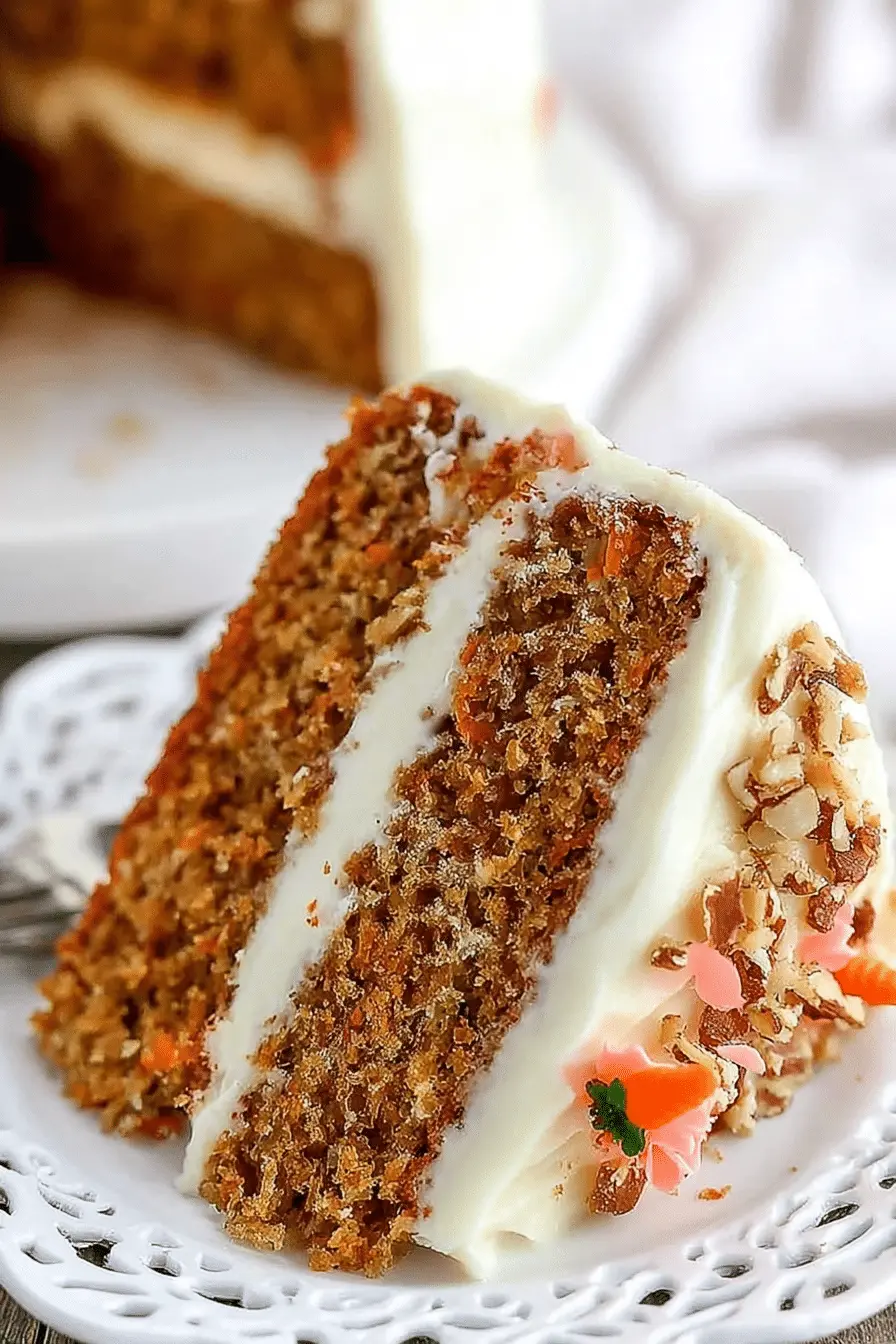
The Best Carrot Cake I Make Every Weekend — Moist, Quick & Foolproof
- Prep
- 35 min
- Cook
- 35 min
- Total
- 95 min
- Serves
- 10
- Calories
- 350 kcal
Introduction
I have a go-to carrot cake that I make when I want something comforting, not fussy, and reliably moist. Over the years I tested batter consistency, oven times, and different sweeteners; what I keep coming back to is the balance between grated carrots and a touch of applesauce for extra moisture. The top browns a warm golden color and the kitchen fills with cinnamon and nutmeg as it bakes.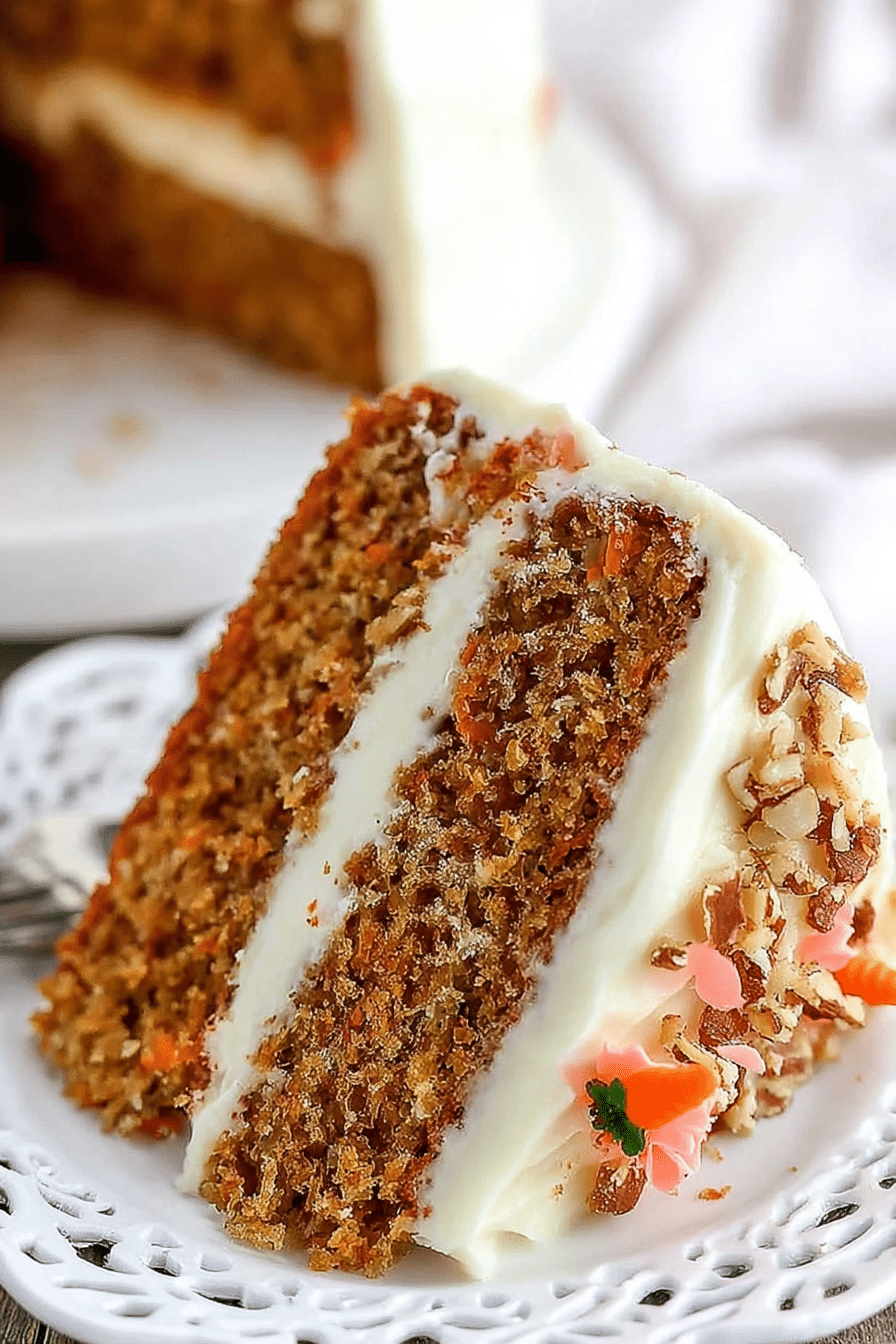
Why This Is the Best Carrot Cake — Moist, Quick, and Easy
This recipe gets its moistness from two places: freshly grated carrots and a bit of unsweetened applesauce. Together they keep the crumb tender without weighing the cake down. I use a mix of brown and granulated sugar because the brown sugar adds depth and a subtle caramel note while the granulated sugar helps with structure and oven browning.
The right baking time and temperature are crucial. Too hot and the outside sets before the inside cooks, which dries the crumb; too long and the cake loses its spring. Look for a golden-brown top and a springy feel when you press lightly near the center. The aroma of cinnamon, ginger, and nutmeg is a reliable cue the spices are blooming and the cake is nearly done.
Everything You Need for The Best Carrot Cake
Below are the ingredients and tools I recommend. I describe each item by purpose and give simple swaps so you can adapt the recipe to what you have on hand. Remember to bring dairy and eggs to room temperature before you start so your batter mixes evenly.
- All-purpose flour – Provides structure; can be swapped for a gluten-free blend formulated for baking if you need a gluten-free cake.
- Leaveners (baking powder and baking soda) – Help the cake rise and create a light crumb; don’t skip or reduce unless you know your substitution.
- Ground cinnamon, ginger, and nutmeg – The spice trio that gives carrot cake its warm aroma; fresh spices pack the most flavor.
- Salt – Balances sweetness and enhances spice flavors.
- Neutral oil (canola or vegetable) – Keeps the cake moist and tender; oil outperforms butter for moisture in this recipe. For a lighter option, part oil can be swapped with applesauce.
- Eggs – Provide structure and lift; use room temperature eggs so they mix smoothly into the batter.
- Brown and granulated sugar – Brown sugar adds depth; granulated helps with texture and browning. You can reduce granulated sugar slightly or use a natural sweetener alternative in moderation.
- Unsweetened applesauce – The secret moisture booster that keeps the cake tender without extra fat. It’s also a good swap if you want to cut some oil.
- Vanilla extract – Rounds out the flavors.
- Fresh carrots – Grated for texture and moisture. Avoid pre-shredded carrots if you can; they’re drier.
- Cream cheese and unsalted butter – The base for the frosting; use full-fat cream cheese for the best texture. For a dairy-free option, use firm vegan cream cheese and a vegan butter substitute.
- Powdered sugar – Sweetens and stabilizes the frosting; sift if it’s lumpy.
- Kitchen tools – Mixing bowls, whisk or paddle, rubber spatula, box grater or food processor, 9-inch cake pans, parchment paper, and a wire rack for cooling.
The Secret to the Moistest Texture
The key techniques that guarantee a moist cake are simple and repeatable. I keep mixing gentle, use oil instead of all butter, and rely on freshly grated carrots rather than dried or pre-shredded versions. Freshly grated carrots release moisture into the batter as it rests and during baking, which keeps the crumb soft.
- Mix only until the dry and wet ingredients are just combined; overmixing develops gluten and yields a tougher, drier cake.
- Use oil instead of butter for a moister crumb—oil stays liquid at room temperature and gives a tender mouthfeel.
- Grate your carrots fresh so they contribute maximum moisture and bright color; I prefer using a medium grating to balance moisture release and texture.
- Check doneness visually and by feel: the top should be golden-brown and spring back lightly when touched near the center.
Choosing the Best Carrots and Grating Tips
Choose carrots that are firm, smooth, and brightly colored. Avoid carrots that are soft, cracked, or woody-tipped. The fresher the carrot, the more moisture and sweetness it brings to the cake.
- Wash and peel only if the skin is rough; most of the flavor sits just under the skin.
- For texture, grate with a medium blade—this gives a good balance between moisture release and visible carrot strands in the crumb.
- If your carrots are very large, cut them into smaller pieces before grating so they shred evenly and don’t clog the grater.
- Avoid pre-shredded carrots; they’re often drier and will give a less tender crumb.
How to Make The Best Carrot Cake (Step-by-Step)
- Preheat your oven and prepare pans: grease and line cake pans so the layers come out cleanly and cooling is even.
- Whisk dry ingredients in one bowl so the baking powder, baking soda, spices, and flour are evenly distributed; this prevents pockets of leavening and spice.
- In a separate bowl, combine oil, eggs, sugars, applesauce, and vanilla; mix until smooth—this creates a homogenous wet base that traps moisture.
- Fold grated carrots into the wet ingredients so they’re evenly dispersed; this prevents overmixing the dry ingredients when you combine bowls.
- Gently fold the wet mixture into the dry until just combined; stop when no streaks of flour remain to avoid developing gluten.
- Divide batter between prepared pans and bake until the tops are set and a skewer comes out clean; a consistent oven temperature ensures even rise and moisture retention.
- Cool in the pans briefly, then transfer layers to a wire rack to finish cooling completely before leveling and frosting; frosting warm cake will slide and create a mess.
The One Ingredient That Keeps This Cake Extra Moist
I use unsweetened applesauce as an intentional moisture booster. It adds tenderness without extra fat and keeps the cake softer the next day. Applesauce also helps reduce the overall oil needed if you’re aiming for a lighter texture.
- Applesauce provides water and pectin that hold moisture in the crumb—great for keeping slices soft a day or two after baking.
- If you prefer to reduce oil, replace part of the oil with applesauce rather than all of it; removing all oil will change the crumb structure noticeably.
- Other moisture-boosting swaps: mashed banana for extra flavor, or pumpkin puree for seasonal variation—expect subtle flavor and texture changes.
How to Make the Cream Cheese Frosting Smooth Every Time
The trick to a silky frosting is temperature and patience. Bring cream cheese and butter to room temperature so they blend to a smooth base without lumps. Beat until fully smooth before adding powdered sugar so you avoid overworking the frosting later.
- Start with room-temperature cream cheese—cold cream cheese will clump and make lumpy frosting.
- Beat cream cheese first until smooth, then add softened butter and beat until combined and airy.
- Sift powdered sugar if it’s clumpy, and add it gradually to control consistency and sweetness.
- If the frosting becomes too soft, chill it briefly to firm up; if it’s too stiff, add a small splash of cream or milk and re-whip on low speed.
- Beat in vanilla at the end for the cleanest flavor.
Pro Tip for the best carrot cake: timing, temperature & smart mix-ins
- Use an oven thermometer to confirm your oven runs true—many ovens run hot and will dry out cakes if you trust the dial alone.
- Cool layers completely before frosting; I usually let layers rest until room temperature so the frosting sets properly.
- Smart mix-ins to try: chopped toasted pecans or walnuts for crunch, crushed pineapple for tropical moisture, or shredded coconut for texture. Add mix-ins sparingly so they don’t weigh down the batter.
- Toast nuts briefly to deepen flavor before adding them to the batter or sprinkling on top.
Troubleshooting (from my kitchen mishaps)
- If the cake is dry: you likely overbaked or overmixed. Reduce bake time slightly and fold batter gently next time. I once left a cake in too long and learned the oven check is non-negotiable.
- If the center sinks: the oven temperature may have been too low or the cake was underbaked when removed. Test with a skewer and give it a few extra minutes if needed.
- If frosting is runny: your ingredients were too warm. Chill the frosting briefly and re-whip. I’ve saved frosting by popping it in the fridge for 10–15 minutes and then smoothing it again.
- If your carrots pool at the bottom: coat grated carrots lightly in a little flour from the dry mix before folding, or fold them in more gently to keep them suspended.
How to Store, Freeze, and Serve Leftovers
To keep your cake moist, store it in an airtight container in the refrigerator where the frosting and crumb stay fresh. If you need to freeze, wrap individual slices well and place them in a freezer-safe bag—this makes thawing quicker and keeps slices tasting fresh.
- Refrigeration: store cake in an airtight container for up to a week; bring slices to room temperature before serving for best texture.
- Freezing: wrap slices tightly in plastic, then foil, and freeze for up to a few months. Thaw overnight in the fridge, then bring to room temperature before serving.
- Serving suggestion: garnish with toasted nuts or a light dusting of cinnamon and serve with coffee or tea for a simple presentation.
Variations & Dietary Swaps for Carrot Cake Lovers
- Gluten-free: use a 1-to-1 gluten-free baking blend designed for cakes and add a little xanthan gum if your blend lacks it.
- Vegan: substitute eggs with a commercial egg replacer or flax eggs, use a neutral oil and a vegan cream cheese for the frosting. Texture will be slightly different but still tasty.
- Lower-sugar: reduce granulated sugar slightly and rely more on brown sugar for flavor; consider a natural granulated sweetener in moderation.
- Flavor twists: add crushed pineapple for moisture, orange zest for brightness, or swap half the spice mix for cardamom for an international twist.
Frequently Asked Questions
Can I use other types of carrots in this recipe?
Absolutely! While regular orange carrots are the most common choice, you can also experiment with baby carrots or even purple or yellow carrots for a fun twist.
How do I achieve the perfect cream cheese frosting consistency?
To get a smooth frosting, ensure your cream cheese and butter are at room temperature before mixing. Beat them well until smooth, then gradually add the powdered sugar and vanilla.
Can I make this carrot cake ahead of time?
Yes! You can bake the cake layers a day in advance. Just let them cool completely, wrap them tightly in plastic wrap, and store them in the fridge until you're ready to frost and serve.
What can I add to this recipe for extra flavor?
Try adding crushed pineapple, shredded coconut, or chopped nuts like walnuts or pecans to the batter for added flavor and texture!
How should I store leftover carrot cake?
Store your leftover carrot cake in an airtight container in the fridge for up to a week. You can also freeze it by wrapping individual slices tightly in plastic wrap and placing them in a freezer-safe bag.
Recipe Card
The Best Carrot Cake I Make Every Weekend — Moist, Quick & Foolproof
- Prep
- 35 min
- Cook
- 35 min
- Total
- 95 min
- Serves
- 10
- Calories
- 350 kcal
Ingredients
- 2 cupsall-purpose flour
- 2 teaspoonsbaking powder
- 1 teaspoonbaking soda
- 1.5 teaspoonsground cinnamon
- 0.5 teaspoonground ginger
- 0.25 teaspoonground nutmeg
- 0.5 teaspoonsalt
- 0.75 cupcanola or vegetable oil
- 4 largeeggs (at room temperature)
- 1.5 cupspacked light brown sugar
- 0.5 cupgranulated sugar
- 0.5 cupunsweetened applesauce
- 1 teaspoonpure vanilla extract
- 3 cupslightly packed grated carrots
- 1 8-ounce packagebrick style cream cheese, softened
- 0.5 cupunsalted butter, softened
- 2 cupspowdered sugar
- 1 teaspoonpure vanilla extract
Instructions
- 1
Preheat the oven to 350°F (180°C). Spray two 9-inch round cake pans well with non stick cooking spray and line the bottom of each pan with a parchment paper circle. Set aside.
- 2
In a large mixing bowl, whisk together the flour, baking powder, baking soda, cinnamon, ginger, nutmeg, and salt until well combined. Set aside.
- 3
In a separate large mixing bowl, whisk together the oil, eggs, brown sugar, granulated sugar, applesauce, and vanilla extract until fully combined. Add the grated carrots to the wet ingredients and mix until well combined.
- 4
Pour the wet ingredients into the dry ingredients and mix with a whisk or rubber spatula until just combined, making sure not to over mix the batter.
- 5
Pour the cake batter evenly between both prepared cake pans. Bake for 30 to 35 minutes or until the tops of the cakes are set and a toothpick inserted into the center of each one comes out clean.
- 6
Remove from the oven, transfer to a wire rack, and allow to cool in the pans for 20 to 25 minutes. Once the cakes have cooled, remove from the pans and return the cakes to the wire rack to finish cooling.
- 7
To make the cream cheese frosting: In the bowl of a stand mixer fitted with the paddle attachment, or in a large mixing bowl using a hand-held mixer, beat the cream cheese until smooth. Add the butter and mix for about 30 seconds to 1 minute until well combined and smooth.
- 8
Add in the powdered sugar and vanilla extract and continue mixing until fully combined, stopping to scrape down the sides of the bowl as needed.
- 9
To assemble the cake: Level the tops of each cake with a knife or cake leveler. Place one of the cake layers on a cake stand, top with a little over 1/2 cup of the frosting, and smooth it out into one even layer. Place the other cake layer on top and use the remaining frosting to frost the top and sides of the cake. Top with pecans or other toppings of choice, if desired.
You might also like


Reviews
Be the first to review this.