

There are recipes that feel like home the moment you stir them — and this ultimate chicken soup is one of those. I remember the first time I made a big pot on a rainy afternoon: the kitchen filled with a gentle, savory steam, the smell of onions and garlic turning warm and sweet, and the slow, reassuring tick of the spoon against the pot as the broth simmered. This is the kind of soup you reach for when you’re under the weather, when you need to feed a family, or when you want something that tastes like comfort itself. It hits that universal note — nourishing, familiar, healing — that people around the world turn to when life needs a little soothing.
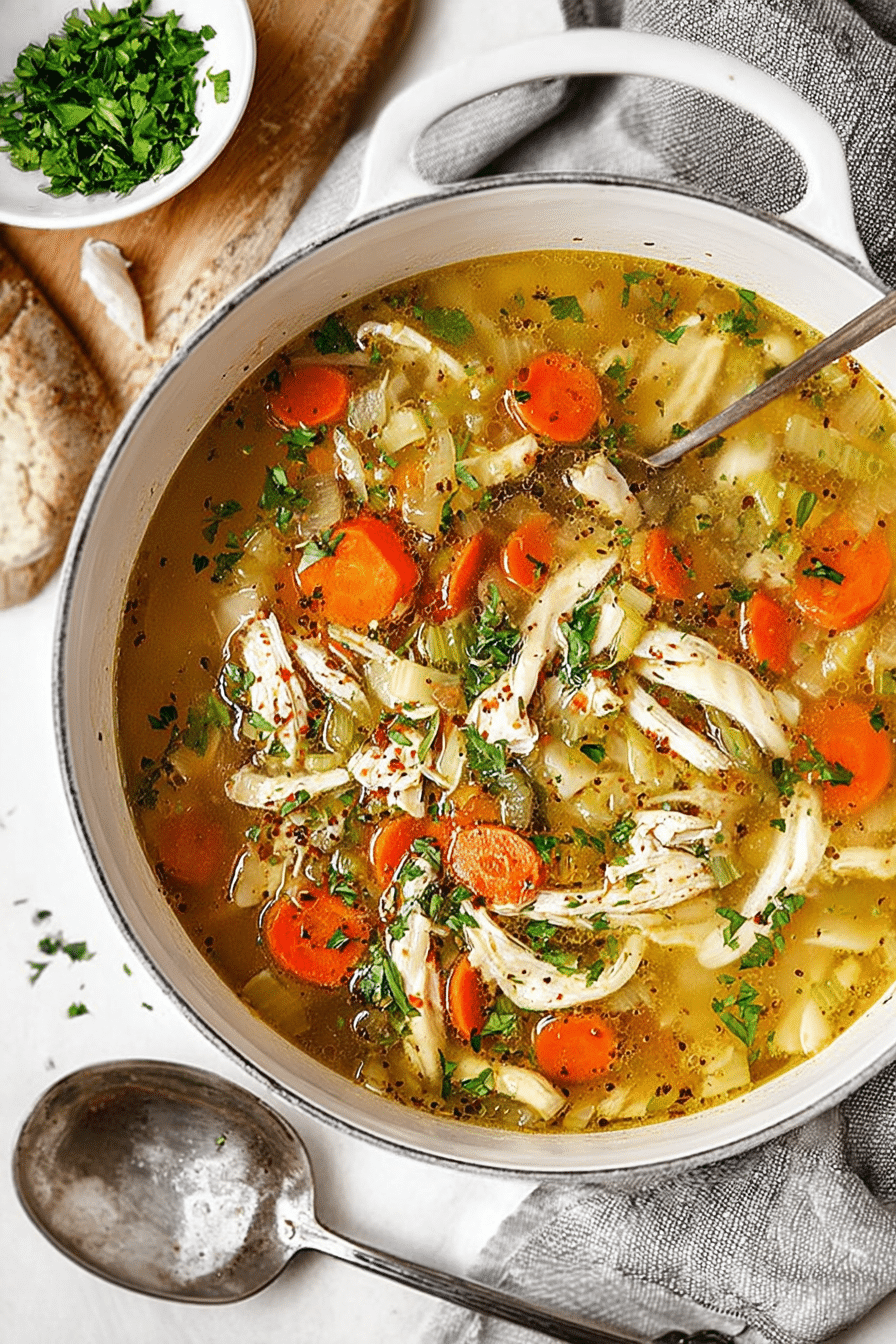
I make this soup on repeat during the colder months and whenever someone in the house is feeling under the weather. Over the years I’ve tweaked timing, added parsnips for a slightly sweet note, and learned the small things that keep the chicken tender and the broth clear and bright. Below you’ll find the full recipe I use, plus tips on avoiding common mistakes and ways to adapt it to whatever you have on hand.
Ingredients: Nourishing Components of Ultimate Chicken Soup
- Extra virgin olive oil – a drizzle to gently sauté vegetables without burning; it adds a rounded background fat and carries flavor.
- Carrots – sliced for sweetness and color; carrots also add natural sugars that balance the savory broth.
- Parsnips – an optional root with a nutty, slightly sweet edge that deepens the soup’s flavor.
- Celery – gives that classic aromatic base and a subtle bitterness that lifts the soup.
- Onion – diced to build savory depth; when cooked until translucent it becomes sweet and rounded.
- Leek – adds a gentle, oniony sweetness; make sure to rinse well between the layers to remove grit.
- Garlic – minced for warmth and aroma; cook briefly to soften its raw edge so it turns sweet and fragrant.
- Kosher salt – essential for seasoning and for coaxing flavors out of the vegetables and chicken.
- Black pepper – freshly ground for bright spice; add more at the end to taste.
- Boneless skinless chicken breasts – cook quickly in the broth for tender, shreddable meat; swap for bone-in pieces for richer flavor.
- Fresh thyme and tarragon – sprigs added whole for a fresh herbal lift; remove before serving so you don’t end up with stringy leaves in the bowl.
- Bay leaf – a subtle, savory floral note that rounds the broth.
- Low-sodium chicken broth – the backbone of the soup; low-sodium lets you control the final seasoning. For more depth, use homemade broth.
- Fresh parsley – stirred in at the end for brightness and color; flat-leaf parsley works especially well.
Instructions: Step-by-Step to Comfort Food Heaven
Below is the exact method I use — times and order matter here to keep the vegetables bright and the chicken tender. Follow the steps and read the troubleshooting tips after the method so you know what to look (and smell) for.
- Prepare the vegetables. Trim and peel the carrots and parsnips and slice them into even coins; slice the celery; dice the onion; halve and thinly slice the leek and rinse it well to remove any sand; mince the garlic. Having everything prepped helps the sauté stay quick and even.
- Sauté the veggies. Heat about 2 tablespoons of extra virgin olive oil in a large pot over medium heat. Add the carrots, parsnips, celery, leek, and onion and cook, stirring frequently, for 4 to 5 minutes until the onions become translucent and the roots begin to soften. You want some color on the edges but not browning — if they brown too quickly, lower the heat. Add the garlic, a teaspoon of kosher salt, and about half a teaspoon of freshly ground black pepper; stir for another minute until the garlic smells sweet and toasty.
- Poach the chicken. Nestle two boneless, skinless chicken breasts into the pot and add two sprigs each of fresh thyme and tarragon plus a bay leaf. Pour in 5 cups of low-sodium chicken broth so the chicken is mostly submerged. Bring the pot to a gentle boil, then immediately reduce the heat to low, cover, and simmer for about 15 minutes. The chicken is done when it reaches 165°F internally or when the flesh is opaque and springs back when pressed.
- Shred the chicken. Use tongs to remove the chicken to a cutting board and let it rest for a minute. Gently shred with two forks; the meat should be moist and pull apart easily. Return the shredded chicken to the pot and simmer for 1 to 2 minutes to marry flavors.
- Finish and serve. Remove the herb sprigs and bay leaf. Stir in a quarter cup of roughly chopped fresh parsley and taste for seasoning — add more salt or pepper if needed. Ladle into bowls and garnish with extra parsley and a crack of black pepper.
If you prefer to poach your own meat, follow our chicken breast recipe for tender, shreddable chicken that’s perfect in soup.
Troubleshooting and tips from my stove
- Broth tastes flat? It usually needs salt rather than sugar — add kosher salt a little at a time and taste. If you over-salt, a peeled potato simmered in the broth for 10 minutes will absorb some saltiness (then remove it).
- Cloudy broth? That can happen if the broth is boiling aggressively while you add the chicken — aim for a gentle simmer. Skim any foam with a spoon while it simmers if you want a clearer broth.
- Dry chicken? If your shredded chicken feels dry, it was probably overcooked or the slices were too thin. For rescue, fold in a ladle of hot broth off the heat and let it rest for a few minutes; that plumps the meat.
- Vegetables too soft? Add them later in the cook or dice them slightly larger. Root vegetables keep better texture if added early but watch the simmer time.
Nutritional Benefits: Why This Soup Is Good for You
This soup is more than comfort — it’s functional. A bowl delivers hydration, protein, and vegetables in a gently seasoned broth that’s easy to digest. The broth helps with hydration and is soothing on a sore throat; the warm steam opens nasal passages and the salty liquid replenishes electrolytes when you’re losing fluids. The chicken provides lean protein for tissue repair, and the vegetables supply fiber, vitamin A (from carrots), and other micronutrients.
Using a leftover carcass or bone-in chicken yields collagen and minerals into the broth, which can make the soup feel richer and slightly gelatinous when chilled. Many people find bone-based broths comforting and easier to digest when they’re ill. While scientific details vary, warm, salty liquids are widely recommended to help with hydration and temporary congestion relief — and in my own kitchen I’ve seen how a hot bowl seems to make everyone breathe easier and relax.
For reference, the original recipe yields about four servings and runs around 319 kcal per serving with about 11 g fat, 38 g carbohydrates, and 21 g protein — a balanced, nourishing meal that’s easy on the stomach.
Variations: Creative Twists on a Classic Recipe
One of the best things about this soup is how flexible it is. Below are ideas I’ve tested and returned to often, plus ways to adapt seasonally or for different diets.
- Thai coconut chicken soup – Swap half the broth for coconut milk, add lime zest and juice, ginger slices, and a couple of crushed lemongrass stalks. Finish with cilantro and thinly sliced red chili for heat.
- Mexican-style – Add cumin, oregano, a squeeze of lime, and chopped cilantro. Replace some veggies with diced tomatoes and toss in hominy for a pozole-like twist.
- Italian with pesto – Stir in a spoonful of pesto at the end and add small pasta or orzo. Finish with a grating of Parmigiano-Reggiano.
- Gluten-free or grain-free – Use rice or gluten-free pasta cooked separately and add to bowls. Or skip grains entirely and bulk up with extra vegetables and beans for protein.
- Vegetarian/vegan – Use robust vegetable or mushroom stock and add chickpeas, roasted mushrooms, or tofu for body and protein. For a heartier, bean-forward take see the suggestion below.
For a hearty vegetarian twist, try flavors inspired by our Tuscan white bean soup as a chicken-free alternative.
Swap in quick hibachi-style noodles for a comforting noodle soup variation with an Asian flair.
Testimonials: Why Everyone Loves This Chicken Soup
I’ve made this soup for housemates who needed a pick-me-up after a long day, for friends nursing colds, and for quiet midweek dinners. My neighbor called it “like a warm blanket” after I dropped a quart off one winter night; my partner says it’s the one thing that immediately makes him feel cared for. At a potluck this soup disappeared faster than any casserole — people came back for seconds and told me it reminded them of their childhood kitchens.
Reader note: A colleague once told me she always asks for a jar of this when her parents visit — it’s now part of their visiting ritual. These little stories are why I keep this recipe in heavy rotation: it’s not fancy, but it’s reliably comforting and flexible.
FAQs: Answering Your Chicken Soup Queries
- How long will this chicken soup keep in the fridge or freezer, and how should I reheat it?Store soup in an airtight container in the fridge for 3–4 days. For longer storage, freeze for up to 3 months (remove fresh herbs and avoid freezing noodles — see noodle tip below). Thaw overnight in the fridge and reheat gently on the stovetop over low–medium heat until hot, adding a splash of broth or water if it’s too thick.
- Can I use bone-in chicken or leftover rotisserie chicken instead of boneless breasts?Yes. For bone-in chicken, simmer 20–30 minutes until cooked through, then remove bones and shred. For rotisserie or leftover cooked chicken, shred it and add it to the hot soup in the last 2–3 minutes just to warm through so it stays moist.
- Can I add noodles or rice, and when is the best time to add them so they don’t get soggy?To avoid soggy noodles, cook pasta or rice separately and add to individual bowls or to the pot right before serving. If adding uncooked pasta to the pot, add it 8–10 minutes before the end of cooking (timing depends on pasta type). Use gluten-free noodles or rice for a gluten-free option.
- Can I make this soup ahead of time, and how can I use a chicken carcass to make a richer broth?Yes — make the soup a day ahead to let flavors meld. To make rich homemade broth, simmer a chicken carcass with onion, carrots, celery, bay leaf and peppercorns for 1.5–3 hours, strain, then use as your soup base. Cool and refrigerate or freeze the broth for later use.
- How can I make a vegetarian or vegan version of this soup?Use a hearty vegetable broth or mushroom stock in place of chicken broth and omit the chicken. Add chickpeas, firm tofu, or extra root vegetables for protein and body. Boost umami with miso, soy sauce (or tamari), roasted mushrooms, or a splash of nutritional yeast.
Conclusion: Enjoy Your Bowl of Comfort!
This ultimate chicken soup is exactly the kind of recipe I keep returning to — quick enough for weeknights, soothing enough for sick days, and flexible enough to suit whatever you have in the pantry. It won’t be fussy or flashy, but it will deliver warmth, nourishment, and that homey feeling that makes cooking worth it.
Serve bowls of soup alongside light sides like our zesty cilantro lime rice for a bright contrast to the rich broth. And please — make a pot, taste as you go, and adjust for your family’s preferences. Then tell me how you adapted it; I love hearing the little changes that make a recipe feel like someone’s own.
Happy cooking and take care — this soup has gotten me through more colds and gray days than I can count. Keep a jar in the freezer and you’ll always have a bowl of comfort waiting.
Recipe yield: about 4 servings. Prep time: ~10 minutes. Cook time: ~20 minutes. Total time: ~30 minutes.
Ultimate Chicken Soup
Ingredients
Method
- Saute the veggies. Heat the oil in a large pot on medium heat. Add the carrots, parsnips, celery, leek, and onion to the pot and cook for 4 to 5 minutes, stirring frequently. Add the garlic, salt, and pepper, and stir for another minute.
- Poach the chicken. Add the thyme, tarragon, bay leaf, chicken, and broth. Bring to a boil, then reduce the heat to low and cover the pot. Simmer the soup for 15 minutes, or until the chicken is fully cooked.
- Shred the chicken. With tongs, remove the chicken to a cutting board and then gently shred the chicken with two forks. Place the shredded chicken back into the pot and simmer for an additional 1 to 2 minutes.
- Serve. Remove the sprigs of thyme, tarragon and the bay leaf. Stir in the parsley, and garnish with additional fresh parsley and black pepper before serving.