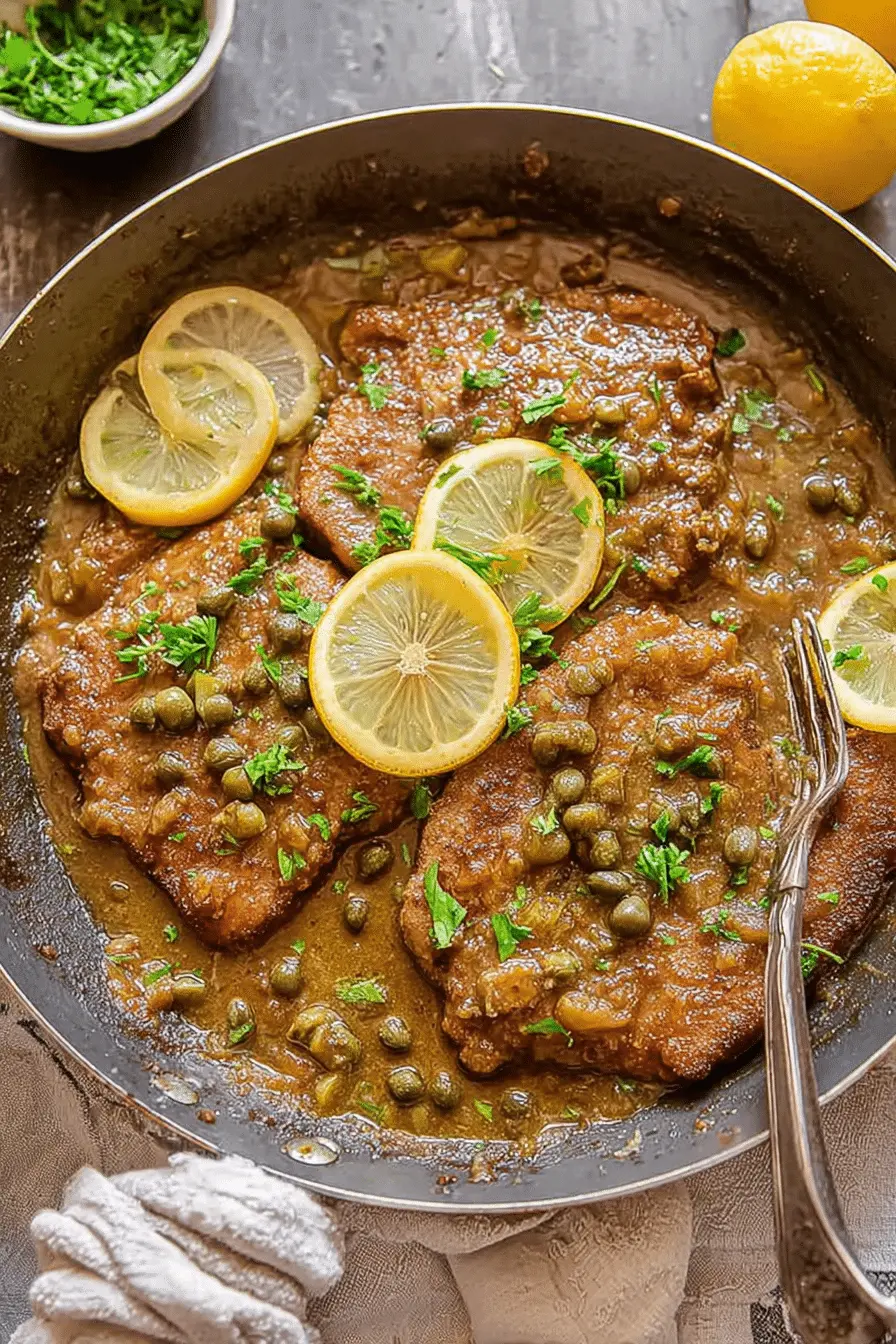
Veal Piccata
- Prep
- 10 min
- Cook
- 15 min
- Total
- 25 min
- Serves
- 4
- Calories
- 443 kcal
- Carbs
- 12.00 g
Introduction
I make veal piccata when I want a fast weeknight meal that still feels a little special. In my kitchen this became a go-to because it cooks quickly, cleans up easily, and the results look and taste like something you might order out: golden-brown veal cutlets in a glossy lemon-butter sauce studded with capers. The first time I tested this I learned to time the butter and wine carefully — that small detail makes the sauce silkier and keeps the veal tender.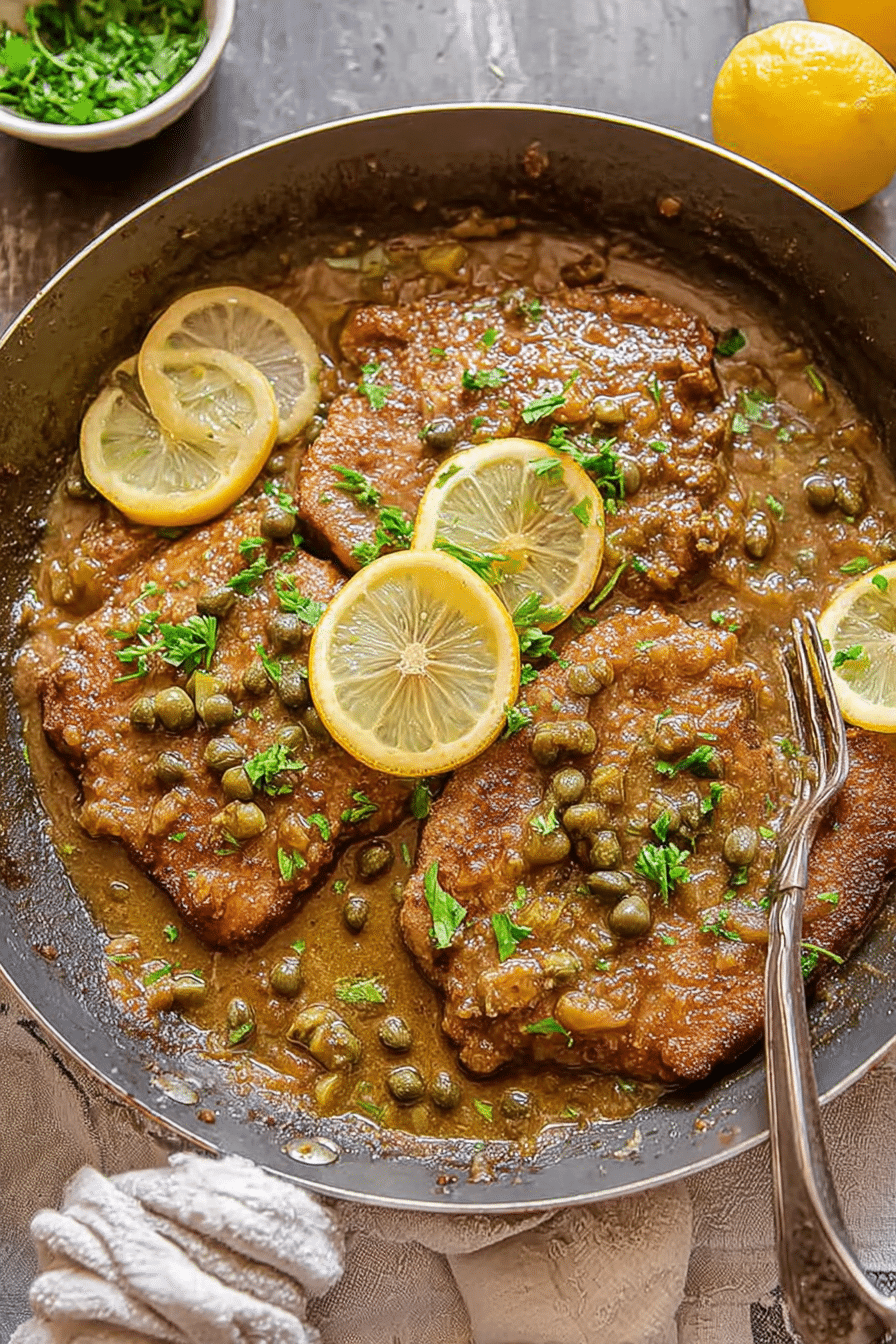
Why This Easy Veal Piccata Is Perfect for You
This version is built for busy home cooks who still want something impressive. It comes together fast, uses a short list of ingredients you probably already have or can get easily, and the techniques are straightforward: quick pan-sear, a brief wine reduction, and a fast finish with lemon and butter. Visually, you should aim for thin cutlets with a warm golden crust and a glossy sauce that clings to the meat. It works for both casual dinners and small dinner parties — you can scale up by searing in batches and keeping cooked pieces warm. The aroma from sautéed shallot and garlic followed by the citrus steam from the pan is the sort of smell that makes a house feel like a proper dinner is happening.Everything You Need for Veal Piccata
Below I walk through the ingredients and the tools I rely on; I also note sensible substitutions so you can shop or improvise quickly. If you enjoy veal, you might also like a richer, breaded take on the cutlet in my veal parmesan for a comforting alternative: If you're interested in more delicious veal recipes, check out our veal parmesan for a tasty alternative.- Veal cutlets – Choose fresh, thinly sliced pieces so they cook in minutes; if cutlets are thick, you can pound them lightly to even thickness.
- Flour – A light dredge gives a little color and helps the sauce cling; swap with a gluten-free blend if you need a gluten-free option.
- Salt and black pepper – Basic seasoning that brings out the veal’s natural flavor; season just before dredging.
- Olive oil – For initial searing; use a good-flavored oil so the crust tastes clean and savory.
- Unsalted butter – Adds silk and richness to the sauce; finishing with cold butter will give the sauce a glossy sheen.
- Shallot and garlic – Shallot gives a mild sweetness, garlic gives depth; sauté gently so they don’t brown too quickly.
- Lemon – Fresh lemon juice brightens the sauce in a way bottled juice cannot; thin lemon slices add a pretty garnish.
- Dry sherry or white wine – Adds acidity and complexity during deglazing; use a dry wine you’d drink.
- Chicken stock – Builds the body of the sauce; low-sodium stock gives you better control of salt.
- Capers – The briney pop that contrasts the butter and lemon; rinse if you prefer them less salty.
- Fresh parsley – Adds fresh color and herbal lift at the end when sprinkled over the finished dish.
- Equipment – A large heavy skillet (stainless or cast iron) for even browning, tongs, a small whisk or spatula for scraping the pan, and an oven set to its lowest temperature to keep cooked cutlets warm.
How to Make Veal Piccata (Step-by-Step)
- Pat the veal dry with paper towels and season both sides with salt and pepper, then lightly dredge in flour; this step ensures a golden crust and a sauce that will cling to the meat. You should feel the dry surface before it hits the pan.
- Heat your skillet over medium-high heat and add oil. When the oil is shimmering, sear the veal in a single layer without crowding; you want a warm, audible sizzle. Brown for a couple of minutes per side until golden — the cutlets will be nearly cooked through because they’re thin.
- Add butter a bit into the searing step (not all at once) to baste and color the meat; then transfer the browned cutlets to a warmed plate or low oven to rest while you make the sauce. Resting keeps juices in the meat.
- Lower the heat, add the chopped shallot and cook gently until soft, then add garlic for the last 30 seconds. Stir in a small spoonful of flour to loosen browned bits and form a light paste; cook briefly so the raw flour taste cooks out.
- Deglaze with dry sherry or white wine, scraping up the fond. Let the liquid bubble and reduce for a couple of minutes, then add chicken stock, lemon juice, lemon slices, and capers. Bring to a simmer and reduce until the sauce thickens slightly and glazes the back of a spoon.
- Return the veal to the pan, spoon the sauce over each piece, then finish with a small knob of cold butter off the heat and sprinkle with fresh parsley. Serve immediately.
- Meal-prep tip: If you’re juggling work and dinner, sear all the cutlets and keep them in a single layer in a low oven; make the sauce while they rest. This keeps the workflow tight and lets you finish in minutes.
- If the veal turns out tough, I usually find it’s from overcooking or not patted dry — always dry and sear quickly over medium-high heat.
- If the sauce is grainy, it’s often because the flour wasn’t cooked briefly before deglazing; let the flour paste cook for a minute to remove raw taste.
- If the sauce is too thin, I simmer a bit longer to reduce, or whisk in a small knob of cold butter off heat to slightly thicken and smooth it.
The Secret to the Perfect Sauce Texture
- Temperature of the butter matters: add small pieces of cold butter off the heat at the end and whisk them in to emulsify the sauce. This yields a glossy, silky finish rather than a greasy one.
- Reduction is your friend: simmer the sauce until it’s reduced and slightly syrupy so it clings to the veal. Watch it carefully — it can go from perfect to too thick quickly.
- Alternative for gluten-sensitive diets: skip the flour entirely and rely on reduction plus a cold butter finish, or use a small slurry of cornstarch dissolved in cold stock added at the end while simmering to thicken. Both methods keep the sauce smooth; note that cornstarch will give a clearer finish than flour.
- For a lump-free sauce, make sure any flour or starch is fully integrated into the softened shallot/garlic mixture before you add liquid, and whisk briskly as you deglaze to break up any clumps.
Why Quality Ingredients Matter
Good ingredients make a genuine difference here because the recipe is short and each element is on display. Fresh veal will be tender and mild, while a lower-quality cut can be chewy; fresh lemon gives bright, clean acidity that bottled juice can’t match. A good olive oil and real butter give the crust and sauce a balanced richness that cheaper fats don’t replicate. Fresh herbs finish the dish with a green lift and visual contrast; parsley scattered over the top makes the plate look finished and smells fresh when you bring it to the table. The impact of quality ingredients is similar in other fresh-flavored dishes — for example, using fresh herbs and good stocks is key in dishes like baked sage chicken meatballs with parmesan orzo. The importance of using quality ingredients is highlighted in dishes like baked sage chicken meatballs, which also focus on fresh flavors.Pro-Tip for Perfect Veal Piccata
- Cook in batches so the pan stays hot and you get even browning; overcrowding drops the pan temperature and yields soggy edges.
- Let the veal rest briefly in a warm oven so the juices redistribute — I usually give them 5 minutes while the sauce reduces.
- Use a thermometer if you’re unsure: thin cutlets don't need a high internal temperature; aim to remove them when they’re just cooked through to keep them tender.
- Finish the sauce off the heat with a small knob of cold butter and a splash of lemon right before serving for a bright, glossy finish.
- For a sweet finish after your meal, consider making homemade chocolate turtles as a delightful dessert.
Storage Tips and Variations to Try
-
- Storage: Cool to room temperature, then store in an airtight container in the refrigerator for up to 3 days. Reheat gently on the stovetop in a skillet with a splash of stock to avoid drying the meat.
- Variation — chicken or pork: Use thin chicken or pork cutlets and follow the same timing; adjust searing time slightly if pieces are thicker.
- Vegetarian idea: Thinly sliced, lightly pan-fried eggplant or firm tofu can stand in for veal; treat them the same way in the pan and finish with the same lemon-caper sauce.
- Pairings: Serve with roasted potatoes over arugula, a simple buttered pasta, or a crisp green salad. For an alternative protein pairing, try combining this meal with something like honey garlic shrimp for variety.
- If you want wine suggestions, choose a dry white with good acidity (for example, a Pinot Grigio or a dry Riesling) that will complement the lemon and cut through the butter.
Frequently Asked Questions
What is veal piccata? Veal piccata is a classic Italian dish made with thin slices of veal that are briefly sautéed in butter, finished with lemon juice, and often enhanced with ingredients like capers for added flavor and complexity. How do I ensure my veal piccata sauce has the perfect texture? To achieve the ideal sauce texture, focus on reducing the sauce after adding the chicken stock and lemon juice. Let it simmer until it thickens slightly before adding the veal back to the pan. Can I use a different type of meat instead of veal? Yes! You can substitute the veal with chicken or pork cutlets. Just adjust the cooking time as needed to ensure the meat is cooked through. What is a great side dish to serve with veal piccata? Veal piccata pairs wonderfully with roasted potatoes over arugula or served alongside pasta or rice for a versatile meal. How should I store leftovers of veal piccata? Store any leftovers in an airtight container in the refrigerator for up to 3 days. To reheat, gently warm on the stovetop to prevent the veal from becoming tough.Recipe Card
Veal Piccata
- Prep
- 10 min
- Cook
- 15 min
- Total
- 25 min
- Serves
- 4
- Calories
- 443 kcal
- Carbs
- 12.00 g
Ingredients
- 4 piecesveal cutlets (150g/5 oz) each
- 4 tbspflour
- 1 tspsalt
- 1/2 tspblack pepper
- 2 tbspolive oil
- 4 tbspunsalted butter
- 1shallot (chopped)
- 2 clovesgarlic (minced)
- 1 lemon(1/2 juiced and 1/2 sliced)
- 125 mldry sherry (or white wine)
- 125 mlchicken stock
- 3 tbspcapers
- 1 tbspchopped fresh parsley
Instructions
- 1
Preheat the oven to the lowest temperature. Pat the veal cutlets dry with a paper towel, season with salt and pepper and dredge in flour.
- 2
Heat the olive oil in a large pan, brown the veal pieces in the hot oil until golden for 5 minutes on each side. A couple of minutes into the cooking add the butter to the pan.
- 3
Remove the veal from the pan and keep it warm in an oven preheated to the lowest temperature while making the sauce.
- 4
To the same pan add the chopped shallot and sauté over low heat for 2 minutes, then add the minced garlic and cook for 30 seconds.
- 5
Add 1 tbsp of flour and mix until it turns into a paste, cook for 1-2 minutes while stirring.
- 6
Pour in the dry sherry and let it bubble for 2-3 minutes, then add chicken stock, lemon juice, lemon slices, capers, and parsley.
- 7
Bring to a boil, then lower the heat and simmer the sauce until reduced in volume for a few minutes.
- 8
Return the veal back to the pan and spoon the sauce all over. Serve immediately.
You might also like
Reviews
Be the first to review this.