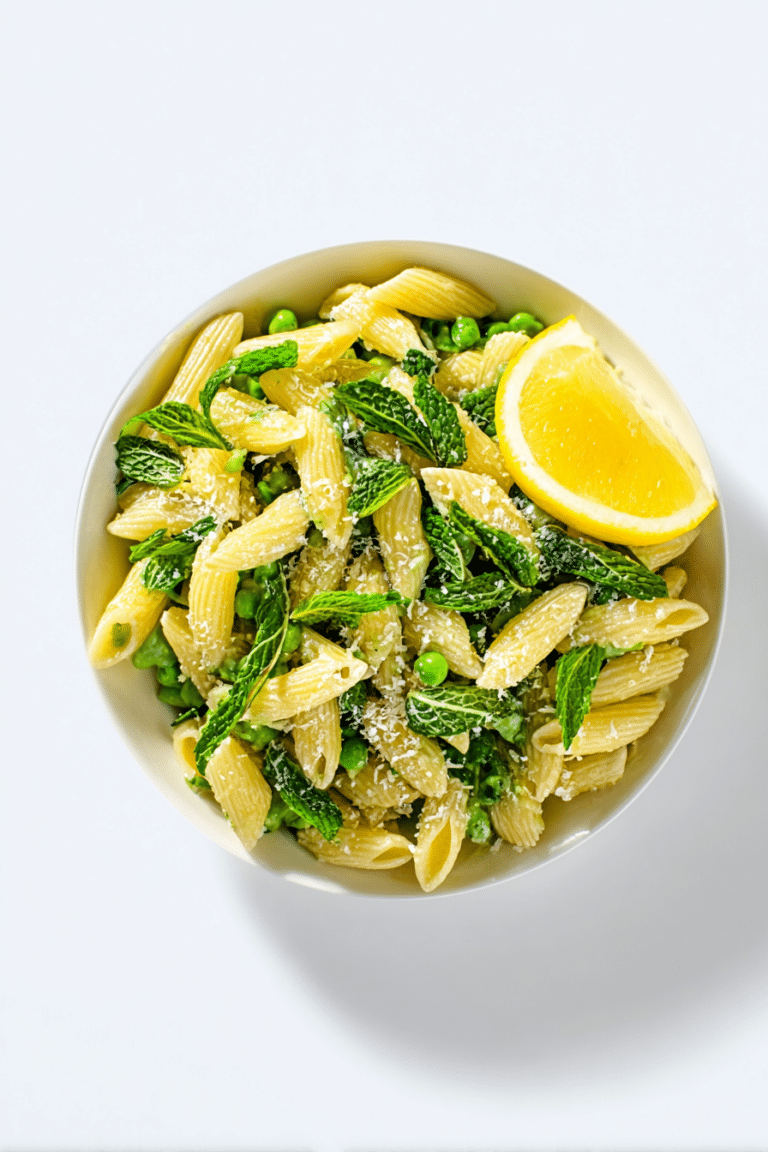


I love recipes that come together fast and taste like you spent the afternoon on them — this vegan wild garlic pesto pasta is one of those. When wild garlic is in season I make a batch of pesto in my kitchen and lean on it for every quick dinner I can. It brightens plain pasta, turns boiled potatoes into a celebration, and cuts the weekday cooking time in half.
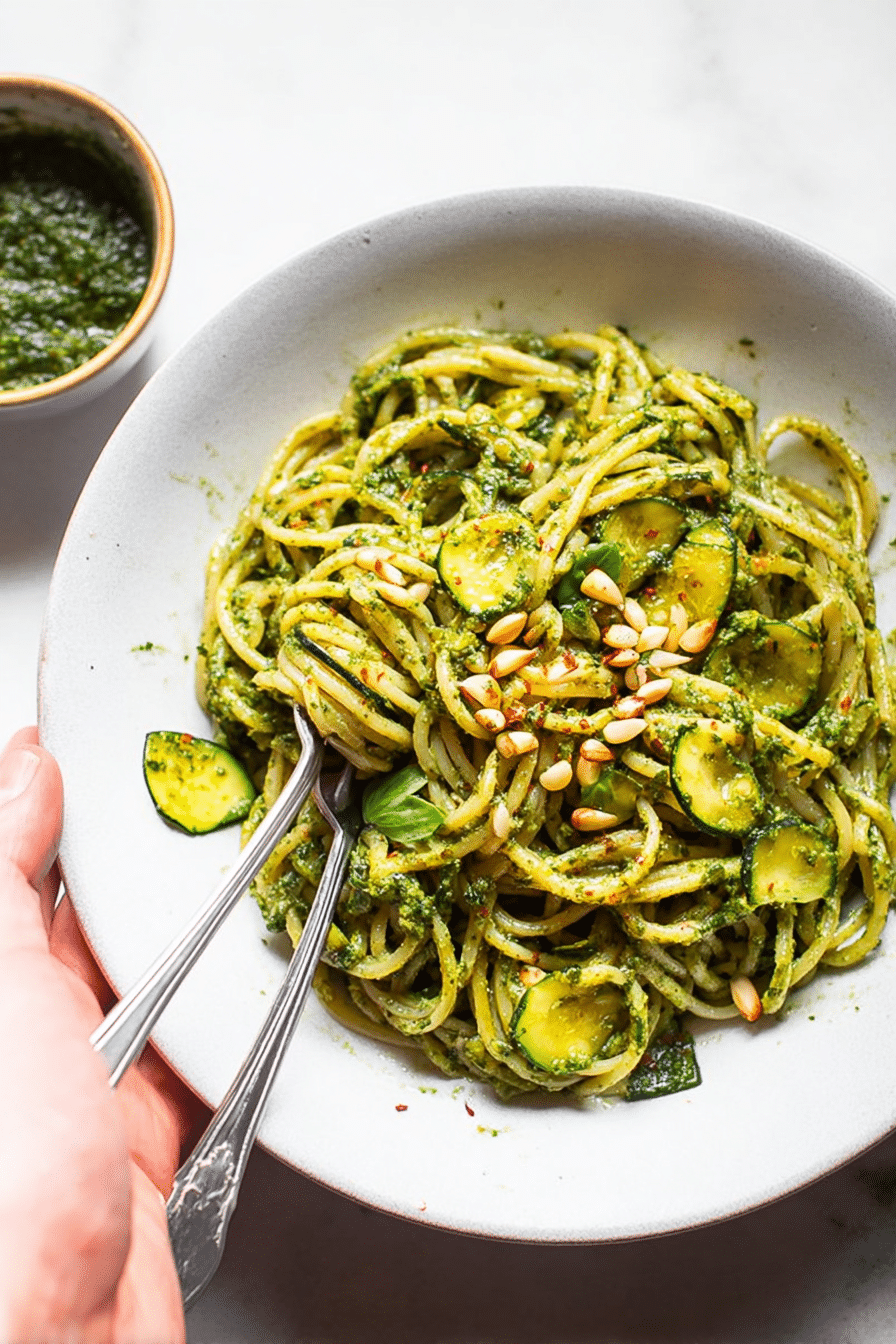
On busy nights I cook the pasta while I blitz the pesto and quickly fry thin courgette slices — everything moves in parallel so dinner lands on the table while it’s still steaming. The aroma of fresh garlic leaves, lemon and toasted nuts fills the kitchen and makes the whole process feel lifted even when time is short.
I’ve learned a few small habits that keep this dish consistently bright and balanced: toast your nuts gently, taste as you go for salt and lemon, and always save a little pasta water to loosen the sauce. These tiny steps make the difference between a dull sauce and one that feels fresh, vibrant and completely weeknight-friendly.
Why this vegan wild garlic pesto pasta is perfect for busy weeknights
This dish is built for speed and flexibility. Prep time is short, and you can cook pasta while you make the pesto — that parallel workflow is a genuine time-saver. The strong, herbaceous flavor from the wild garlic means you need fewer ingredients to get a big result, and the pesto stores well so a batch can feed several meals.
- Prep is quick: you can have pesto ready in the time it takes the pasta to boil.
- Cook in parallel: pasta, pesto, and a quick sauté can happen at once to save time.
- Highly adaptable: add roasted veg, beans or boiled potatoes for variety and extra protein.
Imagine a plate of steaming pasta tossed in bright green pesto, with the citrusy lift of lemon, the nutty crunch of toasted nuts, and the fragrant hit of wild garlic — that combination makes weeknights feel special without the fuss.
Everything You Need for Vegan Wild Garlic Pesto Pasta
Here’s what I always lay out before I start — seeing everything at once speeds me up and reduces last-minute rummaging.
- Wild garlic leaves – the star: fresh, punchy and garlicky; if you don’t have them you can use tender leafy greens with a couple of extra garlic cloves.
- Almonds (or other nuts/seeds) – provide body and texture; choose based on flavour and what’s in your pantry.
- Lemon – zest and juice to keep the pesto bright and balanced.
- Capers or green olives (optional) – a salty, tangy shortcut if you want less added salt.
- Nutritional yeast (optional) – adds a savory, cheesy note without dairy.
- Extra-virgin olive oil – binds the pesto and gives it a silky mouthfeel.
- Courgette (zucchini) – thinly sliced and quickly sautéed for a tender, browned finish.
- Pasta (or boiled potatoes) – choose your favourite shape; gluten-free options work just as well.
- Salt and black pepper – adjust to taste at the end; capers reduce the need for extra salt.
- Chilli flakes (optional) – for a warm, spicy lift if you like heat.
Kitchen tools that save time: a food processor for a silky, even pesto and a mandolin to shave courgette paper-thin. I keep a small jar of toasted nuts in my pantry so I can speed through this even faster on very busy nights.
The secret to bright, garlicky pesto (and how to avoid bitterness)
The balance between acid, oil and nuts is where a pesto lives or dies. I aim for lemon to brighten but not dominate, oil to give silkiness without weighing the sauce down, and nuts toasted just until fragrant so they taste warm rather than bitter.
- Start by toasting nuts lightly and cooling them fully; over-toasted nuts turn bitter and ruin the sauce.
- Grind the nuts first so the processor chops evenly, then add leaves and other flavourings for a consistent texture.
- Trickle in oil while blending to control texture — stop when the pesto is glossy and holds together, but not oily.
- Add lemon juice gradually and taste: too much acid flattens the green colour, too little makes the pesto dull.
- Adjust salt at the end — capers or olives will contribute a lot, so salt gently if you used them.
As you blend, notice the colour and smell: a bright, slightly grassy aroma and vivid green are signs you’ve been gentle enough with the leaves and acid balance.
Nuts, seeds and allergy-friendly swaps for every pantry
Different nuts and seeds change both the flavour and nutritional profile of the pesto. I keep a few options on hand so I can make this with whatever I have.
- Almonds – give a clean, slightly sweet nuttiness and a creamy texture when blended.
- Walnuts – bring a richer, earthier taste and a slightly softer mouthfeel.
- Hazelnuts or pecans – add warmth and depth; great if you want a fuller, toastier note.
- Pine nuts – classic for pesto, delicate and buttery but pricier.
- Hemp, sunflower or pumpkin seeds – excellent nut-free alternatives with added minerals and healthy fats.
- Nutritional yeast – boosts savory, umami character while keeping the recipe dairy-free and allergy-friendly.
Nutritionally, seeds are often higher in magnesium and iron while nuts bring protein and healthy fats — swap based on allergy needs and the flavour profile you prefer.
How to forage wild garlic safely and use it year-round
I forage cautiously and respectfully. Wild garlic is unmistakable when you crush a leaf and smell the fresh garlic aroma, but it has look-alikes, so I always triple-check identification and forage in places where collection is allowed.
- Identify confidently: the crinkled green leaves and strong garlic scent when rubbed are key markers; never eat anything unless you’re sure.
- Forage responsibly: take small amounts from lots of plants, avoid trampling an area, and follow local guidelines about foraging on public land.
- Preserve for year-round use: wash and chop leaves, then freeze pesto in ice cube trays or freeze whole leaves laid flat on a tray; frozen pesto retains much of the flavour and is ideal for quick weeknight meals.
- Store fresh leaves briefly in the fridge wrapped in a damp cloth; they’re happiest used within a few days of picking.
Foraging feels like a little adventure — the smell of damp earth, the flash of green under trees — but it’s important to be mindful and sustainable so that wild garlic thrives for seasons to come.
How to Make Vegan Wild Garlic Pesto Pasta (Step-by-Step)
- Prepare ingredients: wash and dry the wild garlic leaves and slice courgette very thin using a mandolin or sharp knife.
- Toast nuts gently on a dry pan until fragrant and lightly browned in spots; cool completely before blending to avoid steam turning the pesto watery.
- Start the pasta water and cook the pasta until al dente; reserve a splash of the cooking water just before draining.
- In the food processor, grind the nuts first for an even texture, then add wild garlic (or greens), lemon zest and juice, capers or olives if using, and nutritional yeast; pulse until finely chopped.
- With the motor running, trickle in olive oil until the pesto reaches a glossy, spreadable consistency; taste and add salt or more lemon as needed.
- Heat a little oil in a wide frying pan and sauté the courgette slices briefly until just tender and browned in places.
- Toss drained pasta with a few spoonfuls of pesto, adding a little reserved pasta water to loosen the sauce; divide onto plates and top with courgette slices and extra toasted nuts or seeds.
- Finish with a scatter of chilli flakes or cracked black pepper if you like a touch of heat; taste and adjust any final seasoning before serving.
Always taste as you go — small adjustments to lemon, salt or oil make the final plate sing.
Pro Tip for vegan wild garlic pesto pasta: keep it vibrant and shelf-stable
- I always pour a thin layer of olive oil over stored pesto to limit contact with air; it keeps the top from browning and extends fridge life.
- Store pesto in small jars or tubs so you only open what you need; this reduces exposure and preserves colour and flavour.
- For longer storage freeze pesto in ice cube trays and transfer the frozen cubes to a labelled bag — a cube or two melts into dressings, soups or single portions of pasta perfectly.
- Reheat gently: if using pesto with warm pasta, add it off the heat or briefly over low heat so the garlic flavour stays fresh rather than cooked dull.
Troubleshooting
- If the pesto tastes bitter: check your nuts — they were likely over-toasted; make a fresh batch with gently toasted or raw nuts and blend to balance the flavour.
- If the color turns dull: you may have over-blended with too much acid; add a little oil and a handful more leaves or a splash of water to revive it.
- If the pesto is too thin: add more nuts or a bit more leaf matter and pulse to thicken while keeping it glossy with a small dash of oil.
- If the pasta is gummy: make sure the pasta water is boiling when you add the pasta and don’t overcook — al dente works best when finishing with a sauce.
- If the pesto is too salty: toss in a few more leaves, a squeeze of lemon, or a handful of unsalted nuts to balance it out.
How to Store, Make-Ahead and Use Wild Garlic Pesto (beyond pasta)
A batch of wild garlic pesto is a weeknight hero — here are the ways I use leftover pesto that go beyond tossing it with pasta.
- Freeze in portions for fast sauces or to stir into soups and stews for an herbal finish.
- Mix with vegan mayo or yoghurt to make a lively sandwich spread or dip for raw veg.
- Stir through roasted vegetables or grain bowls for immediate flavour lift and extra nutrients.
- Use as a marinade for tofu, tempeh or roasted mushrooms to add depth and herbal brightness.
- Spread on warm toast or baked potatoes in place of butter for a nutrient-dense savoury snack.
Wild garlic is rich in vitamins and brings antioxidant compounds alongside the healthy fats from nuts and olive oil — using pesto regularly is an easy way to add greens and flavour to many meals.
Variations for dietary needs and preferences
- Nut-free – use sunflower or pumpkin seeds plus nutritional yeast for a creamy, allergy-friendly pesto.
- Gluten-free – choose gluten-free pasta or serve the pesto with boiled potatoes or roasted root veg.
- Low-FODMAP – substitute wild garlic with garlic-infused oil and use a small quantity of chives or the green parts of spring onions for the aromatic lift.
- Higher-protein – add cooked chickpeas or white beans to the pasta, or stir in crumbled baked tofu for a fuller meal.
- Herb swaps – blend half wild garlic with basil, parsley or spinach for milder, more versatile flavors.
I hope this serves as a practical, flavour-forward template for your weeknight cooking. I often make a double batch of pesto when wild garlic is at its best so I can reach for that green jar whenever time is short — a little planning makes weeknight dinners feel effortless and delicious.
Frequently Asked Questions
Can I use regular garlic instead of wild garlic for the pesto?
Yes, you can use regular garlic, but the flavor will be different. If you choose to do so, consider using fewer cloves to avoid overpowering the dish.
What can I substitute for pine nuts in the recipe?
You can use a variety of nuts or seeds such as almonds, walnuts, pecans, or pumpkin seeds as a substitute for pine nuts to suit your taste or dietary needs.
How can I store leftover pesto?
Transfer leftover pesto to a clean jar, add a tablespoon of olive oil on top to prevent mold, and store it in the fridge for 2-3 weeks.
Is this recipe gluten-free?
The recipe can be easily made gluten-free by using gluten-free pasta or substituting it with boiled potatoes.
Can I freeze the wild garlic pesto?
Yes, you can freeze the pesto! Just pour it into an ice cube tray, freeze, and then transfer the cubes to a sealable bag for easy use later.
Vegan wild garlic pesto pasta
Ingredients
Method
- Wash wild garlic leaves really well and blot them with a kitchen towel or simply leave to air-dry.
- Dry-roast your almonds (or any other nuts or seeds). You can either do it on a hot, dry pan making sure you shake it regularly so that they do not burn.
- Grind almonds first, then add all the remaining ingredients apart from olive oil and salt and blitz well. Start trickling in olive oil while the motor is going. Taste and add salt to taste.
- Slice your courgette really thinly using the lowest setting on a mandolin.
- Heat up 2 tsp olive oil on a large steel frying pan and add courgette slices. Sauté lightly until browned.
- Cook pasta al dente, reserving a little of the pasta cooking water just before draining.
- Coat the drained pasta in a few tablespoons of pesto, adding a little pasta cooking water to loosen things up. Top with courgette slices and toasted nuts/seeds.
- Transfer the remainder of your pesto to a clean jar and top with an extra tablespoon of olive oil to prevent mould.