

There’s something about a tray of peppers coming out of the oven that feels like a small celebration — bright colors, steam rising, and that sweet, roasted pepper aroma filling the kitchen. I first started making vegetarian stuffed peppers on busy weeknights when I wanted something satisfying without a lot of hands-on fuss. These are roasted bell peppers filled with a savory mix of brown rice, pinto beans, tomatoes, cilantro and spices, topped with a little melty cheese if you like. They’re comforting, colorful, and endlessly adaptable for different diets and occasions.
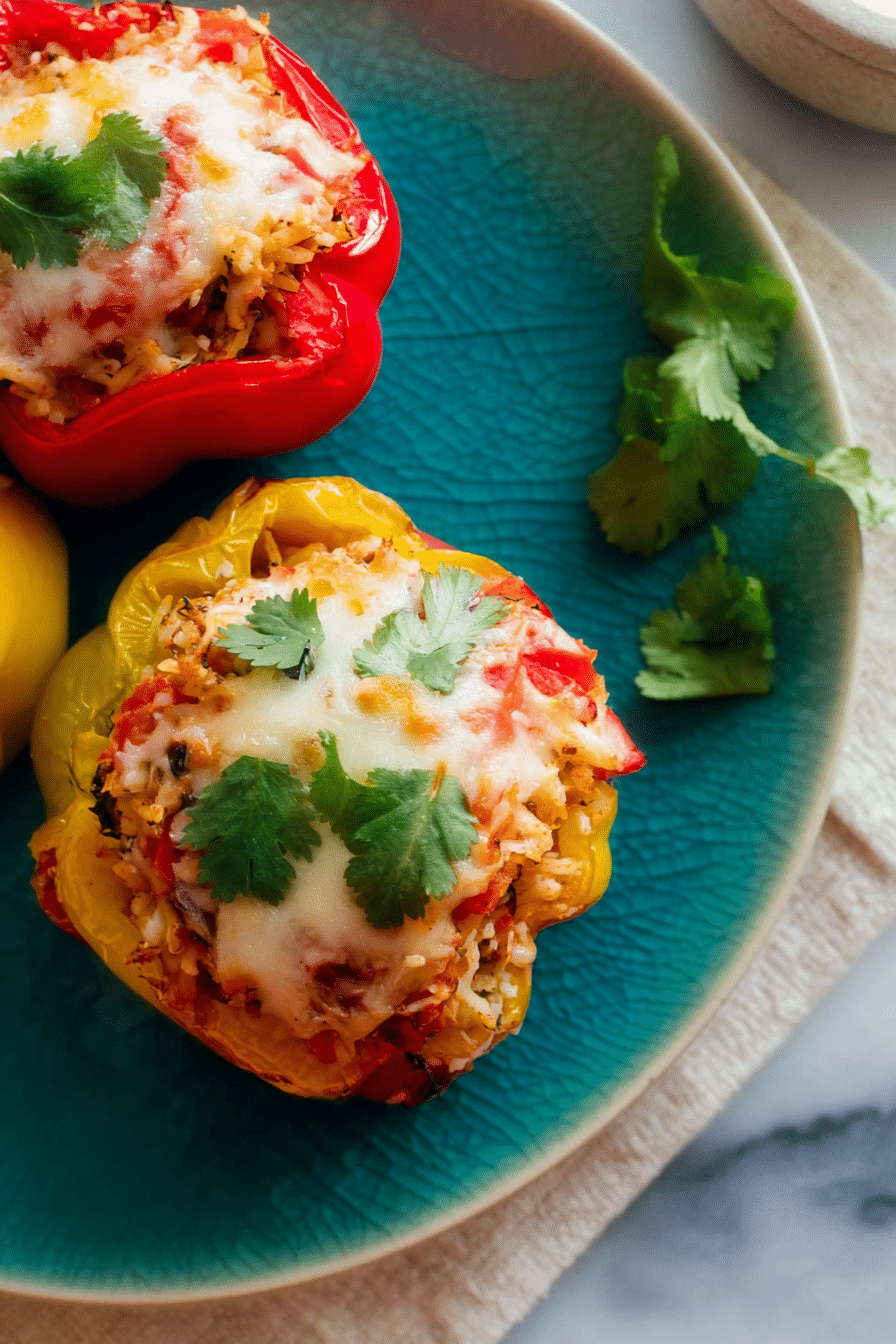
I love serving these when friends come over because they look like effort but are really straightforward to put together. The peppers roast until the edges blister and caramelize slightly; that caramelized edge against a soft, spoonable filling is my favorite mouthfeel here. The filling is moist but not soggy, with a little chew from the whole-grain rice and creaminess from the beans. Read on for an experienced cook’s tips, exact timings, and a few variations I rely on.
Ingredients for the Perfect Stuffed Peppers
- Bell peppers – the vessel: choose large, firm peppers so they hold the filling and roast evenly; red, orange or yellow give the prettiest plates.
- Brown rice (or cooked grains) – provides chew and bulk; you can swap quinoa or farro for texture and nutrition changes.
- Pinto beans – add creaminess and plant protein; black beans or chickpeas also work well.
- Onion – builds savory depth; a quick sauté mellows it and sweetens the filling.
- Cherry tomatoes – bursty juiciness and acidity to balance the beans and grains.
- Garlic – aromatic backbone; press or mince and add near the end of the sauté so it stays fragrant.
- Chili powder and cumin – warm, earthy spices that give the filling a gentle smoky note without heat.
- Fresh cilantro – added at the end for brightness; parsley is a milder substitute.
- Olive oil – for roasting and sautéing; a drizzle helps the peppers blister and the onions caramelize.
- Lime juice – a splash at the end wakes up the whole filling; lemon works in a pinch.
- Cheese (optional) – grated mozzarella or cheddar melts on top for comfort; omit or use a vegan cheese for a dairy-free version.
- Salt & pepper – small amounts make big differences: salt brightens flavors and pepper adds warmth.
Below I also include the exact, tested ingredient amounts in case you want to follow the recipe precisely.
- 4 large red bell peppers, halved from stem to base, seeds and membranes removed
- 1 tablespoon extra virgin olive oil, as needed (for the peppers)
- Fine salt and freshly ground black pepper, for sprinkling
- ½ cup long-grain brown rice (or 1 ½ cups cooked rice)
- 2 tablespoons extra virgin olive oil (for the filling)
- 1 large yellow onion, chopped
- ½ teaspoon fine salt (for the filling)
- 1 pint (2 cups) cherry tomatoes, halved or quartered if large
- ½ cup chopped fresh cilantro, plus more for garnish
- 4 cloves garlic, pressed or minced
- 1 ½ teaspoons chili powder
- 1 teaspoon ground cumin
- 1 can (1 ½ cups) pinto beans, rinsed and drained
- Freshly ground black pepper, to taste
- 1 tablespoon lime juice
- 4 ounces (about 1 cup) grated part-skim mozzarella or cheddar (optional)
- Optional garnishes: sliced ripe avocado, salsa, sour cream or vegan sour cream
Step-by-Step Cooking Instructions
I like to break this into three clear stages: roast the peppers, cook the rice (or prepare your grain), and make the filling. Doing the steps in that order prevents soggy peppers and ensures even cooking.
- Roast the peppers: Preheat the oven to 425°F (220°C). Arrange the halved peppers cut-side up in a large 9×13-inch baking dish or on a rimmed sheet; drizzle with a little olive oil and sprinkle with salt and pepper. Rub the oil over both sides so the skins blister evenly. Roast for 20–25 minutes until the edges are blistered and a fork slides in easily. I watch closely around 18–22 minutes — depending on your oven, they can go from perfectly blistered to too-soft quickly.
- Cook the rice: Bring a large pot of water to a boil. Rinse ½ cup long-grain brown rice in a fine-mesh strainer until the water runs clear (this removes excess starch and prevents gummy rice). Add the rice to the boiling water and simmer uncovered for about 30 minutes, reducing the heat if it threatens to boil over. Drain thoroughly and return the rice to the pot to let any remaining steam escape. If you prefer, use 1½ cups cooked rice — leftover rice works great. If using another grain, follow its package timing; quinoa cooks faster and shouldn’t be overcooked or it turns mushy.
- Make the filling: Warm 2 tablespoons olive oil in a large skillet over medium heat until shimmering. Add the chopped onion and ½ teaspoon salt and cook, stirring often, until the onion is tender and starting to brown, about 5 minutes. Add the cherry tomatoes and cook another 5 minutes until they’re soft and just beginning to break down. Stir in the cilantro, garlic, chili powder and cumin and cook while stirring until the garlic is fragrant — only 30–60 seconds.
- Remove the skillet from the heat and stir in the cooked rice, drained pinto beans, lime juice and several good twists of freshly ground black pepper. Taste and adjust salt and pepper — I usually add another ¼ teaspoon salt at this point. The filling should taste lively; if it’s flat, try a little more salt or a squeeze more lime rather than sugar.
- Stuff the peppers: Pour off any excess liquid pooled in the roasted peppers, then spoon the rice mixture into each pepper generously. If your peppers are very large, you’ll get the right fit; if you end up with extra filling, serve it on the side — it’s great with tortilla chips.
- Bake to finish: Top each stuffed pepper with grated cheese if using. Return to the 425°F oven for 12–13 minutes until the cheese is melted and golden in spots and the filling is heated through. Let the peppers sit for a few minutes before serving so the filling firms up slightly.
If using rice as a base, our cilantro lime rice guide has tips for perfectly cooked, flavorful grains.
Nutritional Benefits of Stuffed Peppers
These stuffed peppers pack a lot of nutrition into a single serving. Here’s what I notice when I plate them:
- Fiber: The combination of brown rice and pinto beans gives a solid dose of fiber, which helps you feel full longer and supports digestion.
- Plant protein: Beans plus whole grains make a complementary protein profile. You’ll get a filling, protein-rich vegetarian meal without meat.
- Vitamins and antioxidants: Bell peppers are high in vitamin C and carotenoids, while tomatoes bring lycopene. The fresh cilantro offers small amounts of vitamins and a bright lift.
- Lower-calorie options: Skip the cheese and use more veggies or a splash more lime to keep calories down while preserving flavor.
Nutrition per serving (approximate, based on the original recipe): around 430 calories with 18.4 g fat, 52.3 g carbs, and 16.5 g protein—useful if you’re tracking macros but remember that variations (like swapping grains or adding avocado) will change these numbers.
Variations: Exploring Quinoa and Farro Options
Changing the grain changes the whole personality of this dish. I’ve tested several swaps and here’s what I learned:
- Quinoa – cooks faster and gives a lighter, fluffier texture. It adds a touch more protein and a slightly nutty flavor that pairs beautifully with cilantro and lime.
- Farro – chewy and nutty, farro holds up well and gives more bite. It’s hearty and feels autumnal, especially with roasted root vegetables mixed into the filling.
- Barley or lentils – barley is similarly chewy; lentils add extra protein and a dense texture that’s very satisfying in colder months.
Try these global flavor riffs I make depending on what’s in my pantry:
- Mediterranean: Swap in farro, add kalamata olives, sun-dried tomatoes and crumbled feta. Finish with a drizzle of olive oil and lemon. For a creamy alternative, try our cream cheese stuffed peppers variation that’s great for appetizers or a richer main.
- Asian-inspired: Use quinoa, add shredded cabbage, scallions, a splash of soy sauce and sesame oil, and finish with toasted sesame seeds and cilantro.
- Indian-spiced: Mix in curry powder, turmeric and peas; use basmati or a small amount of farro for texture. Top with a cooling dollop of plain yogurt or a vegan raita.
For a festive twist, see our Halloween stuffed peppers recipe for spooky presentation ideas and stuffing tips.
Meal Prep and Freezer-Friendly Suggestions
These peppers are one of my favorite make-ahead dinners. Here’s how I save time without losing flavor:
- Prep ahead: Roast peppers and make the filling up to a day in advance. Keep the filling and peppers stored separately in airtight containers in the fridge. Assemble and bake the day you plan to serve for best texture.
- Freezing: You can freeze either unbaked or baked stuffed peppers. I usually freeze baked peppers: let them cool, wrap tightly in foil or plastic wrap, and freeze for up to 2–3 months. When reheating, thaw overnight in the fridge for best results, then warm covered in a 350°F (175°C) oven for 20–30 minutes until hot. If freezing unbaked, add 10–20 minutes to the bake time when cooking from frozen.
- Reheating single portions: Microwave covered for 1–2 minutes, or reheat at 350°F (175°C) for 10–15 minutes. Covering prevents the peppers from drying out.
Common Mistakes and Tips for Success
Over the years I’ve made a few mistakes so you don’t have to. Here are the pitfalls I watch for and how I fix them:
- Soggy peppers: This usually happens when peppers are under-roasted or the filling is too wet. Roast peppers until they’re slightly blistered, and drain any pooled liquid from the pepper cavity before stuffing.
- Flat-tasting filling: If the filling tastes muted, don’t add sugar — add salt or acid. A squeeze of lime brightens the whole mixture. Taste and adjust before stuffing.
- Gummy rice: Overcooked or improperly rinsed rice can get gluey. Rinse rice until the water runs clear, and drain well after cooking.
- Overstuffing: It’s tempting to pile the filling high, but overstuffing can make the peppers tip or release too much liquid. Leave a little headspace so toppings brown evenly.
- Spice balance: If you like heat, add chopped jalapeño or cayenne; if you prefer mild, reduce chili powder. Small changes to spices have big effects — add gradually and taste.
Conclusion: Serving Ideas and Garnishes
These peppers are lovely on their own, but a few finishing touches take them to the next level. I often top them with a handful of fresh cilantro, sliced avocado for creaminess, and a squeeze of lime. A spoonful of salsa or a dollop of sour cream (or vegan sour cream) adds contrast. For Mediterranean versions, a drizzle of olive oil and a scattering of crumbled feta finishes them beautifully. Brighten Mediterranean-style stuffed peppers with a dollop of our healthy tzatziki sauce for a fresh, tangy finish.
These yield 8 stuffed peppers — enough for 4 main-dish servings or 8 lighter side portions. Leftovers keep well in the fridge, covered, for up to 4 days and often taste even better the next day as the flavors meld.
FAQ
- Can I make these vegetarian stuffed peppers vegan?
Yes — simply omit the cheese or use a vegan shredded cheese. The filling is plant-based, so the swap is easy. - Can I freeze stuffed peppers and how do I reheat them?
Yes. You can freeze baked or unbaked peppers. For best results, cool baked peppers, wrap tightly and freeze up to 2–3 months. Reheat covered in a 350°F (175°C) oven until hot (about 20–30 minutes), or thaw overnight and reheat. If frozen unbaked, add 10–20 minutes to the bake time. - What are good substitutes for rice in the filling?
Quinoa, farro, barley, or cooked lentils work well. Quinoa adds extra protein and cooks faster; farro gives a chewy, nutty texture. - How do I prevent soggy peppers and ensure they cook evenly?
Roast the peppers first (as the recipe directs) to remove excess moisture, don’t overstuff them, and drain any pooled liquid before adding filling. Use large, firm peppers for even cooking. - What’s the best way to reheat single servings?
For one portion, microwave on medium-high for 1–2 minutes until hot, or reheat in a small oven-safe dish at 350°F (175°C) for 10–15 minutes. Cover to keep them moist.
If you make these, I’d love to hear what variation you tried — quinoa, farro, Mediterranean, or a spicy Mexican twist. I’ve kept a running list of my favorite combos over the years and this base is one I come back to again and again for weeknight dinners, potlucks, and chilled lunches from the fridge.
Vegetarian Stuffed Peppers
Ingredients
Method
- Preheat the oven to 425°F, rub olive oil on halved peppers, season, and bake for 20-25 minutes.1 tbsp extra virgin olive oil, fine salt and black pepper, 1/2 cup long-grain brown rice
- Boil water, rinse rice, cook for 30 minutes, then drain.2 tbsp extra virgin olive oil
- In a skillet, heat olive oil, sauté onion, add tomatoes, then mix in cilantro, garlic, and spices.1 large yellow onion, 1/2 tsp fine salt, 1 pint cherry tomatoes, 1/2 cup fresh cilantro, 4 cloves garlic, 1.5 tsp chili powder, 1 tsp ground cumin
- Mix cooked rice, pinto beans, lime juice, and seasonings into the skillet.1 can pinto beans, black pepper, 1 tbsp lime juice, 4 oz part-skim mozzarella or cheddar
- Fill the peppers with the rice mixture, sprinkle cheese on top, and bake for 12-13 minutes.1 tbsp extra virgin olive oil, optional garnishes