

I cook this ahi tuna poke when weeknights get busy and I still want a fresh, healthy meal on the table fast. I’ve tested short marination times, different rice bases, and a handful of toppings so you can get dinner done in about thirty minutes without fuss. The bright tuna, crunchy veg, and warm rice look restaurant-ready, but everything here is genuinely simple to pull together in a real home kitchen.
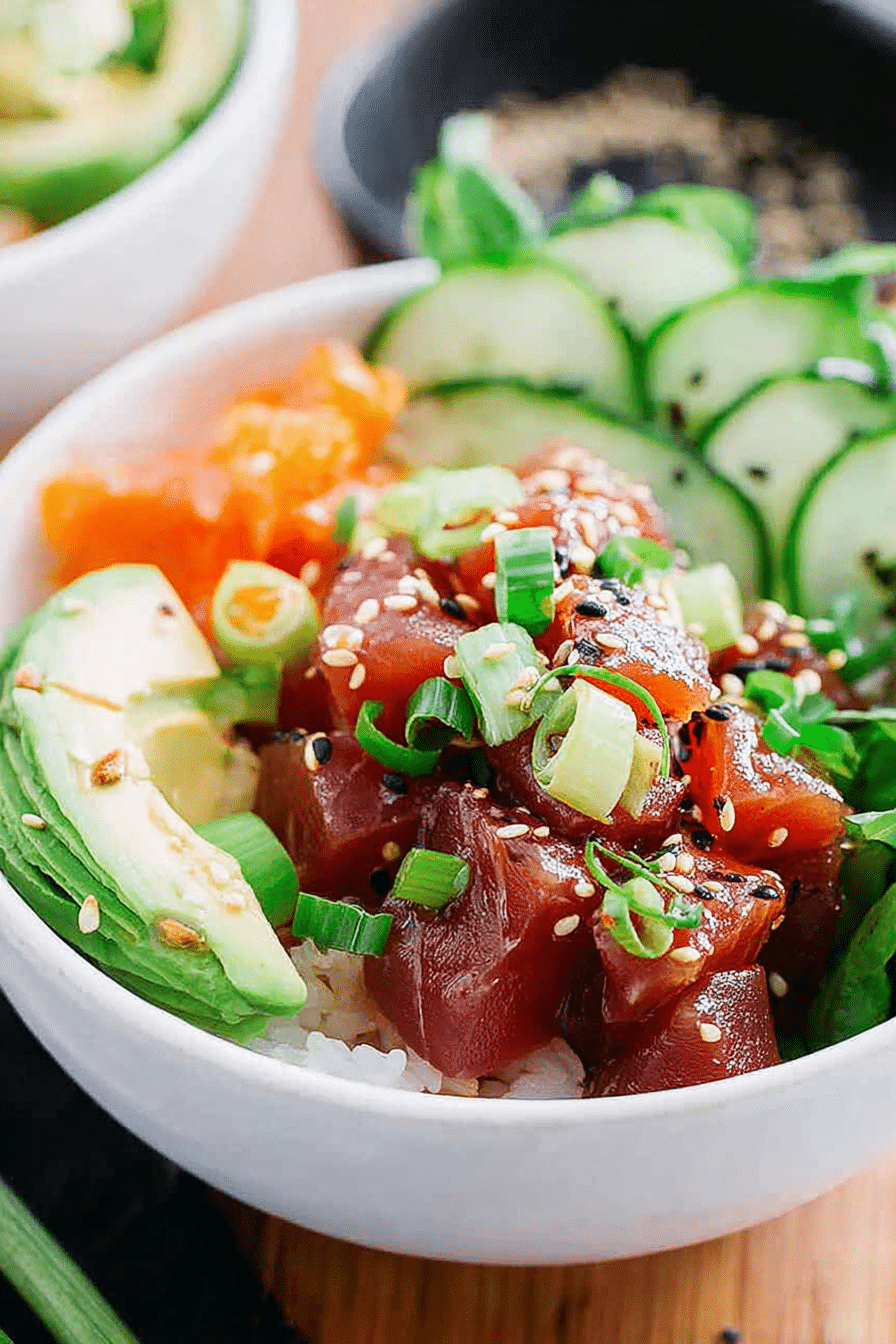
I like this bowl because it balances protein, healthy fats, and whole grains — it’s filling without feeling heavy. The colors help too: ruby-red tuna, bright green scallions, creamy avocado if you add it, and a base of nutty brown rice make it feel like a full meal at a glance. That visual signal matters when you’re serving kids or a partner who wants something satisfying but fast.
In my kitchen I keep a short pantry list for this recipe so it’s easy to mix and match toppings depending on what I have. Below I walk through picking the best tuna, making a quick-but-flavorful marinade, and simple swaps for low-carb or plant-based versions so you can tailor the bowl for your family in minutes.
Why This Ahi Tuna Poke Is Perfect for Busy Weeknights
This poke bowl is designed for speed and balance. It uses quick-cooking or pre-cooked rice, a short marination that adds flavor without softening the fish, and raw vegetables that need only a quick chop. The whole recipe can be prepped in parallel — rice on the stove while you chop vegetables and mix the marinade — which saves time when you’re juggling work, homework, or evening errands.
Sensory notes: expect a salty, slightly tangy aroma from the marinade, the cool firmness of tuna cubes, and the contrast of warm rice with crisp vegetables. That combination of textures and temperatures makes the meal feel complete without extra work.
Everything You Need for Ahi Tuna Poke
Gathering ingredients and tools first makes this a fast weeknight option. Use the freshest ingredients you can find and a sharp knife to make clean cuts — it changes both texture and appearance.
- Kitchen tools – Chopping board, a very sharp chef’s knife, a medium bowl for marinating, and bowls for serving.
- Prep order – Start the rice first, then chop vegetables and mix the marinade while the rice cooks. Marinate the tuna last so it stays chilled.
Ingredient notes (what they do):
- * Ahi tuna – The star ingredient; choose firm, bright tuna with a clean ocean smell. Substitute with other sashimi-grade fish or marinated tofu for a vegetarian option.
- * Soy sauce – Provides the salty, savory base of the marinade; tamari works for gluten-free.
- * Rice vinegar – Adds brightness and helps the marinade lightly cure the surface of the fish.
- * Sesame oil – Gives a toasty, nutty aroma that complements the tuna; a little goes a long way.
- * Red pepper flakes – Adds gentle heat; swap for a mild chili paste for more flavor without the flakes.
- * Green onions – Freshness and crunch; white and green parts add different textures.
- * Sesame seeds – Finishing texture and a subtle nutty note; use toasted for more aroma.
- * Brown or white rice – A neutral warm base that soaks up the marinade; cauliflower rice or zucchini noodles make low-carb swaps.
- * Salad greens and vegetables – Add crunch and color; cucumber, edamame, carrots, and avocado are great options.
How to Choose Fresh Tuna (and What ‘Sushi-Grade’ Really Means)
“Sushi-grade” isn’t a regulated label; it’s a market term indicating the fish is safe to eat raw because of how it was handled and frozen. In practice I look for these signs when buying tuna: a clean, briny smell (not fishy), a deep red color without brown edges, and a firm texture that springs back when pressed. Buy from a trusted fishmonger or seafood counter and ask when the fish arrived — freshness matters more than marketing terms.
When you shop, inspect the tuna visually and by scent. If the fish has any off-odors or feels slimy, pass on it. If the fishmonger can tell you the harvest or arrival date, that’s a good indicator of quality.
Learn more about how to choose fresh tuna for your poke to ensure the best quality.
Quick Marinade Tips to Boost Umami Without Extra Prep Time
A short marinade gives plenty of flavor without changing the tuna’s firm texture. Keep the ratios simple so you don’t overthink it, and always mix the sauce before adding the fish so everything coats evenly the moment the tuna hits the bowl.
- Mix the savory base, acid, and oil first so the flavors marry quickly when the tuna is added.
- Use a small amount of acid to lift flavors — it brightens without cooking the fish.
- Add aromatics (green onions, sesame seeds, a pinch of red pepper) last so they stay fresh and crunchy.
- Marinate briefly — just long enough for surface flavor to develop but not so long the tuna softens.
Check out these quick marinade tips to elevate your ahi tuna poke flavor.
The Secret to Perfect Tuna Texture — Cut, Chill, and Time
The texture comes down to three things: uniform cuts, cold fish, and a short, precise marinade. Cut the tuna into even cubes so every piece gets the same contact with the sauce. Keep the tuna chilled until the moment you mix it with the marinade — cold helps it stay firm. And time the marinade: too short and it tastes underseasoned; too long and it becomes mushy.
Sensory focus: you want each cube to feel cool and springy in the mouth, not limp. The surface should be flavored while the interior stays fresh and clean-tasting.
How to Make Ahi Tuna Poke (Step-by-Step)
- Start the rice so it finishes while you prep the rest of the bowl.
- Chop vegetables and any toppings you plan to use; keep textures varied (one crunchy, one creamy).
- Slice tuna into uniform cubes and keep them chilled on a tray or plate with a layer of ice beneath if your kitchen is warm.
- Whisk the marinade ingredients together in a medium bowl, then add the tuna and toss gently to coat.
- Let the tuna sit in the marinade briefly while you portion rice and greens into serving bowls.
- Spoon the marinated tuna over the rice, add toppings, finish with sesame seeds and scallions, and serve immediately.
Pro Tip for Ahi Tuna Poke: Keep Tuna Cold and Marinate Briefly
- Keep the tuna on ice or in the coldest part of your fridge right up to marinating to preserve texture.
- Marinate only for a short time so the tuna stays firm — think minutes, not hours.
- Handle fish with clean hands and utensils; wipe surfaces and chill plates if serving later.
- If you’re prepping ahead, keep rice and marinated tuna separate and combine just before serving.
How to Store, Make-Ahead, and Serve Your Poke Bowls
For the best texture, store components separately. Keep marinated tuna refrigerated and use within the same day; cooked rice keeps best stored airtight and can be gently reheated. Portion ingredients into containers for quick assembly during the week so serving feels effortless.
- Store marinated tuna covered in the refrigerator and use within a few hours for safety and texture.
- Keep rice in a sealed container; if reheating, add a splash of water and cover to prevent drying out.
- Pack toppings separately (greens, avocado, crunchy vegetables) and assemble just before eating to preserve color and texture.
Find out how to store and serve poke bowls for best results and enjoy later.
Easy Variations: Low‑Carb, Vegan Swaps, and Kid-Friendly Options
Make this poke bowl work for different diets with minimal extra effort. Swap the base and proteins to suit preferences while keeping the same quick-marination approach.
- Low‑carb option: replace rice with cauliflower rice or lightly sautéed zucchini ribbons for a lighter base.
- Vegan/vegetarian swap: use firm tofu or tempeh pressed and marinated in the same sauce; add toasted nori for a briny hit.
- Kid-friendly tweaks: dial back the heat, add familiar veggies like cucumber and carrots, and serve with mild soy or a little mayo-based sauce on the side.
Explore easy variations to customize your poke bowls to suit different diets.
Troubleshooting
- If the tuna tastes too salty, rinse briefly and pat dry before re-marinating with a lighter sauce.
- If the fish becomes soft or mushy, shorten marination time and keep it colder next time.
- If rice is dry, reheat covered with a splash of water to restore moisture.
- If the bowl feels one-note, add a crunchy element (toasted seeds, sliced radish) and a bright acid (lime or rice vinegar).
Cultural Background and History of Poke
Poke started in Hawaii as a simple fisherman’s snack: seasoned, cubed fish mixed with salt, seaweed, and local ingredients. Over time it absorbed influences from Japanese and other Pacific Rim cuisines, which introduced soy sauce, sesame, and green onions. Today’s poke bowls are a modern take on that tradition — they keep the core idea of fresh, seasoned fish but add bases and toppings that reflect both local and global tastes.
When you make poke at home you’re following a practice that celebrates fresh fish and simple seasoning. I like to honor that by keeping marinades short and ingredients clean so the tuna remains the centerpiece.
Frequently Asked Questions
Is ahi poke eaten raw?
Yes, ahi poke is traditionally made with raw sushi-grade tuna, which provides a fresh and flavorful experience. Always ensure you purchase sashimi-grade tuna for safety.
What can I serve with my ahi tuna poke?
You can serve your ahi tuna poke with a base of brown or white rice, salad greens, and various toppings like avocado, seaweed, or additional vegetables for a complete meal.
How should I store leftover poke?
Store any leftover poke covered in the refrigerator for up to 2 hours. It’s best enjoyed fresh, but you can keep the marinated tuna and rice separate if you plan to eat it later.
Can I make ahi tuna poke ahead of time?
Yes, you can prepare the marinade and cut the tuna beforehand. Just combine everything right before serving to maintain the best texture and flavor.
What are some easy variations for this poke recipe?
You can customize your poke bowl by adding low-carb options like zucchini noodles, vegan swaps using tofu or tempeh, and kid-friendly toppings like cucumber and carrots.
Best Ahi Tuna Poke
Ingredients
Method
- Wash the rice under running water and cook it according to the manufacturer's instructions.
- In a medium-sized bowl, combine ahi tuna, soy sauce, rice vinegar, sesame oil, crushed red pepper flakes, green onions, and sesame seeds.
- Add the cooked rice, salad, tuna, and desired toppings to each bowl. Serve immediately or refrigerate covered for up to 2 hours before serving.