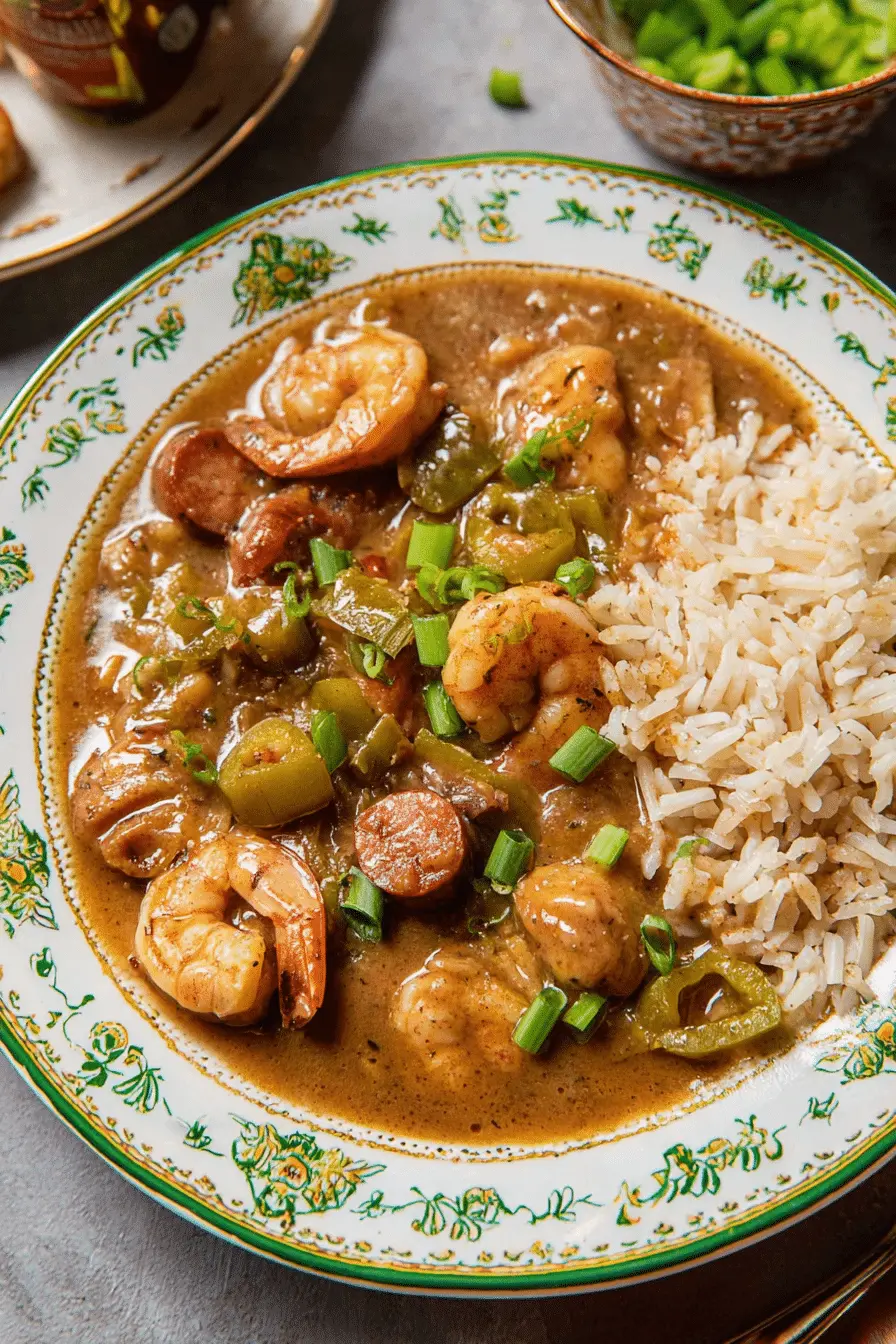
The Authentic Cajun Gumbo I Make for Family Gatherings
- Prep
- 15 min
- Cook
- 90 min
- Total
- 105 min
- Serves
- 10
- Calories
- 400 kcal
Introduction
I grew up watching a pot of gumbo bubble on my grandmother's stove, the house filling with a nutty, toasty smell that meant company was coming. Making gumbo the way I do now comes from those long afternoons stirring a roux until it turned the color of dark chocolate, and from learning how a few humble ingredients—onion, bell pepper, celery, and a good sausage—can hold a room together. I still think of gumbo as food for people who belong to one another: it’s about hands on the pot, stories passed across the table, and the comfort that comes from a bowl shared warm.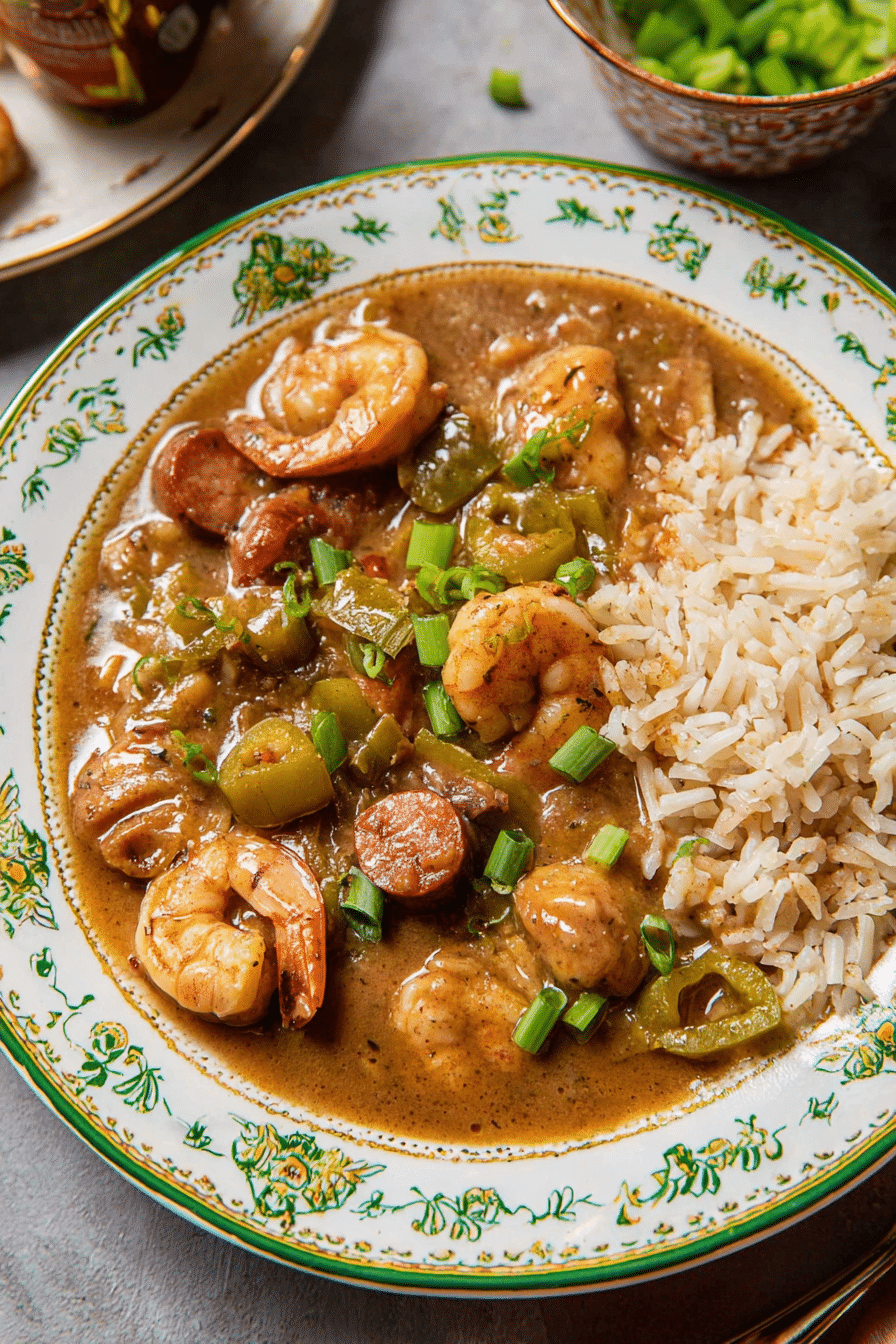
Everything You Need for Authentic Cajun Gumbo
- * Boneless chicken thighs – Tender, forgiving under heat; they add body and a rich mouthfeel. Use dark meat for depth.
- * Andouille sausage – Smoky, spicy, and fatty; it’s a traditional anchor. If you can’t find andouille, use smoked kielbasa as a backup.
- * Fresh seafood (shrimp & lump crab) – Adds sweetness and briny contrast; add shrimp near the end so they stay tender.
- * Onion, green bell pepper, celery (the trinity) – This is the aromatic base; don’t skimp on quality or color.
- * Garlic – Brightens the stew; add toward the end of sautéeing the trinity to avoid bitter burned garlic.
- * All-purpose flour and neutral oil – The roux’s backbone; use oil with a high smoke point for control over color.
- * Okra – Gives body and a characteristic vegetal flavor; frozen okra is fine if fresh isn’t available.
- * Gumbo filé (ground sassafras) – A finishing thickener and flavor note; add at the very end off the heat for best aroma.
- * Low-sodium chicken stock – Keeps the liquid controlled so you can season confidently as it reduces.
- * Creole/Cajun seasoning, bay leaves, white pepper – They shape the dish’s heat and warmth; taste and adjust at the end.
- * Rice and fresh herbs (scallion or parsley) – Rice is the classic bed for gumbo; herbs add a final lift at the table.
For specialty items like andouille or filé, look at local butchers, Louisiana specialty shops, or reputable online purveyors. If you need a vegetarian swap, use hearty mushrooms and a smoky plant-based sausage, and replace chicken stock with vegetable stock—this keeps the dish soulful without misplacing its identity.
The Roux: Timing, Color & How to Know It's Perfect
- Start with even heat in a heavy-bottomed pot so the flour colors uniformly; thin pots burn easily. You’re aiming for a chocolate-brown color—think the hue of melted dark chocolate, not black.
- As the roux cooks it will go from sandy to tan to peanut-butter to a deep brown. Smell is your best gauge: when you get a warm, nutty aroma (not acrid or burnt), you’re at the right place.
- Adjusting fat matters: butter darkens and tastes different than neutral oil. Oil lets you push the color further without the milk solids burning, which is why many traditional Cajun cooks prefer oil-based roux for darker shades.
- Stir constantly but patiently—this isn’t frantic whisking. Use a wooden spoon to scrape the bottom gently; when you see glossy ribbons moving through the roux, you’re maintaining good texture.
- If the roux smokes heavily or smells burnt, it’s beyond rescue—start again. If it only shows early signs of sticking, lower the heat and stir more; I’ve rescued roux a few times by turning down the burner and shifting to a cooler ring.
Layering Flavor: Trinity, Seasoning, and Protein Choices
- The trinity (onion, bell pepper, celery) is your color and aromatic backbone. Sauté these until softened and slightly caramelized so they contribute sweetness and savory depth rather than raw bite.
- Season proteins early but gently. I salt browned chicken and sausage when they hit the pan so that their fond adds to the roux and stock later; you’ll want to taste and adjust as the gumbo reduces because flavors concentrate.
- Choose proteins for contrast: smoked andouille gives fat and spice, chicken brings richness, and seafood brings sweetness and brine—use a combination for balance. If you prefer a bolder meat angle, consider serving a side of Cajun garlic butter steak bites with the gumbo for a steak-and-gumbo table.
- Layering is sequential: brown meats, sauté the trinity in the same pot to pick up fond, build your roux, then return browned proteins and add stock. Each step should add a note—smoky, sweet, nutty, or briny.
Okra vs Filé: Traditional Thickeners and When to Use Each
- Okra thickens and contributes a fresh, green taste. When simmered, it releases a gentle viscosity that rounds the broth without masking other flavors; it’s traditional in many Cajun homes and can be added mid-cook.
- Filé powder is a finishing thickener with an earthy, slightly minty note. Add it off the heat a few minutes before serving to avoid gummy textures; it also brings an aromatic lift you won’t get from okra alone.
- Use both if you like complexity: okra for body during the simmer, filé at the table to finish. Cultural preference varies—some families always use filé at the end; others prefer the vegetal presence of okra.
- If you prefer a clearer broth, skip okra and rely on a darker roux plus a light pinch of filé at the end for thickness and flavor.
How to Make Authentic Cajun Gumbo (Step-by-Step)
- Brown the chicken pieces in a heavy pot with a small amount of oil until they have a caramelized surface; season lightly. Remove and reserve the pieces so they don’t overcook later.
- Sear the andouille in the same pot to render fat and pick up browned bits; remove and set aside with the chicken so those browned flavors can be returned later.
- Sauté the trinity (onion, bell pepper, celery) in the rendered fat until softened and beginning to color; add garlic at the end until fragrant. Remove and wipe the pot clean of any charred bits.
- Build the roux in the clean pot by adding oil and then the flour slowly, stirring constantly. Maintain medium-low heat and stir until the roux reaches a chocolate-brown color and gives a warm, nutty aroma.
- Return the browned chicken and sausage plus the trinity to the roux. Add spices and bay leaves, then deglaze with stock slowly while stirring to combine everything into a smooth stew base.
- Bring to a gentle simmer, cover, and let the flavors marry so the chicken becomes tender and the broth deepens; skim if necessary to remove excess fat.
- Add lump crab meat to warm through without over-stirring, then later add okra and raw shrimp; simmer only until shrimp turn pink and opaque so they stay tender.
- Finish with a few dashes of hot sauce to taste and sprinkle filé at the very end off the heat. Serve over hot cooked white rice and garnish with sliced scallions or parsley.
Pro Tip for authentic cajun gumbo: Make a Chocolate-Brown Roux Without Burning
- I use a heavy, thick-bottomed Dutch oven so heat distributes slowly—this alone reduces the chances of burning when you chase a deep color.
- Keep the heat steady and moderate. If the roux starts to smell acrid or smoke heavily, lower the heat immediately. That moment is when many cooks panic and speed up stirring; slower, patient stirring is the real rescue.
- Use a long-handled wooden spoon and keep a bowl of water nearby. If the roux sticks slightly, a tiny splash of water can loosen the bits without ruining the color—do this sparingly.
- If the roux does burn, don’t try to salvage it by adding more flour; toss it and start over. The slightest burnt taste will carry through the whole gumbo.
Troubleshooting
- I’ve had roux darken unevenly when the pot was too thin — switch to a heavier pot and stir more slowly to correct it mid-process.
- If the gumbo tastes flat after simmering, I check for seasoning balance: a pinch more salt, a dash of acid (a little vinegar or lemon to brighten), or a few dashes of hot sauce can wake it up.
- If shrimp overcook when reheating leftovers, I remove them before storing and add fresh shrimp during reheating to keep texture bright.
- If the gumbo becomes too thick after refrigeration, I thin it with warm stock or water and gently rewarm to preserve the flavors.
How to Store, Reheat, and Make-Ahead Authentic Cajun Gumbo
- Cool the gumbo quickly and refrigerate in airtight containers for up to three to four days. For longer storage, freeze in meal-sized portions and thaw gently overnight in the fridge before reheating.
- When reheating, do it slowly on the stovetop over medium-low heat and add a splash of warm stock if the gumbo has thickened. This keeps the texture balanced without overcooking delicate seafood.
- To retain the best shrimp texture, remove shrimp before refrigerating and add fresh or gently warmed shrimp when you reheat the pot to serve.
- Make-ahead strategy: Prepare the roux, browned proteins, and trinity a day ahead; assemble and simmer the day you plan to serve so flavors are keyed but seafood stays fresh. For a small party, pair the gumbo with classic deviled eggs as a starter—classic deviled eggs complement the meal nicely.
Dietary Variations and Swaps
- Gluten-free roux: Use a 1:1 gluten-free flour blend and a neutral oil; cook the roux slowly and give it extra time to develop color because some GF flours brown differently.
- Vegetarian/vegan option: Brown a smoky, plant-based sausage and use mushrooms for meaty texture; swap chicken stock for a rich vegetable stock and finish with filé or okra for body. Pair with a hearty side like vegetarian stuffed peppers for a full plant-forward meal.
- Dairy-free and low-sodium adjustments: Use low-sodium stock and keep butter out of the roux; oil-based roux is naturally dairy-free and holds flavor well.
- Alternative proteins: If you need a quick swap for protein, roasted or grilled chicken with a different seasoning profile can work—try a simple glazed chicken like easy honey mustard chicken on the side for a different meal plan.
Frequently Asked Questions
What is in an authentic gumbo?
An authentic gumbo includes a dark roux base, the trinity of onions, celery, and bell peppers, proteins like chicken and andouille sausage, seafood such as crab and shrimp, and seasonings including Creole Cajun seasoning and gumbo filé.
How do I know when my roux is perfect?
Your roux is perfect when it reaches a chocolate brown color and has a rich, nutty aroma. This process usually takes around thirty minutes, so be patient and stir continuously to prevent burning.
Can I use frozen okra in my gumbo?
Yes. Frozen okra is a convenient option and will thicken the gumbo and add flavor just like fresh okra.
What do I serve with Cajun gumbo?
Cajun gumbo is traditionally served over cooked white rice. Garnish with sliced scallions or chopped parsley for freshness.
How long can I store leftover gumbo?
Store leftover gumbo in the refrigerator for up to three to four days. Reheat gently on the stove or in the microwave, and add a splash of broth if it thickens too much.
Recipe Card
The Authentic Cajun Gumbo I Make for Family Gatherings
- Prep
- 15 min
- Cook
- 90 min
- Total
- 105 min
- Serves
- 10
- Calories
- 400 kcal
Ingredients
- 1 ¼ cupvegetable oil, divided
- 1 lbboneless/skinless chicken thighs, cut into pieces
- 3 teaspoonsCreole Cajun Seasoning – homemade or store-bought, divided, plus more to taste
- 12 ouncesandouille sausage, sliced into rounds
- 1 largeonion, chopped
- 2 largegreen bell peppers, chopped
- 3 stalkscelery, green part only, chopped
- 8 clovesgarlic, finely minced or pressed
- 1 cupall-purpose flour
- 1 teaspoonground white pepper
- 4 leavesbay leaves
- 64 ounceslow-sodium chicken broth or stock
- 16 ounceslump crab meat
- 2 cupschopped okra, fresh or frozen
- 1 lbraw large shrimp, peeled & deveined
- 3 teaspoonspure ground gumbo filé
- —Hot sauce (preferably Louisiana-style!)
- —cooked white rice
- —sliced scallions or chopped parsley
Instructions
- 1
In a large heavy-bottomed dutch oven or stockpot over medium heat, pour in ¼ cup of oil. Once the oil is hot and shimmering, gently swirl the pot around to evenly coat the bottom...
- 2
In the same pot over medium heat, add the onion, bell peppers, and celery. Sauté the mixture...
- 3
Pour in the remaining 1 cup of oil over medium-high heat. Once the oil is nice and hot...
- 4
Once the roux is nice and chocolatey-brown, add the browned chicken/sausage...
- 5
Now add the crab meat into the pot, stirring well to make sure that the crab and other ingredients are combined...
- 6
Ladle cajun gumbo into individual serving bowls. Carefully add a little helping of cooked rice right on top...
You might also like
Reviews
Be the first to review this.