

I have a handful of condiments I return to again and again in my kitchen, but pico de gallo is the one I reach for when I want something raw, bright, and unpretentious. I grew up watching family members chop tomatoes and onions on the back porch, and I learned quickly that a few simple choices — the right tomato, a firm hand with the knife, and a splash of lime — make this salsa sing. In my kitchen it’s the finishing note on tacos, the fresh contrast to grilled meats, and an easy way to stretch seasonal tomatoes into a celebratory moment.
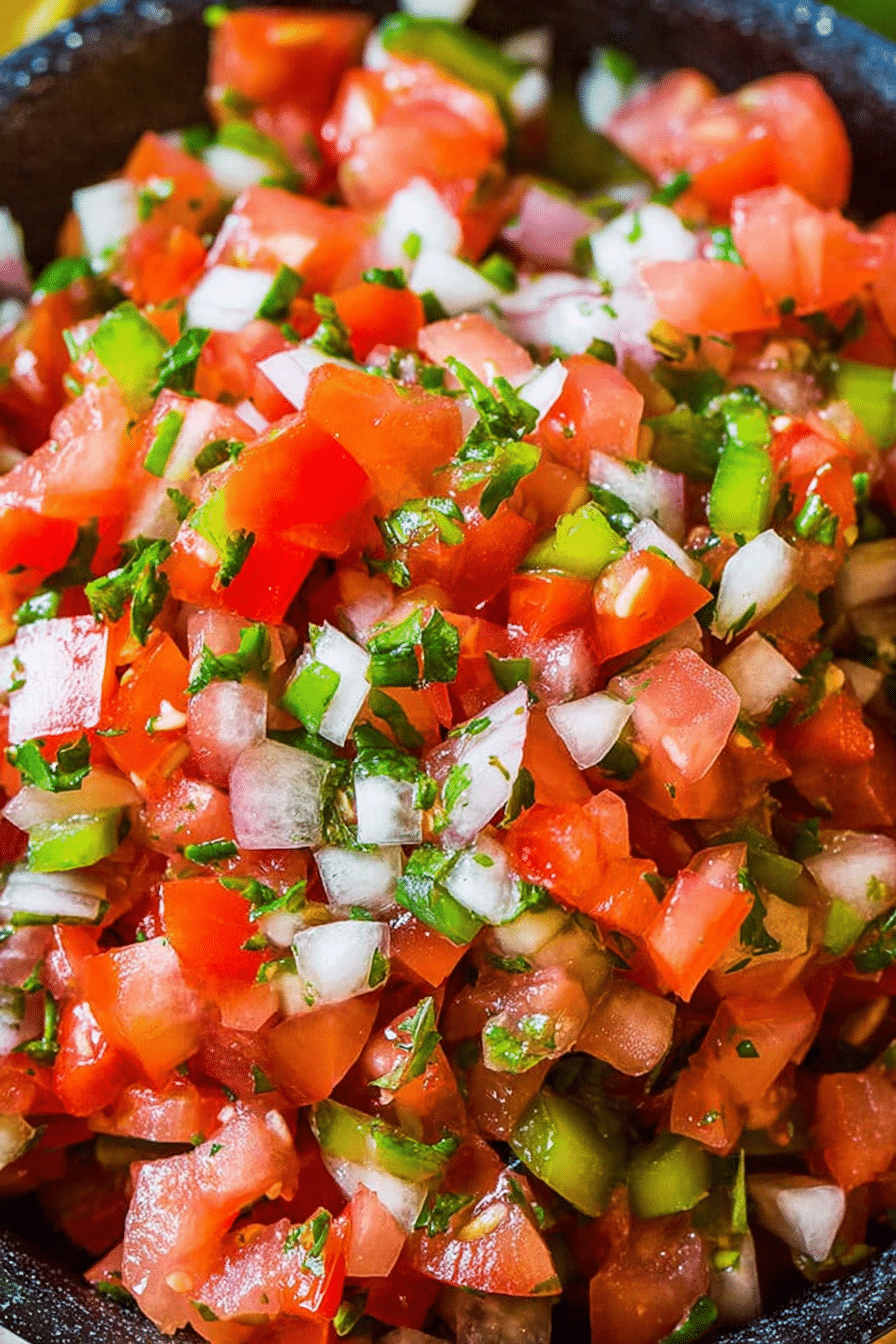
I like pico de gallo because it’s forgiving and immediate: you can taste and adjust as you go. I’ll admit I used to over-salt or let watery tomatoes turn the mixture soupy; after a few seasons of practice I learned to coax the best texture and brightness from each ingredient. The salsa should be lively — bright red tomatoes, white onion flecked with green cilantro, the faint heat of jalapeño — and it should still have bite and structure rather than becoming a bowl of juice.
For home cooks interested in traditional Mexican flavors, this is an ideal starter recipe. It requires only a sharp knife, a confident wrist, and fresh ingredients. I’ll walk you through how I select produce, how I handle seeds and juice for the perfect texture, and a few small technique notes that have made a big difference in my results.
Why This Authentic Pico de Gallo Is Perfect for Home Cooks
Pico de gallo is a regional staple across Mexico because it showcases fresh produce with minimal fuss — a reflection of seasonality and home cooking. It’s a condiment, a picnic item, and a quick salad all at once. For home cooks, it’s valuable because it requires no cooking, can be assembled in minutes, and adapts easily to what’s in season.
Think bright visuals: ruby tomato flesh, pale rice-like onion, glossy green cilantro leaves, and tiny flecks of pepper — the aroma is primarily citrus and herb, with a hint of onion sharpness. The crunch from the onion and the clean citrus finish are what make it such a versatile topper for tacos, grilled fish, or simply a bowl of chips.
Practicality matters: the technique is simple enough for beginners but has room for nuance. Managing tomato moisture, chopping uniformly, and tasting for salt and acidity are small steps that reward you with authentic flavor. This is the kind of recipe you’ll make repeatedly and refine over time.
Everything You Need for Authentic Pico de Gallo
Gather fresh, ripe ingredients and a sharp knife — everything else is seasoning and personality. When possible, buy your produce from a reliable source so the flavors are at their peak.
- Roma or firm salad tomatoes – Use meaty, ripe tomatoes for concentrated flavor and less excess juice.
- White or red onion – Provides sharp crunch and should be rinsed briefly if you prefer a milder bite.
- Fresh cilantro – Bright herbal lift; stems are usable when finely chopped, but avoid limp, yellowed leaves.
- Fresh lime – Acid brightens everything; use fresh juice, not bottled.
- Fresh jalapeño or serrano – Adds heat and brightness; remove seeds for milder salsa.
- Salt & black pepper – Salt enhances and balances; black pepper adds a subtle background warmth.
If you want an accompaniment with similar fresh tomato notes, try serving this with a simple tomato garlic salad for contrast and extra texture:
For an excellent accompaniment to your pico de gallo, try making our fresh tomato garlic salad.
The Secret to the Perfect Texture: Seeds, Juice and Chop Size
Texture separates an okay pico de gallo from a great one. The goal is a salsa that holds together with distinct pieces rather than a bowl of diluted juice. That balance comes down to seed removal, chop uniformity, and a short resting period.
- Remove excess seeds and core from tomatoes to reduce watery runoff; this keeps the salsa chunky and prevents sogginess.
- Chop tomatoes, onion, and cilantro to similar bite-sized pieces so each spoonful has balanced flavor and texture.
- If your tomatoes are especially ripe and juicy, let them drain briefly in a sieve after dicing to collect excess liquid before combining.
- Fold ingredients gently so you don’t crush tomato pieces — you want clean edges and a little crunch from the onion.
- Let the mixture rest briefly in the refrigerator; salt draws out flavor and the components mingle without collapsing into liquid.
Where to Source and Choose the Best Tomatoes & Cilantro
Tomato season is everything here: late summer tomatoes from a market table will change the salsa from pleasant to unforgettable. Look for fruit that gives slightly to gentle pressure, with a fragrant tomato aroma at the stem. Avoid green shoulders or mealy texture — those are signs the tomato was picked underripe or stored too long.
For cilantro, choose bunches with bright green leaves and firm stems; avoid bunches with yellowing or limp leaves. If you can, buy cilantro the same day you plan to make the salsa so the herb’s aroma is at its peak. Local farmers’ markets are often the best source because growers pick for flavor, not for shipping resilience — the result is fresher, more fragrant cilantro.
If you’re building a plate around pico de gallo, crisp vegetable sides work really well; try a simple sautéed green like cabbage for contrast:
Pair your fresh pico de gallo with sides like easy fried cabbage for a wholesome meal.
How to Make Authentic Pico de Gallo (Step-by-Step)
- Prepare your work area: a sharp chef’s knife, a medium bowl, a cutting board, and a citrus juicer or fork for lime.
- Core and seed the tomatoes, then dice to a uniform size so the salsa has consistent texture.
- Peel and finely chop the onion; if you prefer a milder bite, rinse the chopped onion briefly under cold water and drain well.
- Finely mince the jalapeño, removing seeds if you want less heat; thinly slice the ribs if you want moderate warmth.
- Chop the cilantro leaves and tender stems finely so they disperse through the salsa rather than clumping.
- Gently fold tomatoes, onion, jalapeño, and cilantro together in the bowl to combine without crushing the tomato pieces.
- Add fresh lime juice, season with salt and pepper, toss gently, then taste and adjust; the balance should be bright and slightly salty.
- Refrigerate briefly if time allows; a short rest helps the flavors meld while preserving texture.
Pro Tip for authentic pico de gallo: Taste, Rest, and Adjust
- I always taste before serving — salt and acidity shift as the salsa rests, so start with less and add more as needed.
- If the tomatoes are very sweet, counterbalance with a touch more lime and a touch more salt to sharpen the flavors.
- For a cleaner finish, remove excess tomato juice after dicing; you can reserve that juice for soups or cocktails.
- When adding heat, add a little at a time; it’s easier to raise the spice level than to cool it down.
Simple Variations for Vegan, Low‑Carb and Milder Heat
- Vegan: This recipe is naturally vegan — use the freshest produce and keep it simple to highlight ingredients.
- Low‑carb: Reduce the tomato proportion slightly and add more crunchy vegetables like cucumber or celery to keep volume with fewer carbs.
- Milder heat: Remove seeds and inner ribs from the jalapeño, or substitute with a small amount of mild green bell pepper for color without heat.
- Fruit variation: Add diced mango or pineapple for a sweet‑savory twist that pairs beautifully with grilled fish.
Troubleshooting
- If the salsa is watery: drain diced tomatoes in a sieve for a few minutes and blot with paper towels before mixing.
- If it’s flat or dull: increase the fresh lime juice and adjust salt incrementally until brightness returns.
- If it’s too spicy: stir in more tomatoes or a small spoonful of sugar to tame heat; a dollop of avocado also helps mellow intensity.
- If cilantro tastes soapy to some guests: substitute with fresh parsley or omit and add a touch of lime zest instead.
How to Store, Make‑Ahead & Serve Pico de Gallo
Fresh pico de gallo is best the same day it’s made, but it does improve after a short rest as flavors meld. Store it in an airtight container in the refrigerator to preserve texture and color. Consume within a couple of days for the best brightness — beyond that the tomatoes break down and the salsa becomes watery.
When making ahead, combine the ingredients and keep the salsa chilled for a few hours or overnight; add a quick fresh squeeze of lime and a light toss before serving to refresh the flavors and bring back some of the herb aroma. Serve chilled or at cool room temperature over tacos, grilled proteins, or with tortilla chips.
Nutritional Information for Authentic Pico de Gallo
This salsa is low in calories and fat while providing vitamin C, vitamin A precursors from ripe tomatoes, and antioxidants such as lycopene. A typical serving is light on carbohydrates and sugars compared with fruit‑heavy salsas, and it fits comfortably into vegan, low‑calorie, and diabetic‑friendly meal plans when consumed in moderation. The basic nutrition profile per small serving is very modest — minimal fat, a few grams of carbohydrates, and a small amount of protein — making pico de gallo a nutrient‑dense way to add flavor without many calories.
Pairing Pico de Gallo with Different Dishes
Pico de gallo is a chameleon: it brightens fatty, grilled foods and cuts through richness while adding freshness to simple preparations. Classic pairings include tacos, burritos, grilled fish, and nachos. For a fuller plate, pair pico de gallo with cilantro lime rice or use it as a topping on grilled steaks for color and acidity:
Enhance your meal by serving pico de gallo with cilantro lime rice for a delicious combination.
Our chimichurri steak is a fantastic dish to top with pico de gallo for added zest.
Use pico de gallo as a fresh counterpoint to creamy elements like avocado or crema, or fold it into salads and grain bowls for an instant lift.
Frequently Asked Questions
What ingredients do I need to make authentic pico de gallo?
To make authentic pico de gallo, you’ll need ripe tomatoes, onion, jalapeno pepper, chopped cilantro, fresh lime juice, salt, and black pepper.
How do I achieve the perfect texture for my pico de gallo?
For the perfect texture, make sure to remove the seeds and excess juice from the tomatoes and chop all ingredients uniformly to ensure even distribution in every bite.
Can I make pico de gallo ahead of time?
Yes, you can make pico de gallo ahead of time! Just cover it and refrigerate it. The flavors will meld together overnight, enhancing the taste.
What can I serve with pico de gallo?
Pico de gallo is incredibly versatile! You can serve it over tacos, burritos, nachos, or simply enjoy it with tortilla chips.
How should I store leftover pico de gallo?
Store leftover pico de gallo in an airtight container in the refrigerator. It’s best consumed within a couple of days for optimal freshness.
Authentic Pico de Gallo
Ingredients
Method
- In a medium bowl, diced tomatoes, onion, jalapeno pepper and chopped cilantro.
- Stir in lime juice and lightly season with salt and black pepper, or season to taste. Enjoy right away or cover and refrigerate overnight.