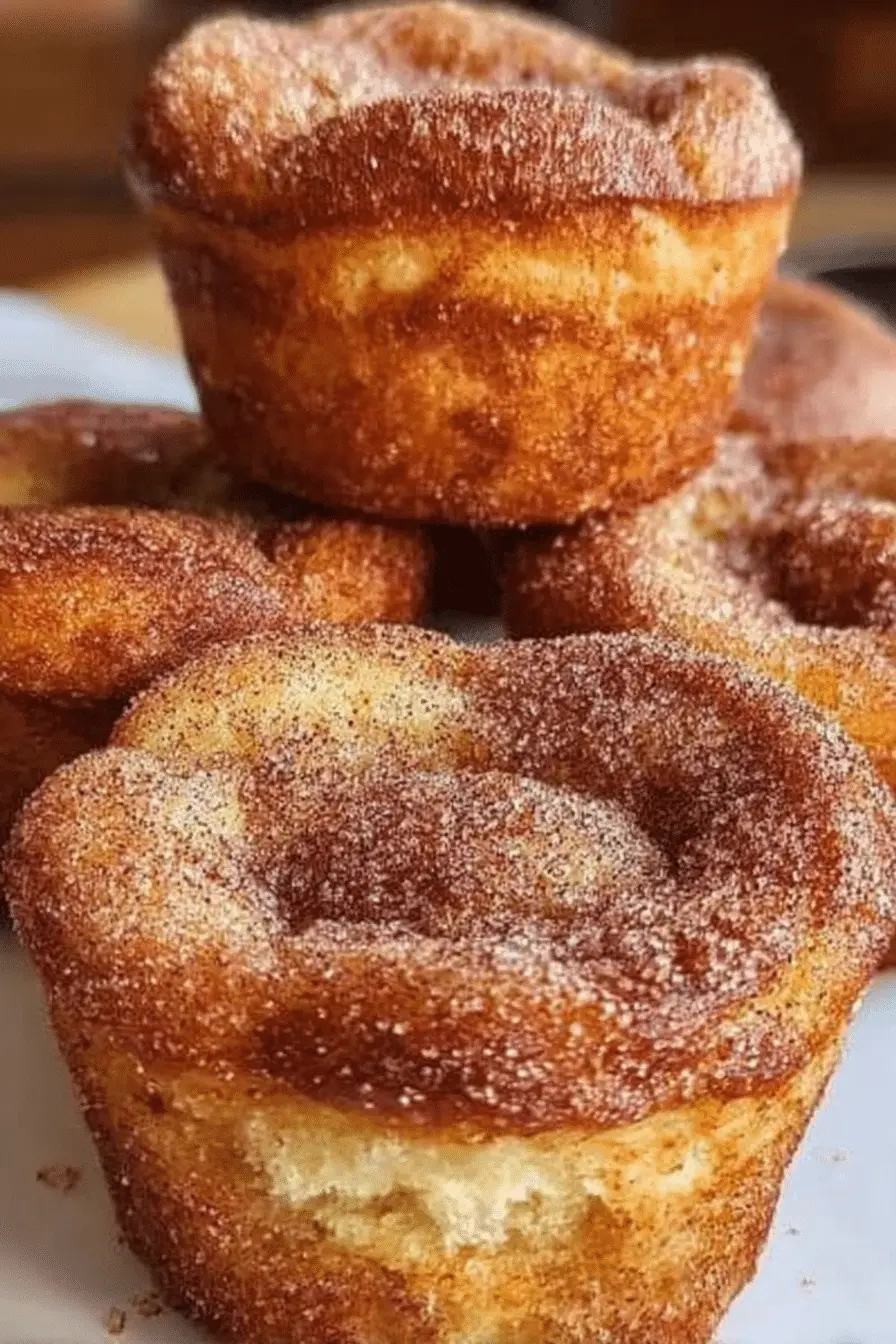
The Baked French Toast Muffins I Make for Busy Mornings
- Prep
- 10 min
- Cook
- 20 min
- Total
- 30 min
- Serves
- 12
- Calories
- 278 kcal
- Protein
- 6.00 g
- Carbs
- 49.00 g
- Fat
- 7.00 g
Introduction
I started making these baked French toast muffins on mornings when the clock and my kids' schedules didn't agree. They give me that warm cinnamon-vanilla aroma of French toast without standing at the stove, and they stack nicely in the fridge for fast breakfasts during the week. I like that they feel a little indulgent but are simple to pull together with pantry bread and a basic egg-and-milk custard.
Why These Baked French Toast Muffins are Perfect for Busy Mornings
These muffins are designed around convenience without sacrificing texture. They’re ideal for preparing in one bowl, baking once, and then grabbing on your way out the door.
- Make-ahead friendly — you can bake a batch on Sunday and reheat all week.
- Handheld and portable — perfect for busy commutes, lunchboxes, or an easy brunch buffet.
- Minimal cleanup — one mixing bowl and a muffin tin, so you spend less time at the sink.
- Sensory: imagine the warm scent of cinnamon and maple as you open the oven, and the contrast of a lightly crisp top with a soft, custardy interior when you bite in.
Everything You Need for Baked French Toast Muffins
Quality here matters more than exact quantities — a richer milk and a sturdier bread both improve the final texture. If you prefer, swap ingredients to suit taste or dietary needs.
- Bread – Use slightly stale slices so they soak but don’t turn to mush; challah or brioche gives a richer result, whole grain adds chew.
- Eggs – Provide structure and a custardy center; use the freshest eggs you have for best color and texture.
- Milk & cream – The creamier the dairy, the silkier the muffin interior; dairy-free milks work but yield a lighter custard.
- Sweeteners – A touch of brown sugar adds depth; granulated sugar on top promotes a crisp, caramelized finish.
- Vanilla & maple extracts – Flavor anchors; if you only have one, use it generously to build aroma.
- Spices (cinnamon, nutmeg) – Cinnamon is essential for warmth; nutmeg is optional but adds a subtle cozy note.
If you like muffin-style breakfast variety, pair these with our fluffy cinnamon sugar donut muffins as an alternate morning treat.
How to Make Baked French Toast Muffins (Step-by-Step)
- Preheat the oven and prepare a 12-cup muffin tin with non-stick spray so the muffins release cleanly.
- Cut your slightly stale bread into roughly one-inch cubes so each piece soaks evenly.
- Whisk eggs, milk, cream, brown sugar, vanilla, maple extract, cinnamon and nutmeg until smooth; this builds the custard that sets around the bread.
- Add the bread to the custard and stir gently, making sure each cube is coated and has time to absorb liquid.
- Divide the soaked bread mixture evenly among the muffin cups so baking is uniform — I use an ice cream scoop for speed and consistency.
- Mix granulated sugar with remaining cinnamon and sprinkle it over each cup for that sweet, crisp top.
- Bake until the tops are browned and the centers feel slightly firm to the touch; remove and let cool a few minutes before unmolding.
Sensory: as you stir the custard into the bread, notice how the cubes plump and the aroma of vanilla and cinnamon rises — that’s your cue they’re ready to be portioned.
The Secret to Crispy Tops and Custardy Centers
- Bake at a moderate temperature so the tops brown without drying the center; too hot and the outside will race ahead of the interior.
- The egg-and-cream mixture sets into a custard that holds bread pieces together — don’t overbeat the eggs, just blend until smooth.
- Cinnamon sugar on top creates caramelized crunch; be generous but even so each muffin browns uniformly.
- Let muffins rest briefly after baking so the custard finishes setting—this gives you the ideal tender center when you bite into the crisp top.
Troubleshooting
- If muffins are soggy in the middle: the bread was under-soaked (or the oven temperature was too low) — increase soak time slightly and confirm your oven reaches the set temperature.
- If tops brown too quickly but centers are still soft: lower the oven temperature a bit and bake a few minutes longer.
- If muffins stick to the tin: use more non-stick spray or a paper liner designed for mini loaves; allow a short cooling period before removing.
Why Soaking Time Matters — a Quick Timing Guide
- Short soak (a few minutes): bread absorbs some custard but remains distinct — good when you prefer pronounced bread texture.
- Moderate soak (10–15 minutes): yields a balance between custardy interior and defined bread pieces — my usual choice for mixed texture.
- Long soak (30 minutes or more): produces a more uniform, pudding-like interior — use if your bread is very stale or dense.
- Visual cue: well-soaked bread looks plumped but not falling apart; press a cube and it should hold shape while feeling saturated.
Quick Swaps for Common Diets (Gluten-Free, Dairy-Free, Vegan)
- Gluten-free: Choose a sturdy gluten-free loaf with a crumb that holds up when soaked (many sandwich-style gluten-free breads work well).
- Dairy-free: Use full-fat plant milks like canned coconut milk or a blend of almond and oat for creaminess; results are slightly lighter but still pleasant.
- Vegan: Replace eggs with a commercial egg replacer or a flax/chia 'egg' plus a bit more starch for binding; texture will be softer and more custard-like.
- Taste notes: swapping affects richness — dairy and eggs contribute to silkiness, so compensate with a touch more vanilla or maple for flavor depth.
Pro Tip for Baked French Toast Muffins: Make-Ahead & Freezer Hacks
- Bake a double batch and freeze extras on a sheet tray until solid, then transfer to a labeled freezer bag for up to 2 months.
- To reheat: thaw overnight in the fridge or reheat from frozen in a 350°F oven until warm and crisp on top; a quick toast in a toaster oven revives the crust.
- Pack reheated muffins with a small container of syrup or a dusting of powdered sugar for on-the-go serving.
- For busy weeks I pair a tray of these with our healthy blueberry oatmeal bars so there’s variety without extra morning prep.
How to Store, Reheat, and Freeze Baked French Toast Muffins
- Room temperature: keep in an airtight container for up to 48–72 hours to preserve tenderness; avoid humid spots to keep tops crisper.
- Refrigeration: store up to a week; bring to room temperature or reheat briefly to regain the crisp exterior.
- Freezing: freeze cooled muffins individually on a tray before bagging to prevent sticking; they thaw quickly overnight in the fridge.
- Reheating tips: oven or toaster oven gives best texture — microwave only if you’re in a rush, then finish in a hot pan or under the broiler for a few seconds to re-crisp.
Enhance your enjoying experience with our easy strawberry cold foam, perfect to pair with your baked French toast muffins.
Variations for Different Occasions
Here are simple ways to change the mood for brunch, holidays, or snack time.
- Blueberry or mixed berry: fold fresh or frozen berries into the soaked mixture for a bright, fruity note.
- Chocolate chip: add small chocolate chips for a kid-friendly sweet version that melts into pockets of gooey chocolate.
- Pumpkin spice (holiday): swap some of the spices for pumpkin pie spice and stir in a spoonful of canned pumpkin for fall gatherings.
- Savory option: omit sugar, add grated cheese, cooked bacon or herbs for a brunch-friendly savory muffin.
- For a twist on the classic, try our banana-stuffed French toast and elevate your breakfast experience.
Frequently Asked Questions
Can I use different types of bread for these muffins?
Absolutely! You can use any type of bread you like, such as brioche, challah, or whole wheat. Just make sure it's slightly stale for the best results!
How do I store leftover muffins?
Store them in an airtight container at room temperature for up to 3 days. If you want to keep them longer, you can freeze them!
Can I make these muffins dairy-free?
Yes! Substitute the milk and heavy cream with almond milk, coconut milk, or any other non-dairy milk you prefer.
What can I serve with Baked French Toast Muffins?
They're delicious on their own, but you can serve them with powdered sugar, maple syrup, or fresh fruit for extra flair!
How do I ensure my muffins have crispy tops?
Make sure to sprinkle the cinnamon sugar generously on top before baking, and bake them until they're nicely browned!
Recipe Card
The Baked French Toast Muffins I Make for Busy Mornings
- Prep
- 10 min
- Cook
- 20 min
- Total
- 30 min
- Serves
- 12
- Calories
- 278 kcal
- Protein
- 6.00 g
- Carbs
- 49.00 g
- Fat
- 7.00 g
Ingredients
- 12 slicesbread (cut into 1 inch cubes)
- 4 largeeggs
- 1 cupmilk
- ½ cupheavy cream
- 2 tablespoonsbrown sugar ((light or dark))
- 1 teaspoonvanilla extract
- 1 teaspoonmaple extract
- 1.5 teaspoonscinnamon ((divided))
- ¼ teaspoongrated nutmeg
- 2 tablespoonsgranulated sugar
- —powdered sugar (optional for serving)
- —Maple syrup (optional for serving)
Instructions
- 1
Preheat your oven to 350°F and spray a 12-count muffin tin with non-stick spray.
- 2
Cut your bread into 1 inch cubes and set aside.
- 3
In a large mixing bowl combine eggs, milk, heavy cream, brown sugar, vanilla extract, maple extract, ½ teaspoon cinnamon, and nutmeg. Whisk the ingredients together until smooth and combined.
- 4
Add the bread to the bowl and stir until all the bread is evenly coated and has soaked up all the milk and egg mixture.
- 5
Add an equal amount of the bread mixture to your prepared muffin tin cups.
- 6
In a small bowl mix together granulated sugar and remaining 1 teaspoon cinnamon.
- 7
Sprinkle an even amount of cinnamon sugar on top of each muffin.
- 8
Add to the oven and cook for 20 minutes or until the tops of the muffins are browned and the muffins feel a little firm.
- 9
Let cool for a few minutes, remove from the muffin tins, sprinkle with powdered sugar, if desired, and serve with maple syrup.
You might also like


Reviews
Be the first to review this.