

I make this balsamic glazed one pan chicken when I need dinner that feels special but can’t steal my evening. In my kitchen it lives in heavy rotation because it smells incredible as it cooks — sharp balsamic and garlic filling the air — yet it requires only a handful of pantry-friendly ingredients and one skillet to finish.
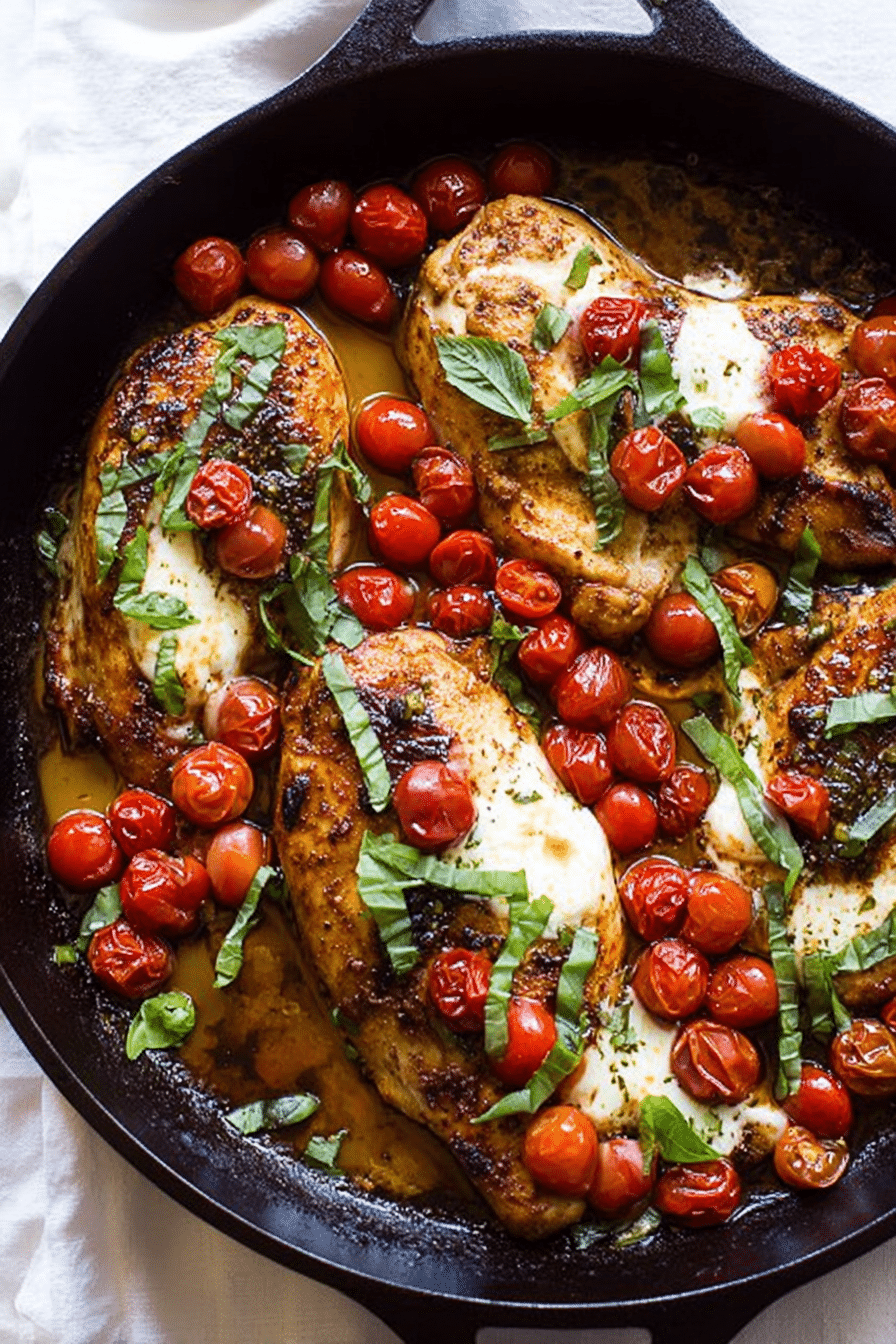
What I appreciate most is the rhythm: a quick sear to build golden color, a splash of a glossy balsamic-honey glaze, and a short bake where the tomatoes roast and the mozzarella softens. Cleanup is always faster when everything finishes in the same pan, which is a real win on weeknights.
I’ll walk you through the simple ingredients, the tiny technique that makes the glaze shine, and the few little habits (pounding the chicken, a short rest) that guarantee juicy results every time. Keep reading and you’ll be dinner-ready in under an hour.
Why This Balsamic Glazed One Pan Chicken is Perfect for Busy Weeknights
This recipe checks the boxes busy home cooks care about: fast prep, short cook time, bold flavor, and minimal cleanup. The balsamic glaze brings big taste without long marinating, and the tomatoes plus fresh mozzarella create a saucy finish that feels put-together with almost no effort.
- One-pan cleanup: Everything finishes in the skillet so you spend less time at the sink.
- Quick turnaround: From the pan to the oven in minutes — you get dinner on the table fast.
- Big flavor from few ingredients: Balsamic, honey, garlic, and mustard combine to make a glaze that tastes like you spent more time than you did.
Everything You Need for Balsamic Glazed One Pan Chicken
Below are the ingredients and tools I rely on, with easy substitutions so you can work with what’s in your pantry. I recommend good-quality balsamic vinegar for the best depth of flavor; it makes a noticeable difference in that glossy glaze.
- Balsamic vinegar – The backbone of the glaze; choose a balanced, flavorful bottle so the sauce isn’t too sharp.
- Honey – Adds sweetness to balance the vinegar and helps the glaze become glossy.
- Oil (avocado or olive) – For searing the chicken so you get a golden crust.
- Garlic – Fresh minced garlic gives immediate aromatic depth when it hits the hot pan.
- Italian seasoning – A quick way to add herby warmth; you can swap oregano and basil if you prefer.
- Dijon mustard – Helps the glaze cling to the chicken and rounds out acidity.
- Grape tomatoes – They roast quickly and burst into a saucy, bright contrast.
- Fresh mozzarella (small balls or pearls) – Melts gently over the hot tomatoes for a creamy finish; shredded mozzarella is an okay substitute.
- Fresh basil – Finishes the dish with freshness and color; add after baking.
- Boneless, skinless chicken breasts – Pound to even thickness so they cook evenly; chicken thighs work if you prefer darker meat but adjust cook time.
- High-heat oil for searing (avocado or other) – Use a neutral oil with a high smoke point for a good sear.
- Kosher salt and fresh black pepper – Simple seasoning that lets the glaze shine.
- Tools – An oven-safe skillet, a wooden spoon or spatula, a meat thermometer, and a cutting board will carry you through.
The Simple Trick for a Glossy Balsamic Glaze
Getting the glaze to cling and shine comes down to reduction and balance. You want the liquid reduced enough to coat the back of a spoon but not so concentrated that it becomes syrupy hard during baking.
- Start the sauce in the hot pan so the balsamic and honey warm and come to a gentle simmer — that starts evaporation right away.
- Simmer briefly until the sauce thickens slightly; this concentrates flavor and helps it coat the chicken.
- Adjust sweetness by adding a touch more honey if the vinegar is aggressive; mustard tames acidity and improves adhesion.
- Spoon or brush the warm glaze over the seared chicken before the oven step so the sauce bonds to the meat and finishes glossy after baking.
How to Get Juicy, Evenly-Cooked Chicken Every Time
Perfect chicken is about even thickness, quick high-heat color, and careful temperature control. I rely on these practical steps in my kitchen every time I want tender, moist chicken.
- Pound to even thickness: You’ll get predictable cook times and avoid overcooking thin edges.
- Pat dry and season: Dry surfaces sear better; season both sides with salt and pepper before the pan.
- Sear in a hot, oven-safe skillet: Sear until the surface is golden to build flavor — this is called a Maillard crust.
- Use a meat thermometer: Cook to the safe target internal temperature so you stop right at 165°F — this avoids the rubbery texture that comes from overcooking.
- Rest the chicken: Let the meat rest after baking so juices redistribute; this keeps slices moist when you cut them.
Quick Veggie Pairings that Roast Right in the Same Pan
Roasting vegetables alongside the chicken adds color and makes this a true one-pan meal. Choose veggies that cook at similar speeds or cut them to match cook times.
- Grape or cherry tomatoes – Burst and become saucy in the pan.
- Zucchini (sliced) – Cooks quickly and soaks up the glaze; slice thicker if using alongside breasts.
- Bell peppers (quartered) – Add sweetness and color; they caramelize beautifully.
- Asparagus (trimmed) – Roast briefly at the end if you want it tender-crisp.
- Red onions (wedges) – Sweeten as they roast and play well with balsamic.
How to Make Balsamic Glazed One Pan Chicken (Step-by-Step)
- Preheat your oven to a hot roasting temperature so the chicken finishes quickly and the tomatoes caramelize.
- Whisk the balsamic, honey, oil, minced garlic, Italian seasoning, and Dijon mustard together in a bowl; season with salt and pepper to taste.
- Toss the halved tomatoes, mozzarella pearls, and chopped basil in a separate bowl and season lightly; set aside so they’re ready to go on top of the seared chicken.
- Heat your oven-safe skillet over medium-high heat with a splash of high-heat oil until shimmering.
- Season the pounded chicken on both sides, then add to the hot skillet and sear until lightly golden, about a couple of minutes per side. This builds flavor and prevents the chicken from sticking.
- Pour the prepared balsamic sauce into the pan with the chicken; it should come up to a simmer. Use a wooden spoon to scrape any flavorful brown bits from the pan so they mix into the sauce.
- Remove the skillet from the heat and layer the tomato-mozzarella mixture over the chicken so the tomatoes roast and the cheese melts as everything finishes in the oven.
- Bake uncovered until the chicken reaches an internal temperature of 165°F and the tomatoes are blistered; then remove and let the chicken rest for a few minutes before serving.
- Safety tip: Always avoid cross-contamination — use separate utensils and a clean board for raw chicken and wash hands after handling.
Pro Tip for Balsamic Glazed One Pan Chicken: Meal Prep, Storage & Low-Carb Swaps
- Meal prep: Marinate the chicken in the balsamic mixture up to a day ahead for deeper flavor, and keep the tomato-mozzarella mix separate until baking.
- Make-ahead glaze: Prepare extra glaze and refrigerate; rewarm briefly and spoon over reheated chicken to freshen leftovers.
- Low-carb swaps: Serve over zucchini noodles or roasted cauliflower rice instead of pasta for a keto-friendly plate.
- Batch cooking: Double the recipe and store in meal prep containers for 3–4 days of lunches or dinners.
- Freezing: Freeze cooked chicken in a shallow layer without the fresh mozzarella; add fresh cheese when reheating for best texture.
- Need specifics? See the FAQ for common make-ahead and substitution questions.
How to Store and Reheat Balsamic Glazed One Pan Chicken
- Refrigeration: Cool completely, then store in an airtight container in the refrigerator for up to 3–4 days to keep the chicken moist.
- Freezing: Freeze portions without the fresh mozzarella for up to 2 months; thaw overnight in the fridge before reheating.
- Reheating: Reheat gently in a low oven or covered skillet so the sauce softens and the chicken warms through without drying; spoon reserved or warmed glaze over the top if it looks dry.
- Quick microwave option: Cover the plate to trap steam and reheat in short bursts to avoid overcooking, then finish with a drizzle of warm glaze.
Frequently Asked Questions
Can I use other types of vinegar instead of balsamic vinegar?
While balsamic vinegar gives a unique flavor, you can experiment with red wine vinegar or apple cider vinegar, but the taste will differ.
What can I substitute for fresh mozzarella balls?
You can use shredded mozzarella cheese or omit the mozzarella entirely if you prefer a lighter version.
How can I ensure my chicken is juicy?
Make sure to pound the chicken to an even thickness and avoid overcooking. The internal temperature should reach 165°F.
What vegetables can I add to this dish?
Vegetables like bell peppers, zucchini, or asparagus work great and can be roasted alongside the chicken in the same pan.
Can I make this dish ahead of time?
Absolutely! You can marinate the chicken and prepare the glaze in advance. Just assemble and bake when you’re ready to eat.
Balsamic Glazed One Pan Chicken
Ingredients
Equipment
Method
- In a bowl, whisk together the sauce ingredients. Season with salt and pepper, to taste. Set aside.
- In a separate bowl, toss together the tomatoes, mozzarella, and basil. Season with salt and pepper, to taste. Set aside.
- Preheat oven to 400 degrees F. Heat oil over medium-high heat in a large oven-safe skillet. Season the chicken all over with salt and pepper. When pan is hot, add chicken to skillet in a single layer. Cook for 1-2 minutes on each side or until lightly golden brown. Add the balsamic sauce mixture and let it simmer.
- Immediately remove the pan from the heat and add the tomato mozzarella mixture over the chicken. Bake uncovered for 18-23 minutes or until chicken is fully cooked through.
- Remove from the oven and rest for 5 minutes before serving.