

I cook this balsamic glazed roasted vegetables recipe regularly when I want something healthy that still feels special. In my kitchen it started as a way to use whatever vegetables were on the verge of being forgotten, and it quickly became a go-to because the glaze transforms everyday veggies into something bright, slightly sweet, and deeply savory. I love how the tang of the balsamic contrasts with the natural sweetness that roasting teases out of carrots and peppers.
I appreciate recipes that fit into a busy evening without cutting corners on nutrition. This dish comes together quickly and gives you a rainbow of vegetables packed with fiber, vitamins, and antioxidants. The aroma while it roasts—sharp balsamic notes mingling with caramelizing sugars—always tells me dinner will be ready soon.
Over time I’ve learned small adjustments that make a big difference: the order I chop vegetables so everything finishes at the same moment, a touch of honey (or maple for a vegan option) to balance acidity, and a finishing drizzle of reduced balsamic for shine. Below I’ll walk you through what I use, why it works, and how to get consistent results every time.
Why This Balsamic Glazed Roasted Vegetables Recipe Is Perfect for Healthy Weeknights
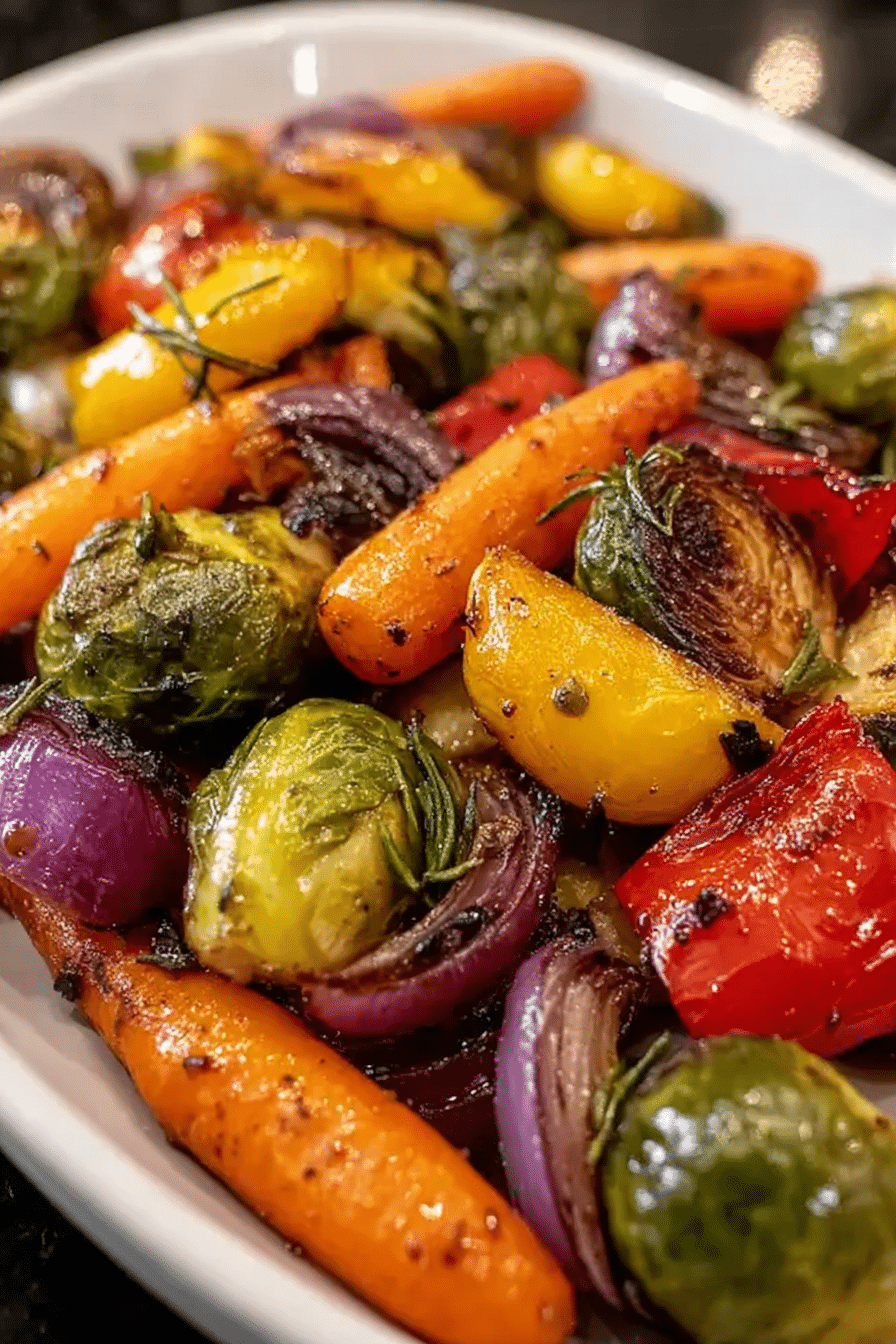
This recipe is a practical weeknight favorite because it takes under 45 minutes from start to finish and uses a single sheet pan, keeping cleanup minimal. The mix of vegetables provides a range of vitamins and fiber that support fullness and steady energy through the evening. Visually, a roasted medley—deep greens from Brussels sprouts, bright orange carrots, and red bell pepper—makes a simple meal look intentional and appetizing. The balsamic glaze adds a tangy-sweet aroma as it caramelizes, which makes the whole house smell like dinner is worth waiting for.
If you want a protein to go with it, try pairing with a one-pan roast—this Balsamic Glazed One-Pan Chicken matches the flavors and keeps the weeknight workflow effortless.
Everything You Need for Balsamic Glazed Roasted Vegetables
Use fresh, seasonal vegetables for the best texture and flavor; they’ll roast more evenly and taste brighter. The type of balsamic you choose matters—basic balsamic gives a clean tang while an aged balsamic adds richer, sweeter notes. Olive oil helps the vegetables brown and prevents sticking, and a touch of honey or maple balances the vinegar’s acidity. While you prep, feel the firmness of each piece: firmer roots will take longer, and thin-skinned veg will soften quickly.
For a complementary side option, consider adding a sweet roasted element like honey roasted carrots to the mix for contrast and extra color.
- Brussels sprouts – Provide a sturdy, slightly bitter base that crisps beautifully when halved.
- Carrots – Add natural sweetness and a firmer bite; swap with parsnips for an earthier profile.
- Bell peppers – Bring bright color and soft, juicy texture when roasted.
- Red onion – Offers savory-sweet depth and caramelizes to add complexity.
- Balsamic vinegar – The acidic backbone that concentrates into a glossy glaze; try aged balsamic for a sweeter finish.
- Olive oil – Coats and helps with browning while adding mouthfeel; use extra-virgin for flavor or a lighter oil if you prefer.
- Honey or maple syrup – Balances acidity and enhances caramelization; use maple to keep the dish vegan.
- Salt and pepper – Simple seasoning that sharpens the vegetables’ natural flavors.
The Nutrition Breakdown — What You’re Getting Per Serving
Per serving this dish is a light, nutrient-dense side that supports a balanced plate. Expect moderate calories with healthy fats from olive oil and carbohydrate from the vegetables, plus a small amount of protein. The mixture is high in fiber, which helps with digestion and satiety, and the variety of vegetables contributes vitamin C, vitamin A precursors, potassium, and folate.
Balsamic vinegar contains antioxidants (like polyphenols) which have been associated with support for healthy blood sugar response when used in moderation. Swapping honey for maple syrup keeps the dish vegan while still providing that caramelized sweetness.
The Secret to Perfect Caramelization with Balsamic
Caramelization is about dry heat concentrating the sugars in vegetables so they brown and sweeten. Balsamic helps by adding an acidic-sweet element that both deepens color and creates a glossy finish as it reduces. To get that deep, slightly sticky glaze without burning, give the pan room and roast hot enough to brown the edges while checking halfway through.
- Spread vegetables in a single layer so air circulates and surfaces brown instead of steaming.
- Toss vegetables with oil first to encourage Maillard reactions; the balsamic goes on with the oil so it can coat evenly.
- Stir once midway to expose all sides—over-stirring prevents proper browning.
- If you want a thicker glaze, reduce a portion of the balsamic on the stovetop until glossy, then toss with the roasted vegetables (see the Pro Tips section below).
Pick Seasonal Veggies for Better Flavor and More Nutrients
Choosing vegetables when they’re in season amplifies both taste and nutrient density. Spring favors tender asparagus and sugar snap peas; summer brings sweet peppers and zucchini; autumn is perfect for root vegetables and Brussels sprouts; winter highlights hearty squash and beets. Think about texture contrasts when you assemble the pan—pair denser roots with quick-roasting bell peppers so everything finishes around the same time.
For a fuller seasonal meal, try pairing your roasted mix with a spring pasta like Spring Vegetable Brown Butter Gnocchi for bright, fresh flavors in season.
How to Make Balsamic Glazed Roasted Vegetables (Step-by-Step)
- Preheat the oven to a high roasting temperature so the vegetables brown quickly without stewing.
- Toss all vegetables in a bowl with olive oil, balsamic, honey or maple, salt, and pepper until evenly coated.
- Arrange the vegetables in a single layer on a rimmed baking sheet—avoid overcrowding to prevent steaming.
- Roast until vegetables are tender and edges are caramelized, stirring once halfway through for even browning.
- If you reduced some balsamic separately, remove the pan from the oven and gently toss the roasted vegetables with the thickened glaze for shine and concentrated flavor.
- Serve warm so the textures and aromas are at their best.
- Troubleshooting — If the vegetables steam instead of brown, they’re overcrowded; use two pans. If they burn, lower the oven a bit and check earlier. If the glaze is thin, reduce more balsamic on the stovetop to thicken before tossing.
Pro Tip for balsamic glazed roasted vegetables: Reduce the vinegar to a thick, glossy glaze
- Simmer a small amount of balsamic in a saucepan until it coats the back of a spoon—this makes a shiny finish that clings to vegetables without sogginess.
- Add a pinch of sweetener while reducing to round acidity and deepen color.
- Finish with the reduction off the heat—too much cooking at high heat can darken the sugars to bitterness.
- Line the baking sheet with parchment for easy cleanup and cleaner caramelization along the edges.
How to Store, Reheat, and Make-Ahead Balsamic Glazed Roasted Vegetables (and Easy Variations)
- Store cooled leftovers in an airtight container in the refrigerator for up to three days to preserve texture and flavor.
- Reheat in a hot oven or toaster oven to restore crisp edges; a quick skillet warm-up on medium-high can also revive caramelization without overcooking.
- To make ahead, roast vegetables until just tender but not fully caramelized, then finish with the glaze just before serving for best texture.
- Freeze only if necessary—frozen and thawed roasted vegetables will be softer, best used blended into soups or grain bowls.
Dietary Swaps and Variations
- Use maple syrup or agave instead of honey to keep the recipe vegan-friendly.
- Swap olive oil for avocado oil for a higher smoke point and a neutral taste.
- Add fresh herbs after roasting—thyme, rosemary, or chopped parsley brighten the dish without adding heat.
- For extra protein, toss in cooked chickpeas or serve the vegetables alongside a grain and a simple protein.
- Play with balsamic varieties—dark, aged balsamic for a sweeter finish or a younger balsamic for tangier uplift.
I often serve these vegetables alongside a simple protein and a grain for a balanced plate; they’re flexible enough to pair with grilled fish, roasted chicken, or a hearty grain bowl. The contrast of glossy, sweet-tangy glaze and crisp-roasted edges always makes the meal feel complete.
Frequently Asked Questions
Can I use different vegetables in this recipe?
Absolutely! Feel free to swap in your favorite vegetables or whatever is in season. Just keep in mind that cooking times may vary depending on the type of veggies you choose.
How do I store leftovers?
Store any leftovers in an airtight container in the fridge for up to 3 days. You can reheat them in the oven or microwave until warmed through.
Can I make this dish vegan?
Yes! Simply substitute honey with maple syrup to keep it completely vegan.
What can I serve with balsamic glazed roasted vegetables?
These delicious veggies pair well with grilled meats, pasta, or can be enjoyed on their own as a healthy snack!
How can I achieve the perfect caramelization?
Make sure to spread the vegetables in a single layer on the baking sheet and avoid overcrowding. Roasting at a high temperature helps to achieve that beautiful caramelization!
Balsamic Glazed Roasted Vegetables
Ingredients
Method
- Preheat the oven to 425°F (220°C).
- In a large bowl, combine the Brussels sprouts, carrots, bell peppers, and red onion.
- In a small bowl, whisk together the balsamic vinegar, olive oil, honey (or maple syrup), salt, and pepper.
- Pour the balsamic mixture over the vegetables and toss to coat evenly.
- Spread the vegetables in a single layer on a baking sheet.
- Roast in the preheated oven for 25-30 minutes, stirring halfway through, until the vegetables are tender and caramelized.
- Serve warm and enjoy!