

I still remember the first time I boiled sugar until it sang — the tiny bubbles crawling across the pan, the kitchen filling with a warm, spicy steam that felt like a holiday memory being made. I made my first batch of cinnamon hard candy in my grandmother’s kitchen, shimmying a stool beside her so I could peek at the thermometer and try not to breathe in the strong cinnamon oil. That sensory memory — the bright red pieces scattered across the counter, the snap when you bit one — is why I return to this recipe every winter.
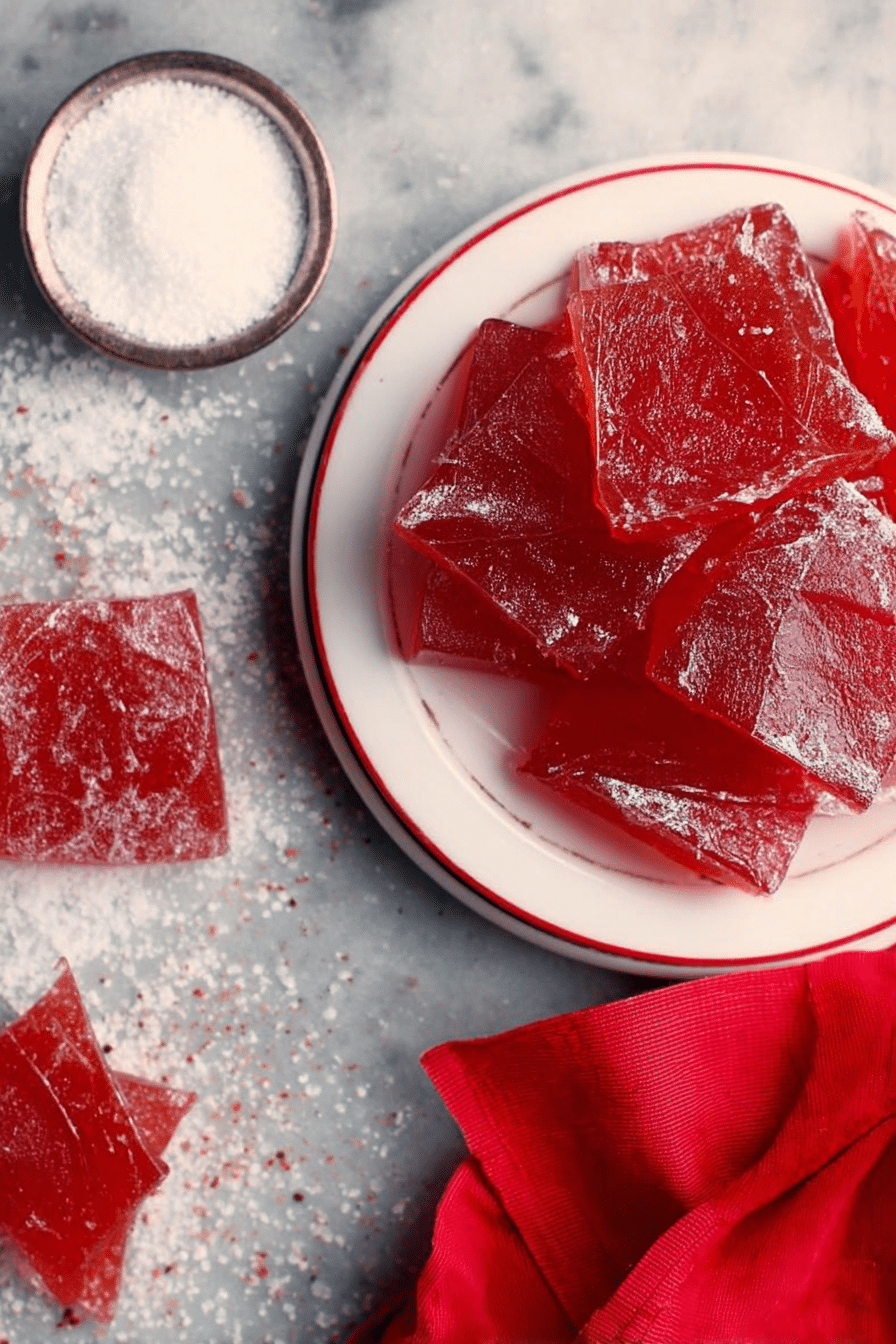
In my kitchen this candy is equal parts memory and technique: the precise hiss of the syrup, the way the candy goes from a glossy red pool to a brittle sheet as it cools. I make it when I want guests to pause and smile, when I want a homemade gift that says I spent time thinking about them. The scent alone — sharp and sweet — will pull people into the room.
Over the years I’ve learned the small fixes that save a batch: watch the temperature, keep a lid handy to wash away crystals, and always add the cinnamon oil off the heat so the flavor stays bright without burning the nose. These are the tricks I’ll share below, along with ways to package and personalize your candies for giving.
Whether you make a big tray for a party or a small jar to tuck into a gift box, this cinnamon hard candy has the straightforward pleasure of an old-fashioned treat. It’s simple, but it asks you to be present — to watch, measure, and move quickly when the moment comes.
Everything You Need for Cinnamon Hard Candy
For a successful batch, you need pantry staples and a few candy-specific tools. Each ingredient plays a role in texture and clarity, and the right equipment keeps you safe and on target. If you don’t have everything, there are sensible substitutions that still give great results. For a sweet twist, try our Brown Sugar Cinnamon Pop Tarts that also celebrate the warm flavor of cinnamon.
- Sugar – The backbone of the candy; creates the structure that will harden into a crisp piece.
- Corn syrup – Prevents unwanted recrystallization, keeping the candy clear and smooth; light corn syrup keeps flavor neutral.
- Water – Dissolves the sugar and helps control the cooking rate so you can hit the correct temperature.
- Food coloring – Optional, used for the classic red hue; choose a liquid or gel that mixes easily.
- Cinnamon oil – A concentrated flavoring that gives the sharp, spicy finish typical of cinnamon hard candy; much stronger than ground cinnamon.
- Confectioners’ sugar – A light dusting prevents pieces from sticking and gives a finished look when gifting.
- Candy thermometer – Non-negotiable if you want the right texture; an instant-read thermometer helps you catch the hard-crack stage precisely.
- Heavy saucepan – Even heat distribution matters to avoid hot spots and burning the sugar.
- Metal pan lined with foil or buttered – For pouring the hot candy so it cools into a sheet you can break into pieces.
- Optional tools – A metal mallet or sturdy rolling pin to break the cooled candy; parchment or silicone mats as alternatives for easy release.
A Brief History: How Cinnamon Candy Became a Classic
Cinnamon has been used in sweets for centuries, prized for its warmth and preservative qualities. Candies flavoured with cinnamon appear across traditions — from spiced lozenges in old apothecaries to bright, hard pieces passed out at winter festivals. The bright red, spicy hard candy became particularly associated with holidays and fairs because it stored well and made a showy, colorful treat to hand out.
These candies also carry family histories: people recall a tin of cinnamon sweets that lasted through a carriage ride, or a bowl on the parlor table during cold-weather gatherings. That quaintness is part of why I love making this recipe — it feels like a link to simpler celebrations. For more classic confections that have stood the test of time, see this write-up about Old-Fashioned Divinity Candy.
Why Temperature Matters: Hitting the Hard‑Crack Stage
The difference between a chewy candy and a brittle one is temperature. As sugar cooks, water evaporates and the syrup concentration increases; specific temperatures correspond to textures. Reaching the hard-crack stage is what gives you glassy, snap-able candy instead of a sticky, soft result.
- As syrup heats, watch the surface: tiny rapid bubbles and a glossy sheen mean you’re moving toward the right stage.
- The hard-crack stage is the target for this candy — it yields pieces that are brittle and clear when broken.
- A reliable candy thermometer is the best safeguard. Avoid stirring once you remove the lid and the syrup begins to climb toward the final temperature, as stirring can create crystals.
- Common pitfall: candy that stays tacky usually means it didn’t reach the hard-crack temperature or cooled too slowly in a humid spot. If that happens, you can gently reheat to dissolve crystals and try again, but be careful not to burn the syrup.
The One Ingredient That Changes Everything: Using Cinnamon Oil Safely
Cinnamon oil is intensely concentrated compared with ground cinnamon. A little goes a long way: it delivers a bright, piercing heat that defines the candy. Because it’s strong and volatile, handle it with care and add it at the right moment to preserve its flavor without overwhelming the batch.
- Measure the oil carefully before you start; keep the bottle capped until the instant you add it.
- Add the cinnamon oil off heat to prevent the alcohol or volatile aromatic compounds from vaporizing and irritating your eyes or throat.
- Store cinnamon oil tightly sealed in a cool, dark place; a high-quality oil will taste cleaner and fresher than generic extracts.
- Safety note: keep your face away when adding the oil — it can be sharp. If you have sensitive skin, avoid direct contact and wash hands after handling.
How to Make Cinnamon Hard Candy (Step-by-Step)
- Prepare a shallow metal pan by lining it with foil and buttering the foil so the hot candy releases cleanly; set it near the stove so you can pour quickly when ready.
- Combine water, sugar, corn syrup, and food coloring in a heavy saucepan and bring to a boil over medium heat, stirring until the sugar dissolves. Cover briefly at the start to wash away any loose crystals.
- Uncover and allow the mixture to cook without stirring; watch the surface for even bubbling as it approaches temperature.
- Use a candy thermometer and cook until the syrup reaches the hard-crack stage, which is the temperature that gives a brittle finish.
- Remove the pan from the heat and add the cinnamon oil off the heat, stirring just enough to incorporate so the aroma stays bright but not overpowering.
- Immediately pour the hot liquid into the prepared pan, tilting slightly to even it out; work quickly to avoid premature cooling and bubbling.
- Let the candy cool completely until it hardens, then break into pieces with the edge of a metal mallet or by snapping by hand if the sheet is thin enough. Dust lightly with confectioners’ sugar to keep pieces from sticking.
If you’re a fan of cinnamon in different formats, you might also enjoy our Sourdough Cinnamon Rolls for a softer, yeasted take on cinnamon flavor.
Pro Tip for cinnamon hard candy: Add Cinnamon Oil Off Heat and Pour Fast
This short section is meant to be quickly scanned while you’re working at the stove. Keep these points in mind and post them near your workspace.
- Pro-Tips:
- Have your pan ready before you reach final temperature — the window to pour is narrow.
- Add cinnamon oil off heat to preserve its bright aroma and to avoid a burn-your-nose moment.
- If bubbles form when you pour, tap the pan once gently on the counter to level the surface and reduce large trapped bubbles.
- Work with a stable, heavy pan so the syrup heats evenly and you avoid scorching at the edges.
- Troubleshooting (what I say when a batch goes sideways):
- If crystallization appears on the sides of the pan, I immediately cover the pot for a minute to let the steam dissolve stray crystals, then remove the lid and continue cooking.
- If your candy is sticky after cooling, it probably didn’t reach hard-crack; I reheat slowly and try again, watching the thermometer closely this time.
- If the cinnamon flavor is too faint, I make a smaller test batch next time and add the oil a drop at a time off heat until it hits the level I want.
- Variations (quick ideas to personalize):
- Swap a portion of cinnamon oil for a complementary extract like vanilla or a citrus oil for a different aromatic profile.
- Stir in a pinch of powdered clove or nutmeg for a deeper, old-fashioned spice mix (use sparingly so it doesn’t cloud the candy).
- Skip the red coloring for clear cinnamon candy, or use colored sugar sprinkles on the surface before it fully hardens for festive looks.
How to Store and Gift Cinnamon Hard Candy (Shelf Life, Make‑Ahead & Variations)
Homemade candy stores well when treated the right way. Keep pieces dry and separated so they retain their crispness; with correct packaging, this candy makes a charming homemade gift that feels thoughtful and old-fashioned. Learn how to package and gift your cinnamon hard candy alongside other treats, like Homemade Chocolate Turtles, for the holidays.
- Store candy in an airtight container at room temperature away from heat and humidity; a cool, dry pantry is ideal.
- Layer pieces between sheets of wax or parchment paper to prevent sticking and to keep them looking presentable when you open the jar.
- For gifting, wrap small handfuls in cellophane tied with twine, or place pieces in a small tin with a paper liner; dust lightly with confectioners’ sugar for a finished look.
- Make-ahead: you can prepare candy several weeks in advance for holiday boxes, but check the jar for any signs of moisture if you live in a humid climate.
I love sending a few pieces in a jar with a handwritten tag — it feels like sending a small piece of home. When guests open the jar, the aroma still carries them back to childhood for a moment, and that’s the real gift.
Frequently Asked Questions
What is cinnamon hard candy?
Cinnamon hard candy is a homemade sweet treat that combines sugar, corn syrup, and cinnamon oil for a spicy flavor. It’s great on its own or as a topping for desserts like ice cream.
What temperature should I cook the candy to?
You should cook the candy until it reaches the hard-crack stage, which is 300°F. This ensures that the candy will harden properly.
How long does it take to make cinnamon hard candy?
The total process takes about 45 minutes, which includes 20 minutes of preparation and 25 minutes of cooking.
Can I use other flavors instead of cinnamon oil?
Yes, you can experiment with different flavors, but keep in mind that the amount and strength of the flavoring may affect the taste and texture of the candy.
How should I store cinnamon hard candy?
Store the candy in an airtight container at room temperature. It can last for several weeks if stored properly.
Cinnamon Hard Candy
Ingredients
Method
- Line a 15x10x1-inch pan with foil, then butter the foil and set the pan aside.
- In a large saucepan, combine water, sugar, corn syrup, and food coloring. Bring to a boil over medium heat, stirring occasionally.
- Cover and cook for additional 3 minutes, or until any sugar crystals have dissolved.
- Uncover and cook on medium-high heat without stirring until a candy thermometer reads 300°F, about 25 minutes.
- Remove from heat and stir in cinnamon oil.
- Immediately pour the hot liquid into the prepared pan. Let it cool completely, about 45 minutes.
- Break the candy into pieces using a metal mallet. Sprinkle both sides with confectioners' sugar.