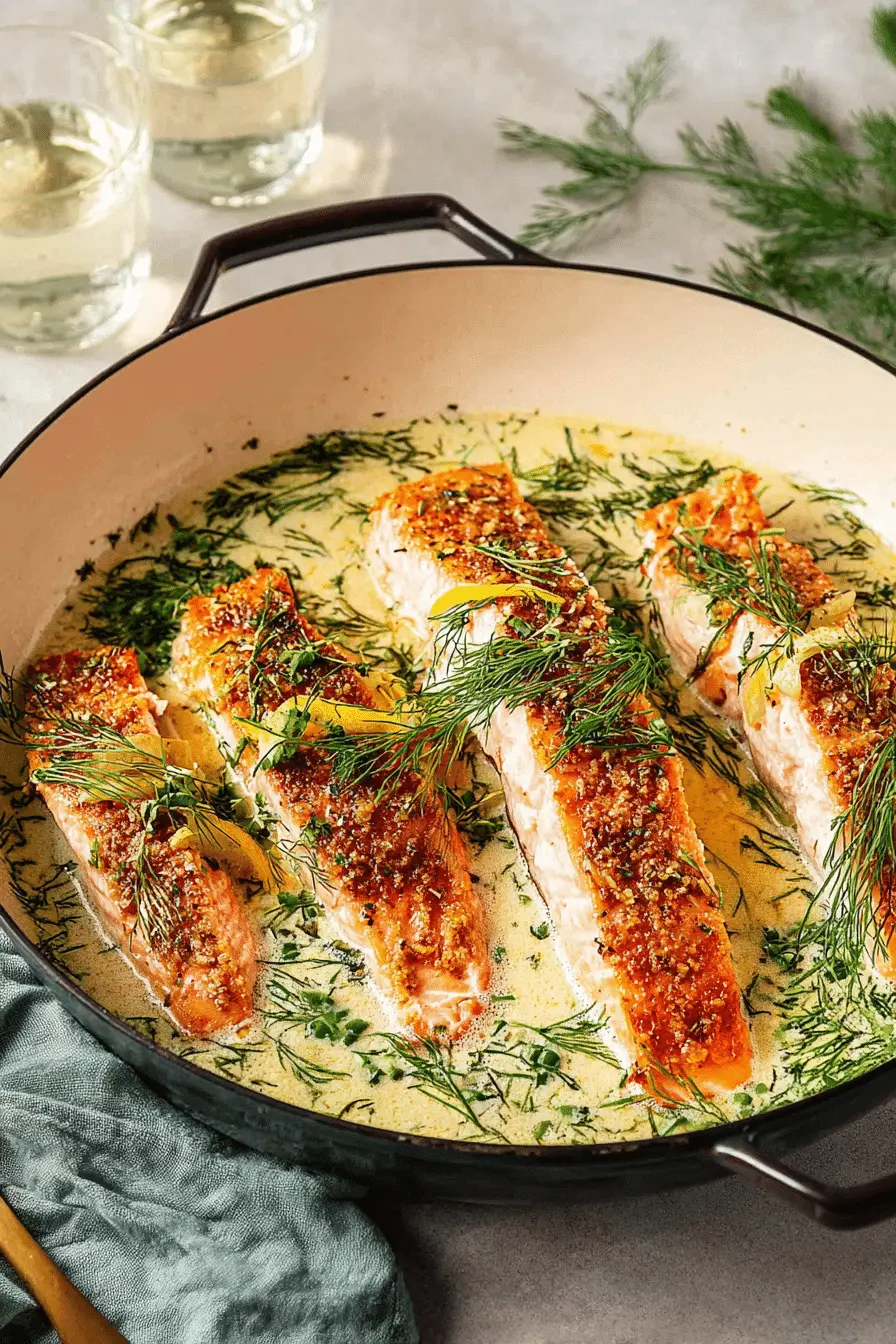
Easy Creamy Spring Salmon: A Healthy Weeknight Delight
- Prep
- 5 min
- Cook
- 15 min
- Total
- 20 min
- Serves
- 4
- Calories
- 505 kcal
- Carbs
- 12.00 g
Introduction
I first made this creamy spring salmon on a blustery late-April evening when the farmer's market bags were heavy with tender herbs and the asparagus crates were just starting to look irresistible. The idea was simple: pan-sear a few nice salmon fillets, make a herb-forward, silky cream sauce, and let the bright, spring flavors do the work. What I didn’t expect was how quickly the kitchen would fill with a mix of lemony herb perfume and caramelizing fish — that smell convinced everyone to clean up and come to the table. The sauce starts thin when you whisk it together, but in the pan it thickens into a glossy coat that clings to the fish and begs to be spooned over orzo or roasted asparagus.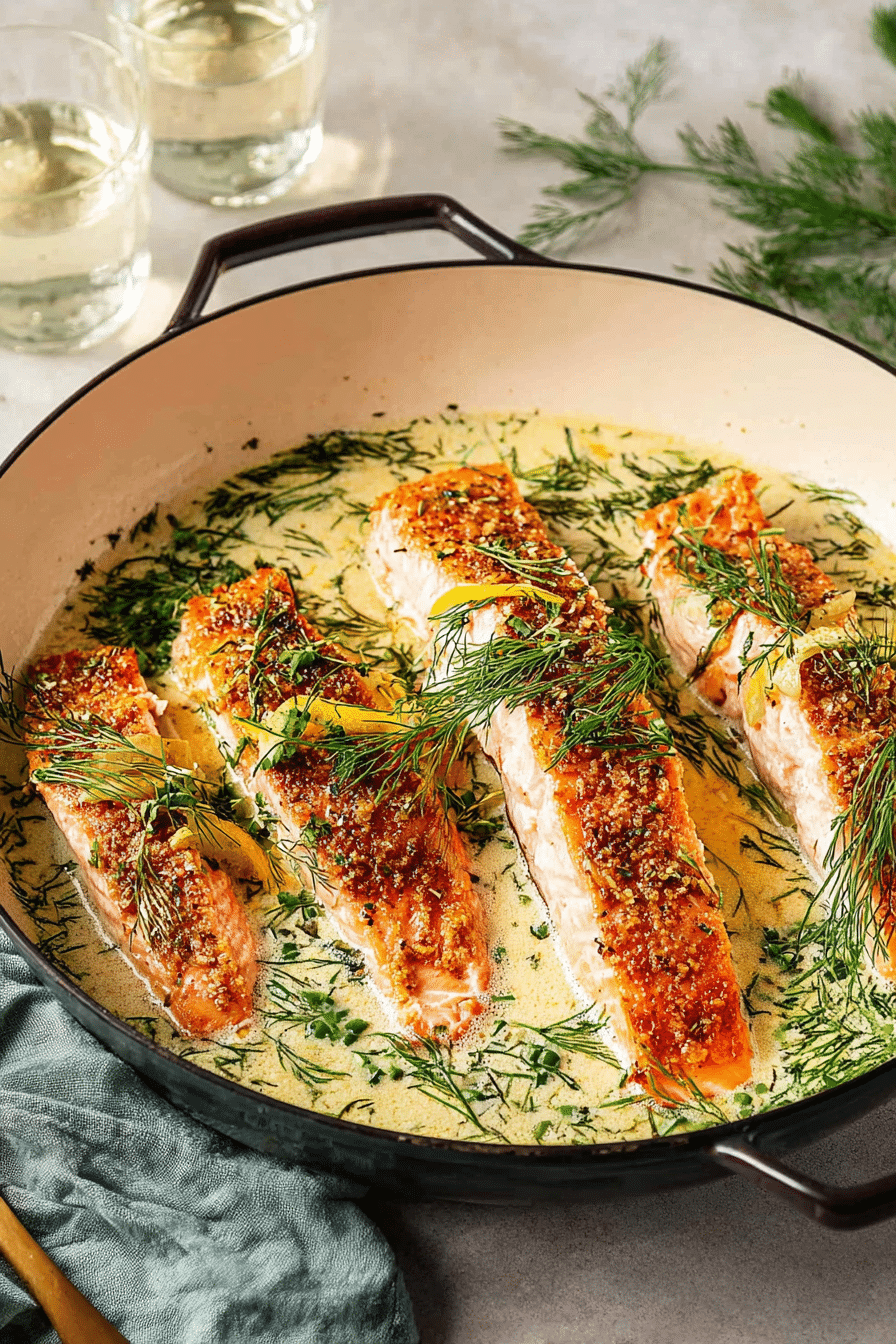
Ingredients You'll Need for the Perfect Dish
- Salmon – the star of the plate; skinless fillets sear quickly and are easy to plate, but you can use skin-on if you like a crisped edge.
- Olive oil – a drizzle to get a hot, non-stick sear and a bit of flavor; use a neutral oil if you're cooking at very high heat.
- Garlic – minced, for that warm, savory backbone; it mellows as it cooks and gives the sauce depth.
- Shallot – thinly sliced; sweeter and more delicate than onion, it softens quickly in the pan and blends into the sauce.
- Dijon mustard – a spoonful adds tang and helps emulsify the sauce so it stays glossy.
- Dry white wine – deglazes the pan, lifts browned bits, and adds a bright acidity; you can use a splash of broth if you prefer.
- Coconut milk – provides richness and a silky texture without dairy; full-fat keeps the sauce luscious.
- Lemon – zest and juice brighten the whole dish and balance the creaminess.
- Fresh chives, dill, tarragon – the herb trio that makes this "spring" — chopped and stirred through at the end for freshness.
- Salt & pepper – essential seasoning; salt opens flavors while pepper adds a warm note.
- Serving suggestions – roasted asparagus or orzo are classic partners; choose a starch or veg to soak up the sauce.
Step-by-Step Instructions to Make Creamy Spring Salmon
Below I share the step-by-step approach I use in my kitchen. Read through once before you start so the timing and pans are organized. I always prep the herbs and aromatics first because the sauce comes together quickly.- Pat the salmon dry with paper towels and season both sides with kosher salt and freshly ground black pepper. Drying is important — moisture is the enemy of a good sear. I’ll often let the seasoned fillets sit at room temperature for 10 minutes if I have time; they brown more evenly that way.
- Heat a large non-stick or well-seasoned skillet over medium-high heat and add a drizzle of olive oil. When the oil shimmers and moves across the pan like mercury (but before it smokes), lay the salmon away from you to avoid splatter. Cook 2–3 minutes without moving to form a golden crust. Flip and cook another 2–3 minutes until the second side has color and the fish is nearly cooked through. Remove the salmon and set aside — it will finish cooking in the sauce.
- Drop the heat to medium and add the minced garlic and thinly sliced shallot to the pan. Sauté gently for about 1 minute; the smell will change from sharp to sweet and toasty when the shallot softens. Don’t let the garlic brown, or it will taste bitter.
- Stir in a spoonful of Dijon mustard, then pour in the dry white wine to deglaze the pan, scraping up those browned bits with a wooden spoon. Let the wine reduce by about half — this concentrates the flavor and burns off the raw alcohol, which only takes a couple of minutes.
- While whisking, slowly add the full-fat coconut milk until the sauce is smooth. Bring it up to a gentle simmer, then lower the heat to medium-low. It should look glossy and slightly thicker than when you started, but still pourable. If it seems too thin, simmer a little longer; if it’s splitting, take it off the heat and whisk in a small splash of cold liquid (wine or water).
- Add the lemon zest, lemon juice, and the chopped fresh herbs — chives, dill, and tarragon — along with a pinch of salt and pepper. Nestle the seared salmon back into the sauce, spooning some around the fillets so the sauce covers them partially. Cook uncovered for another 3–5 minutes, depending on thickness and your preferred doneness: thin fillets near 3 minutes, thick fillets toward 5.
- Plate the salmon spooning extra sauce and herbs over each piece. Garnish with more fresh herbs and a little lemon zest. I like to serve this over a mound of orzo or next to roasted asparagus so the sauce soaks into everything.
Nutritional Information and Benefits of Creamy Spring Salmon
This recipe is both indulgent and nourishing. Per serving the original version calculates to about 505 calories, with roughly 33 grams of fat, 12 grams of carbohydrates, and 37 grams of protein. Beyond macros, salmon is a standout for micronutrients. Why salmon is so good for you:- Omega-3 fatty acids – salmon is rich in EPA and DHA, which support heart health, lower inflammation, and are linked to improved brain function.
- High-quality protein – each serving delivers a solid protein boost to help repair tissue and keep you full.
- Vitamins and minerals – salmon is a source of vitamin D, B12, selenium, and potassium, which support bone health, nervous system function, and metabolism.
- Coconut milk – provides medium-chain triglycerides (MCTs) and a dairy-free creaminess. If you prefer dairy, swapping in heavy cream will change the flavor and fat profile but keeps the sauce luxurious.
Cooking Tips for Perfect Salmon Every Time (creamy spring salmon tips)
Here are practical pointers I rely on every time I make this dish — they’ve saved ruined dinners more than once.- Choose the right fillet – look for bright, firm flesh and a clean, ocean scent. Farmed or wild are both fine; wild tends to be leaner and cook faster.
- Dry and season well – moisture prevents browning. Pat dry and season just before cooking; salt draws moisture out if you salt too early.
- Don't over-sear – get a golden crust, but keep an eye on the color. A too-hot pan burns the outside before the inside cooks.
- Use residual heat – the sauce and carryover cooking finish the fillets. Remove the fish a touch under your target doneness and let it rest in the sauce for perfect texture.
- Check doneness by touch – a gently flaking center that still has a little translucence is ideal. If you prefer a temperature, aim for 145°F (63°C) at the thickest part.
- Fixing a split or oily sauce – if your sauce looks like it's separating, lower the heat and whisk in a splash of cold water, wine, or a teaspoon of mustard to bring it back together.
- Scale the seasoning – if the coconut flavor seems dominant, a squeeze more lemon or an extra pinch of salt will brighten and balance it.
- Timing with sides – start roasted veg first so everything finishes together. Orzo or short pasta takes just minutes in salted water and is the perfect saucy vehicle.
Variations and Dietary Substitutions (creamy spring salmon variations)
I play with this basic formula a lot — it’s forgiving and adapts to what's in my pantry. Below are substitutions that keep the spirit of the dish while fitting different diets.- Dairy-free – the original uses full-fat coconut milk for creaminess. If coconut flavor isn’t your thing, try a neutral dairy-free creamer.
- Classic cream – swap coconut milk for heavy cream for a richer, more neutral sauce; reduce the heat a touch to prevent curdling.
- Keto-friendly – keep the coconut milk and omit starches like orzo; serve over sautéed greens or cauliflower rice.
- Gluten-free – the recipe is naturally gluten-free if you use a gluten-free wine or broth to deglaze.
- Vegan alternative – use thick slices of roasted or pan-seared king oyster mushrooms or tofu steaks in place of salmon and finish with the same herb-coconut sauce.
- Different fish – cod, halibut, or sea bass work well; adjust cooking time because leaner fish will cook faster.
Suggested Pairings: Side Dishes and Wine (creamy spring salmon pairings)
I like pairing this salmon with simple sides that soak up the sauce and add texture. Here are ideas that work well at the table.- Roasted asparagus – trimmed spears tossed with olive oil, salt, and pepper, roasted until they’re tender and slightly charred.
- Orzo or short pasta – cooks in about 8–10 minutes and becomes silky when mixed with the sauce.
- Light potato sides – fingerling potatoes roasted with lemon and thyme, or buttered new potatoes.
- Fresh salad – a peppery arugula salad with lemon vinaigrette cuts through the richness.
- White – Sauvignon Blanc or a crisp unoaked Chardonnay complements the lemon-herb brightness and cuts the creaminess.
- Rosé – a dry rosé is versatile and plays nicely with the herbs and slightly sweet coconut notes.
- Light red – if you prefer red, a Pinot Noir with gentle tannins won't overpower the fish.
User Feedback and Community Contributions
I love when readers tinker with this recipe and report back. Common reader swaps I see in the comments are: trading coconut milk for heavy cream, adding capers and lemon slices for brinier notes, or folding in a handful of baby spinach at the end for color and a little bitter green. A few folks mention doubling the herbs for an irresistibly green sauce, and others have used skin-on salmon and left the skin crisped for extra texture. If you make this recipe, leave a note about what you changed and how it turned out — it really helps other readers choose adaptations that suit their tastes.FAQ
Can I use frozen salmon for this recipe? Yes, you can use frozen salmon! Just make sure to thaw it properly before cooking to ensure even cooking and the best texture. What are some good side dishes to serve with creamy spring salmon? Some great side dishes include roasted asparagus, quinoa, or a fresh garden salad. These complement the flavors of the salmon beautifully! Is there a substitution for coconut milk in this recipe? If you're not a fan of coconut milk, you can substitute it with heavy cream or a dairy-free cream alternative, but keep in mind that it will alter the flavor slightly. How can I tell when the salmon is cooked to perfection? The salmon is perfectly cooked when it flakes easily with a fork and has an internal temperature of 145°F (63°C). You can also check for an opaque color throughout. Can I make this dish ahead of time? While salmon is best enjoyed fresh, you can prepare the sauce ahead of time and store it in the fridge. Just reheat and add the salmon when ready to serve.Conclusion and Invitation to Share Your Experience
This creamy spring salmon is the kind of recipe I reach for when I want dinner to feel special but still come together quickly. The combination of a crisp sear, a lemony herb sauce, and silky coconut cream is reliably comforting and bright at the same time. Try it with roasted asparagus and a squeeze more lemon if you love acidity. If you make it, tell me how you changed the herbs or the sides — I genuinely read every comment and love hearing how this dish fits into your weeknight rotation. Happy cooking, and see you back here for more seasonal, practical recipes!Recipe Card
Easy Creamy Spring Salmon: A Healthy Weeknight Delight
- Prep
- 5 min
- Cook
- 15 min
- Total
- 20 min
- Serves
- 4
- Calories
- 505 kcal
- Carbs
- 12.00 g
Ingredients
- 4 piecessalmon fillets, skinless
- 2 teaspoonskosher salt
- 1 teaspoonblack pepper, freshly ground
- 2 tablespoonsextra-virgin olive oil
- 2 clovesgarlic, minced
- 1/2 cupshallot, thinly sliced
- 1 tablespoonDijon mustard
- 1/2 cupdry white wine
- 1 cupcoconut milk, unsweetened
- 1/2 piecelemon zest
- 1 tablespoonlemon juice, freshly squeezed
- 2 tablespoonsfresh chives, chopped
- 2 tablespoonsfresh dill, chopped
- 2 tablespoonsfresh tarragon, chopped
- 1/4 teaspoonkosher salt, to taste
- 1/4 teaspoonblack pepper, to taste
Instructions
- 1
Pat the salmon dry using a paper towel, then season both sides with salt and pepper.
- 2
In a large non-stick skillet, heat the olive oil over medium-high heat. Add the salmon fillets and cook for 2 to 3 minutes. Flip them and cook until golden brown, another 2 to 3 minutes. Remove from the skillet and set aside.
- 3
Reduce the heat to medium and add the minced garlic and shallot. Sauté gently for about 1 minute. Incorporate the Dijon mustard and add the white wine. Whisk until smooth and cook until the wine reduces by half, approximately 2 minutes.
- 4
While whisking, gradually pour in the coconut milk until fully combined, then bring to a rapid simmer.
- 5
Once simmering, lower the heat to maintain a gentle simmer. Stir in the lemon zest, lemon juice, chives, dill, tarragon, salt, and pepper. Nestle the salmon back in the sauce and cook uncovered until cooked to your desired doneness, about 3 to 5 more minutes.
- 6
Garnish with additional fresh herbs and serve!
You might also like

Reviews
Be the first to review this.