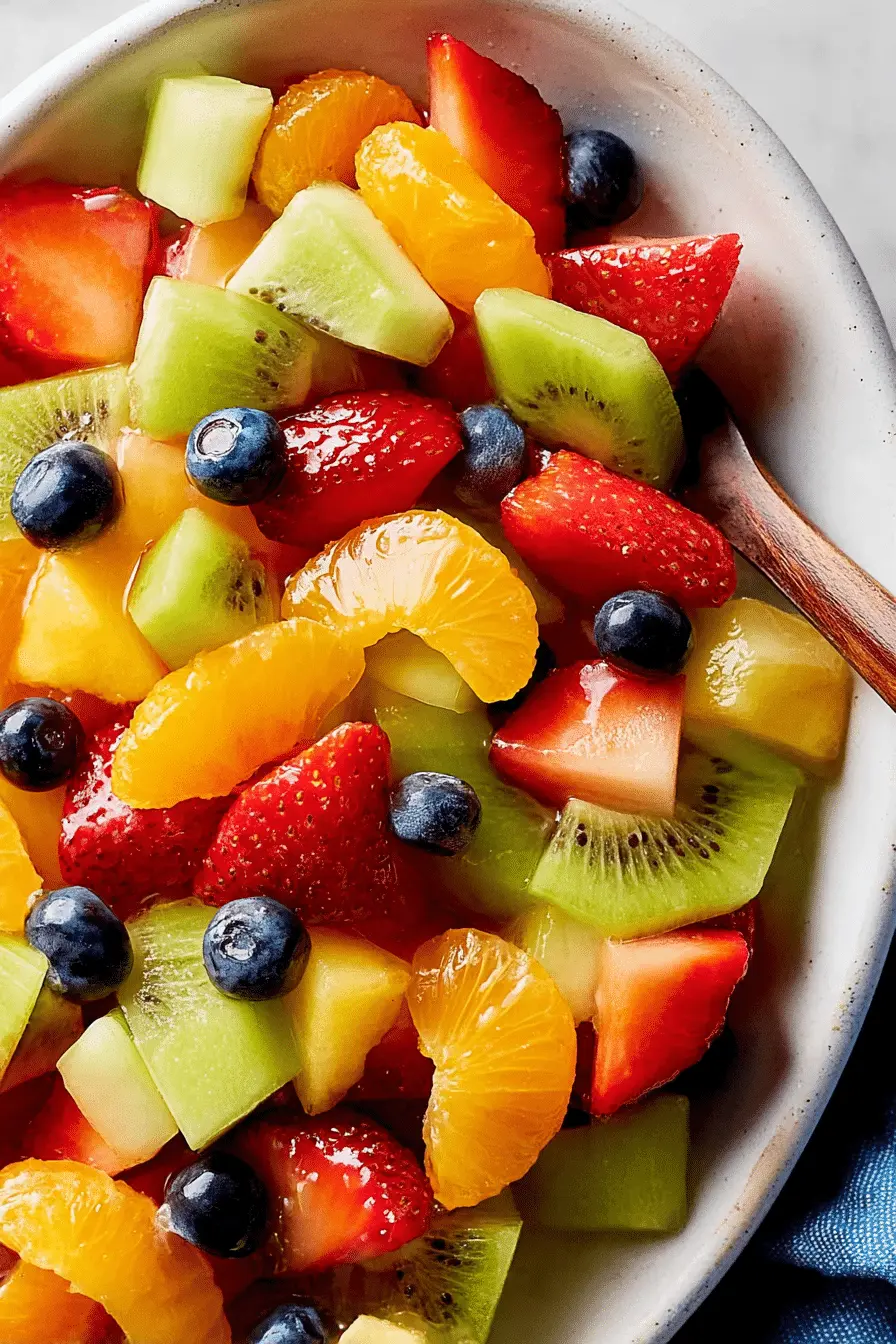
How I Keep It Simple: Easy Fruit Salad for Summer Gatherings
- Prep
- 30 min
- Total
- 30 min
- Serves
- 12
- Calories
- 120 kcal
- Carbs
- 30.00 g
Introduction
I make this easy fruit salad all through the warmer months because it’s the kind of dish I can put together between errands and still feel proud to bring to a picnic. It brightens a potluck bowl, plays nicely beside grilled meat or a big green salad, and it’s forgiving when you swap in whatever fruit is ripe in your market that day.
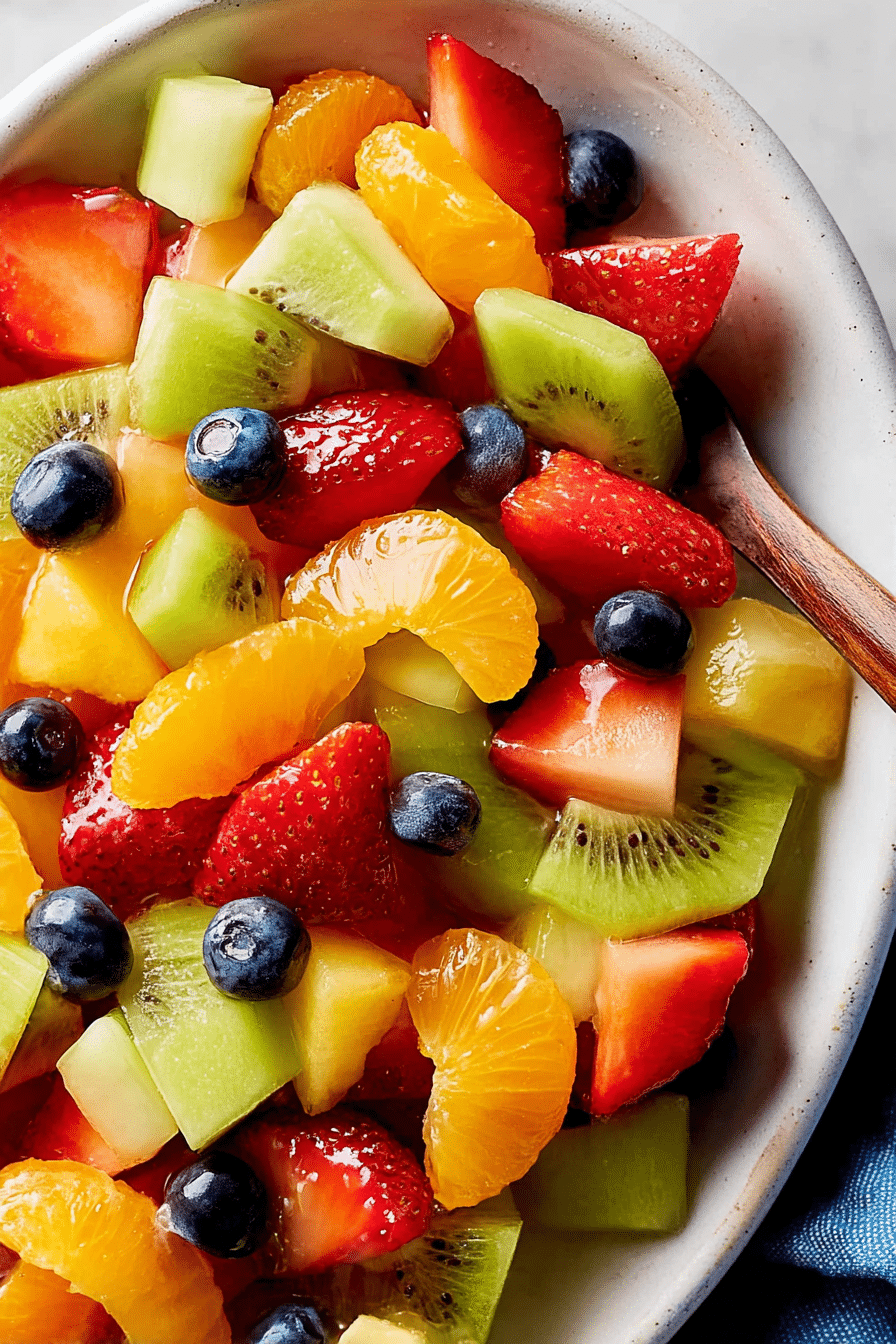
In my kitchen I keep the assembly simple: a few ripe fruits, a citrus-forward dressing, and one or two crunchy toppings for contrast. Because everything is raw and ready in minutes, the salad is ideal when you’re hosting and don’t want to be stuck in the kitchen while guests arrive.
Over the years I’ve learned how small choices—how you cut the fruit, when you add dressing, and which fruits you pair—make the difference between a tired bowl and one that still looks lively hours later. Below I walk you through the essentials so you can make a fruit salad that’s colorful, balanced, and fuss-free.
Why this Easy Fruit Salad is perfect for picnics, parties, and busy hosts
This fruit salad is intentionally low-effort and high-impact: you don’t need to cook anything, and it pairs with nearly everything on a summer spread. If you’re running late, you can prep the fruit ahead, bring the dressing in a jar, and finish the toss at the last minute so the salad remains vibrant.
Think of it as an easy contrast to richer dishes—its bright acidity and juicy textures refresh the palate between heavy bites of cheese, grilled proteins, or creamy sides. At family gatherings I often set it out alongside a big board of savory items; it’s the one thing that almost always disappears first.
Sensory note: when you scoop a spoonful, expect a mix of popping sweetness, a little citrus tang, and satisfying firm bites that keep the salad from feeling mushy. That balance makes it pleasant to eat on its own or layered over yogurt at breakfast.
Everything You Need for Easy Fruit Salad
Gather a few kitchen staples and ripe fruit, and the rest is quick. Below are the essentials—focus on freshness and a small, sharp knife for clean cuts.
- Fresh, ripe fruit – Choose a mix of sweet, tart, and firm fruits so the salad has contrast. If a fruit is under-ripe, hold off; overripe pieces will turn the bowl soggy.
- Bowl for tossing – A wide, shallow bowl helps you toss gently without bruising delicate pieces.
- Sharp knife – For neat, even cuts that keep textures consistent and make the salad look tidy.
- Citrus juicer or fork – For extracting bright citrus juice to dress the fruit; fresh juice makes a noticeable difference.
- Small mixing bowl or jar – For whisking or shaking the dressing so it emulsifies quickly.
- Serving spoon – Use a wide spoon to scoop without smashing softer fruits.
- Substitutions – If a listed fruit isn’t available, swap with a same-texture fruit (e.g., pears for apples, nectarines for peaches). For sweetener in the dressing you can use honey or a plant-based alternative.
Best Fruit Combinations by Season (Quick Picks)
Choosing fruits that are in season will give you the best flavor and texture. Pair fruits with complementary profiles so each bite has sweet, tart, and firm elements.
- Spring – Berries plus stone fruit: sweet strawberries, tart rhubarb or apricot accents, and early cherries when available. Light herbs like mint work nicely here.
- Summer – Tropical and stone fruit mixes: pineapple and mango with peaches or nectarines for juicy, bold flavors and contrasting textures.
- Fall – Crisp fruit combos: apples or pears with late-season grapes and pomegranate arils for crunch and a touch of tannin.
- Winter – Citrus-forward mixes: oranges, mandarins, and grapefruit balanced with persimmons or ripe pears for substance.
For more ideas on how to elevate your fruit salad, check out our best fruit combinations by season.
The Secret to the Perfect Texture: Balance sweet, tart, and firm
Focus on texture rather than gimmicks. The best bowls have three roles filled: something sweet, something tart, and something that holds its shape.
Sweet fruits (like ripe berries or mango) provide immediate flavor; tart fruits or citrus juice cut that sweetness so the salad isn’t cloying; firm fruits (like apples, grapes, or pineapple) give structure so each spoonful has bite. How you cut each fruit matters: smaller pieces for very juicy fruit, larger pieces for firm fruit.
For presentation, aim for uniformity—similar-sized pieces look and feel better together. A few simple cutting techniques make a big difference: thin slices for delicate fruits, wedges for citrus, and small chunks for denser fruits. This keeps the texture consistent and the bowl visually inviting.
Dressings & Toppings That Change Everything
A little dressing ties the bowl together; toppings add contrast. Mix and match depending on dietary needs or the mood of the meal. For creamy notes, yogurt pairs beautifully; for crunch, try nuts or seeds. If you need vegan alternatives, use maple syrup in place of honey.
- Bright citrus dressing – Fresh citrus juice plus a touch of sweetener keeps fruits shining without weighing them down.
- Yogurt drizzle – A spoonful of thick yogurt adds creaminess and pairs well with berries for breakfast or brunch.
- Herb-laced options – Chopped mint or basil adds aromatic freshness that pairs surprisingly well with stone fruits.
- Crunchy toppings – Toasted nuts, seeds, or shredded coconut add texture contrast. Use chopped almonds or pistachios for a nutty note, or sunflower seeds for a nut-free crunch.
- Sweeteners – Honey or maple syrup both work; choose maple for a vegan finish.
Explore various dressings and toppings that can greatly enhance your fruit salad.
How to Make Easy Fruit Salad (Step-by-Step)
- Wash and dry all fruit so the salad isn’t diluted by excess water.
- Prep your cutting station: a sharp knife, a stable cutting board, and a bowl for scraps. Prepare all fruit before combining so you can toss quickly.
- Cut fruits into similar bite-sized pieces—reserve softer fruits to add last to avoid bruising.
- Make the dressing in a separate small bowl or jar by whisking citrus juice with a touch of sweetener until smooth.
- Pour the dressing over the fruit just before serving and toss gently to coat. If you’re serving later, keep the dressing separate and add it at the last minute.
- Finish with toppings—nuts, seeds, coconut, or a dollop of yogurt—right before serving so textures stay crisp.
Pro Tip for easy fruit salad: Prevent sogginess and keep colors bright
- I always wait to add soft or very juicy fruits until the last minute; that prevents the whole bowl from becoming watery.
- Store citrus juice separately and dress the salad just before serving to keep fruit textures intact and colors vivid.
- Use a wide, shallow bowl to toss gently—less pressure means less bruising.
- Sprinkle a little acid (fresh citrus) over fruits that brown quickly to slow oxidation and keep colors bright.
How to Store and Make-Ahead Easy Fruit Salad (Up to 48 Hours)
You can make the salad ahead, but timing matters. Store fruit and dressing separately when possible and combine close to serving. Use an airtight container and keep the salad chilled; sturdy fruits will hold up longer than delicate berries.
- Make-ahead approach: prep and chop fruit, store in airtight containers, and refrigerate. Keep dressing in a sealed jar until ready to toss.
- Best storage containers: shallow, airtight containers minimize crushing and let you see what’s inside at a glance.
- Fruit combinations that last: firmer fruits like apples, grapes, and pineapple keep longer; delicate berries are best added within the last day.
Learn about essential storage techniques for salads to maintain freshness and flavor.
Vegan and Gluten-Free Options for Easy Fruit Salad
This salad is naturally gluten-free. To make it vegan, swap honey for maple syrup in the dressing and choose plant-based toppings like toasted coconut or seeds instead of dairy-based garnishes.
- For vegan dressing: use maple syrup or agave in place of honey and mix with citrus for the same bright lift.
- Gluten-free toppings: nuts, seeds, and shredded coconut are all safe and add texture; avoid pre-flavored granolas unless labeled gluten-free.
- Cross-contact note: if you’re serving someone with severe allergies, keep nuts separate and clearly labeled.
Serving Suggestions and Unique Uses
This fruit salad is versatile: serve it as a bright side at a barbecue, a topping for pancakes or yogurt, or spoon it into parfait glasses for a casual dessert. Leftovers make a great base for a smoothie bowl; use them in place of fresh fruit for a quick blended breakfast.
Use leftover fruit to create an ultimate fresh fruit smoothie that’s refreshing and delicious.
Troubleshooting
- I’ve found that watery salad is almost always from overripe fruit—remove or dice those pieces smaller and serve sooner.
- If fruit browns quickly, squeeze a little extra citrus over the affected pieces and keep chilled until serving.
- If the salad tastes flat, a pinch more acid (lemon or lime) brightens it immediately without adding sweetness.
- If textures clash (too many soft fruits), add firmer pieces or crunchy toppings to restore contrast.
Variations
- Tropical – Pineapple, mango, and papaya with lime and toasted coconut.
- Berry-forward – Mixed berries with a lemon-yogurt dollop for brunch.
- Stone fruit – Peaches, nectarines, and cherries with chopped basil for a fragrant twist.
- Autumn bowl – Apples, pears, late grapes, and a sprinkle of cinnamon or toasted walnuts.
- Savory-sweet – Add diced cucumber, fresh herbs, and a pinch of flaky sea salt for a more savory side.
Frequently Asked Questions
Can I use frozen fruit for this salad? While fresh fruit is recommended for the best flavor and texture, you can use frozen fruit if it's thawed and drained well. Just keep in mind that the texture may be softer.
How long can I keep the fruit salad in the refrigerator? You can store the fruit salad in an airtight container in the refrigerator for up to 2 days for the best freshness and quality.
Can I make this fruit salad in advance? Yes! You can prepare the fruit salad up to 48 hours in advance. Just keep it chilled until you're ready to serve.
What are some good toppings to add? Great toppings include shredded coconut, chopped nuts, or a dollop of yogurt. They can add interesting textures and flavors!
Are there any vegan options for the dressing? Yes! You can use maple syrup instead of honey, making the dressing fully vegan while still being delicious.
Recipe Card
How I Keep It Simple: Easy Fruit Salad for Summer Gatherings
- Prep
- 30 min
- Total
- 30 min
- Serves
- 12
- Calories
- 120 kcal
- Carbs
- 30.00 g
Ingredients
- 1 mediumpineapple ((peeled, cored, and chopped into ½-inch pieces))
- 1 poundstrawberries ((hulled and chopped))
- 3kiwis ((peeled, quartered lengthwise, and sliced))
- 2 cupsseedless grapes ((halved))
- 1 pintblueberries
- 3mandarin oranges ((peeled and segmented, or 1 peeled and diced mango or 2 chopped peaches))
- 1lime ((juice))
- 1mandarin orange ((juice))
- 1 tablespoonhoney or maple syrup
Instructions
- 1
In a large bowl, mix together the pineapple, strawberries, kiwi, grapes, blueberries, and mandarins.
- 2
Make the dressing: In a small bowl, whisk together the lime juice, mandarin juice, and honey.
- 3
Pour the dressing over the fruit and toss to coat. Serve immediately or cover and chill until ready to serve.
- 4
Fruit salad keeps well in an airtight container in the refrigerator for up to 2 days.
You might also like
Reviews
Be the first to review this.