
How I Finally Nailed Easy Grilled Salmon — 20-Min Dinner
- Prep
- 5 min
- Cook
- 7 min
- Total
- 12 min
- Serves
- 2
- Calories
- 427 kcal
- Protein
- 28.00 g
- Carbs
- 1.00 g
- Fat
- 34.00 g
Introduction
I cook salmon on weeknights more than almost anything else because it's fast, satisfying, and almost always delivers that flaky, moist texture I'm after. In my kitchen I focus on a few reliable habits—high heat to get a sear, patting the fish dry so it doesn't steam, and a brief rest at the end so the juices settle. Those three small steps shaved minutes off dinner prep and made cleanup painless.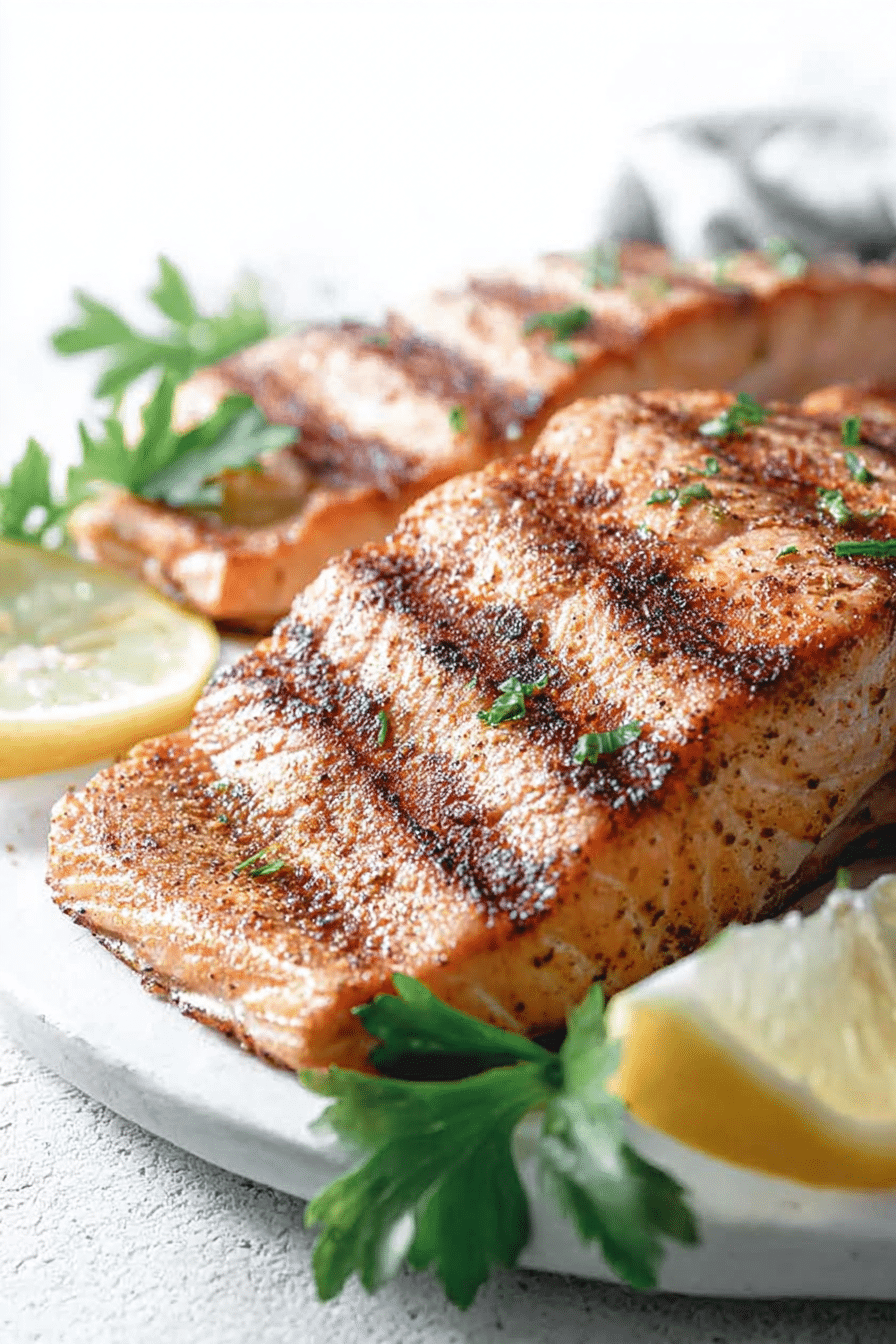
Everything You Need for Easy Grilled Salmon
Here’s what I use in my kitchen and why each piece matters. These notes will help you pick the right salmon and the right tools so your first grill session goes smoothly.
- Salmon (skin-on fillets recommended) – Skin-on fillets hold together better on the grill and make flipping easier; wild-caught or farmed Atlantic both work, but firmer, thicker cuts are easiest to handle.
- Olive oil – Helps the fish sear and prevents sticking; also carries seasoning evenly across the surface.
- Unsalted butter or finishing fat – A small pat of butter or oil right after grilling adds shine and flavor when the fish rests.
- Lemon (fresh squeezed) – Bright acid to finish the fish and cut through richness.
- Coarse salt and freshly cracked pepper – Simple seasoning that enhances natural salmon flavor; coarse salt gives a pleasant surface texture.
- Fish spatula – Thin, wide spatula designed to slide under delicate fillets without tearing.
- Grill brush and oiled towel – Clean grates and a lightly oiled surface prevent sticking and help create a crisp sear.
- Long tongs – For handling the oiled towel and moving fish if needed.
- Instant-read thermometer – The fastest way to hit the ideal internal temp without overcooking.
The secret to perfectly moist, flaky grilled salmon
The texture you want is moist and flaky inside with a slightly firm exterior. These techniques make that happen every time.
- Preheat the grill to high heat (roughly the 450–550°F range) so the exterior sears quickly and keeps juices inside.
- Pat the salmon dry on all sides before oiling—moisture on the surface creates steam, which prevents a good sear.
- Oil the fish rather than relying on marinades that can drip and create flare-ups; oil also helps the seasoning stick and forms a nice crust.
- Place the salmon flesh-side down and don’t move it for the initial sear—this helps a natural release from the grate and builds flavor and texture.
- Use an instant-read thermometer and aim for about 125°F internal for medium-rare, pulling it a touch early if you plan to let it rest; residual heat will carry it a few degrees higher.
- Flip only once. Flipping prematurely breaks the fillet and releases moisture; a gentle flip after the first sear preserves shape and juices.
How salmon thickness and grill temperature change cook time
Cook time depends on thickness and grill heat. Below are practical, experience-based guidelines you can follow for predictable results.
- At medium-high heat (about 400–450°F):
- 1/2" thick — 2–3 minutes per side.
- 3/4" thick — 3–4 minutes per side.
- 1" thick — 4–5 minutes per side (flip once).
- 1.5" thick — 5–6 minutes per side, or sear then move to indirect heat to finish.
- At high heat (about 450–550°F):
- 1/2" thick — 1.5–2 minutes per side.
- 3/4" thick — 2.5–3 minutes per side.
- 1" thick — 4 minutes on flesh side, then 2–3 minutes after flip (this is the sweet spot for most store-bought fillets).
- 1.5–2" thick — Sear 4–6 minutes flesh side, flip and finish 3–5 minutes or move to indirect heat.
- Thermometer placement: Insert the probe into the thickest part of the fillet, avoiding contact with the bone or the skin for an accurate reading.
- Estimate thickness: If you don’t have a ruler, a typical 8-ounce fillet from the grocery is often close to 1" thick; adjust time up or down if yours looks noticeably thinner or thicker.
Why salmon is a quick weeknight superfood (omega-3 benefits)
Salmon is more than fast to cook — it’s nutritionally dense, which makes it ideal for busy, health-minded dinners.
- Omega-3 fatty acids (EPA and DHA) – Support heart health and brain function; a regular serving of salmon helps you meet recommended healthy fat targets without much prep.
- Complete protein – Salmon provides all essential amino acids, making it excellent for muscle repair and satiety after a long day.
- Quick nutrient return – Vitamins D and B12, plus minerals like selenium, come with minimal cooking time, so you get health benefits without a long recipe.
- Fits many diets – Naturally gluten-free and easy to adapt for keto or other low-carb plans by swapping sides.
How to Make Easy Grilled Salmon (Step-by-Step)
Follow these concise, practical steps. Each bullet gives a single action so you can scan quickly while cooking.
- Portion your fillets to the size you want; if skin-on, leave the skin intact for grilling stability.
- Pat the fish dry on all sides with paper towels; this step is non-negotiable for a good sear.
- Brush or rub a thin layer of oil over the flesh and skin so the seasoning adheres and the fish won’t stick.
- Season both sides generously with coarse salt and freshly cracked pepper; keep it simple so the salmon’s flavor shines.
- Preheat the grill to high (around 450–550°F) and clean the grates with a brush so the fish releases cleanly.
- Oil the grill grates using a towel saturated with oil held with long tongs; a well-oiled grate is a key step for easy flipping.
- Place the salmon flesh-side down and leave it undisturbed for the initial sear (about 4 minutes for a 1" fillet at high heat).
- Gently flip using a fish spatula (and tongs if needed) and cook for an additional 2–3 minutes or until the thickest part reaches about 125°F.
- Remove the salmon from the grill, spoon a little melted butter and fresh lemon juice over it, and let it rest for 2–3 minutes before serving.
If you're looking for an easy way to enhance flavor, consider our garlic butter salmon method.
- Troubleshooting (things I learned through trial and error):
- I found that if the grill isn’t hot enough the fish sticks and falls apart—always wait for a good sear before attempting to move it.
- I once ruined a fillet by flipping too early; I now count time and resist the urge to peek until the initial sear is done.
- When flare-ups happen, I move the fish to a cooler part of the grill briefly so it finishes without burning the exterior.
Pro Tip for easy grilled salmon recipe: timing by thickness and thermometer guide
Quick-reference advice I use when the clock is ticking.
- 1/2" fillet: About 2–3 minutes per side at high heat. Use quick checks rather than relying on time alone.
- 3/4" fillet: Roughly 3–4 minutes per side at high heat; aim for 120–125°F before resting.
- 1" fillet (common grocery size): 4 minutes flesh-side down, then 2–3 minutes after flipping at high heat; target 125°F internal.
- Thicker than 1": Sear on high then finish over indirect heat to avoid charring the outside while the center comes up to temp.
- Thermometer placement: Probe into the thickest part of the fillet without touching the skin or bone for an accurate reading.
- Resting time: Let the fish rest for 2–3 minutes; residual heat carries the temperature up a couple degrees and the juices redistribute.
How to Store, Reheat, and Make Variations (Keto, GF, veggie sides)
Leftovers and adaptations keep this recipe useful beyond one meal. Here’s how I handle them.
- Storage: Cool the salmon to room temperature briefly, then store in an airtight container in the refrigerator for up to 3 days.
- Reheating: Gently rewarm slices in a skillet over low heat with a splash of oil or in a low oven (about 250–275°F) until warmed through—this preserves moisture better than a high heat blast.
- Keto/Low-Carb: Keep the same seasoning and pair with cauliflower rice, sautéed greens, or a small salad dressed in olive oil and lemon.
- Gluten-Free: This recipe is naturally gluten-free; avoid sauces with soy or wheat unless you swap for gluten-free tamari.
- Vegetarian/Plant-Based Alternatives: Grill thick slices of marinated extra-firm tofu or large portobello caps with similar timing and finish with lemon and herb butter alternatives for a comparable experience.
- Make-Ahead Tips: You can season the fish an hour ahead and let it rest uncovered in the fridge to dry the surface for an even better sear.
A delicious accompaniment to grilled salmon is a creamy dill potato salad, perfect for any meal.
Pairing suggestions for sides and sauces to complement grilled salmon
Simple sides and bright sauces highlight the salmon without overcomplicating dinner.
- Fresh green salad – A mix of peppery greens, sliced cucumber, and a light lemon vinaigrette adds freshness and crunch.
- Grilled vegetables – Asparagus, zucchini, or bell peppers tossed with olive oil and sea salt grill quickly alongside the fish.
- Simple grain sides – Quinoa, farro, or a herbed rice pilaf make the meal more substantial while keeping flavors balanced.
- Sauces: A quick lemon-dill sauce, an avocado crema, or a spoonful of compound butter brightens each bite without overwhelming the salmon.
- For a sweet-smoky side: Don’t forget to add some grilled corn on the cob as a sweet and smoky side dish.
- Try a twist: For a complementary flavor profile, consider pairing with our honey garlic salmon recipe for a different finish or serving it alongside grilled fillets for variety.
Frequently Asked Questions
What should I put on my salmon before grilling? You can drizzle olive oil and sprinkle salt and pepper on your salmon before grilling. You can also experiment with marinades like soy sauce, garlic, or citrus for added flavor!
How can I tell when the salmon is done cooking? Salmon is done when it reaches an internal temperature of about 125°F. You can also check for doneness by gently flaking the fish with a fork; it should easily flake apart.
Can I substitute other fish for salmon in this recipe? Yes! You can use other firm fish like trout, halibut, or swordfish, but cooking times may vary based on the thickness of the fillets.
What are some good side dishes to serve with grilled salmon? Some popular sides include grilled vegetables, a fresh green salad, quinoa, or rice. A lemon butter sauce or a dill sauce can also complement the salmon beautifully!
How do I store leftover grilled salmon? Store leftover grilled salmon in an airtight container in the refrigerator for up to 3 days. To reheat, gently warm it in the microwave or a skillet over low heat.
Recipe Card
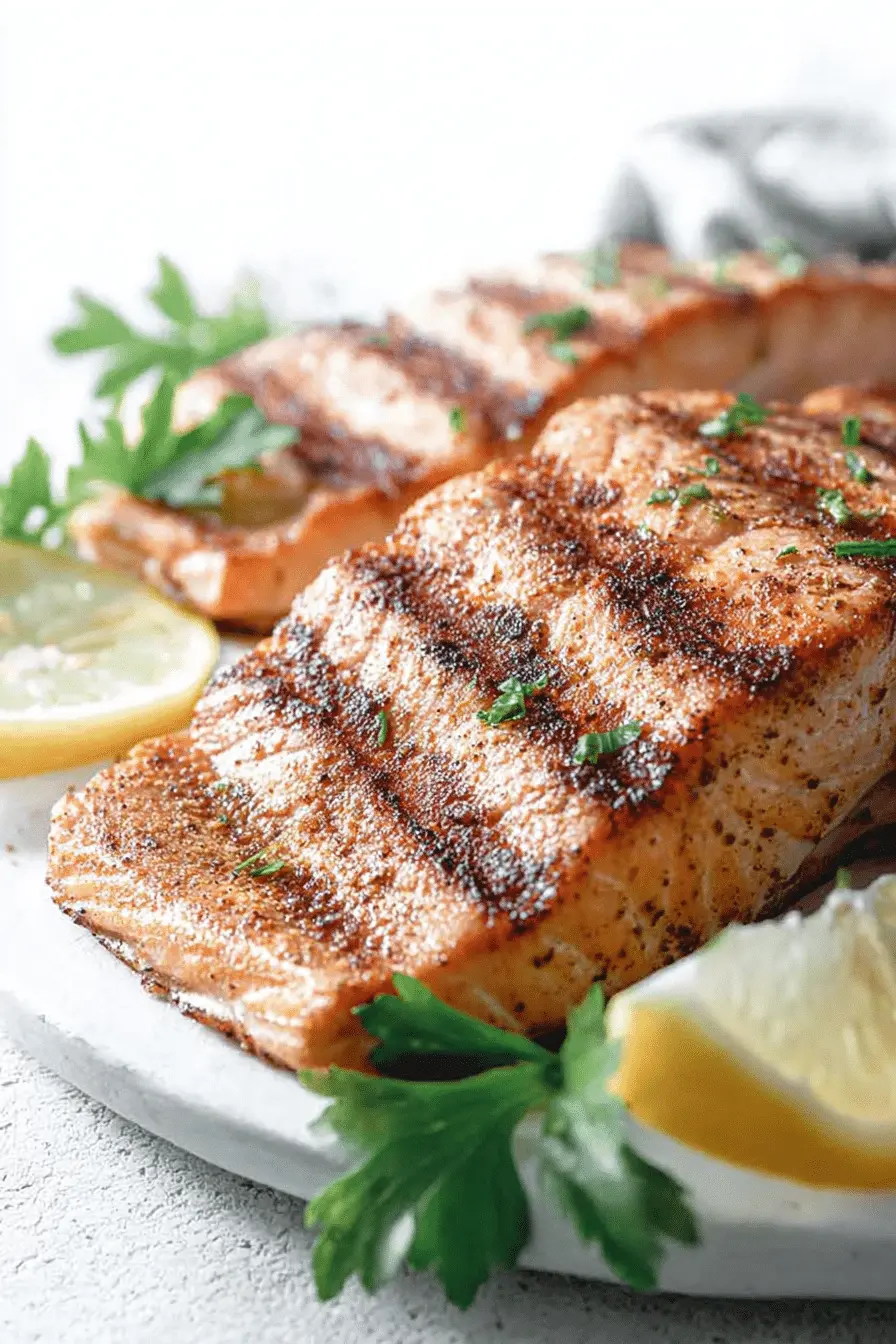
How I Finally Nailed Easy Grilled Salmon — 20-Min Dinner
- Prep
- 5 min
- Cook
- 7 min
- Total
- 12 min
- Serves
- 2
- Calories
- 427 kcal
- Protein
- 28.00 g
- Carbs
- 1.00 g
- Fat
- 34.00 g
Ingredients
- 2 8-ouncesalmon fillets
- 2 tablespoonsolive oil
- 2 tablespoonsmelted unsalted butter
- 1 tablespoonfresh squeezed lemon juice
- —coarse salt and freshly cracked pepper to taste
Instructions
- 1
Portion the salmon fillets to the size of your liking.
- 2
Pat the fish down well on all sides with a paper towel.
- 3
Drizzle on the oil and rub it in to coat it on all sides.
- 4
Season the fish well with coarse salt and freshly cracked pepper on both sides.
- 5
Preheat the grill to high heat, about 450° to 550°.
- 6
Once hot, clean the grill using a grill brush.
- 7
Oil the grill using a kitchen towel saturated with oil.
- 8
Place the salmon flesh side down and cook for 4 minutes. Do not touch it.
- 9
Gently flip the salmon over and cook for 2 to 3 minutes or until it reaches about 125° internally.
- 10
Remove from grill, add melted butter and lemon juice, and let it rest for 2 to 3 minutes.
You might also like
Reviews
Be the first to review this.