

I make this rotisserie chicken noodle soup on the nights when the day ran long and the idea of cooking from scratch feels impossible. Using a store-bought rotisserie chicken lets me pull together a bowl of comfort in under an hour — the vegetables get a quick sauté, the carcass gives the broth real body, and the noodles finish everything off. I keep a few staple jars and frozen veggies handy so I don’t have to overthink dinner.
The first time I used a rotisserie chicken for soup I was surprised at how much flavor lived in the carcass — simmering it with aromatics makes a broth that tastes like it simmered for hours. The thick, hearty version I prefer means a richer mouthfeel; I sometimes thicken lightly so the broth clings to the noodles and vegetables. If you want a lighter bowl, skip the thickener and let the stock shine.
I know busy cooks need choices, so throughout this post I’ll show quick swaps (gluten-free and low-carb options), slow cooker and Instant Pot methods, freezer-friendly tips, and simple uses for any leftover chicken. If you’re exploring other quick soups, you might also like my take on an ultimate chicken soup for similar fast comfort:
If you’re looking for other quick and comforting options, check out our ultimate chicken soup.
Why this easy rotisserie chicken noodle soup is perfect for busy weeknights
Using rotisserie chicken saves the single biggest chunk of time: cooking the bird. That frees you to focus on quick technique — sautéing vegetables for flavor, a short simmer to draw richness from the carcass, and finishing the noodles so they stay springy. I’ve done this on nights I had one hand on homework help and the other on dinner, and it’s forgiving when you need to step away.
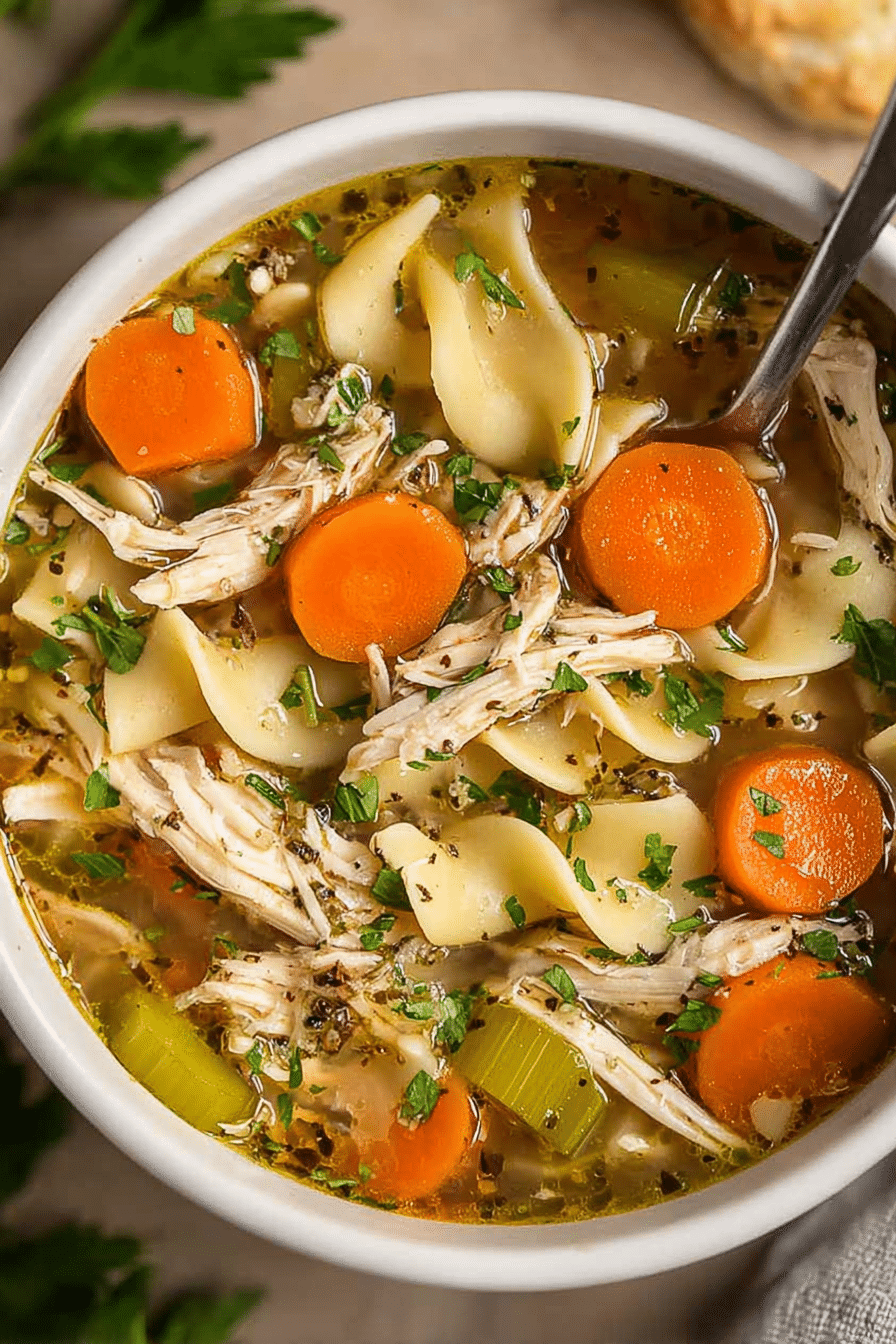
Sensory note: picture bright orange carrot slices and pale celery softened and glossy from sautéing, a steaming bowl releasing savory chicken aroma, and noodles that still have a bit of bite. The balance comes from salty stock, earthy herbs, and the golden body the rotisserie chicken lends. Small swaps—more herbs, extra garlic, or a squeeze of lemon—let you adjust the final bowl to your family’s tastes.
Everything You Need for Easy Rotisserie Chicken Noodle Soup
Below I list the ingredients conversationally so you can visualize the pot and make swaps without hunting for exact amounts. I also note the basic tools that make the process faster.
- * Rotisserie chicken – The flavor backbone; use the meat for shredding and simmer the carcass for broth depth. If you only have raw chicken, use bones or a carcass for the same effect.
- * Chicken broth – Adds salt and body; choose a low-sodium version if you want tighter control over seasoning.
- * Carrots – Sweetness and color; sliced so they soften quickly.
- * Celery – Aromatic backbone that brightens the broth.
- * Onion – Sautéed until translucent to build flavor early.
- * Garlic powder / fresh garlic – Adds savory lift; fresh garlic will be more pronounced.
- * Herbs (dried or fresh parsley, oregano, thyme, bay leaf) – Earthy, warming notes; adjust based on preference.
- * Pasta – Any small pasta works; see the noodles section below for best choices and timing.
- * Thickener (cornstarch or arrowroot) – Optional, for a slightly thicker broth that clings to noodles.
- * Olive oil – For sautéing the vegetables.
- * Salt & pepper – Season in stages; the broth concentrates as it reduces.
Tools that make this quick: a large, heavy-bottomed pot for even heat; a slotted spoon or tongs to remove the carcass; a small bowl and whisk for the thickener; and a good chef’s knife for quick chopping. For shredding, two forks work fine, or use your hands once the meat is cool enough.
Gluten-free and low-carb swaps: use gluten-free pasta or spiralized vegetables instead of wheat pasta, and replace cornstarch with arrowroot for a gluten-free thickener. For a lower-carb bowl, omit pasta and add extra diced vegetables or riced cauliflower at the end.
How to Make Easy Rotisserie Chicken Noodle Soup (Step-by-Step)
- Chop the vegetables so they’re ready to go; uniform pieces will cook evenly and look inviting in the finished bowl.
- Pull the rotisserie chicken meat from the bones and set it aside; keep the carcass whole to simmer and extract flavor.
- Heat oil in a large pot over medium-high heat and sauté the onion, carrots, and celery until the onions are translucent and the veg is glossy—this step builds a savory base you’ll notice in every spoonful.
- Add the broth, herbs, salt, pepper, garlic (or garlic powder), and the chicken (carcass and any reserved bones). Bring to a gentle simmer—no need for a rolling boil.
- Lower heat and simmer for about half an hour, until the carrots are softened and the broth has taken on good color and aroma; this is when the carcass gives the stock its depth.
- Remove the carcass and any large bones with tongs or a slotted spoon, then shred any remaining meat and return it to the pot.
- Add dry pasta directly to the simmering soup and cook until al dente—watch carefully so the noodles don’t overcook and puff.
- If you want a slightly thicker broth, whisk your chosen starch into a small bowl with a cup or two of the hot soup until smooth, then stir it back into the pot to thicken and gloss the broth.
- Taste and adjust seasoning with salt, pepper, or a squeeze of lemon, then serve hot with fresh herbs if you have them.
This process is flexible—if you’re short on time, skip the simmer with the carcass and use a richer store-bought stock, but I highly recommend the quick simmer when you can; the aroma fills the kitchen and rewards the extra half hour.
For another simple family favorite that uses similar one-pot techniques, this recipe is as simple as making our
This recipe is as simple as making our creamy garlic chicken, ensuring a delightful cooking experience.
The secret to a rich, flavorful broth with rotisserie chicken
You don’t need to simmer bones for hours to get serious flavor. When I simmer the carcass even for 20–40 minutes, the broth picks up gelatin and savory notes that make the soup feel homemade. It’s less about time and more about extracting those concentrated flavors: gentle heat and a lid left slightly ajar helps coax flavors without clouding the broth.
Sensory note: as the pot simmers you’ll smell roasted chicken and sweet vegetables — a warm, homey aroma that tells you the broth is building. If the broth tastes flat at the end, a pinch more salt or a splash of acid (vinegar or lemon) brightens everything instantly.
Best noodles and timing for perfect soup texture
Choose noodles that match the texture you want. Egg noodles and small pasta shapes hold up well and give the bowl that classic chicken noodle feel. Whole wheat or shorter shapes add chew and a nutty note, while gluten-free pastas work if you monitor them closely since they can go from al dente to mush quicker.
- Feel the pasta before you add it—if it’s very hard, it needs more time in the pot; if it flexes slightly, it will finish perfectly with carryover heat.
- Stir gently when the pasta is cooking so it doesn’t clump and so the noodles cook evenly in the broth.
- If you plan to freeze leftovers, undercook the pasta slightly in the initial cook; it will finish when you reheat and won’t become overly soft.
Quick shortcuts: using store-bought rotisserie chicken like a pro
- When you buy a rotisserie chicken, remove the meat while it’s still warm for easier shredding; cool any bones before simmering to make handling safe and tidy.
- To shred quickly, use two forks or your hands (wear gloves if you prefer). Slice larger pieces into bite-sized shreds so every spoonful has chicken.
- After pulling the meat, put the carcass straight into the pot with the aromatics and broth to capture maximum flavor from those browned bits.
- Store leftover rotisserie meat in shallow containers for quick access during the week; it keeps the soup prep fast and reduces waste.
Pro Tip for easy rotisserie chicken noodle soup: Instant Pot, GF swaps & freezer prep
Note: The following Pro Tips, Troubleshooting, and Variations are formatted as bulleted lists for quick scanning.
- Instant Pot method – Place sauteed vegetables, broth, herbs, and the chicken carcass in the Instant Pot. Cook on high pressure for a short cycle, then quick-release, remove the bones, add shredded meat and pasta, and use the saute setting to finish the noodles.
- Gluten-free swaps – Use gluten-free pasta and arrowroot as a thickener. Add delicate pastas toward the end to prevent them from breaking down.
- Freezer prep – Cool soup completely, portion into freezer-safe containers, and freeze for up to three months. If you plan to freeze, skip adding pasta; add it when you reheat for best texture.
- Troubleshooting – If the broth tastes flat, finish with salt and a splash of acid. If the pasta is too soft, next time add it later or undercook slightly. If the soup is too thin, whisk in a slurry of starch and hot broth to thicken gradually.
- Variations – Add leafy greens like spinach or kale near the end, swap in different herbs (tarragon or dill for brightness), or use shredded rotisserie dark meat for richer flavor.
How to store, freeze, and reheat Easy Rotisserie Chicken Noodle Soup
Proper storage keeps the soup tasting fresh and keeps textures intact. For a convenient reference, here are the methods I use.
- Refrigerate in airtight containers for up to 3–4 days; cool the soup to room temperature before sealing to protect the flavor and safety.
- For freezing, divide into meal-sized portions in freezer-safe containers or bags and freeze for up to three months. Leave space at the top of containers for expansion.
- To reheat, thaw in the fridge overnight if frozen, then warm gently on the stovetop over medium-low heat; add pasta fresh or allow the soup to simmer until hot. Avoid boiling, which can collapse delicate ingredients and overcook pasta.
If you want other soups that freeze beautifully for quick dinners, consider my classic potato leek soup for a different freezer-friendly option:
For a hearty dinner, you might also consider our classic potato leek soup that’s great for freezing.
Creative uses for leftover rotisserie chicken
- Turn leftovers into tacos with quick seasoning, salsa, and a crisp slaw for a fast weeknight dinner.
- Make a warm chicken salad with grapes, celery, and a light yogurt or mayo dressing for sandwiches or light lunches.
- Stir shredded chicken into casseroles, grain bowls, or scrambled eggs for extra protein and flavor.
- Transform the leftover chicken into a different soup—try a spiced chicken taco soup for a completely new flavor profile:
Transform your leftover rotisserie chicken into a delicious chicken taco soup for a quick and tasty meal.
Serving suggestions: I like this soup with crusty bread or a simple green salad. A sprinkle of fresh parsley or a grind of black pepper makes the bowl feel finished. For picky eaters, keep components separate until plating so everyone can customize their bowl.
Frequently Asked Questions
Can I use any type of noodles for the soup?
Yes! You can use any type of dry pasta, such as egg noodles or rotini. Just adjust the cooking time to ensure they’re cooked al dente.
How can I make this soup gluten-free?
You can use gluten-free pasta and cornstarch instead of regular pasta and wheat-based thickeners to make this soup suitable for a gluten-free diet.
How long do leftovers last in the fridge?
Leftovers can be stored in an airtight container in the fridge for up to 3-4 days. Just reheat on the stove or in the microwave before serving.
Can I make this soup in a slow cooker?
Absolutely! Just add all the ingredients except the pasta and cornstarch to the slow cooker and cook on low for 6-8 hours or high for 4-6 hours. Then add the pasta at the end.
What is the best way to freeze the soup?
Allow the soup to cool completely before transferring it to freezer-safe containers. It can be frozen for up to 3 months. Just reheat when you’re ready to enjoy it!
Easy Rotisserie Chicken Noodle Soup
Ingredients
Method
- Chop vegetables. Pull off the chicken breast meat and shred if desired. Heat olive oil over medium high heat in a large pot. Add celery, carrots and onion and saute until onions become translucent.
- Add in broth, salt, pepper, garlic, bay leaf, thyme, oregano, parsley, and chicken (including the whole chicken carcass).
- Turn heat to medium and allow soup to come to a low boil for about 30 minutes or until carrots are fully softened. At this time, it is easiest to remove the chicken bones.
- When bones are removed, add in dry pasta and allow to cook for about 10-15 minutes, or until al dente.
- Pour about 1 1/2-2 cups of the soup into a small bowl and whisk in the corn starch until dissolved. Add this mixture back into the soup and stir to fully combine.
- Enjoy! Store leftovers in an airtight container in the fridge.
- Add all ingredients into the slow cooker except the pasta and the corn starch. Cook on low for 6-8 hours or high for 4-6 hours. Remove the bones before adding the pasta.
- Add dry pasta and allow to cook until al dente, about 15-20 minutes.
- Pour about 1 1/2-2 cups of the soup into a small bowl and whisk in the corn starch until dissolved. Add this mixture back into the soup and stir to fully combine.
- Enjoy! Store leftovers in an airtight container in the fridge.