

I make this Everything Spring Green Salad as soon as spring produce hits the market. I love that it comes together in about half an hour using mostly fresh, no-cook ingredients, so it’s one of my go-to weeknight mains when time is short but I still want a meal that feels thoughtful and nourishing.
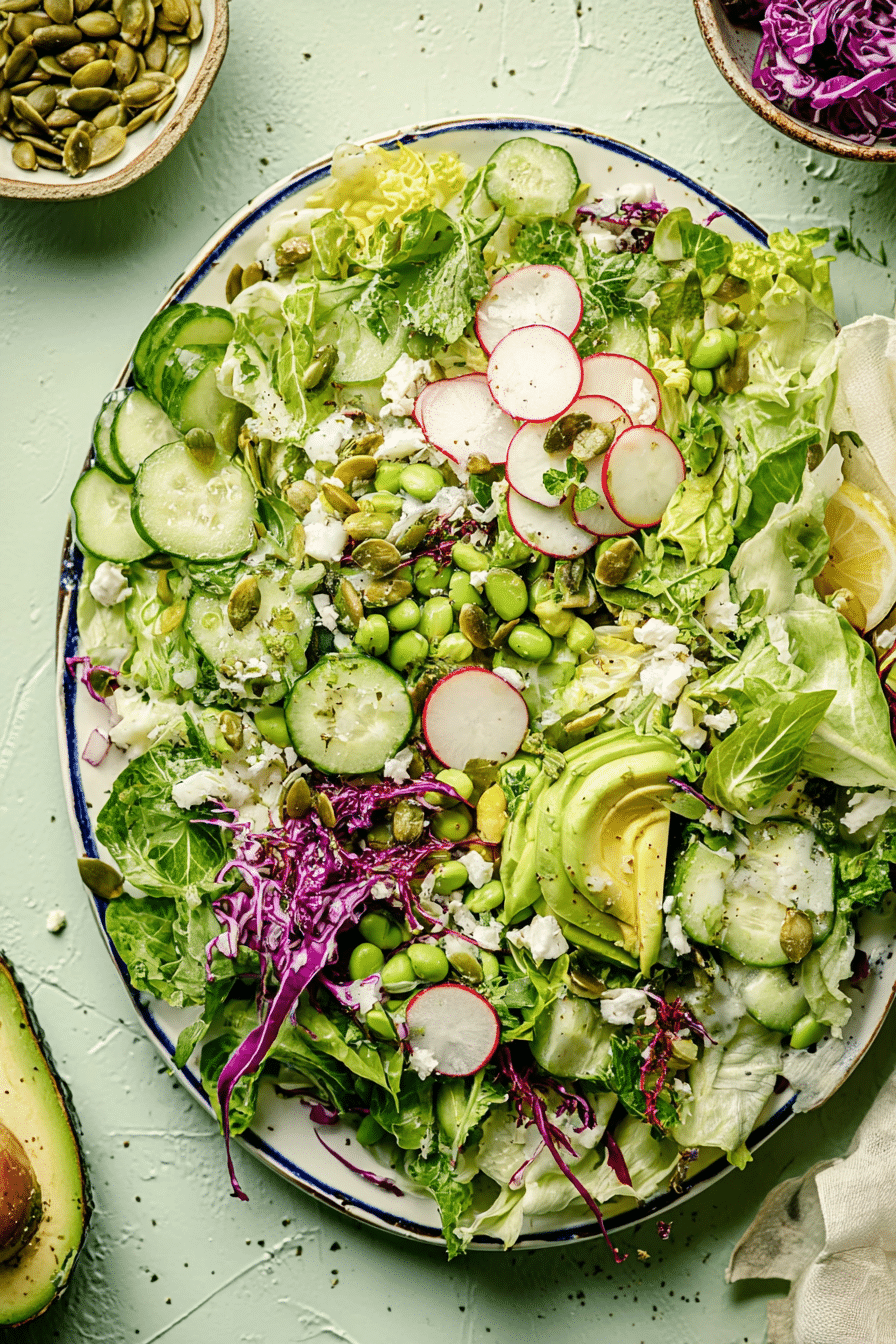
I aim for a mix of textures every time: tender spinach, crunchy cabbage and radish, creamy avocado, and the snap of seeds. The lemon basil vinaigrette brightens everything without overpowering the produce, and I usually make a little extra to keep in the fridge for other salads during the week.
I’ve learned a few practical things in my kitchen: keep the dressing separate until serving, add delicate items like avocado at the last moment, and toast the seeds for a deeper flavor. These small steps make a big difference in both taste and texture when you’re preparing a healthy meal quickly.
This salad works as an easy main meal, a colorful side, or a dish to bring to a potluck. It’s flexible, visually appealing, and built around seasonal ingredients that provide solid nutrition without fuss.
Why the Everything Spring Green Salad is Ideal for Healthy Weeknights
This salad is designed for speed and substance. Fresh, seasonal ingredients mean minimal prep and no long cooking times, so you get a nutrient-packed meal in the time it takes to set the table. The combination of leafy greens, vegetables, seeds and a smear of cheese gives you fiber, healthy fats and protein in a single bowl, supporting balance without extra effort.
Visually it reads as vibrant green with pops of color, which makes it feel satisfying before you even taste it. The citrus in the dressing keeps flavors lively, and the seeds provide crunch so every bite feels complete—ideal when you want a wholesome weeknight dinner that’s simple to assemble.
Everything Spring Green Salad Ingredients
- Spinach – The leafy base that adds iron and a tender texture; use fresh, thoroughly washed leaves.
- Red or green cabbage – Adds color and crunch; use shredded for easy layering.
- Microgreens or alfalfa sprouts – A nutrient-dense garnish that boosts vitamins and visual appeal.
- Frozen peas (thawed) – Sweetness and a pop of texture; a quick, protein-rich addition.
- Cherry tomatoes – Bright acidity and antioxidants that lift the whole salad.
- Persian cucumber – Cool, crisp hydration and mild flavor.
- Radishes – Peppery crunch to contrast softer ingredients.
- Pickled or raw red onion – Sharpness and a touch of tang; pickled for milder bite.
- Castelvetrano green olives – Briny, savory contrast that adds healthy fats.
- Ripe avocado – Creaminess and monounsaturated fats for heart health.
- Feta or goat cheese – Salty, creamy notes and a modest protein boost; swap for dairy-free options if needed.
- Roasted pistachios and sunflower seeds – Crunch, texture and vitamin E; they also supply healthy fats.
- Lemon basil vinaigrette – Bright acid, fresh herb flavor and a binding fat for satiny mouthfeel.
- Kosher salt & black pepper – Essential seasoning to balance and elevate flavors.
Why Each Ingredient Matters: Nutrition & Health Benefits
When you pick produce by color and texture, you automatically increase the variety of vitamins and phytonutrients on your plate. Here’s why the components of this salad matter:
- Spinach brings vitamin K and iron for bone and blood health, while also contributing folate.
- Microgreens punch above their weight: they often contain higher concentrations of vitamins A, C and K compared with mature leaves.
- Avocado provides monounsaturated fats that support heart health and help your body absorb fat-soluble vitamins from the vegetables.
- Pistachios and sunflower seeds add vitamin E, magnesium and healthy fats, plus satisfying crunch that helps curb overeating.
- Tomatoes offer lycopene, an antioxidant linked to reduced inflammation, and their acidity brightens the salad for a more balanced flavor profile.
- Peas contribute plant-based protein and fiber, helping you stay full longer without heavy calories.
- Olives add beneficial monounsaturated fats and a savory note that reduces the need for excess salt elsewhere.
The Secret to Creamy Avocado and Crisp Greens
- Choose an avocado that yields slightly to gentle pressure but isn’t mushy—this gives you creamy texture without turning to mush when you toss the salad.
- Keep greens dry: spin or pat them until no excess water remains to preserve crunch and keep the dressing from diluting.
- Add avocado and delicate microgreens last, just before serving, so they keep shape and color.
- Toss gently: use broad motions to coat leaves without bruising; this keeps cabbage crisp and spinach tender.
- Toast seeds briefly in a dry skillet for a minute or two to deepen their flavor; cool them before adding so they stay crunchy.
Superfood Swaps: Edamame, Quinoa, and Other Protein Boosts
- Edamame – Plant-based protein that fits vegan plates and adds a satisfying bite.
- Quinoa – A gluten-free grain that increases protein and makes the salad more filling as a main dish.
- Chickpeas – Roasted or simple, they add fiber and texture for a heartier bowl.
- Lentils – Cooked and cooled, they bring earthy protein and keep the salad suitable for meal prep.
- Tofu or tempeh – Pan-seared for texture; ideal if you prefer a neutral or smoky protein addition.
- Grilled chicken or salmon – For those who include animal protein, lightweight grilling complements the lemon-basil dressing.
How to Make Everything Spring Green Salad (Step-by-Step)
- Make the lemon basil vinaigrette: whisk lemon juice, olive oil, minced garlic, Dijon, a touch of sweetener, chopped basil, and salt and pepper together until emulsified. Taste and adjust seasoning.
- Place washed spinach in a large mixing bowl and add a light drizzle of vinaigrette; toss gently so the greens are just coated.
- Transfer the dressed greens to a serving platter or leave them in the bowl for family-style serving.
- Layer the other ingredients across the greens—shredded cabbage, microgreens, peas, tomatoes, cucumber, radish, onions, olives and avocado—so each bite includes varied textures and flavors.
- Sprinkle crumbled feta or goat cheese and scatter the toasted pistachios and sunflower seeds on top for crunch and richness.
- Season with a final grind of black pepper and a light sprinkle of kosher salt, then serve with extra vinaigrette on the side for guests who want more.
Pro Tip for everything spring green salad: Keep dressing separate until serving
- I always store the dressing apart from the greens when I meal-prep; this preserves crispness and prevents sogginess.
- I add crunchy toppings like nuts and seeds right before serving so they stay crisp instead of softening in the fridge.
- I slice avocado just before serving and toss it with a little lemon juice if I need to prep it slightly earlier to slow browning.
- I keep a small bowl of extra vinaigrette at the table so guests can customize how dressed they want their salad.
Variations
- Vegan: Use a dairy-free cheese or omit cheese and add extra roasted chickpeas for protein.
- Mediterranean style: Swap pistachios for toasted almonds and add chopped fresh herbs like parsley and mint.
- Grain bowl: Mix in cooked and cooled quinoa for a heartier, gluten-free main course.
- Protein-forward: Add edamame, grilled salmon, or sliced grilled chicken to make it a substantial meal.
Troubleshooting
- If the greens are soggy, I check whether they were fully dried after washing—re-spin or pat them dry and refrigerate uncovered for a short time to crisp up.
- If the dressing tastes too sharp, I add a small pinch of sweetener or a bit more olive oil to balance the acidity.
- If the avocado browns, I slice it at the last minute or toss the pieces with a little lemon juice to slow oxidation.
- If the salad feels bland, I always reach for salt and a squeeze of lemon to brighten flavors; a touch more chopped basil can also help.
How to Store, Meal-Prep, and Serve Everything Spring Green Salad
- Store components separately: keep greens, toppings (nuts/seeds), and dressing in separate airtight containers to extend freshness.
- For meal prep, assemble the base greens lightly dressed and pack crunchy items and avocado separately; combine just before eating.
- The salad can last 3–4 days in the fridge when stored properly, though textures (especially avocado and microgreens) will be best when eaten within the first couple of days.
- Serve chilled but not icy cold—take the salad out of the fridge a few minutes before serving so the flavors come together and the vinaigrette opens up.
Frequently Asked Questions
What ingredients are in the Everything Spring Green Salad?
The salad includes organic spinach, shredded cabbage, microgreens, peas, cherry tomatoes, cucumbers, radishes, pickled red onions, olives, avocado, feta or goat cheese, pistachios, sunflower seeds, and a lemon basil vinaigrette.
Can I make the salad ahead of time?
Yes! You can prepare the salad ingredients in advance, but it’s best to keep the dressing separate until you’re ready to serve to maintain the freshness and texture.
How can I customize the salad for different dietary needs?
You can swap ingredients like edamame or quinoa for added protein, or utilize dairy-free cheese options to make it vegan-friendly.
Is this salad good for meal prep?
Absolutely! This salad is perfect for meal prep as it’s nutritious and can be easily packed for lunches. Just remember to keep the dressing separate.
How long will the salad last in the fridge?
The salad can last 3-4 days in the fridge if stored properly in an airtight container, but the texture may change slightly over time.
Everything Spring Green Salad
Ingredients
Method
- Whisk together all vinaigrette ingredients in a small bowl until well combined and emulsified. You can also blend everything together in a high-speed blender. Taste, add salt and pepper and adjust seasonings as necessary.
- Add spinach to a large bowl and drizzle on half of the dressing, toss gently to coat. Add salad to a platter (or leave in the large bowl), then arrange and layer the other ingredients on top of the greens. Garish with salt and pepper. Serve with the remaining basil lemon vinaigrette on the side for guests to drizzle on if they desire.