


I perfected this iced matcha latte after a stretch of early mornings when I wanted a steady lift without the jittery spike that coffee sometimes gives me. In my kitchen I learned that the trick isn’t complicated: it’s about using vibrant, high-quality matcha and a few simple techniques so the drink tastes fresh, smooth, and lightly vegetal.
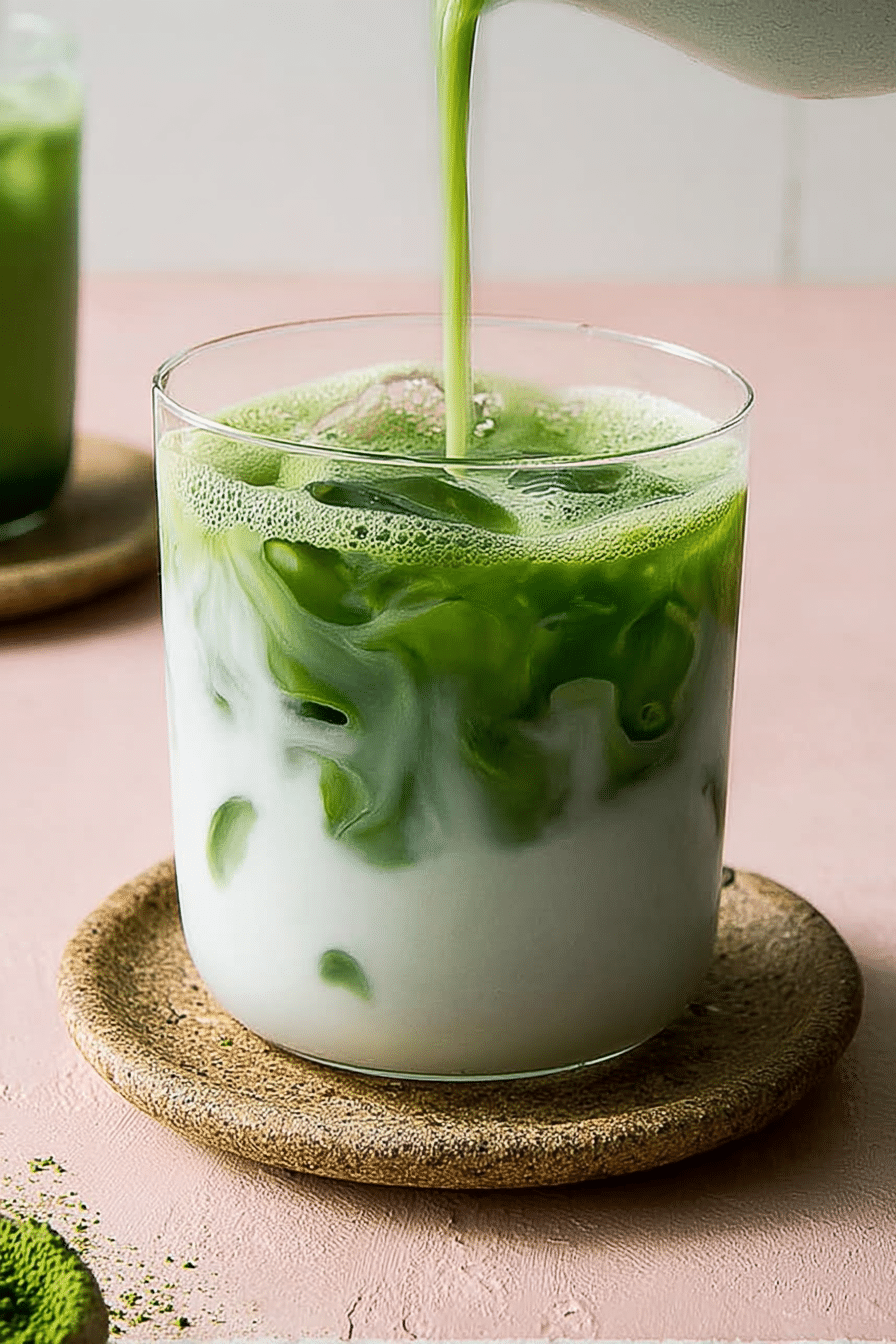
I like this latte because it feels nourishing without weighing me down. The green color is bright and clean; the aroma is mildly sweet and grassy. When I sip it, the mouthfeel is silky—especially if I whisk the matcha into a smooth paste before chilling it.
If you’re looking for a low-calorie, plant-friendly pick-me-up, this recipe is built for that. It’s easy to adapt, makes a quick batch for weekday mornings, and keeps well enough that you can make a concentrate to save time. Read on and I’ll walk you through the tools, the choices, and the small techniques that make the difference.
Why this Iced Matcha Latte is the perfect healthy pick-me-up
Matcha offers a different kind of alertness than brewed coffee because of L-theanine, an amino acid that supports focused calm. Paired with matcha’s moderate caffeine, L-theanine smooths the energy curve so many of us prefer it for steady productivity rather than a quick spike and crash.
This iced matcha latte is also a low-calorie option—about 12 kcal as written—so it won’t undo a light breakfast or snack. Beyond calories, matcha brings concentrated antioxidants called catechins (notably EGCG) that support cell health, plus small amounts of protein and fiber that contribute to satiety. Visually, the vivid emerald green signals freshness; on the nose you’ll notice an earthy, slightly sweet aroma that reads as both refreshing and grounding.
Everything You Need for Iced Matcha Latte
Tools and ingredients should be simple but intentional: a fine mesh strainer or bamboo sieve, a small bowl or measuring cup for whisking, a whisk (traditional bamboo chasen or a small electric frother), and tall glasses for serving. Good ice and cold milk complete the setup—quality here affects dilution and mouthfeel.
- * Matcha powder – The star of the drink: choose a fresh, vibrant green powder for best flavor and aroma.
- * Hot water – Used briefly to dissolve and bloom the matcha into a paste before chilling.
- * Cold water or chilled concentrate – To dilute the matcha paste before adding to milk if you prefer a milder green-tea base.
- * Milk of choice – Adds creaminess; almond, oat, soy, or dairy change body and sweetness.
- * Ice – Use large, fresh ice cubes to minimize quick dilution.
- * Sweetener (optional) – Simple syrup, agave, or a no-calorie sweetener work; add to the milk so it blends evenly.
Matcha 101: How to Choose High-Quality Powder
High-quality matcha is what transforms this from a chalky drink into something silky and bright. Look for an intense emerald green color—dull or yellowish powders indicate older or lower-grade leaf. Texture should be very fine and powdery; run a tiny pinch between your fingers and it should feel soft, not gritty.
For lattes, ceremonial-grade matcha gives the cleanest, least bitter flavor, though high-quality culinary-grade can work if it’s bright and fine. Store your matcha in an airtight container in a cool, dark spot and use it within a few weeks of opening for the freshest aroma. When you lift the tin, notice the fresh vegetal scent—that’s a good sign the powder is still lively.
Health Benefits of Matcha: Nutrients, Calm Energy, and Calories
Matcha concentrates the nutrients of whole tea leaves, so a single serving can deliver a meaningful boost of antioxidants—especially catechins like EGCG, which have been studied for their role in cellular protection and metabolic support. This recipe’s nutrition profile includes a small amount of protein (about 2 g per serving), which helps with satiety when paired with a light breakfast.
The caffeine in matcha is moderate and variable depending on serving size and grade, but it behaves differently than coffee because of L-theanine: you’re more likely to feel sustained focus than rapid jittery stimulation. Matcha also contains a bit of dietary fiber from the whole leaf, contributing to slower absorption of caffeine and nutrients.
Pair this drink with a protein-forward snack for a balanced mini-meal—try it alongside a Chickpea Arugula Quinoa Salad for a nutrient-rich combo that keeps you full and focused.
The Secret to a Smooth, Lump-Free Iced Matcha Latte
- Whisk matcha into a small amount of hot (not boiling) water to form a paste—this blooms the powder and reduces lumps.
- Push the paste through a fine mesh strainer into your bowl if you see any clumps—this gives an immediately smoother texture.
- Chill the whisked matcha briefly before combining with cold milk to prevent sudden clumping when cold liquid hits the powder.
- Use a handheld frother or vigorous whisking to emulsify matcha and milk if you want a lightly frothy top and silky mouthfeel.
- Troubleshooting (what I do when things go wrong) – If you spot stubborn lumps, I re-whisk the paste with a splash of hot water and push it through my strainer again. If the matcha separates after chilling, a quick flick with a frother or a brief shake in a sealed jar usually brings it back together. For gritty pockets, a short pulse in a blender clears them right away.
How to Make Iced Matcha Latte (Step-by-Step)
- Measure your matcha powder into a small bowl or measuring cup so it’s ready to mix.
- Pour a small amount of hot water over the powder and whisk vigorously until it becomes a smooth, lump-free paste.
- Stir in the remaining water to dilute the paste into a chilled matcha base; place it in the fridge or freezer for a short chill if you want it very cold before combining with milk.
- Fill two glasses with ice and add your milk of choice so each glass is about three-quarters full; sweeten the milk now if using simple syrup or another liquid sweetener so it blends evenly.
- Pour the chilled matcha over the milk and gently stir to create a marbled green-and-white effect, then give one final stir to combine fully before serving.
If you enjoy café-style variations, try our copycat version for a slightly different ratio and texture: Copycat Starbucks Matcha Latte.
Pro Tip for iced matcha latte: Vegan, Low-Calorie & Seasonal Swaps
- Plant milks: Almond milk keeps it light, oat milk gives a creamy body, soy adds protein, and thin coconut milk brings tropical notes.
- Low-calorie sweeteners: Use stevia, monk fruit, or a light simple syrup to control sweetness without many calories.
- Protein boost (vegan): Stir in a neutral-flavored pea protein or soy protein isolate to make the latte more filling.
- Seasonal twists: Add a pinch of pumpkin pie spice in autumn or a drop of peppermint extract for winter holidays; both pair well with oat or almond milk.
For a seasonal treat, try our Healthy Pumpkin Pie Smoothie as a refreshing alternative.
Storage, Make-Ahead Tips, and Easy Variations
Matcha powder stays freshest in an airtight container kept cool and dark; once opened, aim to use it within a few weeks for the best color and aroma. If you want to batch-make a matcha concentrate, whisk the matcha into water and keep it refrigerated for up to 24 hours—give it a quick stir or shake before using.
- Batch-making: Whisk a larger amount of matcha into water to make a concentrate you can mix with milk throughout the week.
- Freeze cubes: Make matcha ice cubes to keep drinks cold without diluting flavor.
- Flavor variations: Add a splash of vanilla, a dusting of cinnamon, or a few drops of citrus zest for brightness.
- Toppings: A light sprinkle of matcha powder on top, toasted coconut flakes, or a few cacao nibs add texture and contrast.
Frequently Asked Questions
Can I use any type of milk for my iced matcha latte?
Absolutely! You can use almond milk, oat milk, soy milk, or even regular dairy milk. Choose whichever you prefer!
How do I sweeten my iced matcha latte?
You can add simple syrup, honey, or your favorite sweetener to the milk before pouring in the matcha. Adjust the sweetness to your liking!
Is matcha gluten-free?
Yes! Pure matcha powder is gluten-free, making it a great choice for those with gluten sensitivities.
How can I store leftover iced matcha latte?
You can store any leftover iced matcha latte in the refrigerator for up to a day. Just give it a good stir before enjoying it again!
Can I make this recipe vegan?
Absolutely! Just use a plant-based milk like almond, soy, or oat milk, and you’re good to go!
Iced Matcha Latte
Ingredients
Method
- In a measuring cup or bowl, add the matcha powder. Pour in 1 to 2 tablespoons of hot water and whisk until the matcha has fully incorporated into the water. This should create almost a bit of a paste.
- Pour in the remaining 1 cup of water and mix. Transfer to the fridge or freezer to chill for about 15 minutes.
- Fill two glasses full of ice and add your milk of choice so the glass is about 3/4 of the way full. If you like, this is a great time to add any simple syrup. Lastly, pour in the chilled matcha and stir.