
How I Make Kale Caesar Salad That Stays Fresh All Week
- Prep
- 10 min
- Cook
- 15 min
- Total
- 25 min
- Serves
- 4
- Calories
- 443 kcal
- Carbs
- 12.00 g
Introduction
I've been making kale Caesar salads in my kitchen for years and have learned that a few small adjustments turn tough, bitter leaves into a tender, craveable salad. I love that this version keeps the satisfying tang and creaminess of a classic Caesar while leaning lighter and greener—perfect for weekday lunches or a quick side dish.
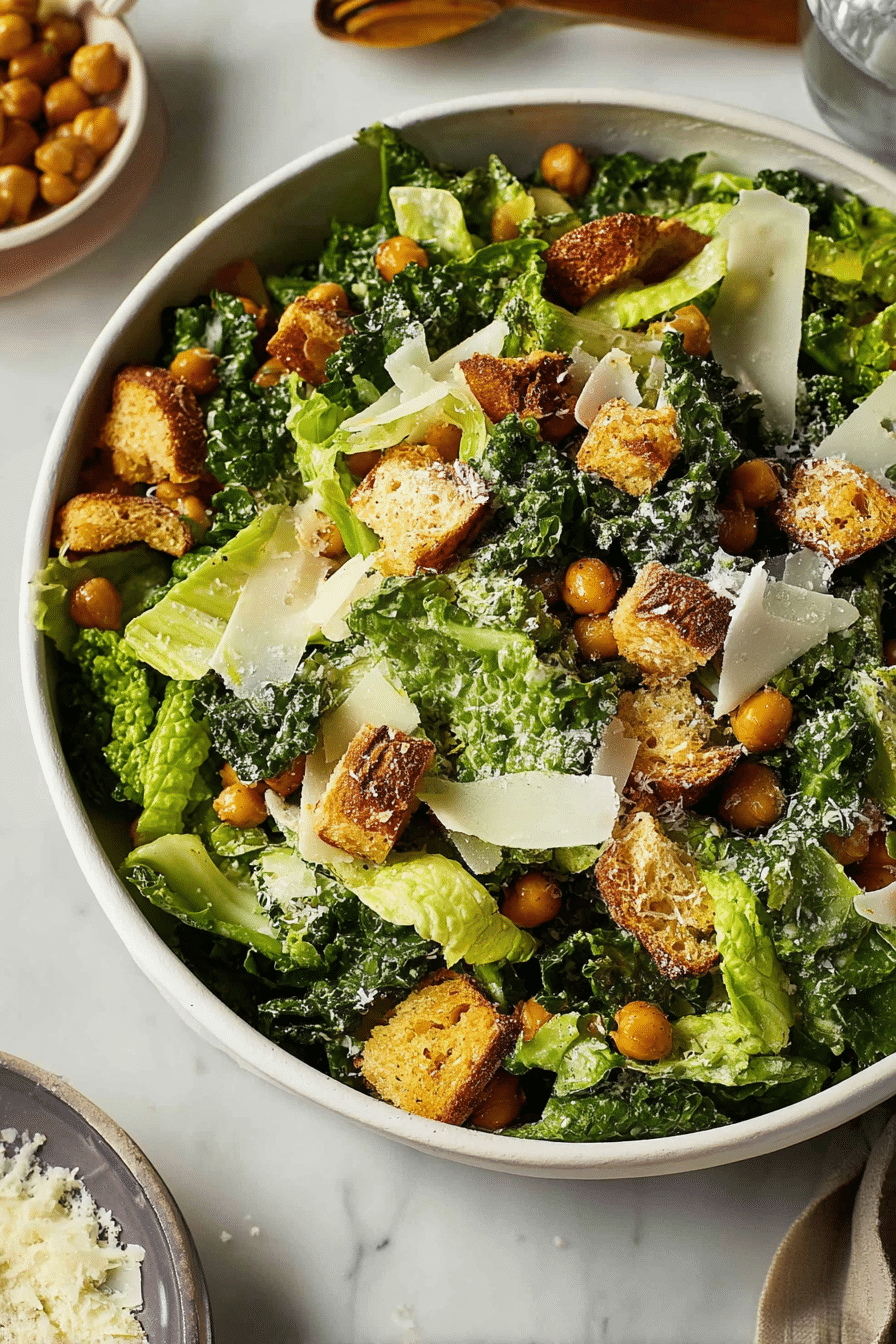
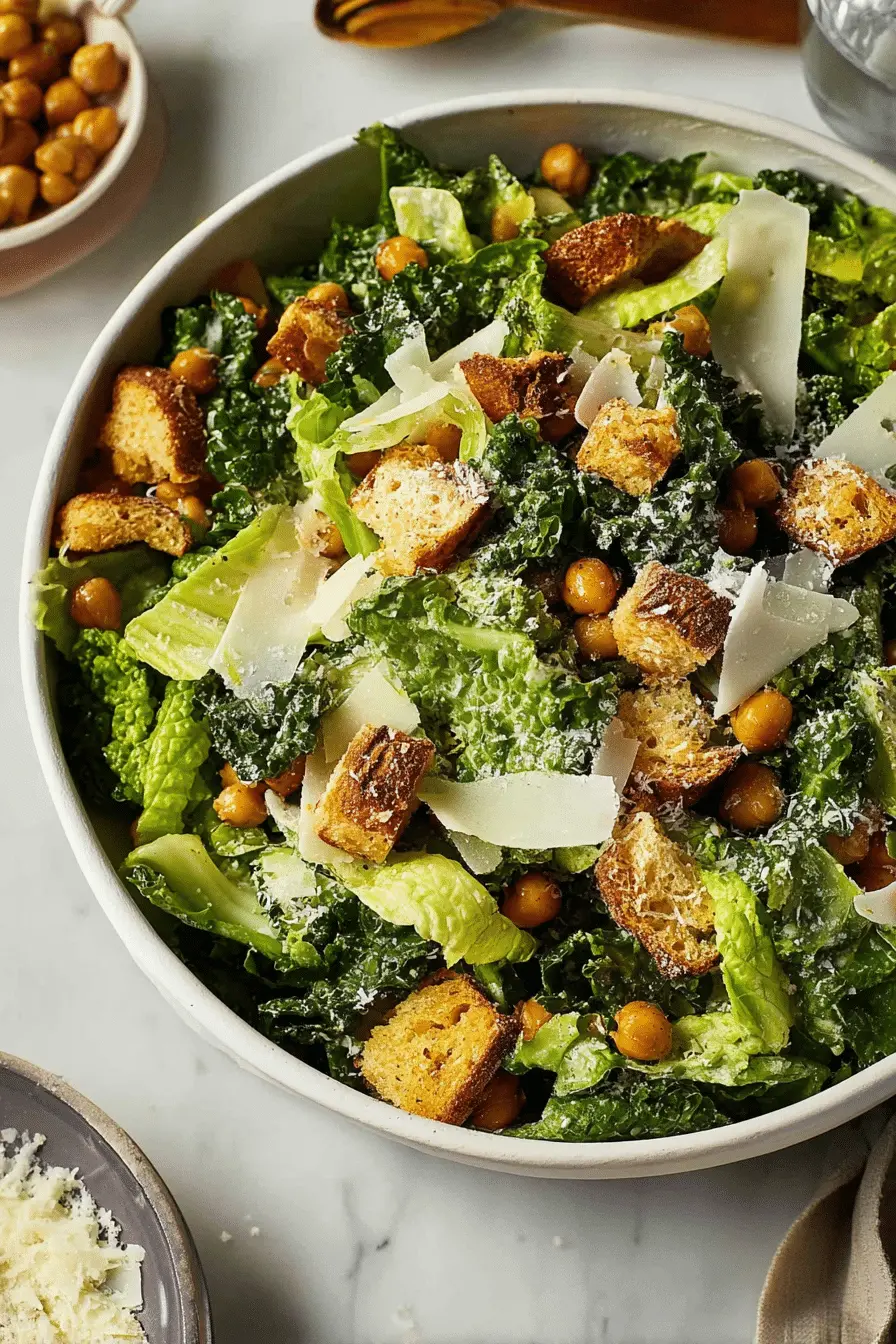
What I enjoy most is the contrast of textures: chewy, massaged kale, crisp homemade croutons, and a creamy dressing that clings to every leaf. I offer two dressing paths—one dairy-free cashew-based dressing you can blend, and a Greek-yogurt version you can whisk in minutes—so you can tailor the salad to your dietary needs without losing creaminess.
Over time I refined the technique that makes the difference: a short massage to soften the kale, seasoning it early so flavors sink in, and keeping crunchy toppings separate until serving. Read on and you’ll see how simple swaps and a couple of habits make this kale Caesar a staple for anyone who wants a healthier, flavorful salad.
Why this Kale Caesar Salad Works for Health-Conscious Eaters
Kale is one of those greens that gives you a big nutritional return for very little effort: it's dense in vitamins A, C, and K, and it brings minerals and antioxidants that support overall health. Compared with a classic Caesar that leans on creamy, higher-saturated-fat dressings, this recipe trims saturated fat by offering a cashew-based vegan option or a Greek-yogurt alternative—both deliver creaminess with healthier fats or lower overall calories.
Because kale holds up to dressing, you get more fiber per serving than with tender lettuces, which helps digestion and keeps you full longer. The texture is bold and satisfying, so you won't miss the heaviness of a traditional Caesar—just bright, tangy flavor and a pleasing bite.
For a comparison to a classic, check out the recipe for a traditional Caesar salad and see how our kale version stands out in health benefits.
If you want another hearty, vegetable-forward option to pair with this salad in your rotation, try a falafel-based bowl that also prioritizes plant protein and bold herbs for a balanced plate.
For another healthy option, you might enjoy our falafel salad bowls, which are packed with flavor and nutrients.
Everything You Need for Kale Caesar Salad
Below I break down the ingredients and the tools that make this salad fast and reliable. I also include easy substitutions so you can adapt based on what you have.
- Curly kale – The backbone of the salad; its ruffled leaves trap dressing and stand up to tossing better than delicate greens.
- Romaine lettuce – Adds a lighter, crisp contrast and stretches the salad for larger portions.
- Cashews – In the vegan dressing they provide rich, creamy body and healthy monounsaturated fats; swap with sunflower seeds for a nut-free version.
- Greek yogurt – For a tangy, protein-rich dressing base that keeps calories lower than heavy mayonnaise; swap with dairy-free yogurt for a non-dairy option.
- Parmesan (or vegan Parmesan) – Adds umami and savory depth; omit for fully vegan or use nutritional yeast for a cheesy note.
- Homemade croutons or roasted chickpeas – Provide essential crunch; both are easy to make at home (see below).
- Optional add-ins – Avocado for creaminess, roasted chickpeas for protein and crunch, or toasted seeds for extra texture.
Kitchen tools that simplify the process: a sturdy bowl for massaging kale, a blender for the cashew dressing, a whisk or bowl for the yogurt dressing, and a sheet pan for toasting croutons or chickpeas. Fresh produce and good olive oil make a noticeable difference in flavor—and a sharp knife keeps prep quick and tidy.
Why Massaging Kale Makes It Tender (and How to Do It Right)
Massaging is the shortcut that transforms kale from coarse and fibrous into something you actually want to eat raw. The mechanical action breaks down tough cell walls while oil and salt help relax the leaves and coax out a softer mouthfeel.
- Start with stemmed kale torn into bite-size pieces so you’re not working against thick ribs.
- Drizzle with a little olive oil and sprinkle a pinch of salt—this helps the leaves soften and carry flavor.
- Use your hands to rub and squeeze the leaves for about one to three minutes: you’re aiming for the leaves to darken and become noticeably more pliable.
- Common mistake: under-seasoning during the massage. If you don’t add oil or a little acid/salt early, the leaves won’t soften as evenly.
- Variations: swap olive oil for a nut oil for a toastier note, or include a splash of lemon juice or vinegar toward the end of massaging for brightness.
Two Creamy Dressing Options: Cashew Vegan or Greek Yogurt
Both dressings are built to cling to kale’s textured leaves. The cashew version gives you a silky, dairy-free base with subtle nuttiness; the Greek-yogurt option is tangy and protein-forward. Either can be customized with anchovy-free or caper-forward umami if you want that classic Caesar edge without the dairy.
- Cashew (vegan) dressing – Soak raw cashews until soft, then blend with lemon, garlic, a little mustard for emulsification, capers or a splash of soy or miso for savory depth, and water or olive oil to reach a creamy pourable consistency. Taste and adjust acidity and salt. The cashews supply healthy fats and create a rich mouthfeel similar to a traditional Caesar without dairy.
- Greek-yogurt dressing – Stir together plain Greek-style yogurt with lemon juice, grated garlic, Dijon mustard, and grated hard cheese or nutritional yeast. Add a splash of olive oil to soften the tang and thin with water if needed. This version is lower in calories than heavy creamy dressings and packs protein.
- Flavor boosters for either dressing: add fresh herbs, smoked paprika, or a pinch of cayenne for warmth. If you like extra umami, a spoon of capers or a little miso blends in beautifully.
How to Make Kale Caesar Salad (Step-by-Step)
- Tear and stem the kale, place it in a large bowl, drizzle with oil and a pinch of salt, and massage until the leaves soften and darken.
- Add chopped romaine for contrast and toss gently to combine textures.
- Drizzle with roughly half of your chosen dressing and toss so every leaf gets a light coating—add more as needed when serving.
- Transfer the salad to a serving bowl and scatter homemade croutons and shaved Parmesan (or vegan alternative) on top for crunch and savory balance.
- Finish with optional extras—roasted chickpeas, diced avocado, or a sprinkle of seeds—just before serving to preserve texture.
- For plating, pile the salad high in a wide bowl so the croutons sit on top instead of sinking; the visual contrast makes the dish more inviting.
Pro Tip for kale caesar salad: Meal-prep to Keep It Fresh All Week
- I like to prepare components separately: massage the kale and store it dry in an airtight container, keep the dressing chilled in a jar, and toast croutons or roast chickpeas in a separate bag so they stay crunchy.
- If you’ll eat multiple servings across the week, add romaine closer to serving day to preserve extra crispness.
- Portion dressings into single-serve containers so you only dress what you’re about to eat; this avoids soggy greens.
- Timeline I follow: prep the kale and toppings on day one, keep dressings refrigerated, and assemble fresh each day for the best texture and flavor.
Homemade Croutons, Roasted Chickpeas & Topping Variations
Golden, crunchy croutons are one of the easiest ways to transform this salad from simple to special. Roasted chickpeas are a great alternative if you want extra protein and a gluten-free crunch.
- Basic croutons – Toss torn or cubed bread in olive oil and seasoning (salt, pepper, and garlic powder or herbs), spread on a sheet pan, and toast until crisp and golden. Stale or day-old bread works especially well because it soaks up the oil without becoming gummy.
- Flavor variations – Try parmesan and lemon zest for brightness, smoked paprika and thyme for warmth, or za’atar for a herb-forward twist.
- Roasted chickpeas – Drain and dry canned chickpeas, toss with a little oil, and season; roast until crispy. They add protein, fiber, and a different kind of crunch.
Add some crunch to your salad with crispy roasted chickpeas as a tasty topping variation.
- Other toppings – Toasted seeds, sliced almonds, or quick-pickled shallots add interest; diced avocado brings creamy balance.
How to Store and Keep Your Kale Caesar Salad Crisp
Proper storage is the difference between a salad that stays exciting and one that collapses into sogginess. Here’s how I keep everything crisp and delicious.
- Store massaged kale in a breathable but sealed container lined with a paper towel to absorb excess moisture.
- Keep dressings in separate jars in the refrigerator; they’ll last several days and re-emulsify with a shake or quick whisk.
- Keep croutons and roasted chickpeas in a sealed container at room temperature so they retain crunch—only add them at serving time.
- If your kale ever gets slightly wilted, I revive it with a quick toss in a little fresh lemon juice and a minute of gentle massaging to brighten and soften the leaves again.
Dietary Swaps and Variations
I aim to make this salad adaptable so you can easily fit it into vegan, gluten-free, nut-free, or higher-protein meal plans without losing what makes it satisfying.
- Nut-free dressing: replace cashews with soaked sunflower seeds or use the Greek-yogurt dressing for a nut-free creamy option.
- Gluten-free crunch: skip bread croutons and use roasted chickpeas, toasted nuts, or gluten-free croutons.
- More protein: add roasted salmon, grilled chicken, or a scoop of cooked lentils for a more substantial meal.
- Seasonal swaps: fold in roasted squash in fall or fresh peas in spring for seasonal nutrition and color—if you're exploring other kale-forward options, try our kale quinoa salad for a nutrient-dense alternative.
Troubleshooting
- If the kale tastes bitter, I find that massaging it a bit longer and adding a touch of acid (lemon or vinegar) smooths the flavor.
- If the dressing is too thick, thin it with a little water or lemon juice a teaspoon at a time until it coats the leaves easily.
- If croutons get soggy, I toast them again in a hot oven for a few minutes to re-crisp before serving.
- When assembling for lunchboxes, I pack toppings and dressing separately and combine right before eating to avoid limp greens.
Frequently Asked Questions
What can I use instead of kale in this salad?
You can substitute kale with other leafy greens like romaine or spinach. Just keep in mind that the texture and flavor will vary.
Can I make this salad vegan?
Absolutely! Use the vegan Caesar dressing made with a cashew base and skip the Parmesan cheese, or opt for a vegan alternative.
How do I store leftovers of the kale Caesar salad?
Store any leftover salad in an airtight container in the fridge. To keep the kale crisp, it's best to keep the dressing separate until you're ready to eat.
What should I serve with my Kale Caesar Salad?
This salad pairs well with grilled chicken, shrimp, or even as a standalone dish. It's a great side for any protein!
How long does it take to prepare this salad?
The total time to prepare the Kale Caesar Salad is about 30 minutes, including prep and a few minutes to toast toppings.
Recipe Card
How I Make Kale Caesar Salad That Stays Fresh All Week
- Prep
- 10 min
- Cook
- 15 min
- Total
- 25 min
- Serves
- 4
- Calories
- 443 kcal
- Carbs
- 12.00 g
Ingredients
- 4 piecesveal cutlets (150g/5 oz each)
- 4 tbspflour
- 1 tspsalt
- 1/2 tspblack pepper
- 2 tbspolive oil
- 4 tbspunsalted butter
- 1shallot (chopped)
- 2 clovesgarlic (minced)
- 1lemon (1/2 juiced and 1/2 sliced)
- 125 mldry sherry (or white wine)
- 125 mlchicken stock
- 3 tbspcapers
- 1 tbspchopped fresh parsley
Instructions
- 1
Preheat the oven to the lowest temperature. Pat the veal cutlets dry with a paper towel, season with salt and pepper and dredge in flour.
- 2
Heat the olive oil in a large pan, brown the veal pieces in the hot oil until golden for 5 minutes on each side. A couple of minutes into the cooking add the butter to the pan. This will add more flavour and colour to the veal. You might want to do the frying in batches to avoid overcrowding.
- 3
Then remove the veal from the pan and keep it warm in an oven preheated to the lowest temperature while you are making the sauce.
- 4
To the same pan add the chopped shallot and sauté over low heat for 2 minutes, add the minced garlic and let it cook over low heat for 30 seconds, then add 1 tbsp of flour and mix it in until it turns into a paste, cook for 1-2 minutes while stirring, pour in the dry sherry and let it bubble for a 2-3 minutes.
- 5
Add the chicken stock, lemon juice, lemon slices, capers and parsley, turn up the heat and bring to a boil, as soon as it boils, lower the heat and simmer the sauce until it’s reduced in volume for a few minutes.
- 6
Return the veal back to the pan and spoon the sauce all over. Serve immediately.
You might also like
Reviews
Be the first to review this.