

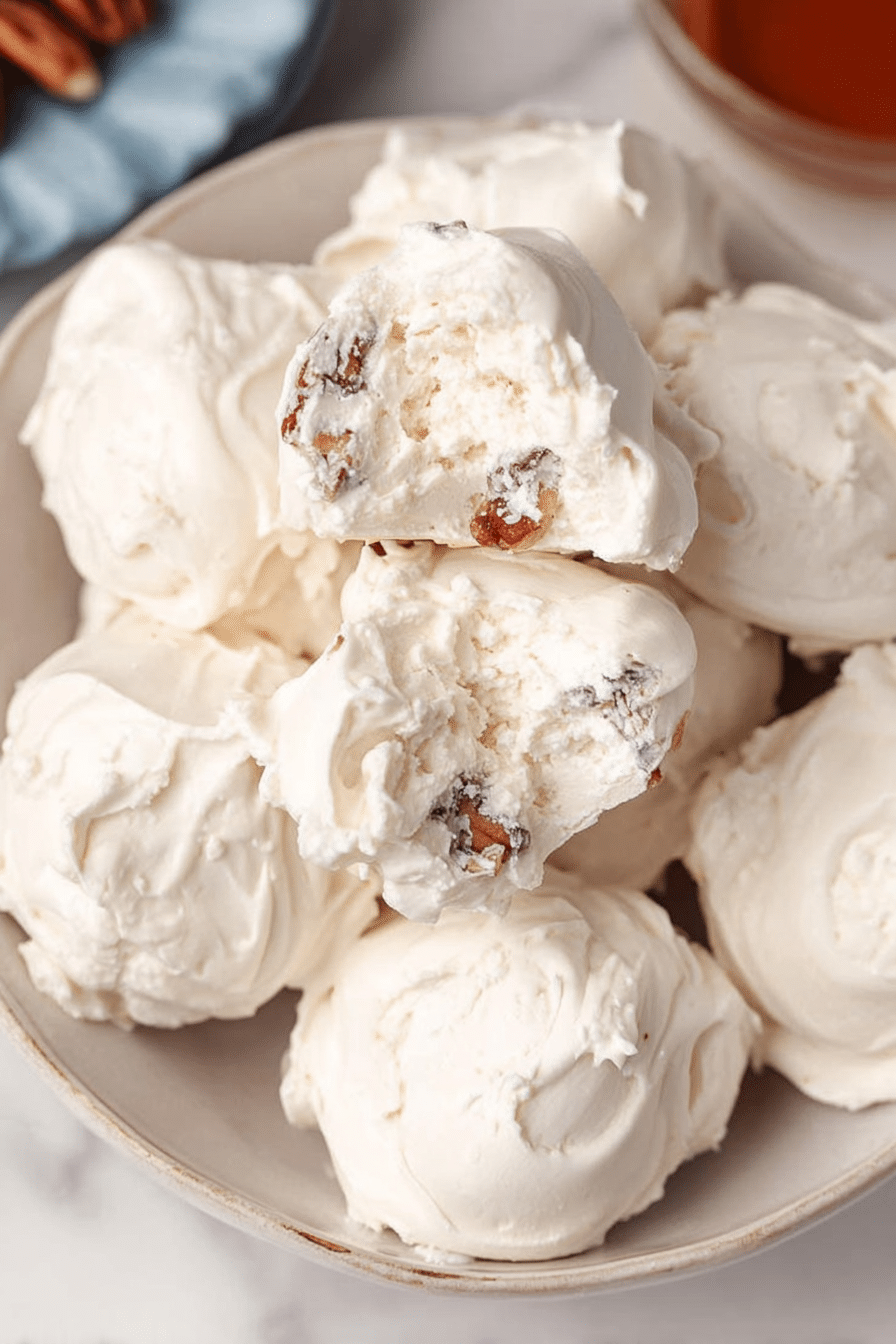
There’s something about making divinity candy that brings my kitchen alive in December — the whir of the mixer, the bright shine of hot syrup, and the smell of vanilla warming the air. It’s a Southern classic: sugar and egg whites whipped into cloud-like pillows, traditionally finished with chopped nuts. I didn’t just copy a recipe for this post; I made three batches while testing times and mixing speeds so I knew what really works and what trips people up. The first batch set a touch too fast, the second was perfect, and the last I made nut-free for a friend who’s allergic, so I’ve got notes from the stove to share.
Divinity traces back to the early 20th century in the United States; corn syrup’s introduction helped the candy keep a smooth texture without crystallizing, which is why this version leans on a bit of corn syrup. It’s a holiday staple in many Southern homes — passed down in handwritten recipes that warn you off making it when humidity is high. If you love old-fashioned sweets with a modern reliability tweak, this is the batch I return to year after year.
Ingredients You’ll Need
- Granulated sugar – the backbone of divinity; use fresh, dry sugar for predictable results.
- Light corn syrup – prevents crystallization and helps the candy stay smooth while cooling; a small but crucial stabilizer.
- Water – dissolves the sugar and helps the syrup reach the right stage.
- Salt – a pinch lifts the sweetness and balances flavor.
- Egg whites – whipped to stiff peaks to create the airy, marshmallow-like body; room temperature whites whip easier.
- Vanilla extract (or vanilla bean paste) – the familiar flavor anchor; paste gives flecks and extra richness.
- Chopped pecans (or other mix-ins) – texture and nuttiness are traditional; substitute walnuts, almonds, or candied cherries if you like.
Step-by-Step Instructions for Success
This is the version I tested to reliable results: it yields about 40 pieces and takes a little patience and a candy thermometer. Read these steps before you start so you’re not scrambling when the syrup is ready.
- Prep everything first. Line two sheet pans with parchment paper and lightly oil or spray the spoons you’ll use for scooping — divinity sets fast and you won’t want to hunt for tools while the syrup is hot. Measure out sugar, water, corn syrup, and salt; have the egg whites in the mixer bowl and the vanilla and nuts nearby.
- Make the syrup. In a medium saucepan combine the granulated sugar, corn syrup, water, and salt. Bring to a boil over medium-high heat without stirring. Stirring can encourage crystals on the pan sides; if crystals appear, brush them down with a wet pastry brush. Attach a candy thermometer and cook the syrup to 260°F. This is the temperature I found gives a stable set while still keeping the interior tender.
- Start whipping the egg whites. When the syrup reads about 240°F, begin whipping the egg whites on high speed in a stand mixer with the whisk attachment. You want stiff, glossy peaks — test by pulling the whisk; the peaks should hold and not droop. Room-temperature whites reach stiffness faster, so if you remembered them to warm for 15 minutes on the counter, you’re ahead.
- Combine syrup with whites carefully. With the mixer on low, slowly pour the hot syrup in a thin, steady stream into the egg whites. Take care to pour the syrup onto the inside of the bowl, not directly onto the whisk, so you don’t splatter or cook any whites on contact. Once all the syrup is in, increase to medium-high and beat for 5–6 minutes. You’re looking for a fluffy, slightly dull appearance rather than shiny — that dulling shows the sugar has been fully integrated and the mixture is cooling.
- Add flavor and mix-ins. Add the vanilla extract and the chopped pecans. Mix just until distributed — overmixing can start to break down air pockets. The nuts add a pleasant crunch and slow the setting a little, giving you extra time to portion.
- Spoon into shapes quickly. Using two lightly sprayed tablespoons or a small scoop, drop tablespoon-sized portions onto the prepared pans. Work quickly; divinity sets fast once it cools even slightly. If a batch begins to firm in the bowl, switch to scooping immediately, then return the bowl to the mixer to whip if needed to loosen it again.
- Cool and store. Let the candies cool and set at room temperature for about 30 minutes or until firm to the touch. Store in an airtight container layered with parchment for up to 3 days at room temperature — they’re best eaten within that window for peak texture.
Tips for Perfect Texture and Consistency
Getting the texture right is where most folks succeed or stumble. I’ve learned these through testing and stress-testing the recipe across a few holiday seasons.
- Humidity matters. Divinity hates humid days. If the humidity is above 60%, the sugar absorbs moisture and the candy may not set. Pick a dry day if possible.
- Temperature precision. 260°F is the target that worked best for me — it gives a set that’s sugar-firm but still soft and slightly chewy inside. If your thermometer reads low, your candy might be too soft; if it’s too high, it’ll be hard and brittle.
- Whip whites to stiff peaks. If the whites are under-whipped, the finished candy will be loose and sticky. If they’re over-whipped to the point of dryness, the candy can be dry and crumbly. You want glossy, resilient peaks before you add syrup.
- Pour the syrup slowly. A slow pour keeps the whites from cooking too rapidly and deflating. If syrup hits the whisk directly you risk scrambling a little and losing volume.
- Watch the visual cues. The syrup goes from clear to a golden sheen as it approaches 260°F. The sugar smell softens and the kitchen smells sweet and slightly toasted — that’s your cue the syrup is reaching stage.
- Scoop without delay. The mixture will thicken and lose gloss quickly; plan to scoop immediately after adding nuts and vanilla.
Common Mistakes and Troubleshooting
I’ve made examples of every mistake below so you don’t have to. Here’s how to spot and fix the usual problems.
- Grainy texture (crystallization). This usually comes from sugar crystals forming on the pan sides or too-fast cooling. If you see gritty bits, you can sometimes salvage the batch by gently pouring the mixture back into a clean, warm pan and carefully reheating until smooth, then starting the cooling and whipping steps again — but often the most reliable fix is to discard and start over with a clean pan and a wet brush to wipe crystals down while boiling.
- Candy won’t set. If your divinity stays sticky and never firms, humidity or undercooked syrup is the likely culprit. Check your thermometer and aim for 260°F; if it still won’t set, try again on a dry day. Also make sure egg whites were whipped properly.
- Falls apart after mixing in nuts. This can happen if the mixture cools too much before scooping. Work quickly and have your parchment pans ready so you can shape immediately. Add nuts at the very end and scoop right away.
- Too hard or brittle. If your batch is rock-hard, the syrup likely went too high. While this can’t be fully reversed, you can chop the candy and use it as a crunchy topping for ice cream rather than serving as classic divinity.
- Egg safety concerns. Because this recipe uses raw egg whites that are cooked by hot sugar, ensure eggs are fresh and you follow the syrup-to-whites timing carefully. If you’re concerned about salmonella, use pasteurized egg whites available in cartons.
Creative Variations and Dietary Adaptations
Divinity is forgiving and invites creativity. I’ve made batches with pecans and ones with bright red candied cherries for a classic holiday look.
- Chocolate swirl. Fold in a few tablespoons of cocoa powder or drizzle melted chocolate over set pieces for a chocolate-note contrast.
- Cherry divinity. Fold in chopped maraschino cherries in place of nuts for a chewy, sweet bite that’s festive and colorful.
- Nut-free. Skip the nuts and add toasted coconut or small chocolate chips to maintain texture without allergens.
- Eggless option. Aquafaba (the liquid from a can of chickpeas) can be whipped as an egg-white substitute. It behaves similarly but can take longer to reach stiffness and may slightly change the final mouthfeel; for reliable results, use the pasteurized egg whites mentioned above if you want the classic texture.
You can also try adding flavors similar to chocolate protein balls to your divinity candy for a fun twist.
Cultural Significance of Divinity Candy
In the American South, divinity is more than candy; it’s a ritual. It was most popularized after corn syrup became available in the early 1900s, which stopped sugar from turning gritty and made the confection accessible to home cooks. Families often have a “divinity day” in December — the kind of afternoon where grandparents teach kids to scoop while stories about Christmases past float through the kitchen. I still use my grandmother’s slightly stained bowl when I take photos; it’s silly, but it’s part of the memory.
Just like the warmth of pumpkin pie overnight oats during fall, divinity candy brings a nostalgic taste to holiday traditions.
Serving Suggestions and Gift Ideas
Divinity is beautiful on a platter, and its vintage look pairs naturally with holiday china. Arrange pieces in paper candy cups, tie small boxes with ribbon, or stack layers separated with parchment for gifting. It travels well when kept cool and dry.
Consider pairing your divinity candy with a delightful sweet almond pastry for a delightful contrast of flavors.
For a unique dessert experience, enjoy your divinity candy after a warm bowl of homemade ramen.
- Packaging tips. Use waxed paper or parchment between layers in an airtight tin. Avoid stacking too high — a little pressure can dent the pieces.
- Pairings. Divinity’s sweet, airy texture pairs well with strong coffee, tea, or a lightly spiced hot chocolate. It’s also a lovely contrast to denser holiday cookies on a dessert tray.
- Gift timing. Make and gift within 2–3 days for best texture. If you must ship, pack carefully and choose a dry, cool shipping forecast.
FAQ
- What are common divinity candy mistakes? Common mistakes include adding humidity to the process, which can prevent the candy from setting properly. It’s best to avoid making divinity on rainy or excessively humid days.
- What is divinity supposed to taste like? Divinity should taste smooth like fudge, airy like a marshmallow, and chewy like taffy, with a delightful sweetness that’s simply divine!
- What ingredients are in divinity candy? Divinity candy is made from granulated sugar, corn syrup, egg whites, and often includes flavorings like vanilla and various mix-ins such as nuts.
- What country is Divinity Candy from? Divinity candy originated in the United States, with its modern recipe emerging around 1915, thanks to the popularity of corn syrup.
- Can I make divinity candy without nuts? Yes, you can make divinity candy without nuts! Simply omit them or replace them with other mix-ins like dried fruits or chocolate, depending on your preference.
Conclusion: Embrace a Classic Recipe
Making old-fashioned divinity candy takes a little attention, but the payoff is those soft, pillowy bites that taste like holiday tradition. From my kitchen to yours: read the steps carefully, watch the thermometer, and don’t attempt this on a steamy afternoon. Expect to learn from your first batch — I did — and know that when you get it right, it’s worth the tiny bit of fuss. Share the candy, tuck some into boxes, and savor the small ritual of scooping and waiting for the first set pieces to come off the pan. It’s an old recipe that still makes new memories.
Old-Fashioned Divinity Candy
Ingredients
Method
- Prep. Line two sheet pans with parchment paper and measure out all ingredients.
- Cook. In a medium saucepan, combine the sugar, corn syrup, water, and salt. Bring to a boil over medium-high heat without stirring. Attach a candy thermometer and cook until the syrup reaches 260°F.
- Beat egg whites. When the syrup reaches about 240°F, begin whipping the egg whites on high speed in a stand mixer until stiff peaks form.
- Combine and beat. With the mixer on low, slowly pour the hot syrup into the egg whites. Once all the syrup is in, increase to medium-high and beat for 5–6 minutes, until the mixture is fluffy and slightly dull in appearance.
- Add pecans. Add the pecans and vanilla extract. Mix just until combined.
- Shape. Quickly scoop tablespoon-sized portions onto the prepared pans using the sprayed spoons. Work quickly as the candy sets fast.
- Cool. Let cool and set at room temperature for about 30 minutes, or until firm to the touch.