

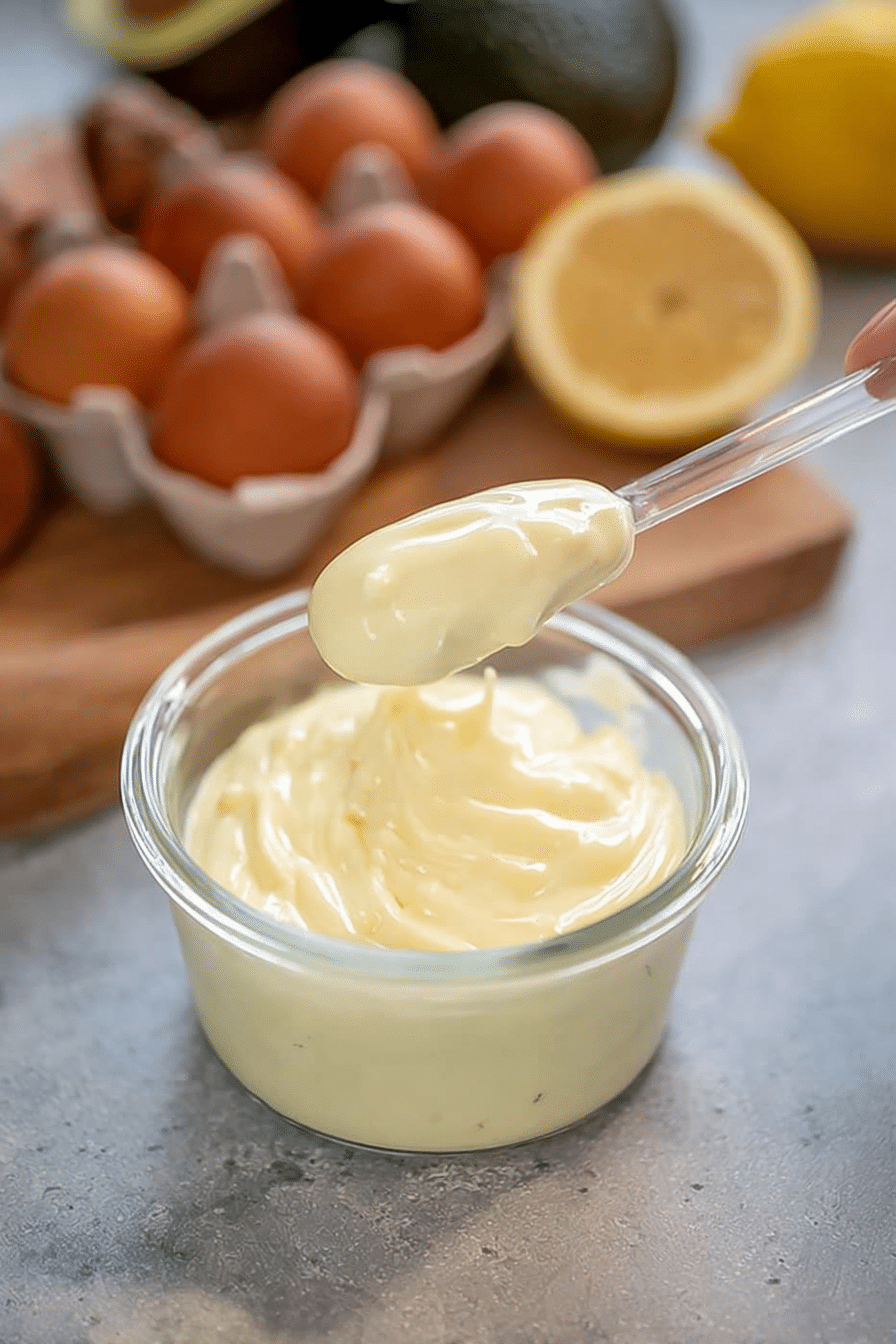
I make homemade mayonnaise on weeknights when time is tight and flavor matters. In my kitchen this recipe slips into the routine like a small, reliable victory: one egg, a splash of acid, a neutral oil, and an immersion blender are all it takes. I use avocado oil for its mild flavor and heart-healthy fats, and I keep the process intentionally simple so it fits into a hectic evening.
The first time I tried making mayo at home I was surprised by how little time it took and how much better it tasted than the jar from the store. It’s fresher, has no preservatives, and you control the oil and acid — so it can be lighter or richer depending on what you want. I also like that making it saves money when you compare it to premium store brands.
If you’re juggling school runs, work, or packed evenings, this recipe is designed to be convenient, healthy, and accessible. Use it straight away on sandwiches and salads, or refrigerate it for quick weekday meals and snacks.
Why this one-minute homemade mayonnaise recipe is perfect for busy families
This recipe takes just one minute from start to finish, which makes it easy to fit into a busy schedule. You get a creamy, preservative-free condiment without the time commitment of more elaborate recipes. The short prep time also means you can make a fresh batch any time the jar runs low.
Homemade mayonnaise is healthier because you avoid additives and choose the oil you prefer — avocado oil adds monounsaturated fats and a neutral taste that works well in most recipes. Making mayo at home also stretches your food budget: a little oil and a single egg yield more servings than many store jars at a lower cost per serving.
Picture this: a glossy, pale-yellow mayo thickening in seconds under the blender, the bright scent of lemon or vinegar cutting through, and the satisfaction of a simple, homemade condiment ready for dinner. That ease is exactly why I recommend this for families who need reliable, quick results.
Everything You Need for One-Minute Homemade Mayonnaise
- Egg – Provides the emulsifier (lecithin) that holds oil and water together; room temperature eggs work best.
- Lemon juice or vinegar – Adds bright acidity and balances the fat; choose your favorite mild vinegar if you prefer.
- Dijon mustard – Helps stabilize the emulsion and adds subtle depth of flavor.
- Sea salt – Brings out flavor; adjust to taste.
- Avocado oil (or neutral oil) – The main fat for creaminess; avocado oil adds healthy monounsaturated fats and a gentle flavor.
- Optional vinegar or additional acid – For brightness or to adjust tang if needed.
- Immersion blender and a tall, narrow jar – The easiest tool combination for one-minute emulsification; a whisk and bowl can work but usually take longer.
Make sure all ingredients are at room temperature before you start — that is crucial for the emulsion to form reliably.
The Secret to Reliable Emulsification Every Time
Emulsification is simply the process of suspending tiny oil droplets in water with the help of an emulsifier. In mayonnaise, the egg yolk (lecithin) and mustard act as the emulsifiers that let oil and acid combine into a smooth, stable cream. If oil is added too fast or ingredients are too cold, the droplets won’t bind and the mayo can separate.
The most effective technique for consistent results is mechanical: let the oil rest on top of the other ingredients in a tall jar, place the immersion blender on the bottom so the blades are against the egg/acid mixture, and start blending. That concentrated shear at the base forms the initial emulsion quickly; once it thickens you can move the blender up and down to fully incorporate the oil. You’ll see the texture change—thin liquids suddenly become glossy and thick—so rely on sight and touch as you blend.
Why Room Temperature Ingredients Matter
Cold ingredients make emulsions harder to form because low temperatures increase the viscosity of the liquid and slow the process of oil droplet formation. Room temperature creates a friendlier environment for the egg yolk and mustard to do their job.
If your egg is cold, warm it quickly by placing it in a bowl of warm (not hot) water for a few minutes, or set ingredients on the counter while you gather tools. These small steps reduce the chance of a broken mayonnaise and give you a reliable result every time.
How to Make One-Minute Homemade Mayonnaise (Step-by-Step)
- Make sure all ingredients are at room temperature and that you have a tall, narrow jar that fits your immersion blender.
- Place the egg, lemon juice (or vinegar), mustard, and salt into the jar. Pour the oil on top and let it sit for a few seconds so the oil separates and rests above the other ingredients.
- Set the immersion blender on the bottom of the jar so the blades touch the solids and blend on high. Hold it steady for about 20 seconds until the mixture begins to thicken at the base.
- Once the base emulsifies, slowly move the blender up and down to incorporate the remaining oil until the mayo is smooth and glossy.
- Remove the blender, give the mayonnaise a good stir to check seasoning, and transfer it to an airtight container. Chill immediately.
- Troubleshooting (if it doesn’t emulsify):
- If the mixture separates, I often start a fresh egg yolk in a clean jar and slowly add the broken mayo to it while blending — that usually brings it back together.
- If the mayo is too thin, continue blending and gently work the blender up and down; sometimes it just needs a bit more shear to thicken fully.
- If it’s overly thick or oily, add a teaspoon of water or lemon juice and blend briefly to smooth it out.
Flavor Variations: Spicy, Herbed, and Vegan Options
- Spicy mayo – Stir in chili sauce, sriracha, or smoked paprika for heat and color.
- Garlic aioli – Add finely minced or grated garlic for a simple aioli; a little lemon brightens it.
- Herbed mayo – Fold in chopped fresh herbs like parsley, chives, dill, or tarragon for a fresh finish.
- Citrus mayo – Use extra lemon or a touch of citrus zest for a brighter, more vibrant mayo.
- Smoky mayo – Blend in smoked paprika or a small amount of chipotle in adobo for depth.
- Vegan alternative (aquafaba) – Use aquafaba as the liquid base with neutral oil and an acid; blend the same way for a plant-based mayo.
- Vegan alternative (silken tofu) – Puree silken tofu with mustard and acid, then stream in oil to reach desired creaminess.
Pro Tip for one-minute homemade mayonnaise recipe: Start blending from the bottom to kick-start emulsification
- I always start the blender at the bottom of the jar and hold it steady until the base begins to thicken — that concentrated action creates the initial emulsion faster than moving the blender around immediately.
- If you’re concerned about speed, use a narrow jar so the blender blade stays near the mixture and creates more shear per second.
- If the mayo breaks, I recommend rescuing it by starting with a fresh egg yolk in a clean jar and slowly adding the broken mayo while blending; that often restores stability.
- Experiment with oil ratios and acids to find your preferred balance; small changes can shift flavor and mouthfeel noticeably.
How to Store, Use, and Customize Your Homemade Mayo
Store homemade mayonnaise in an airtight container in the refrigerator; it will stay fresh for up to 7 days. Do not freeze it, as freezing breaks the emulsion and ruins the texture.
Uses: spread it on sandwiches, mix into potato or egg salads, thin it with a bit of lemon for a quick dressing, or use it as a base for dips and sauces. Customize by adding herbs, spices, roasted garlic, or a touch of mustard to suit sandwiches, grilled vegetables, or seafood.
Health Benefits of Homemade Mayonnaise vs. Store-Bought
Making mayonnaise at home gives you control over ingredients and avoids preservatives, stabilizers, and hidden additives often found in commercial jars. Choosing a high-quality oil like avocado oil increases monounsaturated fat intake and reduces reliance on high-omega-6 seed oils. You can also reduce sodium or omit ingredients to meet dietary needs, making home mayo a fresher, more controlled option.
Egg-Free or Vegan Mayonnaise Alternatives
For egg-free options, two reliable bases are aquafaba (the liquid from canned chickpeas) and silken tofu. Both create a creamy texture when blended with acid, mustard, and oil or oil alternatives. Aquafaba mimics the foaming and emulsifying properties of egg whites, while silken tofu delivers a thicker, protein-rich base that blends smoothly.
Flavor them the same way you would classic mayo: add lemon or vinegar for brightness, mustard for stability, and seasonings to taste. These versions are gentle on digestion for people avoiding eggs and offer a simple way to keep condiments plant-based without sacrificing creaminess.
Frequently Asked Questions
How long does it take to make this mayonnaise?
This homemade mayonnaise recipe takes just one minute to make from start to finish!
Can I use other oils instead of avocado oil?
Yes! You can use any neutral flavored oil, like sunflower or canola oil, in place of avocado oil.
Why do the ingredients need to be at room temperature?
Room temperature ingredients are crucial for emulsification. Cold ingredients can prevent the mayonnaise from coming together smoothly.
How should I store my homemade mayonnaise?
Store your homemade mayonnaise in an airtight container in the fridge, where it will stay fresh for up to 7 days. Do not freeze it.
Can I make variations of this mayonnaise, like spicy or herbed?
Absolutely! You can experiment with spices, herbs, or even different types of vinegar to create exciting flavor variations.
One-Minute Homemade Mayonnaise Recipe
Ingredients
Method
- Make sure all ingredients are at room temperature before blending.
- Add all ingredients except the oil to the jar, then pour the oil on top and let it sit for a few seconds.
- Blend on high for 20 seconds, then move the blender up and down until fully emulsified.
- Stir and transfer the mayonnaise to a container. Refrigerate immediately and consume within 7 days.