

I cook this pea risotto when I want something bright, comforting, and quick — the kind of dinner that feels like I spent more time on it than I actually did. The lemon, mint, and sweet peas give it a spring-fresh pop, and a tiny drizzle of truffle oil at the end is my secret for a faintly luxurious finish. When I’m short on time, frozen peas are my go-to; they keep the color and sweetness and save a lot of prep.
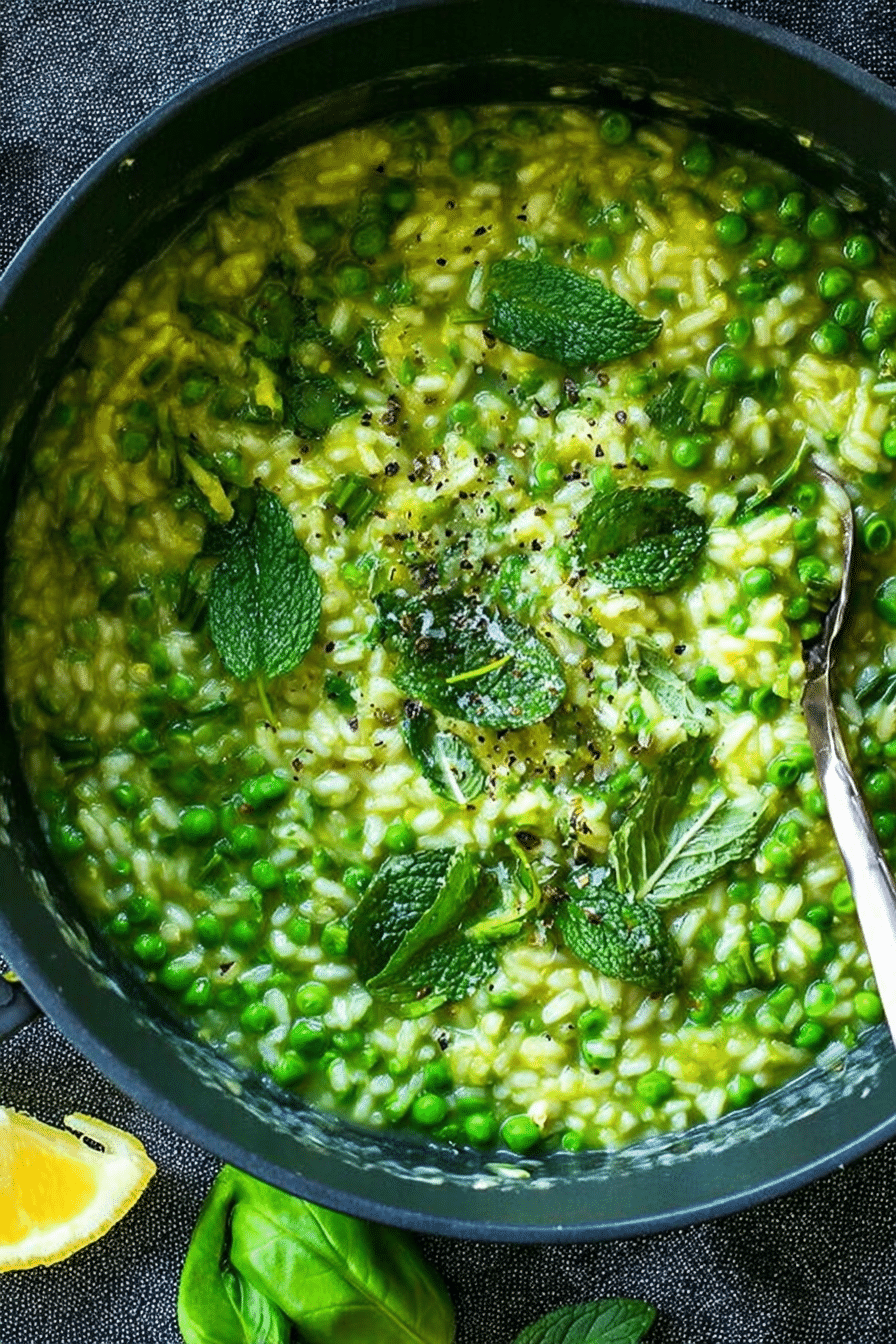
I’ve learned a few kitchen habits that shave time without sacrificing texture: keep the stock hot, pulse some peas into a silky puree, and stir gently so the rice releases just enough starch for creaminess. I often pair the risotto with a simply seared fish or serve it as a vegetarian main with a lemony salad and crusty bread.
It’s a forgiving recipe — and one that’s very adaptable. If you like quick, green dinners, this is a good one to add to your rotation. For another quick and delicious dinner option, check out this spring green risotto recipe.
Why This Pea Risotto Is Perfect for Busy Weeknights
This risotto hits the sweet spot between fast and fancy: it can be ready well under an hour, relies on a few pantry staples, and uses frozen peas to cut prep time without losing flavor. You get a bright green, fragrant dish that smells of lemon and mint while it cooks — and it doubles as a dinner base for proteins like scallops, seared fish, or roasted vegetables.
Key practical benefits:
- Fast finish: most of the active cooking is under an hour and you can multitask while the risotto simmers.
- Versatile: serve it vegetarian or top it with grilled proteins.
- Low prep: frozen peas and warmed stock speed the process and keep the dish vibrant.
For another quick and delicious dinner option, check out this spring green risotto recipe.
Everything You Need for Pea Risotto
Here’s a conversational run-through of the ingredients and tools that really matter — I’ll explain why each one belongs in the pot and what to swap if you need an alternate.
- Arborio (or other risotto rice) – The short, starchy rice that creates the creamy texture; Carnaroli or Vialone Nano are fine substitutes.
- Warm stock – Keeps cooking temperature steady so the rice cooks evenly; chicken or vegetable stock both work.
- Shallot (or leek/onion) – Builds the aromatic base; use a mild leek if you want a subtler flavor.
- Garlic – Adds savory depth; use less if you prefer a softer garlic presence.
- White wine (optional) – Adds brightness and acidity; you can sub a splash of water with lemon if you don’t use alcohol.
- Peas (fresh or frozen) – The star ingredient for color and sweetness; frozen peas are a huge time-saver.
- Hard cheese (Parmesan or Pecorino) – Gives body and creaminess; for a vegan option, stir in a nut-based cheese or nutritional yeast with a touch of olive oil.
- Lemon zest and fresh mint – Add the fresh, bright finish that keeps the risotto feeling light.
- Olive oil or butter – For sautéing and mouthfeel; use olive oil for a vegan version, butter for a richer finish.
- Optional truffle oil – A little drizzle at the end makes it feel special; omit if you prefer.
- Essential tools – A heavy-bottom pot or Dutch oven for even heat, a ladle to add hot stock, and a blender for a silky pea puree.
If you enjoy the flavors of peas, you might also love our creamy one-pot pasta with peas and mint.
Fresh vs. Frozen Peas: When to Use Each
Both fresh and frozen peas make a lovely risotto, but there are a few practical differences to keep in mind.
- Fresh peas: sweeter and slightly firmer when in season; blanch briefly to keep the color vivid and sweet aroma alive.
- Frozen peas: harvested at peak ripeness and flash-frozen, so they hold color and sweetness well and save a lot of shelling time — perfect for weeknights.
- Preparation tips: if using fresh, blanch then shock in ice water to lock the green. If using frozen, add them toward the end of cooking so they stay bright and tender without turning mushy.
The Secret to a Silky, Spoonable Risotto Texture
The look and mouthfeel come down to technique more than fancy ingredients. Aim for rice that’s tender on the outside but still has a slight bite at the center, and a sauce that clings to the grains without being soupy.
- Slow, steady addition of warm stock lets the rice cook evenly and release its starch, creating creaminess.
- Gentle, frequent stirring helps coax out starch without turning the rice gluey — stir to bring the rice and liquid together, not to beat air into it.
- Finishing with grated hard cheese and a spoon of pea puree binds the texture into a silky, spoonable consistency.
- For visual learners, a short risotto video is helpful to watch the ladle-and-stir rhythm and see the ideal finish consistency.
Speed Tips: Finish Risotto in 30 Minutes
- Warm your stock before you start so the pot temperature never drops when you add liquid.
- Use frozen peas and prepare the pea puree in advance to shave minutes during the final toss.
- Dice aromatics finely so they soften quickly and evenly.
- Keep a ladle of hot stock at the ready so you don’t have to step away to reheat it mid-cook.
- Prep garnish (mint, lemon zest) while the risotto is simmering to multi-task efficiently.
How to Make Pea Risotto (Step-by-Step)
- Bring your stock to a gentle simmer and keep it hot on a back burner.
- Warm your pan, add oil, and sweat the finely diced shallot (or leek/onion) and garlic until translucent and fragrant.
- Add the risotto rice and stir to coat the grains in fat until a light nutty scent emerges.
- Pour a splash of white wine (if using) and let it absorb completely to introduce acidity and lift the flavor.
- Add a ladle of hot stock, stirring gently; as the rice absorbs most of the liquid, add another ladle and repeat, keeping the simmer steady.
- While the rice cooks, blanch fresh peas briefly and reserve a portion to blend into a silky puree with a bit of olive oil (or use some warmed frozen peas). Add extra greens like spinach to boost color if you like.
- When the rice is tender but still slightly firm in the center, fold in grated hard cheese, lemon zest, the pea puree, and remaining whole peas to keep texture contrast.
- Taste and season with salt, pepper, and a little more lemon if it needs brightness. Stir in most of the chopped mint, saving some for garnish.
- Serve immediately with a drizzle of olive oil or a tiny drizzle of truffle oil if you want a luxurious note.
Pro Tip for pea risotto recipe: Use Hot Stock & Gentle Stirring
- I always keep the stock hot so the rice cooks steadily instead of cooling down each time liquid is added.
- I stir gently and consistently — too vigorous stirring breaks the grains and makes the texture pasty.
- I finish with acid (lemon zest or a squeeze of juice) to brighten and lift the final flavors.
- I reserve part of the peas whole for texture and blend the rest into a puree for color and creaminess.
Troubleshooting
- If the risotto is too thin: simmer a few extra minutes without adding stock so excess liquid evaporates and the rice absorbs more.
- If the risotto is too thick or sticky: stir in small amounts of hot stock (or water) off heat until it loosens to a spoonable consistency.
- If the rice is undercooked: keep adding hot stock and cook until the center has a slight bite but is not chalky.
- If the color dulls: stir in a little pea puree or a handful of fresh spinach blended with a splash of water for a brighter green.
- If the peas taste bland: a pinch of salt while blanching or a squeeze of lemon at the end will boost their sweetness.
How to Store, Reheat, and Make-Ahead Pea Risotto
Leftovers are great if handled right — risotto firms up as it cools because the starches seize, so plan your reheating step to restore creaminess.
- Storage: cool quickly, then refrigerate in an airtight container for up to three days.
- Reheat: warm gently on the stove over low heat with a splash of hot stock or water, stirring to loosen the grains; avoid high heat which can dry it out.
- Make-ahead: cook until slightly less done than you normally would, cool and refrigerate; finish cooking with hot stock and the pea puree just before serving.
Pairing Suggestions and Variations
Simple pairings and a few ingredient swaps make this risotto fit many dinners.
- Wine pairing: a dry white like Pinot Grigio or Vermentino complements the lemon and peas without overpowering them.
- Protein pairings: pan-seared scallops, grilled halibut, or roasted shrimp add a lovely textural contrast.
- Vegetarian add-ins: toss in tender roasted asparagus, sautéed mushrooms, or blanched green beans for variety.
- For an appetizer or extra green course, try pairing your risotto with spring pea crostini.
- Enhance your meal with a side of pea pasta with mint, truffle & lemon for a fresh flavor combination.
Variations (quick bullets for easy scanning):
- Vegan: use olive oil, vegetable stock, and a vegan Parmesan or nutritional yeast; finish with extra olive oil for richness.
- Gluten-free: risotto rice is naturally gluten-free; just check your stock or any packaged ingredients for hidden gluten.
- Herbed: swap some mint for basil or tarragon for a different herbal note.
- Cheesy: stir in a soft cheese (mascarpone or ricotta) for extra silkiness instead of or in addition to hard cheese.
Frequently Asked Questions
Can I use frozen peas instead of fresh peas for this risotto?
Absolutely! Frozen peas work great in this pea risotto and save on prep time.
How can I achieve a creamy texture in my risotto?
The key to a creamy risotto is gradual addition of warm broth, and stirring gently to release the starch from the rice.
Is there a substitute for Arborio rice?
If you can’t find Arborio rice, try using Carnaroli or Vialone Nano rice, both of which are excellent for risotto.
How do I store leftover pea risotto?
Store the leftover risotto in an airtight container in the fridge for up to three days. Reheat it gently on the stove with a splash of broth or water to loosen it up.
What can I pair with pea risotto?
Pea risotto pairs wonderfully with grilled fish, scallops, or a simple side salad. You can also add cooked shrimp or asparagus for more variety!
Pea Risotto Recipe
Ingredients
Method
- Heat vegetable broth in a medium pot.
- In a heavy-bottom pot, heat 2 tablespoons olive oil over medium-low heat, saute shallots and garlic until fragrant and golden, about 5 minutes, stirring.
- Add Arborio rice and stir to coat for one minute. Add white wine to deglaze the pan and simmer until absorbed. Gradually add hot broth, stirring frequently, until rice is tender, about 20 minutes.
- Blanch fresh peas in salted boiling water for 2-3 minutes. Drain and set aside.
- Blend ½ cup blanched peas with ½ cup water and 1 tablespoon olive oil until smooth. Optionally add spinach.
- Once risotto is tender, fold in cheese, lemon zest, blanched peas, and pea puree. Adjust seasoning with salt and pepper.
- Garnish with mint and serve with a drizzle of truffle oil.