

I make this pesto chicken tortellini and veggies on nights when the clock is short and the family wants something bright, comforting, and a little bit special. I love that it comes together in one skillet, so there’s almost no fuss and very little cleanup — which means more time to sit down and actually enjoy dinner. The first time I cooked it I was surprised at how the simple pesto and sun-dried tomatoes turned plain chicken and tortellini into something that felt celebratory.
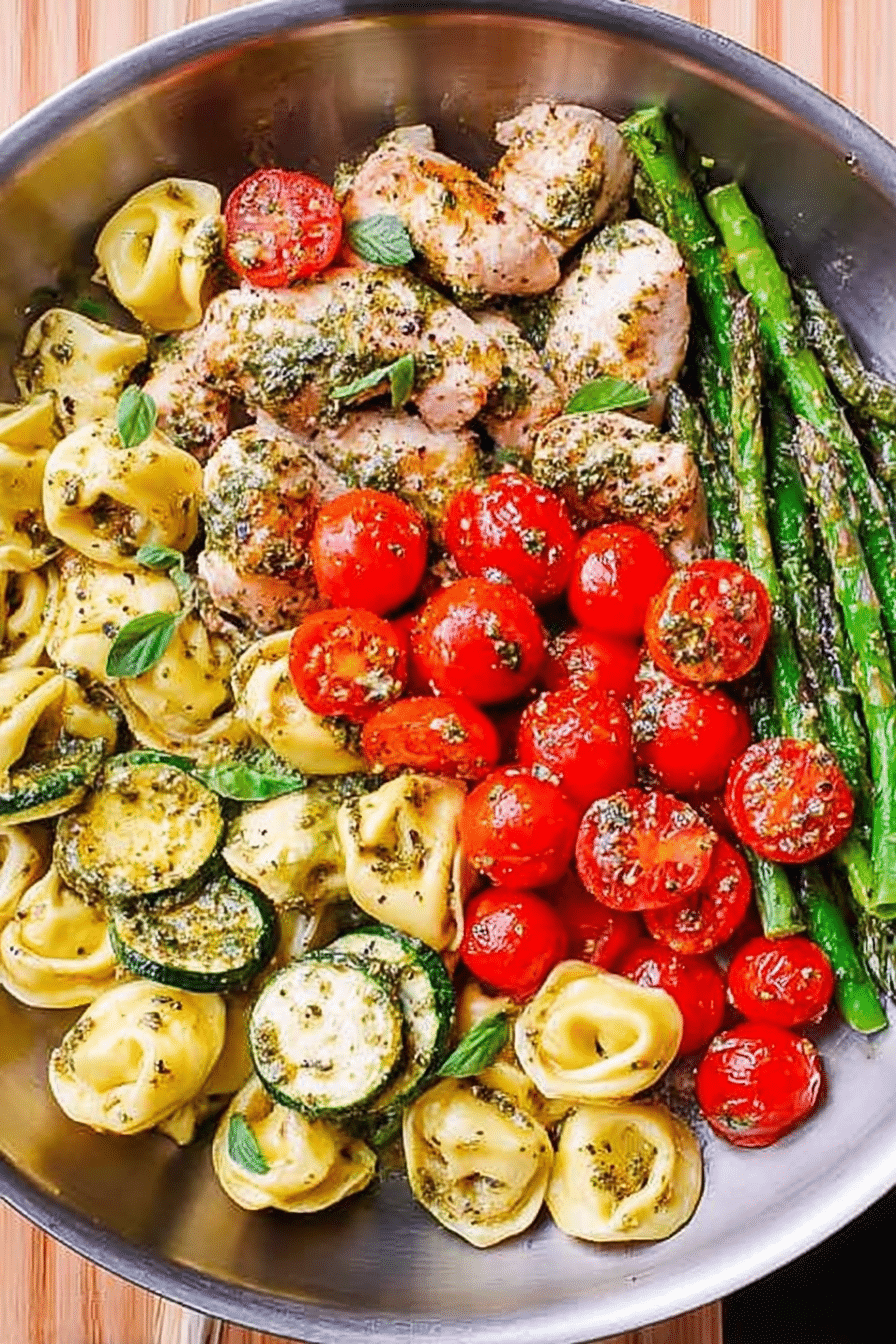
In my kitchen this recipe is the go-to for busy evenings: quick chicken, quick pasta, and vegetables that add color and texture. I like to keep the pesto sauce lively and green, and I often nudge the flavors with a splash of lemon or extra sun-dried tomatoes when I want a tangier bite. The result is a Mediterranean-style plate that looks like you spent more time than you actually did.
Beyond speed, what keeps me coming back to this dish is the mix of textures — pillowy tortellini, tender chicken, snapped asparagus, and juicy cherry tomatoes. It’s filling enough for weeknights yet bright and vegetable-forward so you don’t feel weighed down. If you need a reliable, flavorful go-to for hectic nights, this one-pan pesto chicken tortellini and veggies should be on your short list.
Everything You Need for Pesto Chicken Tortellini and Veggies
Below I list the building blocks and the little pieces of equipment that make this recipe so straightforward. I focus on roles and substitutions so you can adapt with what you have on hand.
- Chicken – The main protein; choose a cut that sautés quickly. For a leaner option, swap to a different poultry cut or a plant-based protein.
- Tortellini – The tender, stuffed pasta that carries the pesto. Fresh or refrigerated tortellini cooks faster and feels more luxurious; dried or frozen will work in a pinch.
- Basil pesto – The flavor backbone. Use jarred for convenience or homemade for fresher taste and ingredient control (see next section for vegan pesto ideas).
- Asparagus – Adds crunch, color, and a slightly green, earthy note. Trim woody ends for best texture.
- Cherry or grape tomatoes – Bring sweetness and juiciness that contrast the pesto and chicken.
- Sun-dried tomatoes – Provide concentrated umami and tang; good to have on hand for depth.
- Olive oil – For cooking and finishing; good quality oil lifts the dish.
- Salt (and pepper) – Simple seasoning that brightens all ingredients; season in layers.
- Equipment – A large skillet or sauté pan for everything except boiling the pasta, plus a pot for the tortellini. A slotted spoon, tongs, and a cutting board complete the kit.
Choosing the Right Pesto: Jarred vs. Homemade
Jarred pesto is a weeknight hero: it’s quick, consistent, and will still give you that basil-forward hit. Homemade pesto, on the other hand, lets you control salt, oil, and cheese, and it tastes brighter when made with fresh basil. If you want a homemade shortcut or an extra creamy lift, you can combine a jarred base with a spoonful of mayo or olive oil for body; for those curious about mayo techniques, try this helpful how-to in the kitchen:
For those considering a homemade option, check out our recipe for homemade mayonnaise to enhance your pesto flavor.
For dietary swaps, vegan pesto is easy: skip the cheese and add toasted nuts, extra olive oil, and a squeeze of lemon for brightness. Nutritionally, homemade pesto can be lighter if you reduce oil and add more herbs or greens — but jarred versions are fine when you choose a quality brand and check the label for additives.
How to Cook Tortellini Fast Without Getting Soggy
Perfect tortellini is about timing and a little salt. The goal is pillowy but still slightly firm to the bite so it doesn’t collapse when tossed with the sauce.
- Bring a large pot of water to a rapid boil so the temperature doesn’t drop when you add the tortellini.
- Salt the water well; it’s your main chance to season the pasta itself so the dish won’t taste flat.
- Cook tortellini just to the package’s al dente recommendation — test a piece early so you stop at the right texture.
- Drain and immediately toss with a little olive oil to prevent sticking and to keep the pasta glossy before it meets the pesto.
- If you want another technique primer for pasta care and preventing soggy noodles, this guide has extra pasta tips:If you’re looking for more pasta cooking techniques, our creamy tomato pasta recipe provides excellent insights on preventing soggy noodles.
How to Keep Asparagus and Tomatoes Bright and Textured
Vegetables are what make this meal feel fresh and balanced. The trick is short, confident cooking so they stay vibrant and retain nutrients.
- Blanch asparagus first for punchy color: briefly submerge in boiling water, then shock in ice water to stop cooking if you want an especially bright green.
- If you prefer to sauté, trim ends and cook over medium heat until tender-crisp — you want a little bite left.
- Cook cherry tomatoes briefly so they warm and release a touch of juice but still hold their shape; add them at the end to preserve sweetness and texture.
- Season simply with salt and a drizzle of olive oil; a squeeze of lemon before serving lifts all the vegetable flavors.
- For more vibrant vegetable side ideas, try roasting root vegetables that keep color and texture, like these honey-roasted carrots:For more vegetable side dish ideas, try our honey-roasted carrots, which are also vibrant and packed with flavor.
How to Make Pesto Chicken Tortellini and Veggies (Step-by-Step)
Follow these clear, ordered steps so each component finishes at the right time. I write these instructions to help you work efficiently with one skillet and a pot for the pasta.
- Heat your skillet with olive oil over medium heat until shimmering.
- Season the sliced chicken with salt and saute until cooked through and lightly browned; add chopped sun-dried tomatoes for extra flavor during this step.
- Remove the cooked chicken and sun-dried tomatoes to a plate, leaving the pan juices in the skillet.
- Add asparagus to the skillet and cook until tender-crisp; remove to the serving plate to keep warm.
- Cook tortellini according to package directions, drain, and toss with a little olive oil to prevent sticking.
- Return the chicken to the skillet, lower the heat, and stir in the pesto until everything is coated and warmed through — adjust amount to taste.
- Add the cooked tortellini and halved cherry tomatoes to the skillet, toss gently to combine, and heat just until tomatoes are warm but still hold shape.
- Taste and season with more salt if needed; finish with a squeeze of lemon or a few fresh basil leaves if you like.
- Return chicken, pasta, and tomatoes to the serving plate with asparagus, or serve family-style straight from the skillet.
- Optional methods: grill the chicken for a smoky edge before slicing and adding to the pan, or roast the assembled dish briefly in a hot oven for a study-your-kitchen variation that adds a light crust to the pasta edges.
Pro Tip for Pesto Chicken Tortellini and Veggies: Vegan, Protein & Seasonal Swaps
Here are compact, scannable tips and swaps so you can adapt this dish to diets, seasons, and pantry items.
- Pro-Tips – Tossed as short bullets for quick reading:
- Reserve a little pasta water when you drain; a splash helps loosen pesto and bind it to the tortellini if the sauce seems thick.
- If your pesto is very salty, dilute with a tablespoon of olive oil or a squeeze of lemon to balance the flavor.
- Finish with freshly cracked pepper and a few basil leaves for color and aroma just before serving.
- Troubleshooting (I speak from experience) – I include what I’ve learned to watch for:
- I noticed chicken can become dry if overcooked; pull it off the heat a minute early — it will finish cooking when it returns to the skillet with the sauce.
- If the tortellini feels gummy, you likely overcooked it; next time reduce boiling time by a minute and rinse briefly with warm water if needed.
- I’ve saved a too-salty pesto by stirring in unsalted cooked pasta or a few spoonfuls of plain yogurt or cream alternative when serving.
- Variations – Seasonal and dietary swaps to keep the idea fresh:
- Vegan: Use firm tofu or chickpeas, swap pesto for a nut-and-herb blend without cheese, and use plant-based tortellini or a different stuffed pasta alternative.
- Protein swaps: Shrimp, sliced pork loin, or grilled tempeh are great options; adjust cooking times accordingly.
- Vegetable swaps: Use zucchini, bell peppers, or baby spinach in place of or alongside asparagus to reflect what’s in season.
How to Store, Reheat, and Serve Leftovers
Leftovers are often where a recipe proves its weeknight value. Follow these tips to keep the dish safe and tasty.
- Store in airtight containers in the refrigerator. Consume within three days for best quality and food safety; label the container with the date if you batch-cook.
- Reheat gently on the stovetop over low heat with a splash of water or a drizzle of olive oil to revive the sauce and prevent drying. Microwaving works too, but do short intervals and stir between bursts.
- If the pasta seems dry after refrigeration, loosen it with a little reserved pasta water or a spoonful of olive oil; you can also stir in extra pesto for freshness.
- For a cozy reheated meal idea, transform leftovers into a warm bowl with extra broth and veggies — similar to how you’d rewarm a comforting soup:When it comes to reheating, nothing beats a comforting chicken soup recipe that keeps well and still tastes delicious.
Frequently Asked Questions
Can I use store-bought pesto for this recipe?
Absolutely! Store-bought pesto is a convenient option that works great in this dish. Just choose a brand you enjoy!
How can I make this recipe vegetarian?
You can easily make this dish vegetarian by substituting the chicken with vegetables like mushrooms or chickpeas, and using a vegetable broth if needed.
What side dishes go well with pesto chicken tortellini?
This dish is full of veggies, so it stands well on its own! However, you can serve it with a simple green salad or some garlic bread for extra flavor.
How do I store leftovers, and how long do they last?
Store leftovers in an airtight container in the refrigerator for up to 3 days. Reheat gently in a skillet or microwave to avoid overcooking.
Can I add other vegetables to the recipe?
Yes! Feel free to add your favorite vegetables like bell peppers, zucchini, or spinach to customize the dish to your liking.
Pesto Chicken Tortellini and Veggies
Ingredients
Equipment
Method
- In a large skillet heat olive oil on medium heat.
- Add sliced chicken thighs (seasoned with salt) and 1/4 cup of chopped sun-dried tomatoes. Cook for 5-10 minutes until the chicken is completely cooked through.
- Remove the chicken and sun-dried tomatoes from the skillet, leaving the oil.
- Add asparagus seasoned with salt and remaining sun-dried tomatoes to the skillet. Cook for 5-10 minutes until the asparagus is cooked through.
- Cook tortellini according to package instructions, then drain.
- Add cooked chicken back to the skillet with basil pesto, stir to coat and heat through.
- Add cooked tortellini and halved cherry tomatoes to the skillet, stir to combine.
- Season with salt if needed and serve with asparagus.