The Pesto Pasta Salad I Make for Every Summer Potluck
- Prep
- 15 min
- Cook
- 15 min
- Total
- 30 min
- Serves
- 5
- Calories
- 663 kcal
- Protein
- 21.00 g
- Carbs
- 57.00 g
- Fat
- 40.00 g
Introduction
I make this pesto pasta salad all summer long. It’s the kind of dish I reach for when friends text to ask, “Can I bring anything?” — because it travels well, serves a crowd, and still looks like you cared. The basil and garlic perfume the kitchen while you’re putting it together, and by the time it hits the table the cherry tomatoes and bocconcini make it look like a little celebration in a bowl.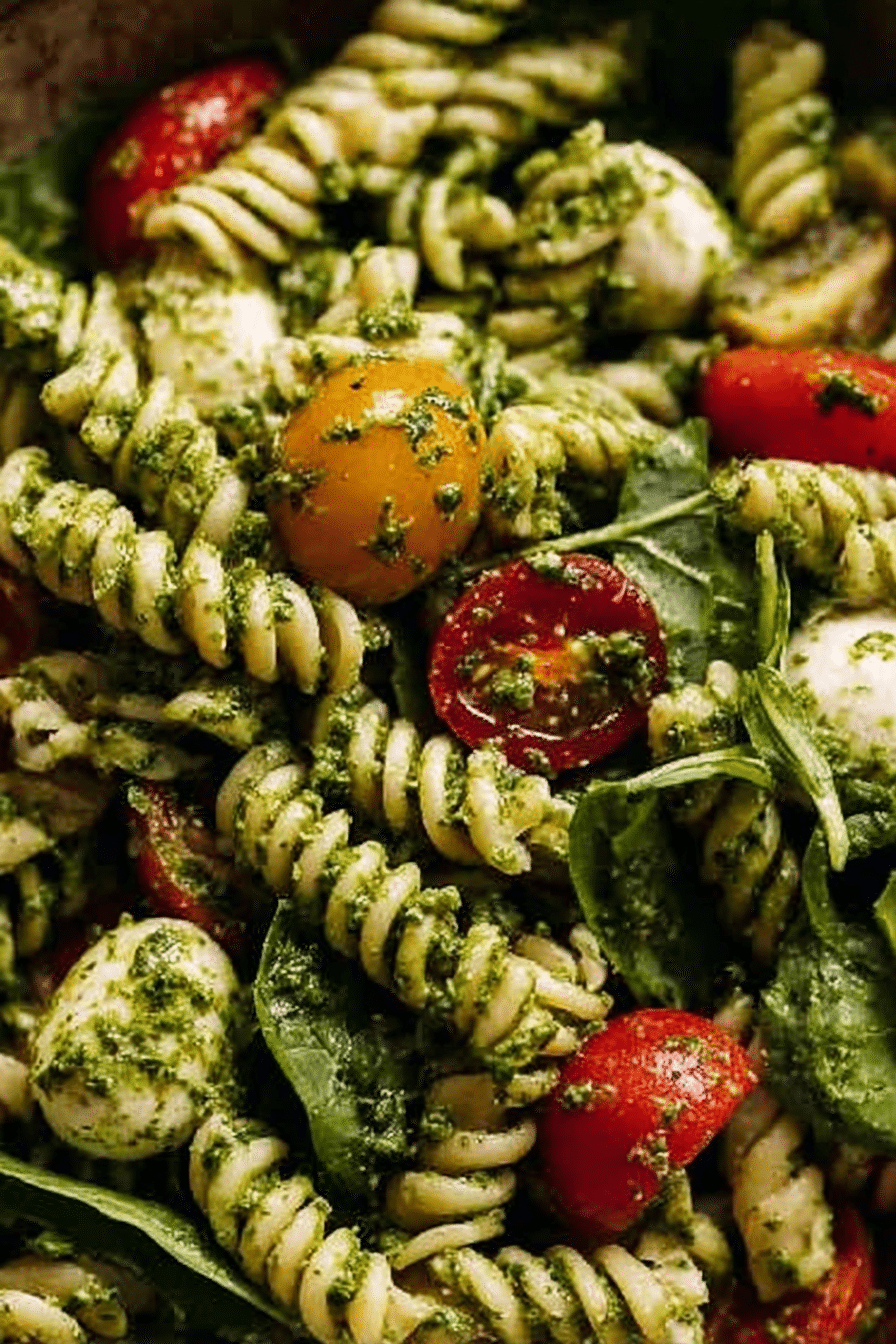
Why this pesto pasta salad is perfect for summer potlucks
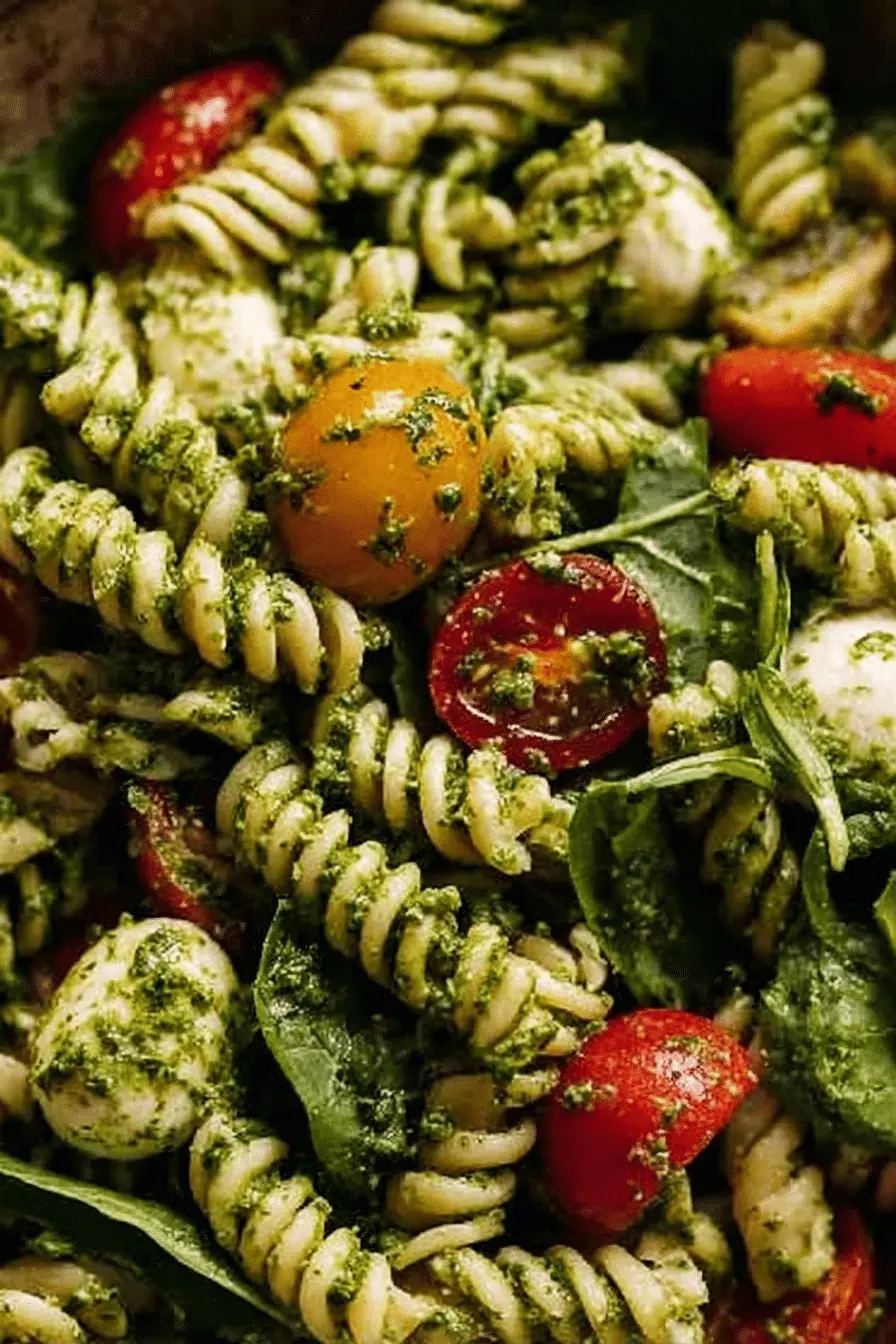
This salad looks and tastes like summer: glossy green pesto clinging to spiraled pasta, pops of red from halved tomatoes, and little white bocconcini pearls scattered through. It’s easy to scale so one pan can feed a small family or a whole picnic crowd without much extra work. The presentation is bright and inviting — arrange it in a wide bowl and scatter torn basil leaves on top and you’ll have something that draws people in as soon as you set it down.
Sensory note: the first thing people notice is the aroma of basil and garlic, then the light sheen of olive oil and the juicy burst of tomato. Texture matters here — tender pasta with the slight chew of bocconcini and the leafy bite of arugula keeps every forkful interesting.
Everything You Need for Pesto Pasta Salad
Gather fresh ingredients and a few basic tools. Use the best basil and olive oil you can afford; they’re the backbone of the flavor. You’ll also want a sturdy pot, a colander to cool the pasta quickly, and either a stick blender or a small food processor for the pesto.
- * Basil leaves – The star. Use fresh, fragrant leaves for the brightest color and aroma; avoid limp or brown-edged leaves.
- * Pasta – A ridged spiral or other shape that holds sauce is best; choose a variety that will stay tender but not mushy after cooling.
- * Olive oil – Adds glossy mouthfeel and carries the basil aroma; choose extra virgin for flavor.
- * Nuts – Pine nuts give a classic flavor and creaminess when blended; walnuts, cashews or almonds are good swaps.
- * Parmesan – Adds savory depth; a good-quality hard cheese keeps the pesto bright without weighing it down.
- * Garlic – Fresh and minced for a fragrant bite; adjust to taste if you prefer a milder note.
- * Mayonnaise – A small amount for creaminess and to help the salad hold up as leftovers; choose a brand you like or a vegan alternative if needed.
- * Cherry tomatoes – For color, acidity and juiciness; their sweetness balances the herbiness of the pesto.
- * Bocconcini or mozzarella – Soft cheese that keeps the salad light; swap for a plant-based cheese if making vegan.
- * Arugula (rocket) – Peppery greens that add lift and contrast; add at the last minute so they stay bright.
- * Kitchen tools – Pot, colander, stick blender (or food processor), mixing bowl and spatula.
Health note: basil is rich in antioxidants, tomatoes provide vitamin C and lycopene, and using whole-ingredient olive oil offers heart-healthy fats — together they make a salad that feels indulgent and fresh without being heavy.
The secret to bright, non-greasy pesto
A bright pesto depends on balance: acid to lift the basil, low heat exposure, and the right oil ratio so the sauce isn’t slick. I like to add a little acidity — lemon juice or a splash of vinegar — which wakes up the basil and cuts through oil. Pulse the nuts and basil rather than blitzing into a puree; you want some visible green bits so the pesto still feels fresh on the tongue.
Use a good, hard cheese and grate it finely so it disperses without clumping. If you want a dairy-free version, nutritional yeast adds that umami bite without heaviness.
For a fresh take on pesto, try our Vegan Wild Garlic Pesto Pasta, perfect for vibrant summer meals.
Why extra olive oil and a touch of mayo matter
Don’t skimp on the oil: it glosses every strand of pasta and carries the basil aroma across the dish. But too much oil without something to bind can feel greasy. That’s where a small spoonful of mayonnaise comes in — it gives a rounded creaminess that keeps the texture cohesive without weighing the salad down.
Sensory focus: visually the oil gives a shiny finish that screams freshness; on the palate, the mayo softens the edges so the pesto feels smooth. Practically, that little amount of mayo is why this salad tastes great the next day — it prevents drying and keeps the pasta tender.
Best pasta swaps: gluten-free and vegan options
You can make this salad work for different diets without losing the soul of the dish. Choose a gluten-free pasta that’s firm after cooking — many rice, corn or legume-based pastas hold up well in salads. For a vegan version, use a plant-based mayo and swap the parmesan for nutritional yeast or a vegan hard cheese to keep the savory depth.
For more gluten-free summer salads that pair well with leftovers, see this Mediterranean Chickpea Salad as an alternative side or main.
Step-by-step: Make Pesto Pasta Salad
- Bring a large pot of water to a rolling boil and add salt. Cook the pasta for the packet time plus about one minute so it sits just shy of fully soft; you want it slightly firmer than usual since it will cool and rest in the sauce.
- Drain the pasta in a colander and rinse under cold water until it’s completely cool. Shake off excess water and spread on a tray to let it dry briefly — damp pasta dilutes the pesto.
- Make the pesto: place basil, nuts, garlic, grated cheese, a squeeze of lemon, salt and pepper in a tall jug or food processor. Add oil while pulsing until the texture is mostly smooth but still shows flecks of green; you don’t want a paste. Taste and adjust acid and salt.
- Transfer chilled pasta to a large mixing bowl. Add the pesto and toss to coat each piece; then add the small amount of mayonnaise and toss again so the dressing is silky and clings well.
- Gently fold in halved cherry tomatoes and halved bocconcini so they distribute without getting crushed. Add arugula at the end and toss just to combine so the leaves stay bright.
- Transfer to a serving bowl, scatter small basil leaves and serve at room temperature.
This recipe is reminiscent of our Pesto Caprese Pasta Salad, adding a twist of flavors.
Troubleshooting
- If the pesto tastes oily or flat: add a little lemon juice or a pinch more salt to balance it.
- If the salad feels dry after mixing: drizzle a bit more olive oil and toss; if needed, a splash of reserved pasta cooking water will help emulsion.
- If the arugula or basil looks wilted: add them just before serving or lightly chill the salad before plating.
- If leftovers taste muted: refresh with a squeeze of lemon and a small drizzle of oil before serving again.
Pro Tip for pesto pasta salad: Make-ahead & storage that keeps it fresh
- I often make the pesto a day ahead to let the flavors settle; store it in the fridge with a thin film of oil on top to keep it bright.
- Cook the pasta one day ahead, drain and chill well, then toss with pesto and mayo just before serving — this prevents the pasta from absorbing too much dressing overnight.
- Store the salad in an airtight container in the fridge. If you’re making it for a potluck, keep the dressing and delicate greens separate until you arrive, then toss.
- To revive chilled leftovers, bring to room temperature for 20 minutes and stir in a splash of oil or lemon juice to freshen the flavors.
Storing, reheating & easy variations for leftovers
- Store in an airtight container in the refrigerator for up to 3 days; the mayonnaise helps maintain creaminess and stops the pasta from drying out.
- To serve leftovers warm: gently heat a portion in a skillet with a splash of oil, add a handful of fresh greens at the end, and finish with extra cheese or toasted nuts.
- Variations — try these to transform day-two pasta:
- • Add grilled chicken or leftover roast vegetables for a heartier meal.
- • Stir through cooked beans or chickpeas for extra protein and texture.
- • Toss in olives, roasted peppers or cucumbers for a bright, crunchy change.
- • For a citrus twist, add freshly grated lemon zest and extra lemon juice before serving.
For an exciting variation, consider making our Cilantro Lime Pasta Salad using your leftovers in a new way.
Frequently Asked Questions
Can I use store-bought pesto for this pasta salad?
Absolutely! While homemade pesto is ideal, a good quality store-bought pesto from the refrigerator section will work just fine.
What can I substitute for pine nuts in the recipe?
You can easily substitute pine nuts with walnuts, cashews, or almonds for a similar texture and flavor.
Is this pasta salad suitable for vegans?
To make it vegan, simply omit the mayonnaise and substitute the cheese with a dairy-free alternative or nutritional yeast for added flavor.
How can I store leftovers of this pesto pasta salad?
Store leftovers in an airtight container in the fridge. The addition of mayonnaise helps keep it fresh and creamy!
Can I add additional veggies to this salad?
Definitely! Feel free to add your favorite vegetables like bell peppers, olives, or cucumbers for extra flavor and crunch.