

I made this sautéed spring vegetable salad on a rainy Saturday when the farmer’s market crates were bursting with green things — asparagus tips peeking out, squat zucchini with glossy skins, and a bag of bright radishes. I wanted something that tasted like spring but felt warm and comforting, and the sauté method turned out to be the perfect bridge between salad and side dish. The smell in the kitchen changed as soon as the pan hit the heat: the avocado oil got nutty, the skillet sizzled, and the zucchini let off a light, vegetal perfume that made my mouth water.
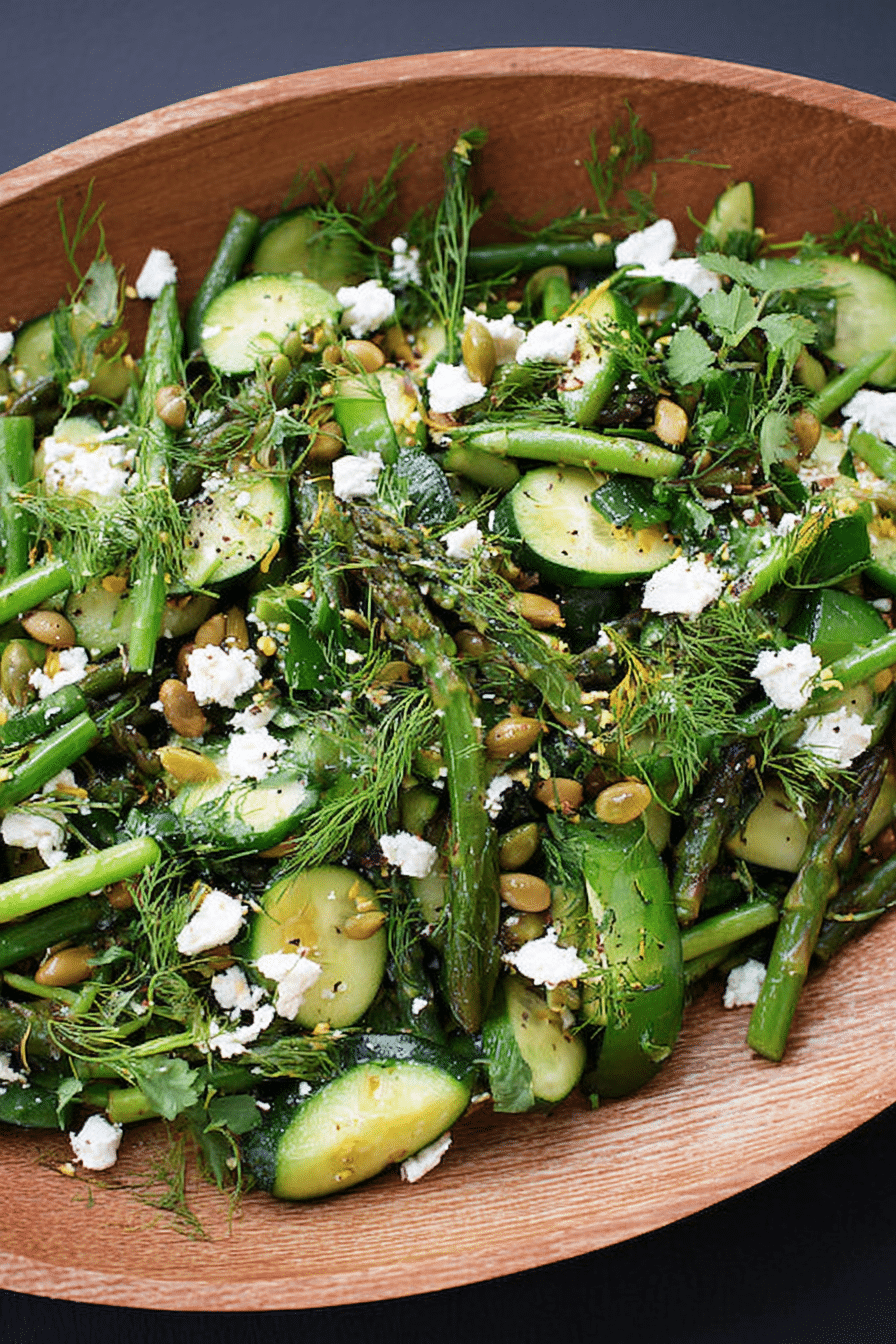
What I love about this salad is the balance: warm sautéed veg, a bright lemon-Dijon vinaigrette that cuts through the oil, salty crumbled feta, and a crunchy sprinkle of pistachios. It’s versatile — a light main with added protein or a standout side — and it’s one of those recipes I make repeatedly in April and May when the produce is at its best.
Seasonal Ingredients and Their Benefits
This is where the salad gets its spring personality. Here are the typical vegetables and additions I reach for, with quick notes on what they add to the dish and sensible substitutions if you can’t find them.
- Asparagus – tender, slightly grassy stalks that get sweet when seared; trim the woody ends and choose medium-thin spears for quick sautéing.
- Zucchini – mild and juicy with a soft interior and a seared, slightly caramelized exterior; holds up well in the pan without turning to mush if cut into thick rounds.
- Pistachios – provide a buttery, crunchy contrast; lightly crushed, they add texture and a nutty finish.
- Feta – briny and creamy; a little goes a long way to brighten the salad without overpowering the vegetables.
- Dill (or other fresh herbs) – fresh, lemony-green flavor; dill pairs especially well with asparagus and feta — parsley or mint are good swaps.
- Olive oil & avocado oil – olive oil belongs in the dressing for flavor; a neutral high-smoke oil (like avocado) is great for pan-searing without burning.
- Lemon & Dijon – acid and an emulsifier that lift all the flavors and create a silky dressing that clings to the warm veg.
Step-by-Step Cooking Techniques for Perfectly Sautéed Vegetables
Sautéing sounds simple, but a few practical moves will keep your vegetables bright, tender, and nicely browned instead of limp and gray. I say this from experience: on my first attempt I crowded the pan and ended up steaming everything. Lesson learned.
Here are the essentials and what I actually did in my kitchen so you can replicate it:
- Choose the right pan: Use a wide, heavy-bottomed sauté pan or skillet. You want space so each piece of veg makes contact with the hot surface; that contact creates the Maillard browning that adds flavor.
- Prep size matters: Slice zucchini into pieces about ¾–1 inch thick and cut asparagus into roughly 2-inch pieces. Uniform size cooks evenly. If pieces are too thin they’ll overcook before searing; too large and they won’t cook through.
- Dry the vegetables: Moisture is the enemy of a good sear. After washing, pat everything very dry on a towel. If the veg is wet it steams instead of browns.
- Right oil at the right heat: I heat the pan over medium-high and add avocado oil — it can take the heat without smoking. Olive oil is reserved for the dressing so its flavor stays bright.
- Don’t crowd the pan: Work in batches if necessary. Crowding traps steam and prevents browning. You want a single layer with space between pieces.
- Let things sit: For the zucchini, I place the cut side down and resist the urge to move it for 3–4 minutes. That wait is what gets a good golden sear. You’ll hear a steady sizzle. When it releases easily, flip it.
- Season lightly while cooking: Use a small pinch of kosher salt while sautéing. Remember the salad gets salty toppings (feta and salted pistachios), so keep pan salt conservative.
- Finish with texture balance: Add pistachios and herbs after the vegetables come off the heat to preserve their crunch and brightness.
Timing cues I used:
- Heat pan over medium-high until the oil shimmers.
- Sear zucchini, cut-side down, for 3–4 minutes until golden.
- Add asparagus, then sauté everything together another 3–5 minutes until asparagus is tender-crisp.
- For thick asparagus, blanch 2–3 minutes first so zucchini doesn’t overcook — try it if your stalks are pencil-thick or fatter.
Nutritional Highlights of Each Vegetable
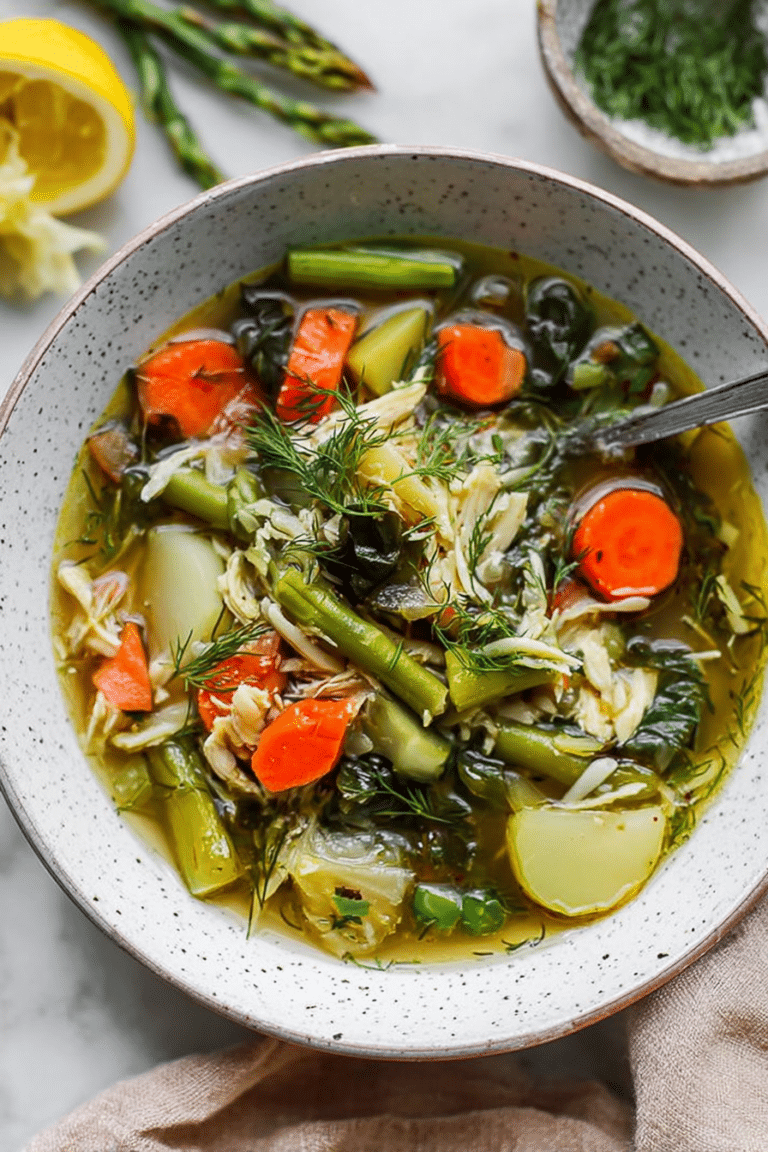
For more on the health benefits of spring vegetables, check out our flavorful spring vegetable soup.
- Asparagus – rich in vitamin K and folate, with fiber and antioxidants. It supports bone health and digestion and has a delicate, slightly sweet flavor when sautéed.
- Zucchini – low in calories, high in vitamin C and potassium, with plenty of water and fiber to help you feel satisfied without heaviness.
- Pistachios – provide heart-healthy monounsaturated fats, a bit of protein, and a satisfying crunch; they also add micronutrients like vitamin B6 and copper.
- Feta – adds calcium and a savory saltiness; use sparingly if you’re watching sodium, or choose a lower-salt variety.
- Dill and herbs – low-calorie flavor boosters with phytonutrients and compounds that add freshness and aroma without adding fat.
These vegetables together create a nutrient-dense plate: fiber to feed your gut, vitamins to support immunity and energy, and healthy fats to help you absorb fat-soluble vitamins. The overall salad clocks in at about 205 kcal per serving with modest protein and healthy fat — enough for a satisfying side or a light main when boosted with protein.
Pairing Suggestions for Protein Options
Consider pairing your sautéed spring vegetable salad with a delicious spring salad with goat cheese for a flavorful twist.
- Grilled chicken – Simple, seasoned chicken breast sliced over the salad makes it a well-rounded, high-protein meal. A quick lemon and herb marinade ties the flavors together.
- Shrimp – Seared shrimp with a touch of garlic or paprika complements the lemon-Dijon dressing and keeps things light.
- Chickpeas – Roasted or warmed chickpeas are a great vegetarian protein that also adds texture and fiber. Toss them with a dash of smoked paprika for depth.
- Tofu – Extra-firm tofu, pressed and pan-seared until golden, soaks up the dressing and provides a clean, plant-based protein source.
For gluten-free diets, these protein options are safe as long as any marinades or added sauces are gluten-free. For low-carb plates, choose higher-protein, lower-carb proteins like grilled chicken or shrimp.
Vegan Variations of the Salad
For a hearty vegan alternative, try adding elements from our chickpea, feta, and avocado salad.
- Skip the feta – Replace with a tangy nut-based cheese or crumbled toasted walnuts and a squeeze of extra lemon to replicate that salty tang.
- Boost texture – Add roasted chickpeas or pan-toasted pistachios and pumpkin seeds for crunch.
- Umami lift – A splash of tamari or a few capers stirred into the dressing will deepen flavor without animal products.
- Herb-forward – Add chopped mint and parsley alongside the dill to brighten the salad even more in the absence of dairy.
Meal Prep Tips for Busy Lifestyles
I’ve prepped this salad three ways depending on how much time I have: fully assembled and eaten cold or gently reheated; prepped veg and dressing separately; and sautéed veg stored to be finished with toppings just before serving. Each method has pros and cons, so here’s practical guidance.
- Cut and store – Slice zucchini and trim asparagus, then store in airtight containers or zip-top bags with a paper towel to absorb moisture. They’ll keep 2–3 days in the fridge.
- Dressing ahead – Whisk the olive oil, lemon juice, white wine vinegar, honey, and Dijon and store in a jar. Shake before using; it keeps for about a week in the fridge.
- Sauté in batches – If you’re prepping for multiple meals, sauté the vegetables and cool quickly on a sheet pan. Store in shallow containers to cool faster and keep their texture.
- Reheating – Gently rewarm leftovers in a skillet over medium-low for a couple of minutes — you just want to take the chill off without re-softening the vegetables. Alternatively, eat cold; the salad is still pleasant chilled.
- Best containers – Use shallow, airtight glass containers to minimize condensation and keep texture intact. If packing for lunch, keep dressing in a separate small jar and add just before eating.
Serving and Enjoying Your Salad
Enhance your dining experience by serving our spicy spring roll salad with spicy ginger dressing alongside your sautéed vegetable salad.
When I serve this to friends, I plate it warm in a shallow bowl so the dressing pools slightly and meets each bite. I sprinkle the pistachios last so they stay crunchy and scatter the dill all over for a bright green finish. Here are a few serving ideas and garnishes I use:
- Plating – Use a wide shallow bowl so each piece is visible; contrast the green veg with white crumbles of feta and a scattering of pistachios.
- Garnishes – Fresh lemon wedges, an extra drizzle of good olive oil, or a few torn herbs on top right before serving.
- Side pairings – Crusty bread to mop up the dressing, or a simple grain like quinoa if you want a heartier plate.
- Drinks – A crisp white wine or sparkling water with lemon complements the bright flavors.
Full Recipe: Sautéed Spring Vegetable Salad
Yield: 6 servings | Prep time: about 15 minutes | Cook time: about 15 minutes | Total time: ~30 minutes
This is the version I test-cooked and wrote down exactly; follow these measurements if you want the same result.
- 2 tablespoons avocado oil
- 2 medium zucchini, ends removed and sliced into ¾–1 inch thick pieces
- 2 bundles asparagus, ends trimmed and cut into 2-inch long pieces
- Pinch kosher salt, for lightly seasoning the vegetables
- Few turns cracked black pepper, to taste
- ⅓ cup crumbled feta
- ⅓ cup salted pistachios, lightly crushed
- 2–4 tablespoons fresh dill, roughly chopped
- ¼ cup extra virgin olive oil
- 1 tablespoon fresh squeezed lemon juice
- 1 tablespoon white wine vinegar
- 1 tablespoon honey
- 1 teaspoon Dijon mustard
- Pinch kosher salt, to taste
- Few turns cracked black pepper, to taste
- Wash and dry the zucchini and asparagus, removing the ends. Slice the zucchini into ¾–1 inch thick pieces and the asparagus into 2-inch lengths. Add the salted pistachios to a Ziplock and gently pound them to crush. Finally, wash, dry, and roughly chop the fresh dill.
- In a small mixing bowl, combine the extra virgin olive oil, white wine vinegar, fresh lemon juice, honey, Dijon mustard, kosher salt, and cracked black pepper. Whisk until well mixed and set aside.
- Heat a large sauté pan over medium-high heat with the avocado oil. Once hot, place the zucchini slices center side down to get a nice sear. Sauté without moving for 3–4 minutes. Once browned, flip the zucchini and add the asparagus. Season with a pinch of kosher salt and cracked black pepper, using the salt sparingly due to the added saltiness of the pistachios and feta. Sauté for another 3–5 minutes, or until the asparagus is tender but still al dente.
- For thicker asparagus, you may want to blanch it quickly in hot water for 2–3 minutes before adding it to the pan. This softens it without overcooking the zucchini. Thin asparagus may only need a few minutes to sauté.
- After cooking to your preference, transfer the sautéed zucchini and asparagus to a serving dish and let cool slightly. Top with crushed pistachios, crumbled feta, fresh dill, and the lemon Dijon dressing. Add the dressing as desired, taste for seasoning, and enjoy immediately while still warm.
Storage, Leftovers, and Troubleshooting
Expect the salad to be best on the day you make it, but leftovers are forgiving. I store leftovers in an airtight container in the fridge and they keep well for 2–3 days. The dressing will be more absorbed and the pistachios will lose some crunch. When reheating, warm gently to preserve texture. If your salad turns out a bit flat the next day, a squeeze of lemon and a pinch more salt brings it back to life.
Common problems and fixes from my test kitchen:
- Vegetables came out soggy: That’s usually from crowding the pan or not drying vegetables well. Fix by working in batches and patting dry before cooking.
- Zucchini browned too fast but asparagus was still raw: Use thicker zucchini slices or blanch thicker asparagus briefly, or add asparagus first if it’s thicker than usual.
- Too salty: If you over-salt during cooking, add a squeeze of lemon, a teaspoon of honey, or extra unsalted zucchini to balance it.
Conclusion and Recipe Recap
This sautéed spring vegetable salad is one of those dependable seasonal dishes I quietly rely on when I want something that tastes like the market — bright, a bit buttery, and oscillating between crisp and tender. It’s forgiving, adaptable, and quick enough for weeknights. The sear on the zucchini and the tender snap of asparagus are the highlights, and the pistachios and feta create texture and savory depth.
Try the recipe as written and then make it yours: swap herbs, add a protein, or make it fully vegan. If you do make it, I’d love to hear what you changed — did you add peas for a pop of sweetness? More dill? A drizzle of chili oil? Leave a note or try it at your next spring gathering: it’s one of those dishes that looks simple but gets praised every time.
FAQ
- Can I use other vegetables besides zucchini and asparagus in this salad?Absolutely! Feel free to add your favorite spring vegetables like peas, radishes, or bell peppers. Just make sure to sauté them until they’re tender!
- Is the sautéed spring vegetable salad suitable for meal prep?Yes! You can chop the vegetables and make the dressing ahead of time. Just store them separately in the fridge and combine them when you’re ready to enjoy your salad.
- How can I make this salad vegan?To make it vegan, you can substitute the feta cheese with a nut-based cheese or simply omit it. You can also add extra nuts or seeds for crunch!
- What proteins can I add to make this salad a complete meal?Great options include grilled chicken, shrimp, chickpeas, or tofu. These additions will enhance both the flavor and nutrition of your salad.
- How should I serve and store the leftovers of this salad?Serve the salad warm for the best taste! If you have leftovers, store them in an airtight container in the fridge and enjoy them chilled or gently reheated.
Sautéed Spring Vegetable Salad
Ingredients
Method
- Wash and dry the zucchini and asparagus, removing the ends. Slice the zucchini into ¾-1 inch thick pieces and the asparagus into 2-inch lengths. Crush salted pistachios and roughly chop the fresh dill.
- In a small mixing bowl, whisk together olive oil, white wine vinegar, lemon juice, honey, Dijon mustard, kosher salt, and black pepper. Set aside.
- Heat a large sauté pan over medium-high heat with avocado oil. Add zucchini slices and sauté for 3-4 minutes without moving. Flip, add asparagus, season with salt and pepper, and sauté for another 3-5 minutes until tender.
- Transfer sautéed vegetables to a serving dish, cool slightly, and top with pistachios, feta, dill, and the vinaigrette. Enjoy while warm.