

I first made these brown butter sourdough discard chocolate chip cookies on a rainy Sunday afternoon when I had a jar of discard in the fridge and a craving for something deeply comforting. The kitchen smelled like warm caramel and toasted nuts as the butter browned, and when the cookies came out of the oven the chocolate was glossy and melty in the centers while the edges had a gentle golden crackle. This is the kind of cookie I make when I want something that feels a little grown-up—familiar chocolate chip comfort with an unexpected tang and complexity from the discard.
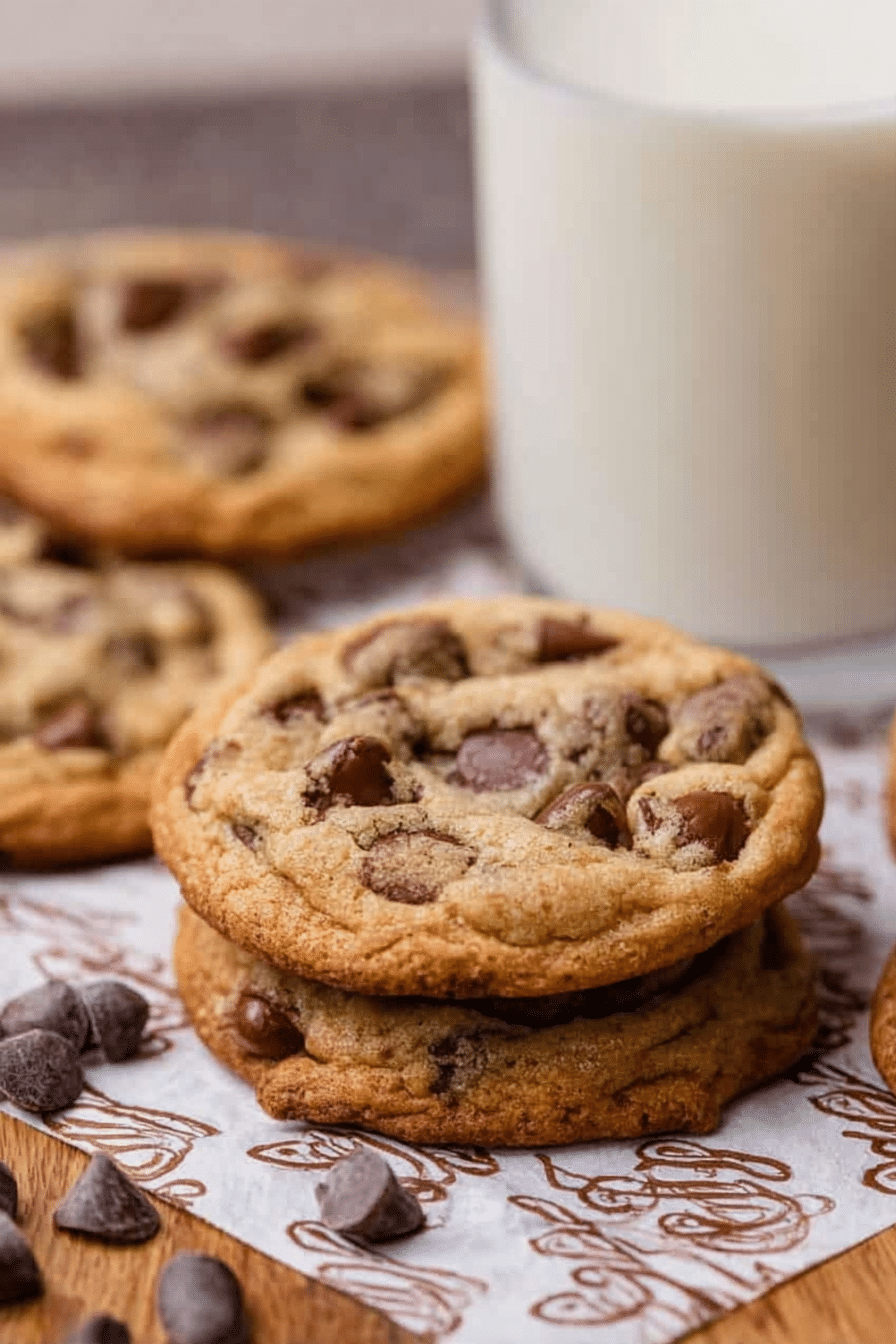
Using sourdough discard in cookies is more than thriftiness—it’s flavor engineering. The discard contributes moisture, a gentle tang, and a background depth that plays beautifully with browned butter and dark chocolate. It’s also a satisfying way to reduce waste: instead of tossing the discard after a feeding, you fold it into something everyone will fight over. If you’re a fan of baked treats, check out The Best Chocolate Chip Cookies for more delicious inspiration!
Understanding Sourdough Discard
Sourdough discard is the portion of a sourdough starter you remove before feeding. Home bakers remove discard to keep the starter manageable; that discard is full of active, fermented flour and water with a tangy aroma. While it’s not usually used for rising breads without a refresh, it’s perfect for quickbreads, pancakes, waffles, and cookies where its acidity and enzymes add flavor and tenderize the crumb.
From a nutritional standpoint, discard still contains the same fermented flour compounds and beneficial organic acids as starter—though it’s not a significant source of calories or protein, it does bring flavor complexity and a bit more moisture. Practically, throwing away discard contributes to household food waste. Studies often cite that household-level food waste is a sizable percentage of total food waste; using discard reduces that waste and makes your baking more sustainable in a small, enjoyable way.
Benefits of Using Sourdough Discard in Baking
There are a few reasons I reach for discard when I bake cookies: it improves texture, layers flavor, and adds a little chew without extra fuss. The acids in discard help break down some of the flour’s proteins, which can make cookies that keep a tender, chewy center while the edges crisp up. Flavor-wise, that subtle tang lifts the sweetness of brown sugar and chocolate—think of it as a background note that makes each bite more interesting.
Beyond cookies, discard works brilliantly in pancakes, muffins, and brownies—anywhere you want a little complexity. Explore how sourdough discard elevates flavors in baked goods like Cinnamon Donut Bread for a delightful treat.
Ingredient Spotlight
- Unsalted butter – browned to develop a nutty, caramel note that becomes the backbone of the cookie’s flavor.
- Brown sugar – gives chew and molasses depth; it also helps the cookies stay soft.
- Granulated sugar – balances sweetness and aids in spreading, giving contrast to the brown sugar.
- Egg + egg yolk – both provide structure; the extra yolk adds richness and chewiness.
- Sourdough discard – adds tang, moisture, and a subtle fermentation depth; can be unfed discard.
- All-purpose flour – the base; adsorbs liquids and creates structure when combined with the leaveners.
- Baking soda & baking powder – the soda reacts with the discard’s acidity for lift, while the powder provides steady rise and a tender crumb.
- Salt & cinnamon – salt balances flavor; cinnamon is optional but deepens the cookie’s aroma.
- Chocolate chips or chopped chocolate – use high-quality dark or semi-sweet; chopped chocolate creates pockets of molten chocolate and varied texture.
- Flaky sea salt (optional) – a finishing touch that highlights the chocolate and browned butter.
Tips for the Perfect Brown Butter
Browned butter is the star here, and getting it right changes the cookie from good to memorable. Use a light-colored, heavy-bottomed saucepan so you can see the color change. Start over medium heat and stir constantly—because butter solids can stick and burn quickly once they’ve separated. Watch for three stages: first it melts into a clear yellow liquid, then it foams, and finally the foam subsides and brown specks appear with a toasty aroma. That nutty smell is your cue—it should be warm and almost caramel-like, not bitter.
Timing matters: remove the pan from the heat just as the browned bits form and scrape everything into your mixing bowl. If you leave it on the heat too long it scorches and tastes bitter; if it’s under-browned, you miss the toasty notes. Let the butter cool for about 10–15 minutes to avoid scrambling the eggs when you add them. If you’re in a hurry, spread it thin in a shallow bowl to speed cooling, but don’t put it in the fridge—that can solidify the fats and change how the dough comes together.
Step-by-Step Instructions for the Recipe
Below is the full, tested recipe I use. I always measure my flour by weight for consistency, but if you’re using cups, the listed amounts work well when you spoon and level the flour into the cup.
- Yield – 24 cookies.
- Total time – About 2 hours and 22 minutes including chilling (active time under 30 minutes).
Ingredients (exact)
- 1 cup unsalted butter
- 1 cup packed light brown sugar
- 1/2 cup granulated sugar
- 1 large egg plus 1 large egg yolk
- 1/2 cup unfed sourdough discard
- 1 tablespoon vanilla extract
- 2 1/3 cups all-purpose flour
- 1 teaspoon baking soda
- 1/2 teaspoon baking powder
- 3/4 teaspoon salt
- 1/2 teaspoon ground cinnamon
- 1 1/2 cups dark or semi-sweet chocolate chips or chopped chocolate plus extra for topping
- Flaky sea salt for garnish (optional)
- Melt the butter in a saucepan over medium heat. Stir and swirl occasionally until it foams, turns golden brown, and smells nutty. Scrape all the browned bits into a large mixing bowl. Let it cool for 10 to 15 minutes. (I usually scrape the pan with a wooden spoon and push the browned solids out—don’t waste them.)
- Whisk brown sugar and granulated sugar into the brown butter until combined. The mixture will look glossy and slightly melted—this is normal.
- Incorporate the egg, egg yolk, and vanilla extract, whisking until the mixture is smooth and glossy. If the butter is too hot it will curdle the eggs; if that happens, cool it a bit more or whisk in the eggs slowly to temper them.
- Stir in the sourdough discard until well mixed. The discard lightens the batter and adds moisture; the mixture might seem loose at this point but the flour will fix that.
- In another bowl, whisk together the flour, baking soda, baking powder, salt, and cinnamon.
- Combine the dry ingredients with the wet ingredients, stirring with a spatula or wooden spoon until just combined. Fold in the chocolate chips or chunks. Overmixing develops gluten and will make denser cookies—stop when you no longer see streaks of flour.
- Cover and chill the dough for at least 2 hours or up to 72 hours. Chilling is crucial for thicker, more flavorful cookies. If you forget to chill, the cookies will spread more and be flatter; they’ll still taste good, but texture will differ.
- Preheat the oven to 350°F (175°C) when ready to bake, and line baking sheets with parchment paper. Scoop dough into 2-tablespoon-sized balls and arrange them 2 inches apart. For perfectly rounded cookies, chill scooped dough on the sheet while the oven heats.
- Bake for 10 to 12 minutes or until the edges are golden and the centers appear slightly soft. The centers will finish setting as they cool—don’t overbake if you want chewy centers.
- Right after baking, press extra chocolate chips on top and, if desired, use a large round cookie cutter or glass to gently shape the cookies into perfect circles. Let cool on the baking sheet for 5 minutes, then move to a wire rack. If desired, sprinkle with flaky sea salt. Allow to cool completely.
What to Watch For & Troubleshooting
Cookies that spread too much usually mean the dough was too warm—either the butter was hot when mixed or you didn’t chill the dough. If the centers are underdone after the full time, it’s usually because the cookie balls were larger than intended; add 1–2 minutes of bake time while watching color. If the browned butter tastes bitter, it was burned—start over with fresh butter and scrape the pan clean.
If your discard is particularly sour, reduce the discard by a tablespoon or two or add an extra tablespoon of brown sugar to balance. If the dough seems dry, a teaspoon or two of milk will bring it together; if it’s too sticky, a tablespoon of flour will help. These small fixes are part of why I love baking—there’s always a simple, logical adjustment.
Variations for Dietary Restrictions
I’ve adapted this dough a few times. For gluten-free baking, replace the all-purpose flour with a 1:1 gluten-free blend that contains xanthan gum, or try a mix of almond and a small amount of tapioca to mimic chew; expect a denser but pleasantly nutty cookie. For a vegan version, brown coconut oil (watch carefully—its aroma is different from butter) and substitute flax eggs (1 tablespoon flaxseed meal + 2.5 tablespoons water per egg) plus a vegan sourdough discard if you maintain one.
For dessert lovers, you might also enjoy a Vegan Chocolate Brownie Sundae as a creative alternative.
Serving Suggestions and Pairings
These cookies are great warm, straight from the oven when the chocolate is gooey, but they also keep their chew at room temperature. Serve with a tall glass of milk, strong coffee, or a scoop of vanilla ice cream for an indulgent treat. For a party, arrange on a platter with other small sweets—people will come back for a second cookie.
Try serving your cookies alongside a slice of Pumpkin Crunch Cake for a seasonal twist!
Storage and Make-Ahead Tips
Cookies stored in an airtight container at room temperature will stay soft for up to a week; place a slice of apple or a piece of bread in the container to keep them moist if you live in a dry climate. For longer storage, freeze baked cookies in a single layer on a tray, then transfer to a freezer bag for up to 3 months. Thaw at room temperature or warm briefly in a low oven to refresh.
If you want to bake later, scoop the chilled dough onto a tray, freeze until firm, then move the dough balls to a bag and bake from frozen—add 1–2 minutes to the bake time. This is my go-to for spontaneous cookie cravings.
Frequently Asked Questions
Can I use frozen sourdough discard?
Yes! You can use frozen sourdough discard directly in the recipe. Just thaw it in the fridge overnight before mixing it into your cookie dough.
What can I do if my cookies turn out too flat?
If your cookies turn out too flat, make sure your butter isn’t too warm when you start mixing. Also, check that you chilled the dough for enough time—this helps the cookies maintain their shape while baking.
Can I substitute the chocolate chips with nuts or dried fruit?
Absolutely! Feel free to swap chocolate chips for nuts, dried fruit, or even a mix. Just keep the total volume similar for the best texture.
How should I store the cookies to keep them fresh?
Store the cookies in an airtight container at room temperature for up to a week. For longer storage, you can freeze them and simply thaw them when you’re ready to enjoy!
What makes brown butter special in this recipe?
Brown butter adds a wonderful nutty flavor that enhances the cookies’ taste. It creates a rich, deep flavor profile that pairs perfectly with the chocolate and sourdough discard.
Final Thoughts and Encouragement to Bake
These brown butter sourdough discard chocolate chip cookies are one of those recipes I come back to when I want something reliably comforting but a bit more interesting than a standard cookie. The browned butter gives toastiness, the discard adds a subtle lift and tang, and chilling the dough produces the thick, chewy texture I prefer. I’ve tweaked timing and temperatures until the recipe behaved consistently in my kitchen, and I hope these notes save you a little time and a few missteps.
Give the dough a night in the fridge for the best flavor development, and don’t be afraid to experiment—swap the chocolate for chopped coffee-infused dark chocolate, add orange zest, or fold in toasted pecans. Come back to this recipe again and again; it’s forgiving, adaptable, and a genuine way to turn discard into something everyone will love. Happy baking—and if you try these, I’d love to hear what twist you put on them.
Brown Butter Sourdough Discard Chocolate Chip Cookies
Ingredients
Method
- Melt the butter in a saucepan over medium heat. Stir and swirl occasionally until it foams, turns golden brown, and smells nutty. Scrape browned bits into a large mixing bowl and let it cool for 10 to 15 minutes.
- Whisk brown sugar and granulated sugar into the brown butter until combined.
- Incorporate the egg, egg yolk, and vanilla extract, whisking until the mixture is smooth and glossy.
- Stir in the sourdough discard until well mixed.
- In another bowl, whisk together the flour, baking soda, baking powder, salt, and cinnamon.
- Combine the dry ingredients with the wet ingredients, stirring with a spatula or wooden spoon until just combined. Fold in the chocolate chips.
- Cover and chill the dough for at least 2 hours or up to 72 hours.
- Preheat the oven to 350°F and line baking sheets with parchment paper. Scoop dough into 2-tablespoon-sized balls and arrange them 2 inches apart.
- Bake for 10 to 12 minutes or until the edges are golden and the centers appear slightly soft.
- Press extra chocolate chips on top and use a glass to gently shape the cookies into perfect circles.
- Let cool on the baking sheet for 5 minutes, then move to a wire rack. Sprinkle with flaky sea salt if desired.