

I make this tartine when I want something that looks like it took longer than it did. In my kitchen it’s the kind of recipe I reach for when friends pop over at the last minute or when I want a bright, seasonal lunch that’s mostly hands-off. The fruit caramelizes quickly, the ricotta becomes silky with a few easy turns, and the contrast of sweet fruit, savory shallot and a hit of hot honey always feels special without being fussy.
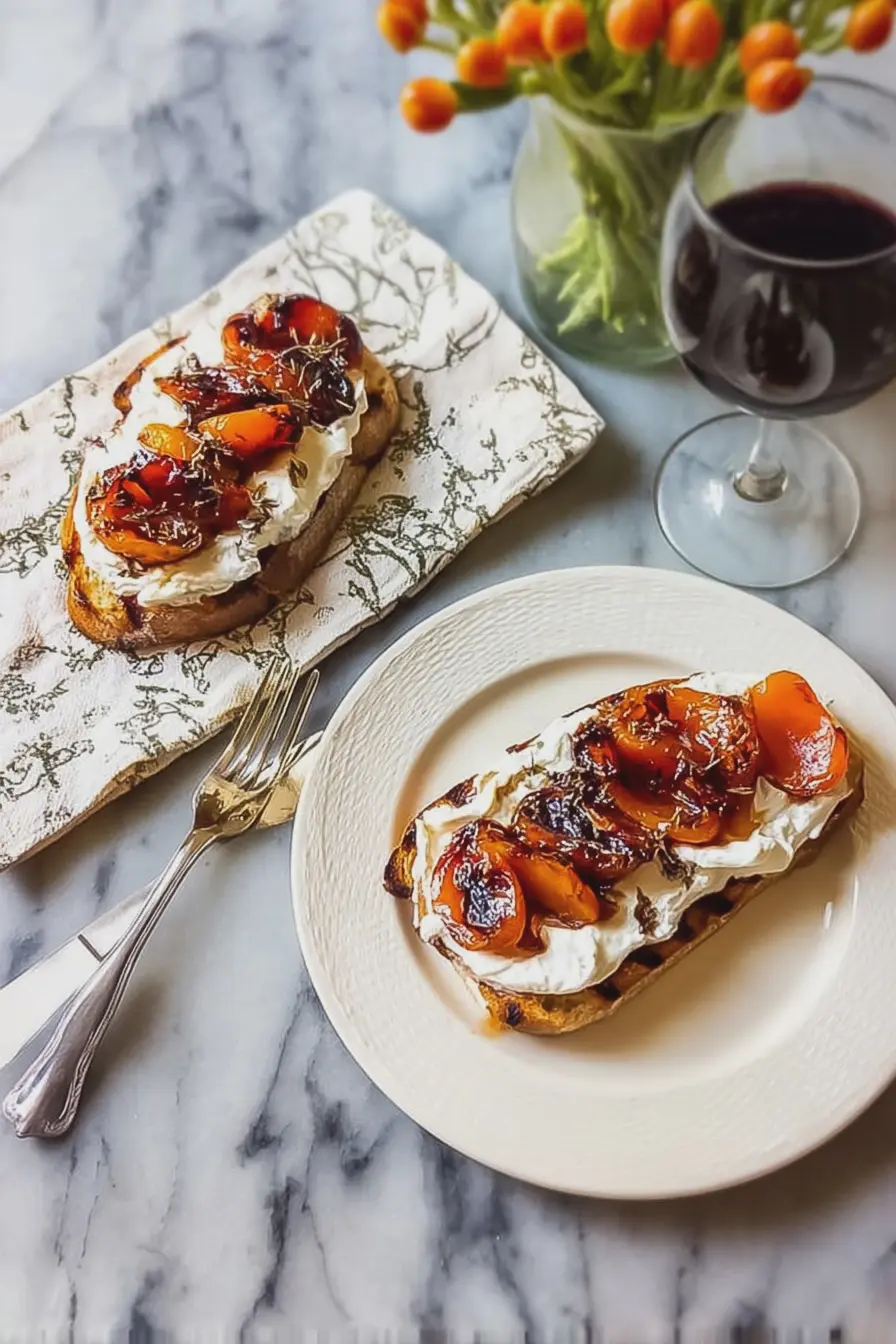
I like to cook the apricots just long enough that they’re tender but still hold their shape — that golden, caramelized face is where the flavor is. While they’re in the pan I’ll crisp the bread and smooth the ricotta; everything finishes at the same time if you stagger the pans. I’ll also add a few torn rosemary needles during cooking for a woodsy note and pull out the sprig before plating.
What I enjoy most about this tartine is how seasonal it feels: ripe apricots bring bright color and a honeyed aroma, while lemon and ricotta keep the bite fresh. It’s a quick recipe that looks like a proper brunch plate, and once you make it a couple times you’ll have the timing down so guests arrive and it’s ready in under an hour.
Why This Caramelized Apricot & Ricotta Tartine Works for Quick Brunches
Simple components, big payoff. The technique is straightforward and gives a layered mouthfeel: creamy ricotta, slightly sticky caramelized fruit, soft caramelized shallot, and crisp bread. Because each element takes only minutes, you can multitask—toast the bread while the apricots caramelize and the shallots turn sweet in another pan.
Sensory notes to expect: the kitchen fills with the warm, sweet scent of roasting stone fruit; the apricots give a gentle sizzle as their sugars brown; and the finished tartine presents bright orange fruit against snowy ricotta for an eye-catching plate. Use ripe, but not overripe, apricots so they caramelize without collapsing.
Everything You Need for Caramelized Apricot & Ricotta Tartine
Gather fresh, straightforward ingredients and a couple of basic tools. The right bread and fresh fruit make the biggest difference; the rest is easy to source. Below I describe each component and sensible substitutions so you can tailor the tartine to what’s in your pantry.
- Rustic bread (sourdough, country loaf, whole grain) – Provides a chewy, crisp base that won’t get soggy; grill or toast for texture.
- Fresh apricots – The star ingredient: choose ripe but firm fruit so they caramelize without falling apart.
- Fresh ricotta – Gives a creamy, mild counterpoint to the sweet apricots; choose full-fat for the best texture.
- Shallot – Caramelized shallots add savory depth and a touch of sweetness.
- Fresh rosemary – A sprig added while the fruit cooks imparts a fragrant, piney note; remove before serving.
- Lemon (juice and zest) – Brightens the ricotta and keeps the topping tasting fresh.
- Olive oil & softened butter – Use fat for caramelizing and crisping the bread; butter gives richness, olive oil carries flavor without burning at medium heat.
- Salt & pepper – Small amounts balance the sweetness; flaky sea salt is especially nice as a finishing touch.
- Hot honey – Drizzled at the end for a controlled kiss of heat and additional sweetness; substitute plain honey and a pinch of chili flakes if needed.
- Essential tools – A heavy skillet for even caramelization, a second small pan for shallots, and a grill pan or toaster for the bread.
The Secret to Perfectly Caramelized Apricots
- Pat the apricot halves dry so they make good contact with the pan; moisture prevents browning. Place them cut-side down in a hot, lightly oiled skillet so the sugars hit the surface and begin to caramelize.
- Keep the heat at medium to medium-high: hot enough to brown but not so hot that the fruit burns. You want a deep golden color and an audible, gentle sizzle.
- Add a fresh rosemary sprig to the pan while the apricots cook; it will perfume the fruit. Remove the sprig before plating to avoid woody bits.
- Turn only if necessary. Let the cut face develop color and flavor before moving the pieces — overly fussing with them can tear the fruit.
- Timing cues: when the apricots are tender to the touch and you see glossy, browned edges, they’re ready. They should hold shape and become slightly jammy, not collapsed.
- If you enjoy other stone fruit, you can apply the same approach—try grilled peaches for a variation on the brunch table:
grilled peaches are an excellent swap.
How to Whip Ricotta Into a Smooth, Spreadable Base
Ricotta can be grainy straight from the tub; a few simple moves make it lusciously smooth and easy to spread across warm toast.
- Use a bowl and a whisk, fork, or small hand mixer to beat the ricotta until it loosens and becomes glossy. A short blast with a hand mixer will save time if you’re making several tartines.
- Add lemon zest and a splash of lemon juice to brighten the cheese—this keeps the ricotta tasting fresh against the sweet fruit.
- Adjust texture with a drizzle of olive oil or a little of the apricot pan juices to achieve a spreadable consistency without watering it down.
- Season lightly with salt and a grind of black pepper; taste as you go so the ricotta complements rather than overpowers.
- If you want serving inspiration that also celebrates ricotta, try this ricotta crostini recipe for entertaining:
How to Make Caramelized Apricot & Ricotta Tartine (Step-by-Step)
- Start the shallots: thinly slice and cook in a small pan over medium heat with olive oil until deeply golden and sweet; remove from heat and set aside so they don’t over-brown while you finish other elements.
- In a separate heavy skillet, heat a little oil and arrange apricot halves cut-side down; add a rosemary sprig to the pan. Cook until the cut faces are glossy and golden, then remove from heat and set aside.
- Toast the bread: butter one or both sides and toast in a grill pan, skillet, or panini press until crisp and golden. Remove to a board so the surface stays crisp while you assemble.
- Finish the ricotta: whip with lemon zest and juice, a drizzle of olive oil if needed, and a pinch of salt and pepper until smooth. Keep it warm at room temperature for easier spreading.
- Assemble on warm toast: spread a generous layer of ricotta, arrange caramelized apricots on top, scatter caramelized shallots, and finish with a few flakes of sea salt and a drizzle of hot honey. Remove any rosemary sprigs before serving.
- Plate for guests: place tartines on a warm platter, add a few extra apricot halves for color, and serve immediately so the bread stays crisp under the toppings.
Pro Tip for Caramelized Apricot & Ricotta Tartine: Balancing Sweet, Savory & Heat
- Finish with flaky sea salt to cut into the sweetness—salt is the easiest way to make the apricot flavor sing.
- Choose complementary herbs: rosemary gives a woodsy backdrop, thyme is lighter and citrus-friendly; torn leaves work better than chopped to avoid bitterness.
- Add heat in small increments: drizzle hot honey, or sprinkle a pinch of cayenne or chili flakes so you control the warmth across the plate.
- Play with texture: a light scatter of toasted nuts adds crunch (almonds or pistachios are great).
- Want a deeper caramel note? Try a touch of homemade caramel for finishing touches if you like richer sweetness:
homemade caramel is useful here.
How to Store, Reheat and Vary This Tartine (Vegan & GF Options)
Leftovers are best kept as separate components. Store toast and toppings apart so you can preserve textures and reheat only what you need.
- Storage: Keep ricotta and caramelized apricots in airtight containers in the fridge. Toast separately and refresh under a broiler or in a hot skillet to bring back crispness.
- Reheating: Warm apricots gently in a skillet over low heat so they don’t disintegrate; re-crisp bread briefly in a hot pan or oven to restore texture.
- Vegan options: Use a plant-based ricotta or make a cashew-based spread with soaked cashews, lemon, and a little nutritional yeast for tang. Swap butter for vegan butter or olive oil when toasting bread.
- Gluten-free: Any sturdy gluten-free loaf or sourdough-style slice that toasts well will work; the goal is a crisp surface that holds the toppings.
- Variations: Swap apricots for peaches, nectarines, or plums for seasonal turns; prosciutto or a smear of mustard can add savory contrast for a heartier option.
- Troubleshooting:
- If apricots collapse, they were too ripe or the pan was too hot—use firmer fruit or lower the heat next time.
- If ricotta is too slack, drain it briefly in cheesecloth to concentrate texture before whipping.
- If bread gets soggy, toast longer and assemble just before serving; keep wet toppings separate until plating.
- For a sweet finish or to build a menu around similar flavors, consider pairing this tartine with a light fruit dessert like a peach and raspberry cobbler:
Frequently Asked Questions
Can I use other fruits instead of apricots?
Absolutely! You can substitute apricots with peaches, nectarines, or even plums for a delicious variation.
Is there a vegan alternative for ricotta cheese?
Yes, you can use a plant-based ricotta or make your own using soaked cashews blended with lemon juice and nutritional yeast.
How do I store leftovers?
Store any leftover tartine components separately in the fridge. The bread can be toasted again, while the toppings should be kept in airtight containers.
Can I make this tartine gluten-free?
Definitely! Just use gluten-free bread as a substitute for the rustic bread in the recipe.
What can I serve with the tartine for a complete brunch?
Pair the tartine with a fresh fruit salad, yogurt, or a light salad for a balanced brunch experience!
Caramelized Apricot & Ricotta Tartine Recipe
Ingredients
Method
- Drizzle some oil in a skillet, and place the apricots cut-side down into the pan. Cook until tender and they have started to caramelize.
- As they cook, add some fresh rosemary to the pan for flavor. No need to chop, you'll be removing before serving.
- Meanwhile, in a separate pan, caramelize the shallots in olive oil, watching closely to ensure they do not burn. Remove from the heat and put into a bowl and set aside.
- Prepare the bread. Butter one (or both) sides of the bread and fry or place on a grill. We used a panini maker.
- Remove to a board when the bread is toasted and golden brown.
- Prepare the ricotta cheese mixture. Add a little lemon juice and lemon zest from one lemon and whip the ricotta until fairly smooth.
- Spread a nice thick layer on each toast, and add a little salt and pepper.
- Layer the caramelized apricots on each toast. Then add the caramelized shallots.
- Drizzle with a little hot honey and serve immediately.