

I make these Chipotle Steak Fajita Bowls all the time when weeknights get hectic — they’re one of those meals I can prep a little in advance, finish quickly when you walk in the door, and still serve something colorful and satisfying to the whole family. I’ve tested short marination windows and overnight ones; both work, but the tricks I’ll share below guarantee juicy steak and bright, crisp veggies even when time is tight.
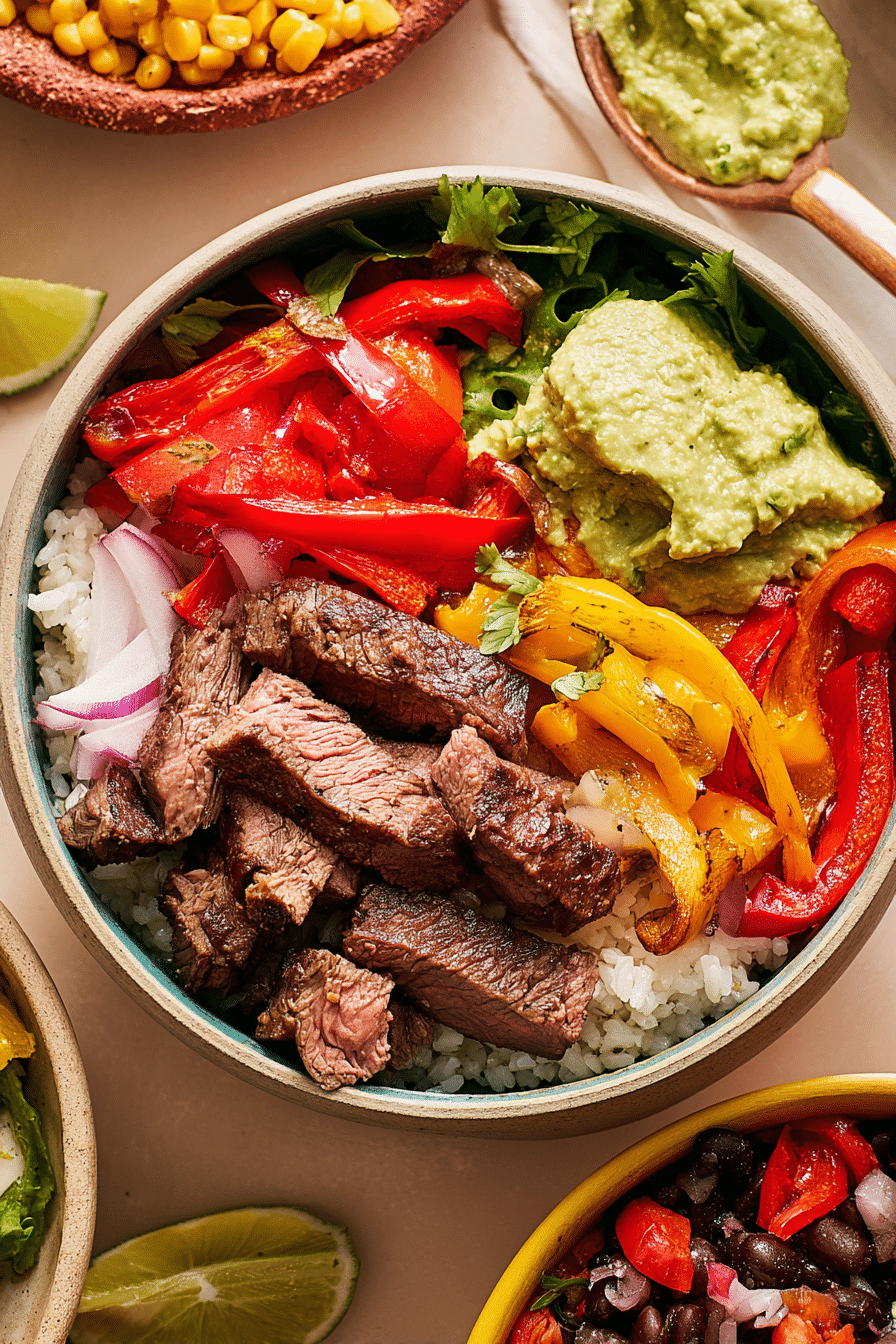
I like to think of these bowls as a modular dinner: the steak is the headline, the fajita veggies add snap and color, and staples like rice, beans, and guacamole fill everything out. In my kitchen I often double the veggies and use leftovers for lunches — the bowls reheat beautifully if you keep components separate. The aroma of smoky chipotle and garlic meeting hot oil is one of those weekday perks that makes dinner feel intentional.
Pro-Tips, Troubleshooting, and Variations are presented as bulleted lists below for quick scanning. Read the short sections on technique and storage so you can set up this meal to match your week (fast tonight, meal‑prep friendly for the week ahead). I’ll also point out where canned swaps and quick shortcuts save time without sacrificing flavor.
Why these Chipotle Steak Fajita Bowls are perfect for busy weeknights
These bowls are built around three time-saving ideas: advance marination, component prep, and flexible assembly. Below are practical ways I use those ideas so dinner actually happens on a busy evening.
- Marinate ahead: I sometimes marinate the steak in the morning or the night before so all the flavor is locked in and dinner becomes a quick sear and assemble job.
- Batch-cook staples: Cook rice and rinse canned beans in bulk on the weekend; during the week you only heat and assemble. If you want an authentic touch, try adding some cilantro lime rice to your fajita bowls for that classic flavor note.
- Customize per eater: The bowl format lets each person pick toppings — kids often skip the spice and keep the veggies, while adults get more guacamole and a pinch of chipotle.
- Use leftovers purposely: Leftover steak from roast night or a grilled sirloin becomes this bowl’s star with minimal effort.
Sensory note: imagine the bright ring of sliced peppers, the deep red of chipotle marinade, and the warm, savory scent of rested steak — those quick wins make a rushed evening feel like a proper meal.
Everything You Need for Chipotle Steak Fajita Bowls
Below I walk through each ingredient’s job in the bowl and offer substitutions where it makes sense. I focus on freshness when it matters and on smart canned swaps when you need speed.
- Sirloin or flank steak – The star protein; choose a cut with good beefy flavor. For quicker cooking, a thinner-cut steak will sear fast and slice easily.
- Oil (olive or avocado) – Helps transfer heat for a good sear and carries fat-soluble flavor from the chipotle.
- Lime – Adds bright acidity that balances the smoky chipotle and helps tenderize the meat.
- Chipotle peppers in adobo – Provide smoky heat and body to the marinade; you can tone down the quantity if you prefer mild bowls.
- Garlic + dried spices (cumin, oregano, black pepper) – Build depth; swap smoked paprika for extra smokiness if you like.
- Bell peppers & red onion – The fajita vegetables: they add color, crunch, and sweetness when lightly sautéed or grilled.
- Corn, black beans, tomatoes – Canned corn and beans save time and still taste great; rinsing beans removes excess sodium and keeps the bowl bright.
- Romaine or other greens – Adds freshness and a crunchy base; baby greens are a great shortcut.
- Rice – A neutral, filling base; plain jasmine or a seasoned rice both work well with the bold marinade.
- Guacamole or avocado – Creaminess to finish the bowl; store-bought guac is a fine time-saver if you don’t have a spare five minutes.
Choose higher-quality steak if you want a richer beef flavor — it holds up well against the smoky chipotle. For vegetarian protein alternatives, see the dedicated section below.
The Secret to Tender, Juicy Steak in Minutes
I’ve learned the hard way that a good sear plus resting time beats long, slow cooking for weeknight steaks. Here’s exactly how I get a restaurant-like crust and juices inside without fuss.
- Marinate: Coat the steak in the chipotle mixture and refrigerate for at least 30 minutes; if you have time, leave it overnight for deeper flavor penetration.
- Bring to room temperature briefly: Take the steak out of the fridge 20–30 minutes before cooking so it cooks evenly.
- Heat the pan hot: Use a cast-iron skillet or heavy-bottomed pan on medium-high heat until shimmering — a hot pan is the difference between a good sear and a gray, steamed edge.
- Sear without crowding: Lay the steak in the pan and leave it undisturbed for 4–5 minutes per side for medium-rare on a thicker cut; thinner cuts will need less time.
- Rest the steak: Transfer it to a cutting board and let it rest for about 8–10 minutes so the juices redistribute — slice against the grain for tenderness.
Troubleshooting (quick bullet list):
- If the steak sticks to the pan, the pan wasn’t hot enough — heat longer and dry the steak surface with a paper towel before searing.
- If your steak is charred outside but undercooked inside, reduce the heat slightly and use a couple minutes less per side next time, or finish in a 400°F oven for 4–6 minutes.
- If slices are tough, you may be cutting with the grain — always slice against the grain to shorten muscle fibers.
Why the Chipotle Marinade Packs Big Flavor (and how long to marinate)
The marinade is smoky, acidic, and garlicky — the chipotle peppers provide the smoke and spice, the lime adds brightness and helps break down proteins slightly, and the oil carries those flavors into the steak. Longer marination deepens the flavor, but even a short soak moves the needle significantly.
- Short marinate (30 minutes to 2 hours) – You’ll get clear chipotle flavor on the surface and a tender edge.
- Overnight marinate – The meat absorbs deeper flavor and becomes more tender; this is my go-to when I plan ahead.
- Alternative profiles – Swap oregano and cumin for smoked paprika and a touch of brown sugar for a sweeter glaze; for a fresher profile, add chopped cilantro and extra lime zest just before cooking.
- Vegan marinade idea – Use lime, chipotle powder or smoked paprika, oil, garlic, and a splash of soy or tamari for umami on tofu or hearty mushrooms.
Sensory focus: as the steak marinates you should smell the smoky, garlicky perfume of the chipotle balanced by bright citrus — that aroma is a good sign you’re on track.
How to Make Chipotle Steak Fajita Bowls (Step-by-Step)
Follow this order for the smoothest, fastest dinner: marinate, cook rice, sear steak, rest and slice, then sauté the veggies and assemble.
- Prepare the marinade and coat the steak; refrigerate for at least 30 minutes or up to overnight.
- Start the rice so it finishes around the same time as the steak. Keep it warm while you cook.
- Heat your skillet on medium-high with oil until shimmering, then sear the steak 4–5 minutes per side for medium-rare (adjust time for thickness and preferred doneness).
- Remove the steak, tent loosely with foil, and rest for 8–10 minutes before slicing.
- Return the pan to medium-high, add the leftover marinade (careful of flare-ups) and toss in the sliced bell peppers and onions; sauté 3–5 minutes until tender-crisp with some browned edges.
- Assemble bowls: rice first, then greens, the sautéed fajita veggies, beans, corn, halved tomatoes, sliced steak, and a generous scoop of guacamole.
- Finish with a squeeze of fresh lime and any extra hot sauce or chopped cilantro you like; serve immediately so the steak stays warm and juicy.
Sensory note: the pan will sing when the peppers hit the hot oil, and that quick sizzle preserves texture and flavor — don’t overcook the veggies if you want a bit of snap.
Pro Tip for Chipotle Steak Fajita Bowls: Grill vs. Pan-Sear for Faster Weeknights
Both methods are fast; pick based on your equipment and the weather. Here are the practical pros and cons I weigh when choosing how to cook my steak.
- Grilling – Pros: adds extra smoky char, cooks large batches quickly, and is ideal in warm weather. Cons: needs outdoor space and attention to flare-ups; slightly less control over exact internal temperature.
- Pan-searing – Pros: precise heat control, easy on any stove, and perfect for a one-pan finish with veggies. Cons: less open-fire char, and smaller batches mean you may need to cook in shifts for multiple steaks.
- Speed tip: If you want quick, high-heat flavor indoors, use a very hot cast-iron pan and a thin-cut steak — it’s the fastest route to a good crust.
If you enjoy the flavors of chipotle, you might also like our Chipotle chicken avocado melt for a quick meal option.
How to Store, Reheat, and Meal Prep Chipotle Steak Fajita Bowls
These bowls are meal-prep gold if you pack components smartly. Store wet and dry components separately to keep textures at their best.
- Storage: Keep steak, rice, and veggies in separate airtight containers in the fridge; most components last 3–4 days refrigerated.
- Reheating steak: Reheat gently in a skillet over medium-low or in a 300°F oven until warm; add a splash of broth or water to keep it from drying.
- Reheating veggies and rice: Sauté veggies quickly to refresh texture; microwave rice with a damp towel or sprinkle of water to keep it fluffy.
- Meal-prep plan: Cook steak and rice on Sunday, roast or sauté a big tray of peppers and onions, portion into containers with beans and corn, and add guacamole or avocado the day you serve.
For more meal prep ideas, check out our easy crockpot French dip sandwiches.
Vegetarian and Vegan Alternatives for Fajita Bowls
If you want to skip the steak, there are plenty of plant-based proteins and techniques that mimic the savory depth and texture.
- Tofu (pressed, then marinated) – Use firm tofu pressed dry so it soaks up the chipotle marinade; pan-sear or bake until edges are golden.
- Tempeh – Its nutty texture holds up to bold marinades; steam briefly, then marinate and pan-sear for a chewy, meaty bite.
- Portobello or king oyster mushrooms – Thick slices or torn strips absorb marinade and provide a satisfying umami bite when grilled or roasted.
- Seitan or plant-based steak slices – If you use store-bought plant meats, marinate briefly and sear to build crust.
- Swap dairy toppings – Use vegan sour cream or cashew crema in place of dairy-based dressings; guacamole remains naturally vegan.
For a light and fresh option, consider adding vegetable spring rolls as a tasty alternative.
Unique Topping Ideas Beyond Standard Toppings
Small topping tweaks change the bowl’s personality — try one or two to keep things interesting while adding nutrients.
- Pickled red onions or quick pickled jalapeños for bright acidity and a crunchy snap.
- Toasted pepitas or crushed roasted chickpeas for a crunchy, protein-rich finish.
- Quick citrus slaw (lime, thinly sliced cabbage, and cilantro) for freshness and texture contrast.
- Drizzles: smoky chipotle crema, cilantro-lime yogurt, or a tahini-lime sauce for richness and creaminess.
- Fresh herbs: chopped cilantro or green onion for an herbal lift that brightens the bowl.
Frequently Asked Questions
How long do I need to marinate the steak for the Chipotle Fajita Bowls?
For best results, marinate the steak for at least 30 minutes, but you can leave it in the fridge overnight for deeper flavor.
Can I use a different type of meat instead of steak?
Absolutely! You can substitute the steak with chicken, pork, or even tofu for a vegetarian option. Just adjust the cooking times accordingly.
Is this recipe gluten-free?
Yes! The Chipotle Steak Fajita Bowls are gluten-free as long as you use gluten-free rice and check the labels on any canned ingredients.
What can I use instead of guacamole?
If you’re not a fan of guacamole, you can try using avocado slices, salsa, or even a creamy cilantro dressing to add richness to your bowls.
How can I meal prep these bowls for the week?
You can cook everything ahead of time, store the components separately in airtight containers, and assemble fresh bowls each day. Just reheat the steak and veggies before serving.
Chipotle Steak Fajita Bowls
Ingredients
Method
- Prepare the marinade: Combine steak, olive oil, lime juice, chipotle peppers, garlic, cumin, oregano, and black pepper in a bowl. Rub the steak well with the marinade and refrigerate for at least 30 minutes.
- Slice the bell peppers, onions, and tomatoes while the steak is marinating, and prepare the rice.
- Heat a cast iron skillet. Once hot, add the steak and cook for 4-5 minutes, then flip and cook for another 4-5 minutes. Adjust time for preferred doneness.
- Remove steak from the pan and let it rest for 10 minutes before slicing.
- Sauté the vegetables in the pan with leftover marinade until softened, about 3-5 minutes.
- Assemble bowls with rice, romaine lettuce, corn, black beans, baby tomatoes, fajita vegetables, sliced steak, and a scoop of guacamole. Serve immediately.