
Poolside RecipeDesserts
Crostoli Recipe
- Prep
- 15 min
- Cook
- 40 min
- Total
- 55 min
- Serves
- 9
- Calories
- 150 kcal
Introduction
I grew up watching my Nonna stretch paper-thin sheets of dough across the kitchen table while my cousins and I waited for the first batch to come out of the pan. The ritual—rolling, cutting, twisting and frying—was as much a part of the celebration as the food itself. I still remember the sweet, warm steam carrying the scent of powdered sugar through the house and the sound of laughter as someone inevitably burned a finger on a hot strand of dough.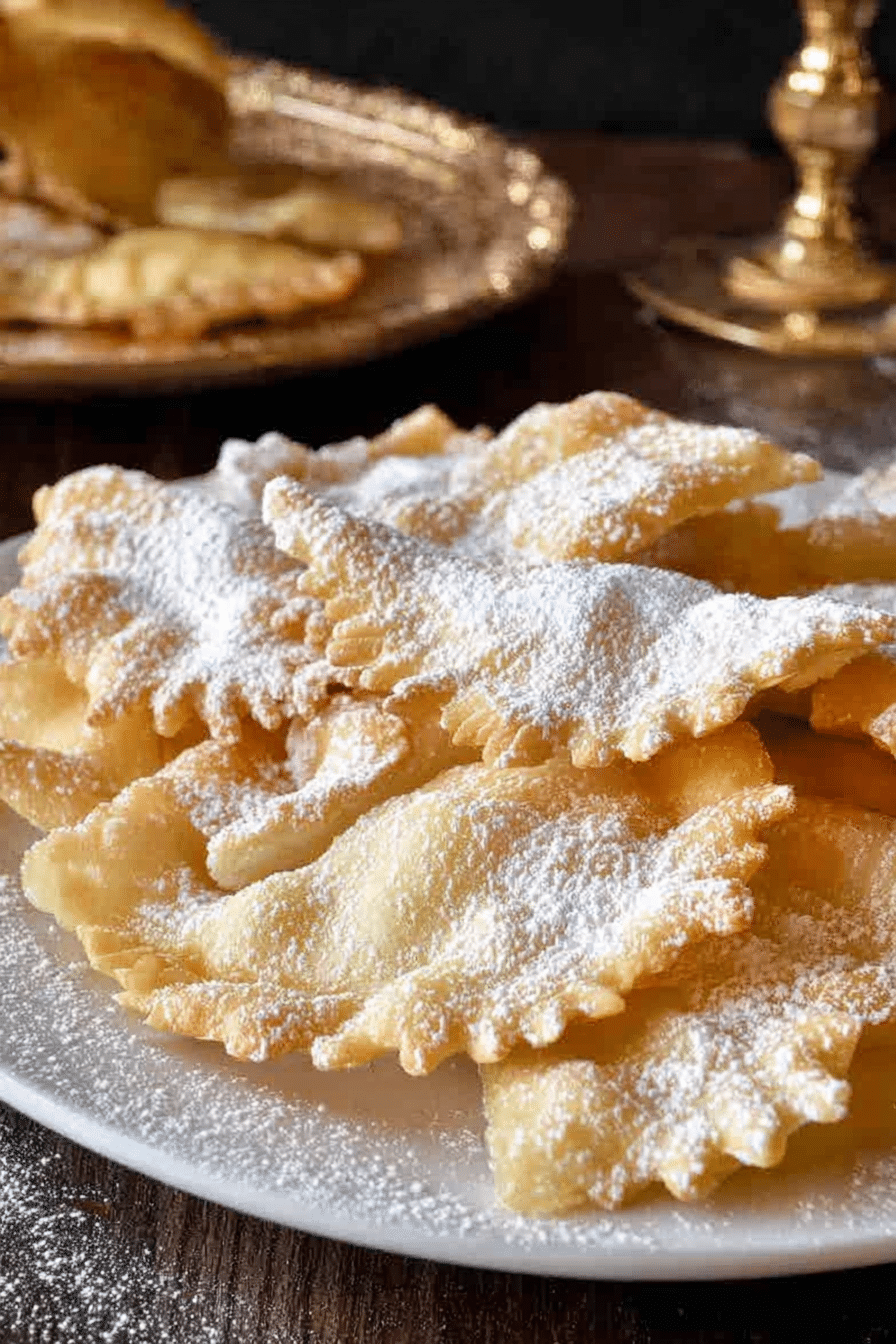
Why This Crostoli Recipe Brings Family Together
Crostoli are as much about people as they are about pastry. In my family they mark the start of a celebration: someone fries, someone dusts with sugar, and someone always sneaks an extra piece. Passing the method down—how thin to make the dough, where to nick it for the classic twist, and how long to fry without over-browning—is how recipes survive generations. The act of making crostoli turns the kitchen into a stage for stories. You’ll feel the flour on your fingertips, hear the oil begin to bubble, and smell the sweet aroma that draws everyone nearer. I still have a memory of my aunt humming an old folk tune while we worked; those small rituals matter. Share the work, hand out simple tasks to children, and you’ll create memories that outlast the pastries themselves.Everything You Need for Crostoli
Below I list the ingredients and tools conversationally so you understand each component’s role and sensible swaps. I avoid measurements here so you focus on purpose and substitutes.- All-purpose flour – The backbone of the dough; it gives structure while still allowing the dough to be rolled very thin. For a gluten-free swap use a cup-for-cup gluten-free flour blend that contains xanthan gum.
- Eggs – Provide richness and bind the dough. For an egg-free version, try a firm vegan binder such as a thick aquafaba reduction, but expect a slightly different texture.
- Sugar – Just a touch for balance in the dough; powdered sugar is used for dusting at the end.
- Butter (slightly softened) – Adds tenderness and a subtle flavor. If you need a dairy-free option, use a firm plant-based spread that behaves like butter when mixed into dough.
- Brandy – A splash lifts the flavor and helps the dough crisp; you can use another spirit or omit it and use a little milk or water for an alcohol-free version.
- Vanilla extract – A whisper of warmth and aroma; optional but recommended.
- Salt – Enhances flavor; don’t skip it.
- Neutral frying oil (peanut recommended) – Use a high-smoke-point oil for even frying. If peanut oil is not an option, use sunflower or grapeseed oil.
- Pasta machine or rolling pin – A pasta roller makes it fast and consistent; you can stretch and roll by hand if needed.
- Heavy, high-sided frying pan or pot and thermometer – A heavy pan holds temperature; a thermometer helps you keep the oil steady at frying temperature.
- Slotted spoon or spider and absorbent paper – For removing and draining the crostoli so they stay crisp.
How to Make Crostoli (Step-by-Step)
Follow these practical steps and remember: take your time with the dough and be decisive with the oil temperature. I find that patience during rolling pays off with a better puff when frying.- Make a well of flour and mix in the eggs, sugar, softened butter, spirit, vanilla and salt. Bring the dough together until it forms a ball; if it feels a touch sticky, let it rest briefly or add a dusting of flour.
- Knead briefly until the dough is smooth and elastic; you should feel it become satin-like under your palms. Rest the dough to relax the gluten so it will roll thinner more easily.
- Divide a small piece from the mother dough. Flatten and run it through the pasta machine on the widest setting. Fold and repeat several times until the dough is smooth, then gradually reduce the thickness settings until you reach the thinnest setting your machine allows—or roll until paper-thin by hand.
- Dust with a little flour as needed to prevent sticking, but avoid over-flouring which toughens the dough.
- Cut the stretched dough into strips roughly a few inches long and about the width you like; make a small slit in the center of each strip and pull one end through to form the classic twist.
- Heat your oil in a heavy pan and bring it to 350°F (180°C). Test the oil with a small scrap of dough: it should bubble vigorously and rise to the surface quickly.
- Fry a few crostoli at a time—do not overcrowd the pan. They take about 30 seconds per side; turn once when many bubbles form and before color deepens too far. Aim for a light golden color.
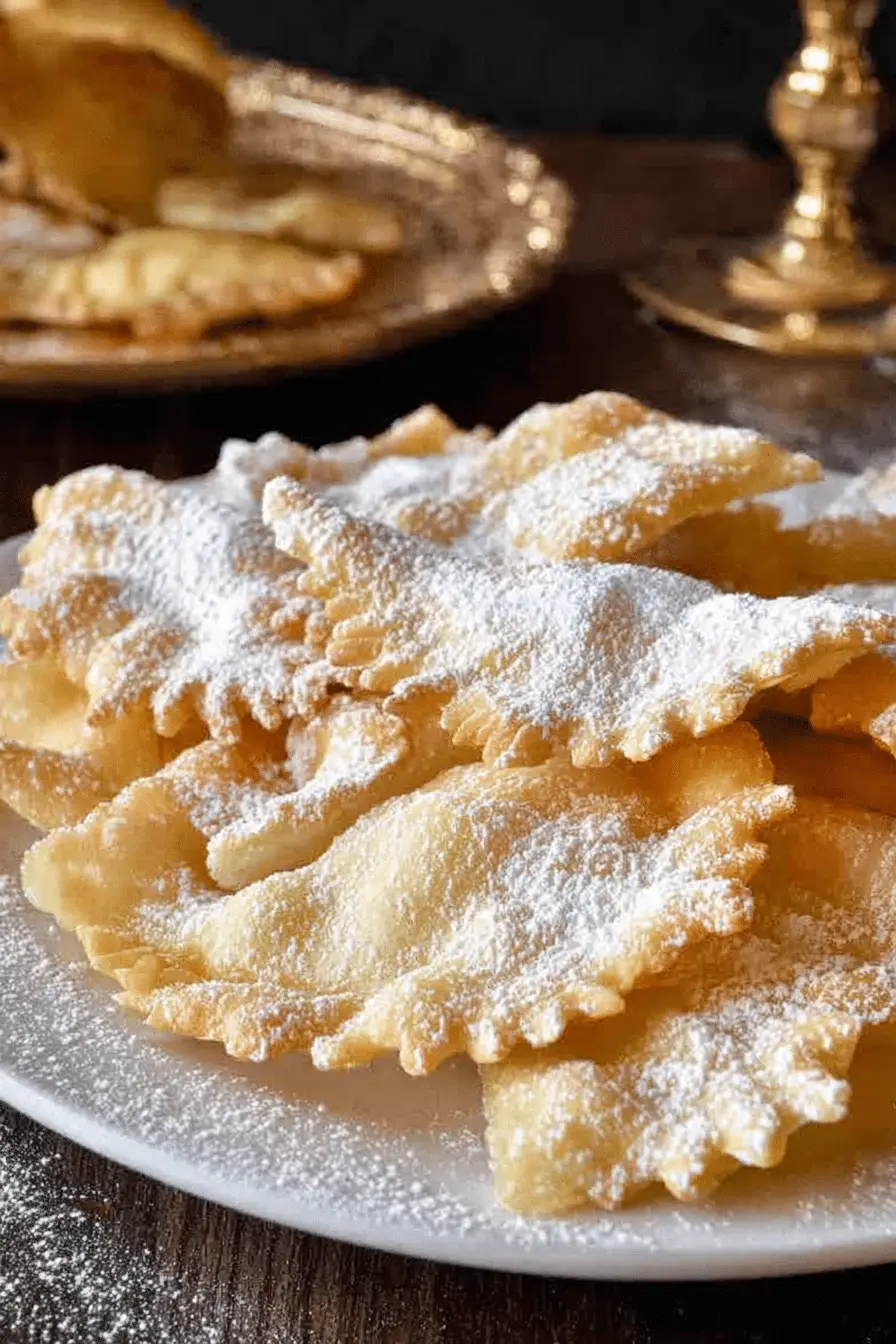
- Remove and drain on absorbent paper. They will firm up and become crisp as they cool. When completely cool, dust generously with powdered sugar.
- If crostoli absorb too much oil and feel heavy, your oil is not hot enough—raise the heat and test again.
- If they brown too quickly, lower the temperature slightly; quick browning means outside is cooking faster than inside.
- If the dough resists rolling thin, let it rest longer; relaxed gluten is easier to stretch.
- If your crostoli don’t puff, check that they’re uniformly thin and that the oil is hot and steady—small variations in thickness prevent even puffing.
The Cultural Significance of Crostoli in Italian Celebrations
Crostoli trace their roots through regional Italy and show up under many names—each village or family with a slightly different shape, dough treatment or name. They are most closely associated with Carnevale, the last festival before the Lenten season when rich foods and sweets are traditionally enjoyed in abundance. At festivals you’ll find long tables piled high with variations; the sight of powdered sugar drifting down onto trays of golden pastries is as emblematic as confetti in the streets. Families prepare crostoli for Christmas, weddings and neighborhood fêtes as a sign of abundance and shared joy. Like crostoli, mini cannoli cups hold a special place in Italian culture, often enjoyed during festive gatherings. The pastry symbolizes more than a treat: it’s an excuse to gather, to teach children old techniques and to connect over food the way Italians have done for centuries.The Secret to Achieving Perfectly Puffed Crostoli
Watch, feel and time everything. The following technical pointers are the techniques I use to get that light, airy puff and even golden color every time.- Maintain a steady oil temperature around 350°F (180°C). Too cool and the pastry soaks oil; too hot and the outside burns before it puffs.
- Roll the dough as uniformly thin as possible. Small variations in thickness are the biggest reason crostoli won’t puff evenly.
- Shape the strip with a neat central slit and a gentle pull-through; a tight twist can prevent steam from inflating the layers.
- Fry in small batches so the oil temperature doesn’t drop drastically when pieces go in.
- Drain immediately and avoid stacking hot crostoli; they’ll steam and lose their crispness. Let them cool in a single layer.
- For inspiration on delicate laminated techniques that help with puffing, see approaches used insweet almond pastry.
Variations to Try: Unique Flavors and Dietary Adaptations
Play with flavors and textures—crostoli are a friendly canvas. Below are ideas to try; each is simple and keeps the basic method intact.- Orange or lemon zest in the dough for a bright citrus note; finish with matching citrus sugar.
- Dust with cocoa or cinnamon sugar for a warming twist, or drizzle with a thin glaze for a shinier finish.
- Savory crostoli: omit the sugar and finish with flaky salt and grated cheese for a unique appetizer.
- Gluten-free approach using a cup-for-cup blend containing xanthan gum; expect a slightly different bite but excellent flavor.
- Vegan swap: use plant-based butter and an egg replacer like aquafaba for binding; the handling is similar but roll a touch more gently.
- For a festive pairing idea, consider exploring the variations that include Italian nut roll cookies for a unique twist on traditional flavors.
Pro-Tip for Perfect Crostoli Every Time
- Always have your thermometer visible—steady oil temperature is the most consistent predictor of success. I keep mine clipped to the pan when frying.
- Do not overcrowd the pan; fry in small batches to maintain oil temperature and even cooking.
- Use a heavy pan to help hold temperature and ensure even browning across each piece.
- Test oil with a small piece of dough before frying a full batch to confirm the correct frying behavior.
- For an easy dessert pairing, try makinghomemade chocolate turtles —the contrast of crunchy pastry and chocolate is lovely.
Storage Tips for Your Crostoli
Proper cooling and storage will keep crostoli crisp for days. Once completely cool, store them in an airtight container at room temperature. Avoid the refrigerator, which can introduce humidity and soften the pastry.- If crostoli lose their crispness, refresh them in a warm oven for a few minutes on a baking sheet to revive crunch.
- Stored properly in an airtight container, they remain good for up to two weeks.
- Signs of spoilage: any rancid or off smell from the fat or visible mold—discard immediately if present.
Frequently Asked Questions
What is Crostoli made of? Crostoli are made from all-purpose flour, eggs, sugar, butter, brandy, vanilla extract, and salt. They are deep-fried in peanut oil and typically dusted with powdered sugar. What is another name for Crostoli? Crostoli are known by various names depending on the region in Italy, including Chiacchiere, Frappe, Bugie, Cenci, Sfrappole, and Galani. Is it Crostoli or Chiacchiere? Crostoli and Chiacchiere refer to the same delightful fried pastries, though ingredients and shapes can slightly vary across different Italian regions. How long do Crostoli last? When stored in an airtight container, Crostoli can remain fresh for up to two weeks. What should I do if my Crostoli are too oily? If your Crostoli are oily, it may be due to the oil not being hot enough. Make sure the oil reaches 350°F (180°C) before frying to achieve the perfect crispy texture.Recipe Card
Crostoli Recipe
- Prep
- 15 min
- Cook
- 40 min
- Total
- 55 min
- Serves
- 9
- Calories
- 150 kcal
Ingredients
- 1 cupold-fashioned oats
- 3/4 cupall-purpose flour (or gluten-free flour blend)
- 1/3 cuplight brown sugar
- 1/4 teaspoonbaking soda
- 1/4 teaspoonsalt
- 1/2 teaspooncinnamon (optional)
- 6 tablespoonsunsalted butter, melted (or coconut oil)
- 1 teaspoonvanilla extract
- 1 cupblueberries (fresh or frozen)
- 1/4 cupgranulated sugar
- 2 teaspoonscornstarch
Instructions
- 1
Preheat your oven to 375°F (190°C) and line an 8-inch square baking pan with parchment paper.
- 2
In a large bowl, combine the oats, flour, brown sugar, baking soda, salt, and cinnamon (if using). Mix well.
- 3
Stir in the melted butter and vanilla extract until crumbly for the base of your bars.
- 4
Press half of the oat mixture into the bottom of the prepared pan.
- 5
In a separate bowl, toss the blueberries with granulated sugar and cornstarch. Spread this mixture over the oat base.
- 6
Crumble the remaining oat mixture over the blueberries, gently pressing down.
- 7
Bake for 35-40 minutes or until golden brown and bubbly.
- 8
Allow to cool completely, then lift out and cut into squares.
You might also like

Reviews
Be the first to review this.