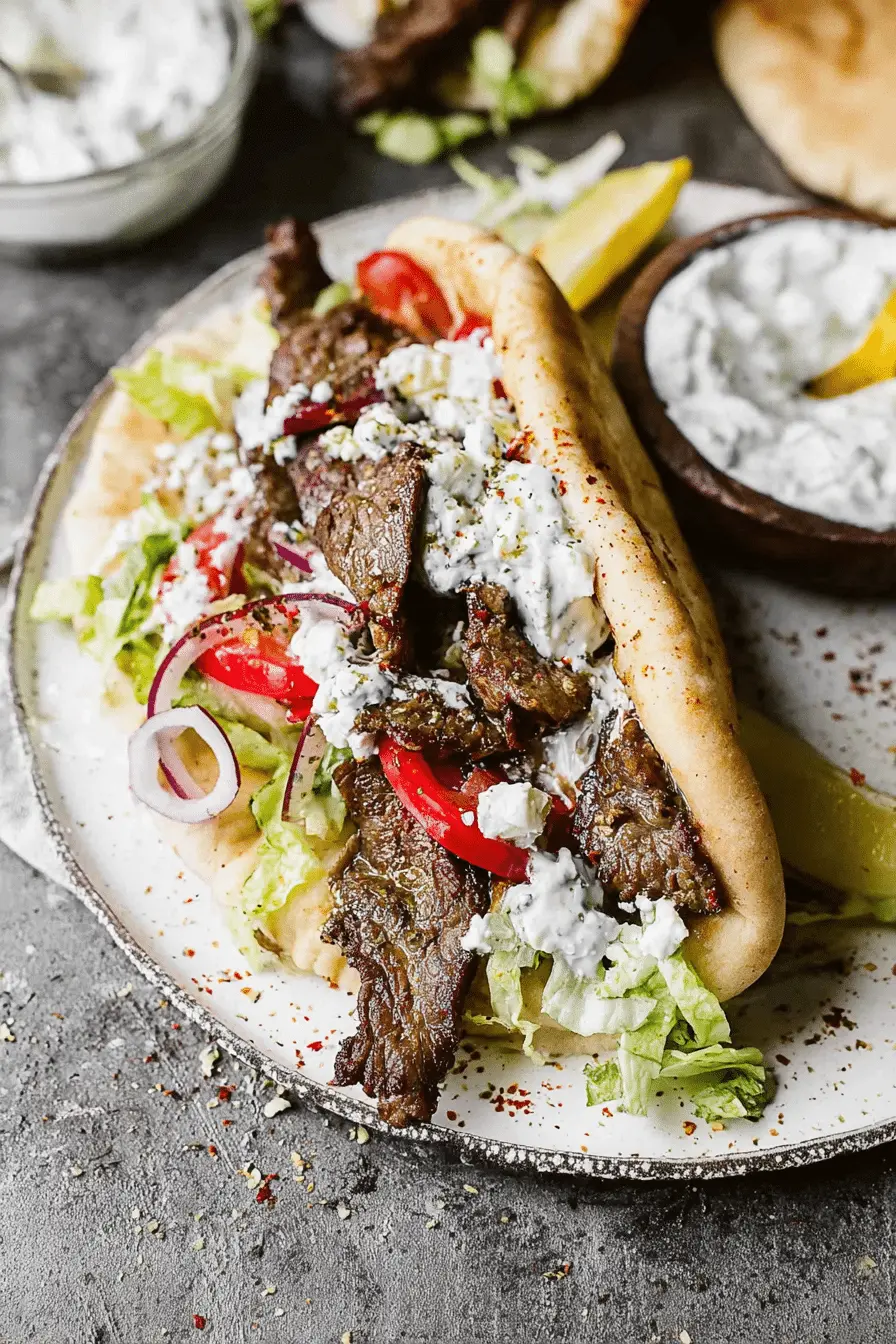
Make Irresistible Gyros at Home: A Simple Recipe for Greek Lovers
- Prep
- 15 min
- Cook
- 60 min
- Total
- 95 min
- Serves
- 8
- Calories
- 525 kcal
- Carbs
- 42.00 g
Introduction
I remember the first time I wrapped a warm pita around thin slices of gyro meat I had just browned in a cast iron pan — the smell of oregano and garlic filled the kitchen, the edges crackled under the heat, and the first bite was a salty, tangy, crunchy, cool contrast because of the tzatziki. Gyros are one of those dishes that feel communal: hand-held, messy in the best way, and instantly nostalgic. They come from Greece, where spit-roasted meat layered on a vertical rotisserie has fed street crowds for generations, and that same spirit shows up in home kitchens everywhere now — we just adapt the method for practicality and flavor.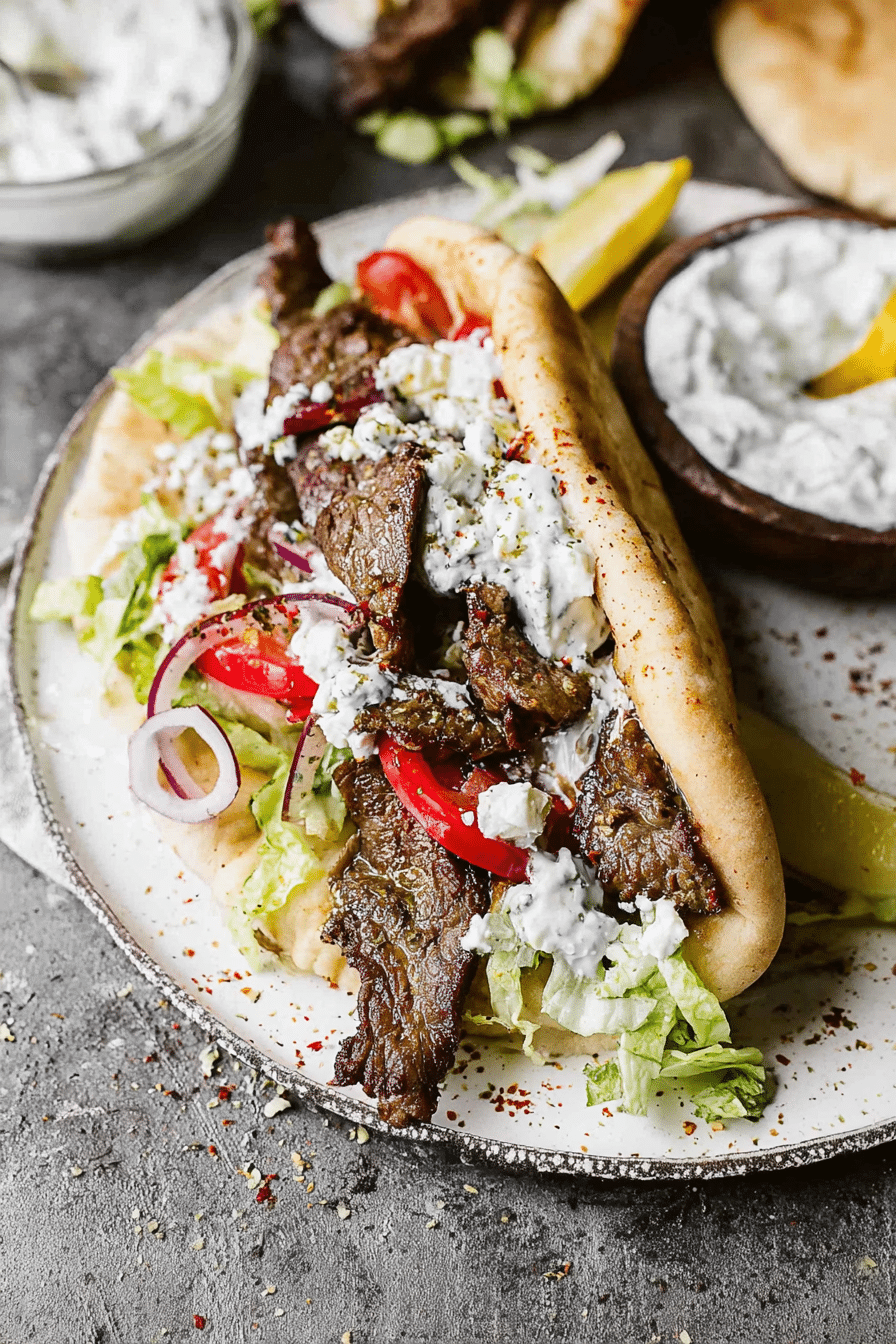
Ingredients for Homemade Gyros
- Ground lamb – the rich, slightly gamey backbone of traditional gyro meat; brings fat and flavor.
- Ground beef – adds beefy structure and balances lamb; helps the mixture bind and slice well.
- Onion – provides moisture and savory sweetness after processing; it also helps the meat mix hold together.
- Garlic – gives that warm, aromatic lift that sings through the meat.
- Breadcrumbs – a binder that keeps the loaf dense enough to slice thin without falling apart.
- Dried oregano – classic Greek flavor; floral and slightly bitter, it’s essential to the gyro profile.
- Ground cumin – adds an earthy, warm note to round out the herbs and garlic.
- Salt and black pepper – seasoning matters: salt brings out the meat’s flavors; black pepper gives subtle heat.
- Aleppo pepper or paprika + cayenne – for a mild smokiness with optional heat; use paprika if you don’t have Aleppo.
- Pita bread – soft, warm, and perfect for wrapping; slightly chewy and supportive, it’s the vessel for everything.
- Tzatziki sauce – cool yogurt, cucumber, and garlic sauce that balances the rich meat.
- Tomatoes – juicy, acidic slices that add freshness and a pop of color.
- Red onion – thin, sharp ribbons for bite and crunch.
- Romaine or lettuce – a crunchy, cooling layer to contrast the meat.
- Feta cheese – optional but delightful; salty, crumbly, and tangy on top.
- Hot sauce – optional for those who like a little fire in their wrap.
Step-by-Step Instructions
- Prepare the meat mixture (why this matters): Finely chop the onion and garlic in a food processor until almost paste-like. That moisture helps bind the ground meats and spreads flavor evenly so you don’t get a hit of raw onion in one bite and none in the next. In a large bowl combine your ground lamb and ground beef with the processed onion and garlic, breadcrumbs, dried oregano, ground cumin, kosher salt, Aleppo pepper (or paprika + a pinch of cayenne), and black pepper. Use clean hands to work the mixture until it’s dense and sticky — that tackiness is what will let you pack it into a loaf and slice it without crumbling. Overworking can make it tough, though: aim for thorough mixing but stop once ingredients are evenly distributed.
- Pack and bake (safety and structure): Pack the meat into a 9x5 inch loaf pan so there are no air pockets. Smooth the top with a spatula. Bake at 325°F for about 50–60 minutes, or until the center reaches 165°F on an instant-read thermometer. The low oven temperature cooks the interior evenly without browning too much, which is important because you’ll crisp the slices later in a hot pan. If you rush this step at a higher temperature the outside will darken before the center reaches a safe temperature.
- Rest and chill (key for good slices): Let the baked loaf rest in the pan for 20 minutes so juices redistribute. Then refrigerate for a few hours or overnight if you can — chilling solidifies the fat and makes the meat far easier to slice thinly. I’ve sliced it warm before and ended up with ragged shreds; patience here yields neat, thin ribbons that crisp beautifully.
- Slice thinly: Remove the loaf from the pan and slice as thin as you can, about 1/8 inch if possible. Thin slices are the goal because they mimic the layered meat from a rotisserie: more edge surface area equals more crispiness when you brown them.
- Brown the meat (crisping technique): Heat a griddle, cast iron skillet, or heavy skillet over medium-high. Add a drizzle of reserved drippings or a little oil; you just need a thin coating so the meat sizzles rather than stews. Lay the slices flat and let them sit undisturbed for 1–2 minutes per side to get those dark, caramelized edges. The sound should be a steady sizzle; if it’s spitting aggressively you’re too hot. Alternatively, you can broil slices on a lined pan for a minute or two to get fast charred edges — watch them closely so they don’t burn.
- Warm the pita and assemble: Warm the pita quickly over a low flame or in a hot dry skillet until it’s pliable. Layer your pita with a bed of chopped romaine, a few slices of tomato and red onion, a generous spoonful of tzatziki, and the hot, crisped gyro meat. Finish with a sprinkle of feta and a dash of hot sauce if you like. Fold or roll and press lightly so everything nests together.
Tips for Perfect Gyro Meat
I’ve made this gyro meat dozens of times and tweaked the process until I could predict the outcome. Here are the practical tips I rely on:- Marinating and resting: The mixture benefits from at least 1 hour in the fridge, but overnight is ideal. This lets the spices mellow and penetrate the meat. If you skip chilling, expect messier slices.
- Use the right cuts: Ground lamb with a decent fat percentage is purposeful — too-lean lamb will make the loaf dry. If your ground beef is very lean, consider adding a tablespoon or two of olive oil or using an 80/20 blend to maintain juiciness.
- Don’t overwork the meat: Work to combine ingredients thoroughly, but finish as soon as everything is evenly mixed. Over-mixing compresses proteins and can make the loaf dense and tough.
- Thermometer is your friend: Aim for 165°F interior after baking for safety (because this is a ground meat product). Insert the probe into the center; if it’s slightly under, tent and continue in 5–10 minute increments.
- If the slices fall apart: Pack the loaf tighter before baking next time and chill longer. In a pinch, reheat slices in a skillet with a splash of oil so the fat can help glue them together as it renders.
- For extra crisp: After browning, briefly hit the pan with a splash of water and cover to steam for 30 seconds, then uncover and let the edges re-crisp — this helps if the meat warmed through but didn’t render enough fat at first.
- Reserve and use drippings: Drippings are flavorful. Use them to brown the slices or to flavor a quick pan sauce for bowls.
- Leftovers: Store sliced, cooked gyro meat in an airtight container in the fridge for up to 3 days, or freeze for longer. Reheat gently in the skillet so edges stay crisp.
Serving Suggestions and Variations
Gyros are endlessly adaptable. Serve them as a street-style wrap for dinner, slice the meat over a salad for a lighter meal, or pile everything on a platter for a casual family-style night. Enhance your gyros with a refreshing tzatziki sauce that complements the flavors beautifully. For a delicious appetizer, try pairing your gyros with our crispy Mediterranean spinach and feta crisps.- Classic wrap: Warm pita, meat, tzatziki, tomato, onion, lettuce, feta.
- Bowl: Skip the pita and serve sliced gyro meat over rice or greens with tzatziki and roasted vegetables.
- Salad: Thin ribbons of gyro meat on a Greek salad with cucumbers, olives, tomatoes, and a lemon-oregano dressing.
- Vegetarian/vegan: Swap meat for marinated, grilled portobello mushrooms, cauliflower shawarma, or seasoned seared tempeh. Use dairy-free tzatziki (cashew or coconut yogurt base) to keep it vegan.
- Spicy variant: Mix harissa or spicy pepper paste into the tzatziki or add hot sauce to the meat while browning.
Exploring Gyros: Lamb vs. Chicken
Choosing between lamb and chicken gyros comes down to flavor intensity and texture preferences. Lamb has a robust, slightly gamey profile and higher fat content which yields richer, juicier slices when baked and browned. Chicken, on the other hand, is leaner and milder, so it relies more heavily on bright marinades to deliver flavor. If you're a fan of lamb, you'll love our recipe for Mediterranean lamb meatballs that showcase similar flavors. For a variation on using chicken, consider trying our chicken garlic parmesan pasta recipe that offers a different culinary experience.- Lamb gyros: Use ground lamb either alone or mixed with beef. Because lamb is fattier, it stays moist and develops great crust. Marinate or mix spices and refrigerate overnight for deepest flavor. Bake to 165°F internal for safety, then chill and slice.
- Chicken gyros: Use thinly sliced boneless, skinless chicken thighs or breasts marinated in lemon, garlic, oregano, and olive oil; then grill or pan-sear. Chicken needs acid in the marinade to both tenderize and flavor the meat — but don’t over-acidulate (more than a few hours can make it mealy).
- Cooking tips: For lamb, let the fat render slowly during the browning step so edges crisp without burning. For chicken, use medium-high heat to get a quick sear and finish cooking through without drying; internal temp 165°F.
- Regional preferences: In Greece you’ll often find pork or lamb; in many American shops chicken is common because of cost and broader appeal. Both are authentic in their own contexts and delicious if cooked well.
Quick Meal Prep Ideas with Gyros
Gyros are great for busy weeks because most of the work can be done ahead — bake the loaf on a Sunday and you have quick assembly options all week.- Make meat in advance: Bake and chill the gyro loaf, slice it, then refrigerate. To serve, just crisp slices in a hot pan for a few minutes.
- Prep toppings separately: Chop tomatoes, slice onions, and mix tzatziki into containers. Pita can be wrapped in foil and warmed quickly when needed.
- Mix-and-match bowls: Keep a tub of cooked grains, a jar of tzatziki, and chopped veg on hand. Add warmed gyro meat and a drizzle of olive oil for a 5-minute bowl.
- Freeze portions: Portion the cooked, sliced gyro meat into freezer-safe bags flat so they thaw quickly. Reheat in a skillet or oven.
Health Benefits of Gyro Ingredients
Gyros can be part of a balanced diet when you focus on fresh ingredients and mindful portions. Here are some health-focused notes I consider when I make them:- Fresh vegetables: Tomatoes, onions, and lettuce add fiber, vitamins A and C, plus hydration. They lighten the plate and provide contrast to the rich meat.
- Protein choice: Lamb and beef provide iron and B vitamins; choosing leaner ground beef or using more lamb vs. beef changes the fat profile. Chicken is a leaner option for lower saturated fat.
- Sauces and breads: Tzatziki made from Greek yogurt gives you protein and probiotics — swap to low-fat Greek yogurt for fewer calories. Choose whole-wheat pita for more fiber.
- Healthy swaps: Reduce salt and use herbs like oregano and cumin to add flavor. Add more veg to increase volume without a lot of extra calories.
Conclusion and Final Thoughts
Gyros are one of those deceptively simple dishes that reward care: a little patience while baking and chilling the loaf, a hot pan for crisping, and a bright sauce to finish. I make this recipe when I want something that feels special but feeds a crowd — it’s perfect for casual dinners where people build their own wraps. Expect bold, herb-forward meat with crisp edges, cool creamy tzatziki, and bright, crunchy veg. If you try it once and tweak to your taste (more oregano, less cumin, extra lemon in the tzatziki), you’ll quickly make it your own. Final practical tips: bake low and slow, chill before slicing, and always reserve drippings for browning. Leftovers will keep for about 3 days in the refrigerator and the flavors often meld and taste even better the next day.FAQ
What are gyros traditionally made of? Gyros are traditionally made from ground lamb and beef, mixed with spices and herbs to enhance their flavor. The combination of meats adds a unique taste! Can I make gyros using only one type of meat? Absolutely! You can use just ground lamb or beef if you prefer. While lamb is traditional, ground beef is a great alternative that offers a different flavor. How can I store leftover gyro meat? Store any leftover gyro meat in an airtight container in the refrigerator for up to 3 days. You can also freeze it for longer storage; just make sure to reheat it thoroughly before serving. What can I substitute for tzatziki sauce? If you're looking for alternatives to tzatziki sauce, consider using Greek yogurt mixed with herbs and garlic, or try salsa or hummus for a different twist. How long should I marinate the meat for optimal flavor? For the best flavor, marinate the meat mixture for at least 1 hour, but overnight in the refrigerator is ideal to let the flavors really develop!Recipe Card
Make Irresistible Gyros at Home: A Simple Recipe for Greek Lovers
- Prep
- 15 min
- Cook
- 60 min
- Total
- 95 min
- Serves
- 8
- Calories
- 525 kcal
- Carbs
- 42.00 g
Ingredients
- 1 lbground lamb
- 1 lbground beef (80/20)
- 1 smallonion
- 5 clovesgarlic, minced
- 1/4 cupbreadcrumbs
- 1 tbspdried oregano
- 2 tspground cumin
- 2 tspkosher salt
- 1 tspAleppo pepper or paprika with cayenne
- 1/2 tspfreshly ground black pepper
- 8 piecespita bread, warmed
- 1 cuptzatziki sauce, (homemade or store-bought)
- 3campari or roma tomatoes, sliced
- 1red onion, thinly sliced
- 1 heartromaine, finely chopped
- 1/2 cupfeta cheese crumbles, optional
- —hot sauce, optional
Instructions
- 1
Prepare the gyro meat: In a food processor, finely chop the onion and garlic. Combine with the ground meat, salt, pepper, breadcrumbs, oregano, cumin, and Aleppo pepper in a bowl. Use clean hands or gloves to thoroughly mix the meat until it forms a dense mixture.
- 2
Bake: Pack the meat mixture into a 9x5 inch loaf pan. Bake at 325°F for about 50-60 minutes, or until the center reaches 165°F on a thermometer. Let it rest for 20 minutes, then refrigerate for a few hours or overnight, if possible, to aid slicing.
- 3
Slice the meat: Take the meat out of the pan, reserving the fat drippings, and slice it into thin strips, about 1/8 inch thick.
- 4
Brown the meat: Heat a griddle, cast iron skillet, or regular skillet over medium-high heat. Add some reserved meat drippings or a bit of oil to coat the pan lightly. Once hot, place the meat slices flat in the pan and cook for 1-2 minutes on each side until browned and crisp. Alternatively, broil on a lined baking sheet in the oven for a few minutes.
- 5
Assemble the gyros: Serve the gyro meat in warmed pita bread, topped with tomato, onion, lettuce, tzatziki, and feta.
You might also like

Reviews
Be the first to review this.