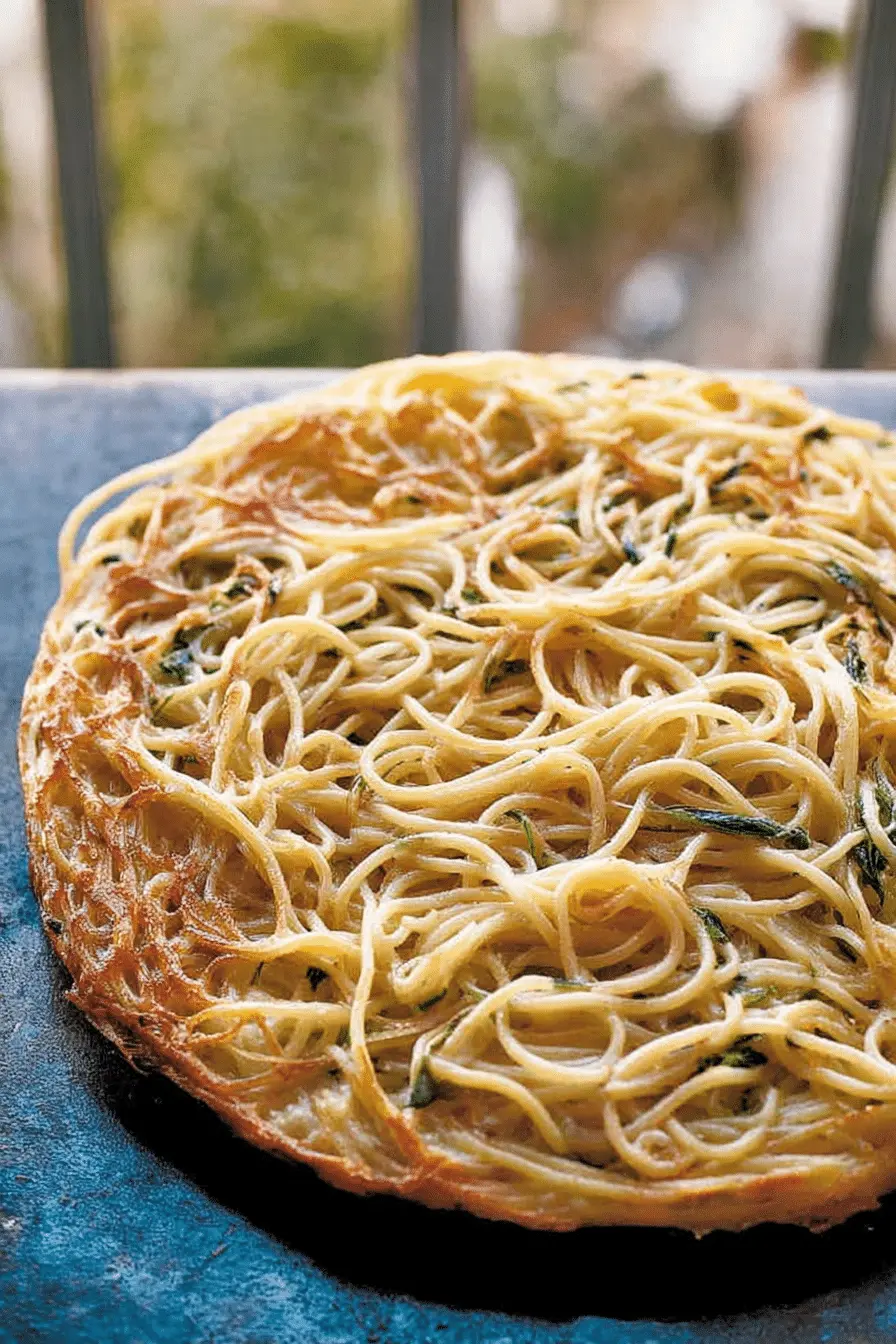
The Leftover Pasta Frittata I Make for Quick, Cheap Dinners
- Prep
- 5 min
- Cook
- 20 min
- Total
- 25 min
- Serves
- 4
- Calories
- 301 kcal
- Carbs
- 22.00 g
Introduction
I make a leftover pasta frittata when my fridge looks like a thrift store for vegetables and a single cling of spaghetti. It’s the kind of meal that uses what you already have, feeds a small family, and cleans out containers without wasting a cent. In my kitchen it’s become the simplest answer to the question, “What’s for dinner?” and a favorite when time and money are both tight.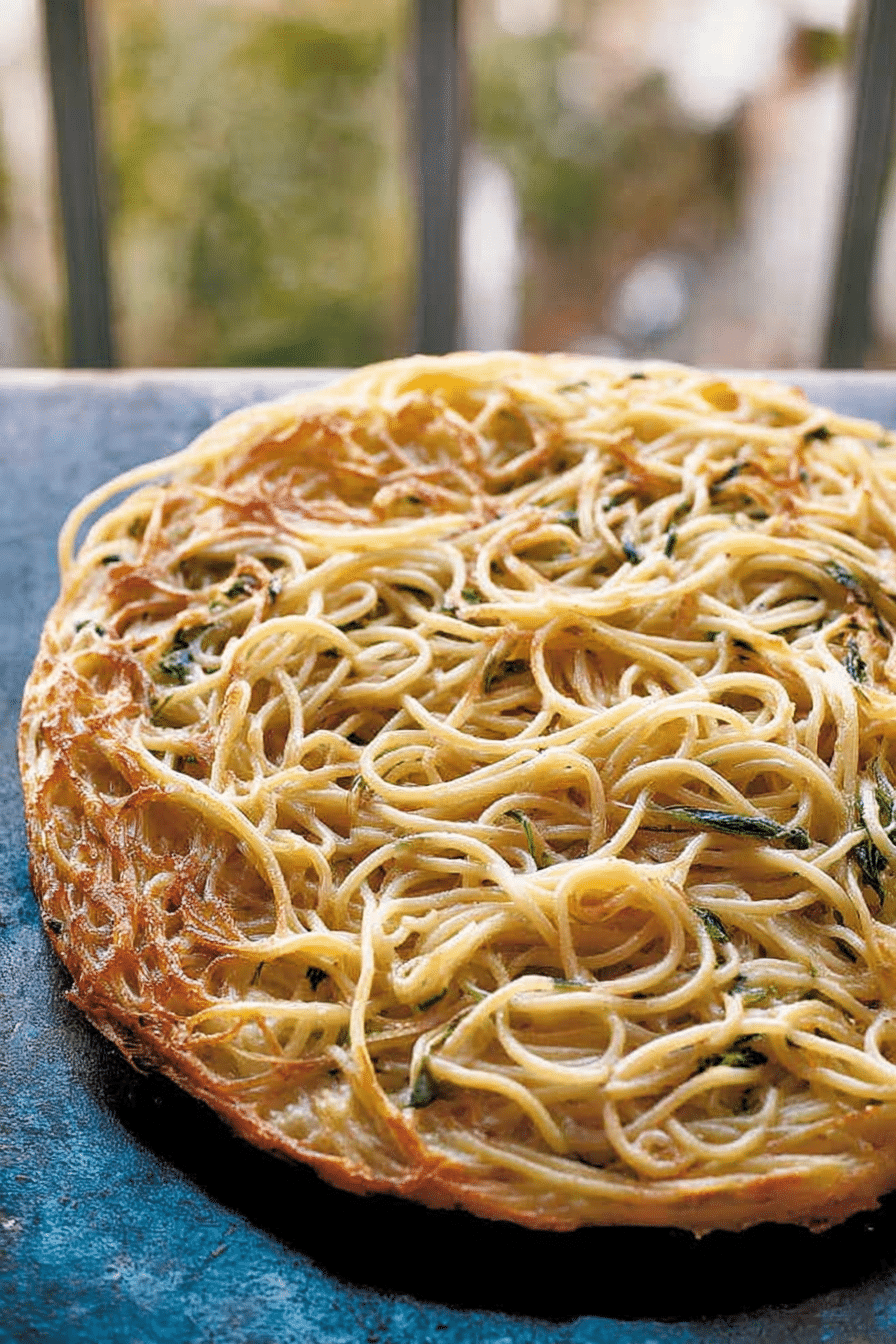
Why Leftover Pasta Frittata Is the Budget Meal You Need Tonight
This is thrift cooking at its most satisfying: you use cold pasta that would otherwise sit forgotten, a handful of eggs, and pantry cheese to make a meal that feels indulgent but costs next to nothing. The versatility is the real money-saver — you can swap herbs, vegetables, or proteins depending on what’s on sale or what’s sitting in your crisper.
Think about the sensory payoff: the smell of hot olive oil and garlic, the sight of a golden rim developing against a soft, custardy center, and the sound of a confident flip (or a careful slide) when you turn the frittata. It’s comfort food with frugal instincts — and it uses ingredients you already have, so each meal wastes less and feeds more.
Everything You Need for Leftover Pasta Frittata
Below are the pantry and tool essentials, plus basic nutrition and serving ideas so you know what to expect on the plate.
- Large eggs – The structure-builder; I always use large eggs because they give the right texture and lift.
- Hard cheese (Parmesan or pecorino) – Adds saltiness and a slightly granular texture that helps the egg mixture set.
- Olive oil or butter – For frying and crisping; oil gives a crisper edge, butter gives flavor.
- Cold leftover pasta (spaghetti or any shape) – The main body of the dish; sauced or plain both work with slight technique changes.
- Salt and freshly ground pepper – Keep these simple; finish with a little extra at the table if needed.
- Nonstick skillet with a snug-fitting plate for flipping – A smooth release is the easiest way to flip without losing the shape.
Nutrition snapshot per serving (approximate): calories around 300, fat ~16 g, carbs ~22 g, protein ~15 g. This is a satiating plate — pair with a crisp salad or a light side if you want to round it into a fuller meal.
The Secret to a Crispy Bottom and Tender Center
- Preheat the skillet over medium-high so the oil is hot before the pasta hits the pan; this jump-starts crisping instead of steaming.
- For sauced pasta: warm it briefly so excess liquid can evaporate. Drain any pooling sauce before mixing with eggs to avoid a soggy frittata.
- For plain pasta: give the strands time in hot oil to brown slightly — press down once or twice with a spatula so you get a cohesive, crispy base.
- Pour the egg-cheese mixture gently so it seeps between strands instead of sitting on top; tilt the pan to distribute evenly.
- Cook on medium-low after the initial sear so the edges set slowly while the center stays tender; aggressive heat will bubble and overcook the interior.
- Use a thin metal spatula to check edges and lift slightly; when the edges are set and the center still jiggles, it’s time to flip.
How to Stretch Eggs and Boost Flavor with Pantry Staples
If eggs are the limiting ingredient, you can make each one go further while keeping flavor high.
- Add dried herbs or a pinch of smoked paprika to the eggs for added aroma without extra cost.
- Grated hard cheese stretches richness — a little goes a long way in mouthfeel and savor.
- Nutritional yeast is a savory, dairy-free option to mimic cheesy depth.
- Bulk with sautéed seasonal vegetables (onions, bell peppers, spinach) so the plate feels plentiful. Lightly wilt vegetables first so they don’t release water into the egg mix.
- For a protein boost without extra eggs: stir in chopped cured meats or leftover roasted chicken for heartiness.
Why Egg-to-Pasta Ratio Matters
Getting the ratio right affects texture: too few eggs and the frittata is dry and floppy; too many and it becomes more like a soufflé with less pasta presence. The pasta soaks up some moisture and needs enough egg to bind it but not drown it.
- Rule of thumb: for a shallow, 9-inch skillet that serves 3–4, I typically use about six eggs — enough to coat and bind a good mound of pasta while still allowing a tender center.
- If you’re making a smaller, single-serving frittata, scale down proportionally: fewer eggs for less pasta keeps the balance intact.
- If your pasta is saucy, reduce the egg slightly or heat the pasta first and drain to avoid excess moisture; sauced pasta already contributes fat and flavor.
How to Make Leftover Pasta Frittata (Step-by-Step)
- Whisk the eggs thoroughly until blended and slightly frothy; stir in grated hard cheese, a little oil, and a grind of black pepper.
- If your pasta is sauced, warm it briefly with a splash of water to loosen it, drain off excess liquid, then fold it into the egg mixture so the strands are coated.
- If your pasta is plain, heat oil or butter in a nonstick skillet until hot, add the pasta, and let it brown on the bottom. Press it down once or twice with the spatula to make a compact base.
- Reduce heat to low, pour (or add) the egg-cheese mixture and spread so it reaches the pan edges; cook gently until the edges set but the center still jiggles — about several minutes.
- Run a thin metal spatula around the edge to loosen. Invert a dinner plate over the skillet and, holding both plate and handle, flip in a confident up-and-over motion so the uncooked side lands in the pan.
- Slick the skillet with a little more oil or butter, slide the frittata back in, and finish over low heat until cooked through. Use the tip of the spatula to check the center; if it comes away clean, it’s ready.
If you want another vegetable-forward frittata idea to try, see this Asparagus Frittata for inspiration.
Pro Tip for Leftover Pasta Frittata: Rescue Soggy Noodles and Crisp Them Fast
- Pat damp noodles dry with paper towels or spread them on a tray for a few minutes to let surface moisture evaporate.
- Heat the skillet well and use a generous slick of oil — hot oil is the quickest way to turn limp pasta into crisp strands.
- Don’t crowd the pan; give the pasta contact with the hot surface so it browns instead of steaming.
- Press down with a spatula to create a compact, even crust that will hold together when you add the egg mixture.
- If some bits remain soggy, tuck them toward the center where they’ll finish cooking with residual heat after the flip.
Family-Friendly Variations and Add-Ins Kids Will Eat
Keep these on hand to adapt the frittata to tastes and moods — all formatted for quick scanning.
- Cheesy pepper: add sautéed bell peppers and extra melting cheese for a sweeter, kid-friendly profile.
- Greens boost: fold in wilted spinach or kale; it sneaks vegetables into each slice.
- Ham and peas: mix in diced ham and a handful of thawed peas for a classic, familiar combo.
- Mix-and-match cheeses: swap Parmesan for cheddar or a mild melting cheese kids prefer.
- Protein add: stir in chopped leftover rotisserie chicken or crumbled cooked sausage for heartier appetites.
For a playful twist, consider using leftovers from Classic Deviled Eggs to add extra eggy flavor and texture.
How to Store, Reheat, and Meal-Prep Leftover Pasta Frittata
- Cool the frittata to room temperature before storing to avoid condensation; keep in an airtight container in the refrigerator for up to 3 days.
- To reheat without losing crispness: warm a skillet over medium and slide in slices for a few minutes per side; this revives the crust far better than a microwave.
- If you must microwave, cover lightly and heat in short bursts to avoid rubbery eggs; finish in a hot pan if you want the edge crisped back up.
- For meal prep: make a full frittata, portion into individual slices, and stack with parchment between slices so they’re grab-and-go for quick lunches or breakfasts.
What to Serve With It: Easy Sides and Sauces for a Complete Meal
Pair the frittata with something bright to balance the richness. A simple vinegar-based salad or a crisp green with lemon will cut through the fat. For dipping or additional comfort, an herbed aioli or warmed marinara works well.
For texture contrast, consider serving alongside crunchy Pasta Chips, or keep things extra comforting by pairing with garlic-forward pasta like Garlic Butter Spaghetti with Herbs. Bread is optional — a slice of toasted country bread or focaccia is welcome if you want to make it heartier.
Frequently Asked Questions
What if I don't have leftover spaghetti?
No worries! You can use any type of leftover pasta, or even cook fresh pasta if you prefer. Just make sure it's cooled before mixing it with the eggs.
How can I make my frittata fluffier?
Try whisking your eggs until they're fully combined and a bit frothy before adding other ingredients. This helps incorporate air and can lead to a fluffier texture!
Can I add vegetables to the frittata?
Absolutely! You can mix in your favorite sautéed vegetables, like bell peppers, onions, or spinach, to boost nutrition and flavor.
How do I store leftover frittata?
Store any leftover frittata in an airtight container in the refrigerator for up to 3 days. To reheat, simply warm it in a skillet or microwave until heated through.
Is this recipe suitable for meal prep?
Yes! This frittata is great for meal prep. Make it in advance, slice it into portions, and you have a quick, satisfying meal ready to go!