

I’ve been keeping a fast vegetable stir fry in my weeknight rotation for years because it hits everything I need: color, crunch, and speed. When my calendar gets hectic I turn to this method — it’s forgiving, flexible, and the kind of meal that lets you use up odds and ends in the fridge without sacrificing flavor. I’ll walk you through how I prep, cook, and save time without losing texture or brightness.
There are nights when I have five minutes and nights when I have twenty — this recipe scales. The whole process from chopping to final toss can fit into about twenty minutes, so it’s ideal for busy families. If you plan ahead with a couple of prepped vegetables, dinner becomes almost effortless.
I’m picky about two things: keeping vegetables crisp-tender and finishing the sauce so it clings to each piece. I’ll share the small tricks I use — how I cut things, when I add the sauce, and what I look for as I cook — so you get consistent results every time.
Note to reader: The Pro-Tips, Troubleshooting, and Variations sections below are formatted as bulleted lists for quick scanning and easy reference while you cook.
Why This Vegetable Stir Fry Is Perfect for Busy Weeknights
This stir fry is built around being fast, flexible, and nutritious. You get a full dinner with minimal fuss because most of the work is quick chopping and a hot pan. The total prep and cook time is short, so you can get a colorful, balanced meal on the table on even the busiest evenings.
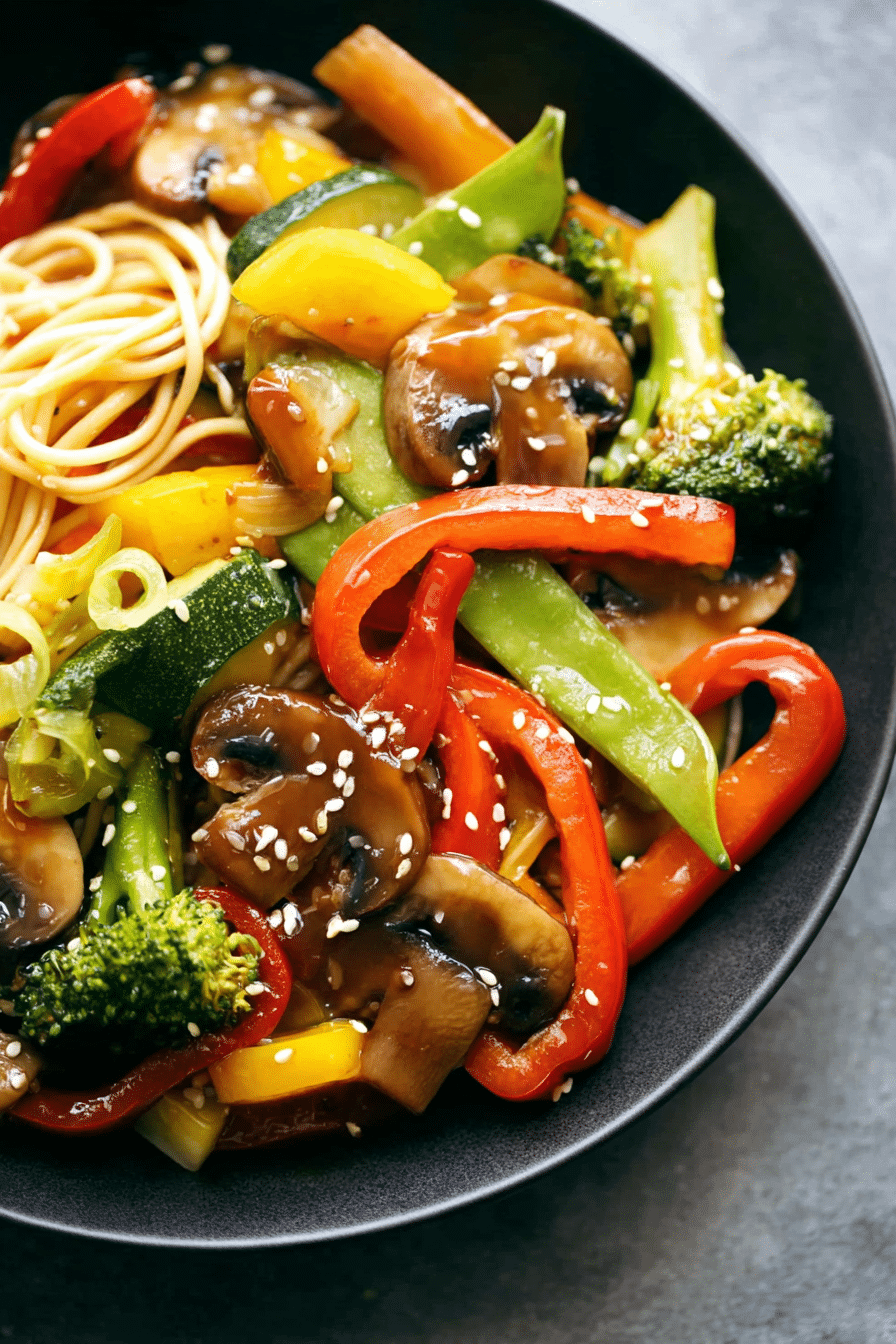
Visually it’s a winner: bright reds, greens, and oranges come together in the pan, and the aroma of garlic and toasted sesame threads through the kitchen as it sears. Using a variety of vegetables gives you different nutrients and keeps the family interested — everyone gets a contrast of crunchy and tender textures in one bowl.
Everything You Need for Vegetable Stir Fry
For tools, use a wide, heavy-bottomed pan or a wok and a sturdy spatula; they give you the high heat and quick tossing action that creates the right sear. A sharp knife and a stable cutting board speed up prep. Keep small bowls handy for your sauce ingredients so you can add them quickly when the pan is hot.
- * Wok or large skillet – Holds heat and gives space to toss so vegetables sear rather than steam.
- * Spatula or tongs – For fast, even stirring and turning without bruising delicate pieces.
- * Sharp knife – Quick, even cuts mean uniform cooking.
- * Garlic and aromatics – Provide the savory backbone; swap with ginger for a different profile.
- * Soy-based sauce – Adds salt and umami; see swaps below for gluten-free options.
- * Starch/thickener – Helps the sauce cling; you can use cornstarch or suitable alternatives.
- * Fresh seasonal vegetables – They taste brighter and last longer in the fridge.
Storage tips: keep leafy greens wrapped in a paper towel inside a sealed container and store root vegetables in the crisper away from ethylene-producing fruits. Pre-sliced vegetables keep for a day or two in an airtight container — I often prep a few staples on the weekend to speed weeknight cooking.
Why the Right Vegetables and Cut Sizes Matter
Different vegetables release moisture at different rates and take different times to cook. For example, carrots and broccoli need a bit more time than bell peppers or zucchini. Cutting them into uniform pieces is the fastest way to make sure nothing overcooks while something else is still raw.
When you cut vegetables to similar thicknesses you’ll get an even crisp-tender texture across the board. Also be aware that watery vegetables (zucchini, mushrooms) can dilute your sauce if added too early — I treat them separately or add them later so the sauce stays glossy and concentrated.
Sensory cue: watch the pan and listen — a consistent high sizzle means water is evaporating and you’re forming flavor; if the pan goes quiet, the vegetables are steaming instead of searing.
The Secret to the Perfect Stir-Fry Texture
The short answer: very hot pan, quick movement, and staged cooking. Sear vegetables on high heat so they caramelize slightly but remain crisp inside. Avoid crowding the pan; too many pieces lower the temperature and cause steaming.
- Heat your pan until it’s very hot and just starting to smoke; add oil and immediately add vegetables that take longer to cook.
- Add quicker-cooking items later so everything reaches crisp-tender at the same time.
- Finish by pouring your mixed sauce around the edge of the pan so it hits the hot surface and thickens quickly, then toss to coat.
- Turn off the heat a touch early — carryover heat will finish the last few seconds of cooking without turning vegetables limp.
Troubleshooting:
- I’ve oversteamed the pan before; if your vegetables are soggy, next time increase heat and cook in smaller batches.
- If the sauce is too thin, make a slurry with more starch and a little cold liquid, then stir it in off the direct heat to avoid clumping.
- If the sauce is too salty, add a splash of water or a pinch of sugar to balance it, then reheat briefly to meld flavors.
How to Make Vegetable Stir Fry (Step-by-Step)
- Prep everything first: wash and cut vegetables into similar-sized pieces, mince aromatics, and whisk your sauce so it’s ready to go — once the pan is hot you’ll be moving quickly.
- Heat your wok or skillet until it’s very hot, add oil, then start with the densest vegetables (for example carrots and broccoli). Stir constantly so they sear evenly.
- After a minute or two, add medium-density vegetables like bell peppers and snap peas; keep stirring so edges get color but centers stay crisp.
- Add quick-cooking items (zucchini, mushrooms, baby corn, water chestnuts) toward the end so they warm through without losing bite.
- Give the pan a quick splash of broth or water if things are sticking, then pour in your sauce mixture and stir until it thickens and coats the vegetables.
- Turn off the heat, toss in a small finishing drizzle of toasted sesame oil for aroma, and garnish with sliced green onions and sesame seeds before serving.
If you want a noodle-based companion that’s just as fast, try our 30 Minute Vegan Stir Fry Sesame Noodles for a delightful meal.
Pro Tip for vegetable stir fry recipe: Easy Swaps for Gluten-Free, Low‑Carb & Vegan
- Gluten-free: swap regular soy sauce for tamari or gluten-free coconut aminos. Also check that your thickener is labeled gluten-free.
- Low-carb: replace rice or noodles with cauliflower rice or shredded cabbage as a base; focus on lower-starch vegetables like leafy greens, mushrooms, and bell peppers.
- Vegan: use vegetable broth instead of chicken broth and add pan-seared tofu or tempeh for protein; mushrooms and edamame also give a meaty texture.
- Thickener swaps: arrowroot or tapioca starch work well in place of cornstarch; whisk with cold liquid before adding to hot pan to avoid lumps.
- Flavor boost: a splash of rice vinegar or a squeeze of fresh citrus brightens the sauce without extra salt.
Quick Variations and Add-Ins to Match Your Pantry
Keep this list handy when you want to change the profile or make the dish heartier — everything here is quick to add and adjusts cook times slightly, so watch for tenderness.
- Proteins: cubed tofu, tempeh, cooked shrimp, or thinly sliced leftover chicken — add toward the end if already cooked.
- Veg swaps: swap broccoli for broccolini, bell peppers for poblano for mild heat, or add baby spinach at the very end to wilt.
- Crunch: toasted cashews, peanuts, or sesame seeds scattered on top give texture contrast.
- Heat: red pepper flakes, sliced fresh chiles, or a spoonful of chili-garlic sauce added with the sauce.
- Herb finish: fresh cilantro or Thai basil added off heat brightens the dish just before serving.
If you want something heartier on a night when you have a little more time, consider pairing with our Best Vegetable Lasagna for an enjoyable twist on dinner.
How to Store and Reheat Vegetable Stir Fry
Leftovers hold up well if you store them properly. Cool the stir fry quickly to room temperature, then refrigerate in a shallow, airtight container. Use within a few days for best texture. For longer storage, freeze in portioned, freezer-safe containers; note that some vegetables soften after freezing.
- Reheat gently in a hot skillet with a small splash of oil or water to revive the texture; avoid reheating in the microwave if you want to preserve crunch.
- For meal prep, keep sauces separate if you plan to freeze or eat across several days — adding the sauce when you reheat gives a fresher finish.
- Sustainability tip: buy seasonal produce and prioritize imperfect or bulk bags from the market; trimming and using vegetable scraps for quick broth reduces waste and stretches your grocery dollars.
Pairing Suggestions to Enhance Your Meal
Serve this stir fry over steamed rice, quinoa, or your favorite noodles for a complete meal. If you want extra protein on the side, grilled chicken, pan-seared salmon, or crispy baked tofu all work well and can be prepared while the vegetables cook.
Complement your stir fry with crispy vegetable spring rolls for a complete dining experience. Our roasted garlic hummus also makes a surprisingly nice dip for fresh veggie sticks alongside the stir fry.
For beverages, a light iced tea, sparkling water with a squeeze of citrus, or a chilled beer pairs nicely with the savory, slightly sweet flavors of the sauce.
Frequently Asked Questions
What vegetables are best for stir fry?
Great options for stir fry include carrots, spring onions, bell peppers, mushrooms, broccoli, snap peas, and garlic. Feel free to mix and match based on what you have on hand!
Can I make this vegetable stir fry gluten-free?
Yes, just swap out the soy sauce for a gluten-free alternative like tamari. You can also check for gluten-free cornstarch.
How do I achieve the perfect stir-fry texture?
To get that ideal crisp-tender texture, make sure to cut your vegetables into uniform sizes and cook them on high heat for a short amount of time, stirring frequently.
How long does it take to make this vegetable stir fry?
This recipe takes about 20 minutes total: 15 minutes for prep and about 5 minutes for cooking!
What can I serve with vegetable stir fry?
You can serve your vegetable stir fry over rice or noodles, or pair it with a protein like chicken, beef, or tofu for a complete meal.
Vegetable Stir Fry Recipe
Ingredients
Method
- Add olive oil over medium-high heat in a wok or large skillet. Add red bell pepper, yellow bell pepper, zucchini, sugar snap peas, carrots, mushrooms, broccoli, baby corn, and water chestnuts. Cook for 2-3 minutes, stirring frequently until the veggies are almost tender.
- In a small bowl, whisk together soy sauce, minced garlic, brown sugar, sesame oil, chicken broth, and cornstarch.
- Pour the sauce over the veggies and cook until the sauce has thickened and the veggies are tender. Garnish with green onions and sesame seeds if desired.