The Teriyaki Salmon Bowl I Make Almost Every Week (30-Min Dinner)
- Prep
- 10 min
- Total
- 10 min
- Serves
- 2
- Calories
- 66 kcal
- Protein
- 4.70 g
- Carbs
- 5.80 g
- Fat
- 3.30 g
Introduction
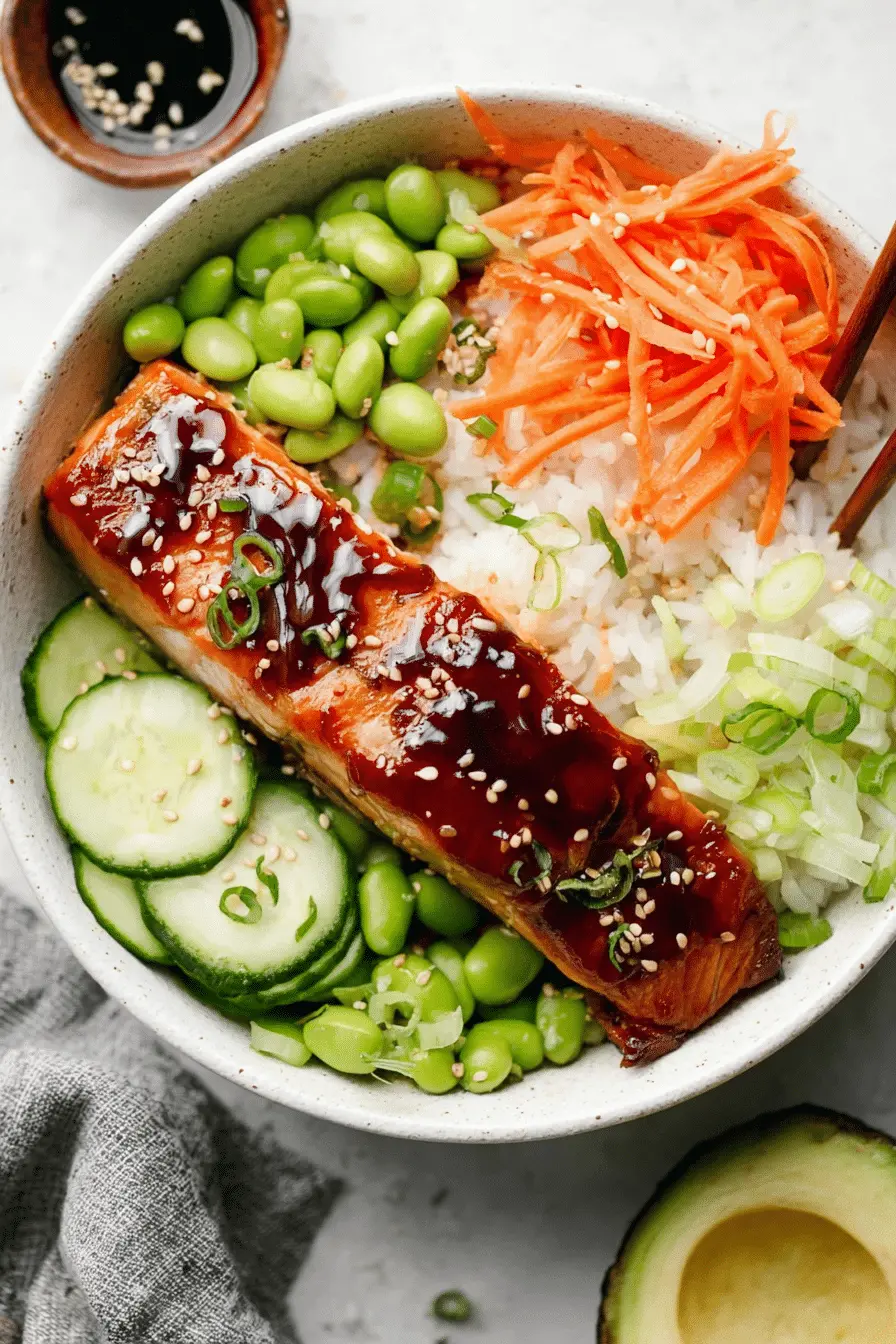
I lean on this teriyaki salmon bowl on the busiest weeknights because it gives me a full, balanced meal in about 30 minutes without feeling like I rushed it. The salmon broils up fast, the rice keeps everyone full, and the homemade teriyaki sauce gives the whole bowl that glossy, slightly sweet finish that makes dinner feel special. I love that the prep is straightforward — chop a few veggies, whisk a quick sauce, and the kitchen fills with a warm, garlicky aroma while everything comes together.
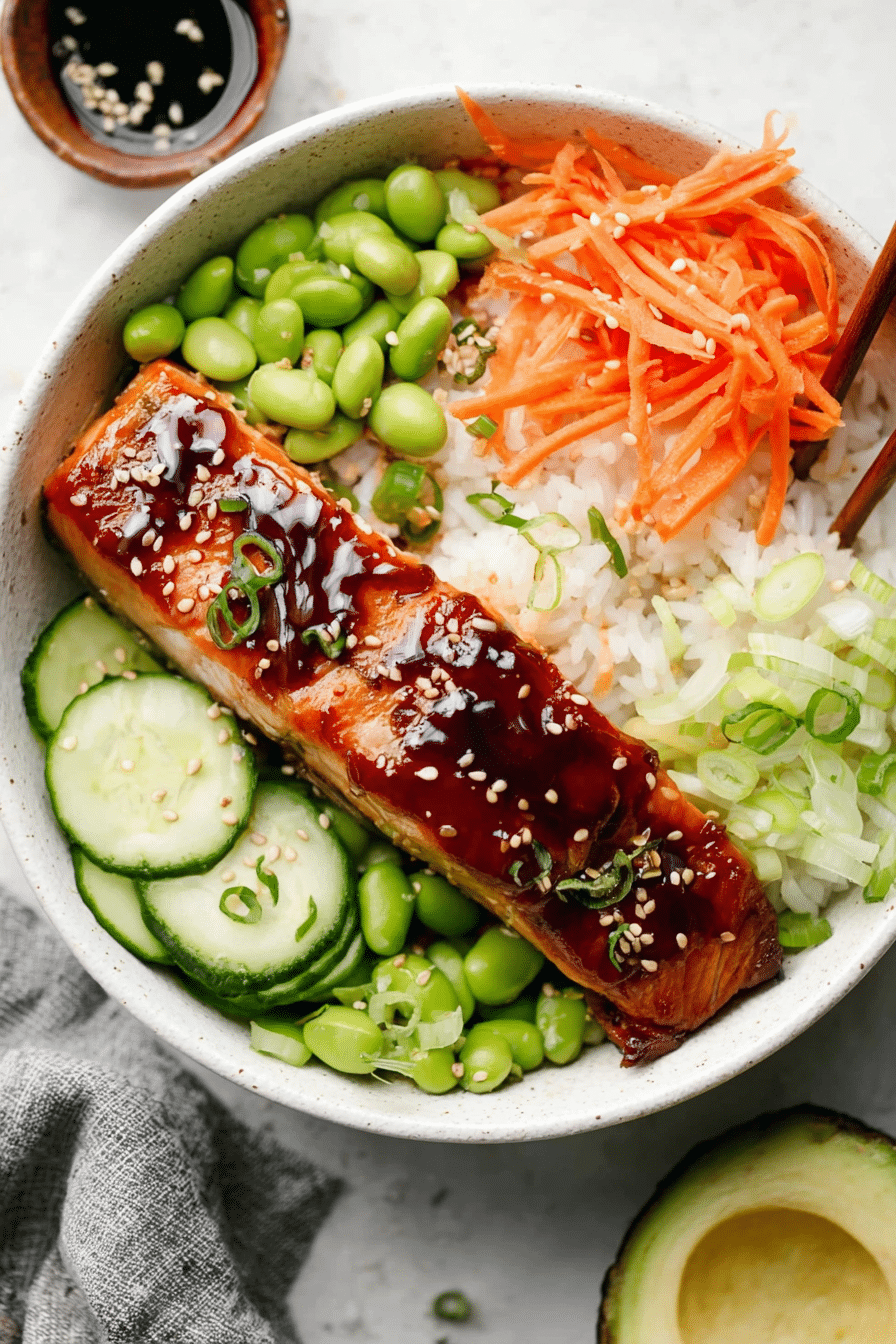
I like to think of this bowl as a template: colorful veg for crunch and freshness, a starchy base for comfort, and protein that’s rich in omega-3s. The contrast between the glossy sauce, the bright cucumber, the orange of the carrots, and a creamy slice of avocado is what keeps my family coming back. When I’m pressed for time, I’ll prep rice earlier in the day or keep frozen edamame on hand — small choices like that save real minutes.
Over the years I’ve tweaked the sauce and timing to avoid soggy veg and overcooked fish. I’ll share those tricks below so you don’t end up with dry salmon or a watery sauce. If you like to meal-prep, I recommend making a double batch of the teriyaki sauce — it stores well and makes weeknight dinners feel effortless.
The aroma of sesame oil and garlic while the sauce reduces is one of my favorite kitchen moments. You’ll notice the sauce go from thin and amber to glossy and slightly thickened — that’s when you know it’s ready to dress the salmon and rice. Now let’s walk through everything you need and how I get consistently great results every time.
Why This Teriyaki Salmon Bowl Works for Busy Weeknights
This recipe is built around speed and balance. You get protein that cooks quickly, a starchy base that can be prepped ahead, and fresh vegetables that require minimal cook time. The result is a colorful, nourishing bowl that’s easy to customize for picky eaters.
- 30-minute total time: Everything — prep, broiling the salmon, and finishing the sauce — fits neatly into a short window.
- Nutrient-rich: Salmon supplies omega-3s and protein, while edamame and veggies add fiber, vitamins, and texture.
- Customizable: Swap the base or veggies to suit tastes, dietary needs, or what’s in your fridge — the teriyaki sauce ties it all together.
- Sensory note: The dish is visually vibrant with glossy sauce on the fish and the refreshing scent of ginger and garlic in the air.
Everything You Need for Teriyaki Salmon Bowls
Gather fresh produce and a few pantry staples, along with a couple of useful tools. Freshness matters here because the raw veg won’t be cooked long — crisp cucumbers and sweet carrots make a big difference.
- * Salmon – The star protein; choose fresh fillets for the best texture and flavor.
- * Rice or grain – A neutral, cooked base that soaks up sauce; you can swap with other grains or low-carb options.
- * Cucumber, carrots, edamame – Fresh crunchy elements that add color and texture.
- * Avocado – Adds creaminess and healthy fats to balance the bowl.
- * Coconut aminos or gluten-free soy sauce – Builds the savory backbone of the sauce and keeps it gluten-free if needed.
- * Honey or another sweetener – Balances the savory and acid notes in the sauce; adjust to taste.
- * Garlic, ginger, rice vinegar, toasted sesame oil – Aromatics that create depth and a slightly toasty finish.
- * Cornstarch – Thickens the sauce quickly into a glossy glaze.
- * Tools – A broiler-safe rimmed baking sheet (or broiler pan), foil for easy clean-up, and a whisk for the sauce.
If you’re looking for more salmon ideas to pair with these bowls, try our garlic butter salmon with asparagus, which makes a delicious pairing!
The Homemade Teriyaki Sauce: How to Get It Thick and Glossy
Making the sauce from scratch gives you control over sweetness and saltiness, and it comes together while the salmon cooks. The trick to that shiny finish is the cornstarch slurry — it transforms a thin sauce into a clingy glaze.
- Combine your savory base (coconut aminos or gluten-free soy), sweetener, rice vinegar, toasted sesame oil, minced garlic, and grated ginger.
- Bring most of the sauce to a gentle simmer in a small saucepan so the flavors meld and the raw edge of garlic softens.
- Whisk a small amount of cornstarch into warm water until it’s milky, then slowly whisk that slurry into the simmering sauce.
- Return to a simmer and cook for a few minutes until the sauce thickens to a glossy, pourable glaze that coats the back of a spoon.
- Adjust thickness: add more slurry for a thicker glaze or a splash of water to loosen it. Taste and balance with extra honey or vinegar as needed.
Sensory focus: watch the sauce change from thin and translucent to a thicker, lacquered sheen — it should smell warm and garlicky with a bright ginger lift.
Best Salmon Choices: Wild, Farmed, and Sustainable Options
Choosing the right salmon is about flavor, texture, budget, and sustainability. Wild-caught salmon tends to have a firmer texture and more pronounced flavor, while farmed salmon is often milder and more widely available. Look for sustainability labels at the market or ask your fishmonger for recommendations — they can tell you when local runs are best or which farms follow strong environmental practices.
- Wild-caught: firmer texture, more pronounced flavor; best when in season.
- Farmed: consistent availability and price, slightly softer texture; check for responsible farming certifications.
- Certifications & tips: ask for guidance at your market and look for reputable sustainability labels to make eco-friendlier choices.
If you're looking for a delicious seafood alternative, try our easy air fryer shrimp for a quick and flavorful option.
Rice Alternatives and Veggie Swaps (quinoa, cauliflower rice, more)
Substituting the base or veggies is one of the easiest ways to adapt this bowl to diet or seasonality. Different bases change the nutrition and texture of the bowl, and seasonal veggies keep the plates bright and interesting.
- Quinoa – A protein-forward grain with a slightly nutty taste and fluffy texture; rinse before cooking to remove bitterness.
- Cauliflower rice – Low-carb, quick to heat through; sautée briefly to remove excess moisture and keep a pleasant bite.
- Farro or barley – Chewier grains that add hearty texture if you want something more substantial.
- Vegetable ideas – Swap cucumbers for pickled radish, add quick-pickled red onion, steamed broccoli, or roasted bell peppers for variety and color.
Sensory note: mixing textures — the soft, flaky salmon against fluffy quinoa or crisp cucumbers — makes the bowl feel complete.
How to Make Teriyaki Salmon Bowls (Step-by-Step)
Follow the order of operations to keep everything hot and at peak texture: prep veg, marinate briefly, broil the fish, finish the sauce, then assemble. Timing is everything on busy weeknights.
- Prep your base and vegetables first so they’re ready to plate when the salmon finishes.
- Whisk the majority of the teriyaki mixture and spoon a portion over the salmon to marinate briefly while you prep veg.
- Preheat the broiler and line a rimmed baking sheet with foil; place salmon skin-side down and discard excess marinade before broiling.
- Broil the salmon until it flakes easily but remains moist inside — watch closely so it doesn’t overcook.
- While the salmon broils, simmer the remaining sauce and whisk in the cornstarch slurry until glossy and thickened.
- Plate warmed rice or your chosen base, top with the salmon, divide fresh veg and avocado slices, and drizzle with the finished teriyaki glaze.
For a different flavor twist, consider our honey garlic salmon rice bowls as part of your meal prep.
Pro Tip for teriyaki salmon bowl: Make-Ahead Sauce & Meal-Prep Tricks
Small prep moves make weeknight dinners simpler. I keep a jar of sauce in the fridge and pre-portion veg so building bowls takes less than ten minutes on a busy evening.
Pro-Tips
- Make a double batch of the teriyaki sauce and store it in a sealed jar in the fridge for up to a week — reheat gently before using.
- Cook rice or quinoa ahead and cool it quickly; portion into containers so you can reheat single servings.
- Keep frozen edamame and pre-shredded carrots on hand to skip extra chopping on busy nights.
Troubleshooting
- If the sauce is too thin: whisk in a tiny bit more cornstarch slurry and simmer until it thickens.
- If the salmon tastes dry: reduce broil time slightly and check doneness earlier; residual heat continues to cook it.
- If the sauce is too sweet or salty: balance with a splash of rice vinegar or a pinch more sweetener, tasting as you go.
Variations
- Vegetarian/Vegan: swap salmon for firm tofu or tempeh — press and sear it before glazing with the teriyaki sauce.
- Spicy: add a dash of chili oil or red pepper flakes to the sauce for heat.
- Low-sodium: use low-sodium coconut aminos or dilute the sauce slightly with water and more vinegar.
For more meal prep inspiration, check out our teriyaki chicken meal prep bowls.
How to Store, Reheat, and Customize Teriyaki Salmon Bowls
Leftovers keep well for a few days with proper storage and gentle reheating. Customize reheats based on what you want to preserve — texture or crispness.
- Storage: portion into airtight containers, keeping sauce separate if possible to prevent soggy rice or veg. Refrigerate up to 3 days.
- Reheating: gently reheat salmon in a low oven or microwave in short bursts to avoid overcooking; rewarm rice separately for even heating.
- Customization: add fresh herbs, a squeeze of lime, toasted sesame seeds, or a drizzle of spicy mayo for extra flair — swap in quinoa or cauliflower rice for dietary preferences.
Frequently Asked Questions
How long does it take to make the teriyaki salmon bowl?
This teriyaki salmon bowl can be prepared in just 30 minutes, making it a quick and easy weeknight dinner option!
Can I use a different protein instead of salmon?
Absolutely! You can substitute salmon with chicken, tofu, or shrimp if you prefer. Just adjust the cooking time accordingly.
What are some good rice alternatives I can use?
You can substitute brown or white rice with quinoa, cauliflower rice, or any other grain you like. Each option offers different nutritional benefits!
How do I store leftovers from the teriyaki salmon bowl?
Store leftovers in an airtight container in the refrigerator for up to 3 days. Reheat gently in the microwave before serving.
Can I make the teriyaki sauce ahead of time?
Yes! You can prepare the teriyaki sauce ahead of time and store it in the fridge. Just reheat it before using it in your dish.
Recipe Card
The Teriyaki Salmon Bowl I Make Almost Every Week (30-Min Dinner)
- Prep
- 10 min
- Total
- 10 min
- Serves
- 2
- Calories
- 66 kcal
- Protein
- 4.70 g
- Carbs
- 5.80 g
- Fat
- 3.30 g
Ingredients
- 1 cupplain Greek Yogurt (nonfat)
- 1/2 cupEnglish cucumber (seeds removed, diced)
- 2 teaspoonsolive oil
- 3 tablespoonsfresh lemon juice
- 1 tablespoonfresh lemon zest
- 1 tablespoonminced garlic (about 1 clove)
- 1/4 cupfresh chopped dill
- 1/2 teaspoonkosher salt
- 1/4 teaspoonground black pepper
Instructions
- 1
Place the diced cucumber in a strainer over a bowl and sprinkle it with some salt. Let it sit for a few minutes to extract any excess moisture, then pat it lightly with a clean paper towel.
- 2
Add the Greek yogurt, cucumber, and the rest of the ingredients to a medium-sized bowl and mix until combined into a creamy sauce.
- 3
Top with more fresh dill, ground black pepper, and a drizzle of olive oil.
- 4
Serve cold with pita chips, naan, or fresh chopped veggies.
You might also like

Reviews
Be the first to review this.