

I remember the first time I pressed a halved cherry into focaccia dough: the oven steam lifted a fruity perfume that surprised the whole kitchen. Over the years I’ve kept this version on rotation for weekend brunches — guests are always drawn to the glossy cherry pockets against the herb-speckled golden crust. Baking it taught me how a simple sweet-savory pairing can feel both comforting and slightly unexpected.
I like to call this bread a brunch ambassador: it sits on the table beside coffee, soft cheeses and preserves, and people drift toward it. A few small choices — olive oil on the surface, a scattering of sea salt, a sprig of rosemary tucked into an indentation — make the difference between a nice loaf and a bread that earns requests for seconds.
I’ll share the practical work: what to have on hand, how I handle the dough and the cherries so the topping stays lively rather than soggy, and the small timing tricks that give the focaccia its open crumb and crisp bottom.
Why Rosemary Cherry Focaccia with Sea Salt Belongs on Your Brunch Table
The contrast of sweet cherries and savory herbs is what makes this focaccia sing at brunch: the cherries lend bright acidity and juicy pockets, rosemary adds a piney lift, and flaked sea salt gives a finishing pop. Focaccia is a relaxed, convivial bread in many traditions — it’s meant to be shared straight from the pan, torn into pieces and enjoyed alongside drinks and small plates.
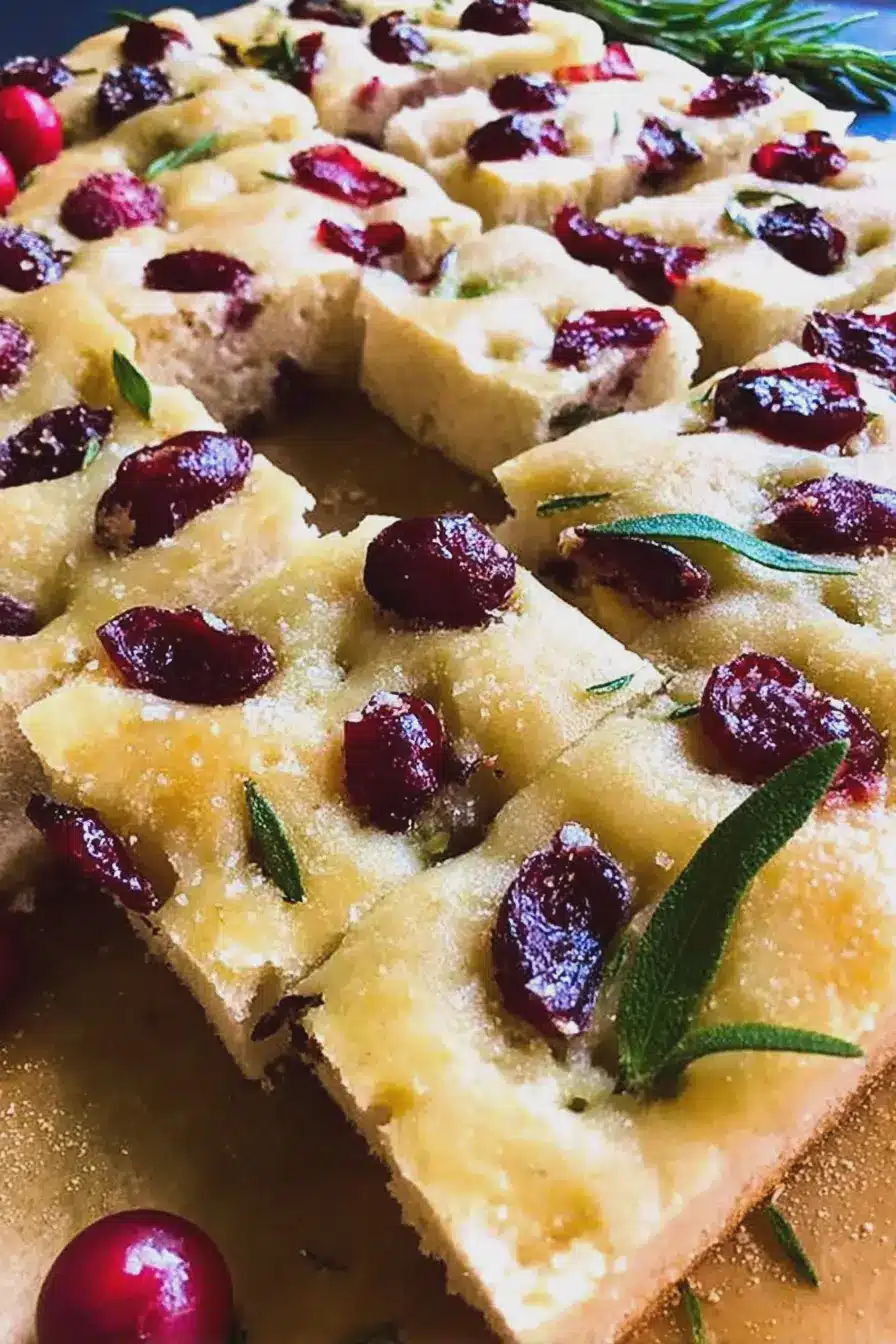
Visually, the bread is warm and inviting: a golden crust scattered with glistening cherry halves and flecks of green rosemary. The aroma as it comes out of the oven is toasty olive oil, warm fruit and that unmistakable herb note — it sets the table for the meal before anyone sits down.
If you’re building a larger brunch spread, this focaccia pairs especially well with a composed board of cheeses, charcuterie and jams. Try it next to a Brunch Charcuterie Board to create a varied table where the focaccia plays both starch and centerpiece.
Serve it warm or at room temperature; both work. When guests break the bread, the texture should be airy and soft inside, with a slightly crisp base that can stand up to spreads and dips without collapsing.
Everything You Need for Rosemary Cherry Focaccia
Below I talk through the ingredients and tools in plain terms — why they matter and what to swap if you need to. I avoid exact measures here so you can focus on purpose and substitutions.
- All-purpose flour (or a mix with wheat) – The backbone of the dough; all-purpose yields a soft crumb, mixing in some whole wheat adds flavor and a touch more structure.
- Active dry yeast – Leavens the dough; proof it in warm water with a pinch of sugar to confirm it’s active.
- Water – Hydration matters for an open crumb; warmer water helps proof the yeast but shouldn’t be hot enough to kill it.
- Olive oil – Used in the dough and brushed on top; it gives the crust its sheen and helps create a tender crumb.
- Salt – Adds flavor to the dough and, when sprinkled on top, balances the cherries’ sweetness.
- Fresh rosemary (or dried) – Fresh gives the brightest aroma; dried works if that’s all you have, but add it earlier in the dough so it rehydrates.
- Sage (optional) – A subtle, earthy partner to rosemary if you want a herbier profile.
- Cherries – Pitted and halved; soak briefly to concentrate flavor and to coat them so they brown instead of shrivel.
- Sea salt flakes – For finishing; they dissolve slightly but still give a satisfying crunch.
- Kitchen tools – A large mixing bowl, a baking pan or sheet with just a little depth, parchment or a well-oiled surface, and a bench scraper or hands for gentle shaping.
How to Make Rosemary Cherry Focaccia with Sea Salt (Step-by-Step)
- Proof the yeast: warm your water until pleasantly warm (comfortable to the touch), add a pinch of sugar and the yeast, and wait until the surface looks foamy — that tells you the yeast is alive.
- Mix the dough: combine your flour and salt, add oil, the proven yeast water and the remaining warm water. Stir until a sticky dough forms; resist the urge to add excessive flour.
- Short rest then knead: let the dough rest briefly to hydrate, then knead on a lightly floured surface until it becomes smoother and less tacky. The dough will develop elasticity — that’s what you want.
- Add herbs: fold minced rosemary and sage into the dough toward the end of kneading so the oils distribute without breaking the gluten network.
- First rise: place the dough in an oiled bowl, turn to coat, cover and let it rise until roughly doubled. Time varies with temperature; I usually allow about an hour and a half in a warm kitchen.
- Prepare cherries: pit and halve the cherries, then toss them briefly with a little olive oil or a splash of balsamic to add flavor and protect them from drying out while baking.
- Shape in the pan: oil a shallow baking sheet or use parchment, spread the dough to fit, cover and let it rise again until puffy.
- Dimple and top: using oiled fingers, press dimples across the surface spaced evenly. Press half a cherry into many of those dimples, tuck small rosemary sprigs into others, and drizzle extra virgin olive oil over the top. Finish with a scattering of sea salt.
- Bake with two temperatures: start in a very hot oven for initial oven spring, then reduce the heat to finish baking so the top browns gently while the bottom crisps. Keep an eye after the temperature drop; ovens vary so check a little early rather than late.
- Cool briefly: slip the focaccia onto a wire rack so steam escapes from the bottom and the crust stays crisp. Slice when it’s warm rather than piping hot for the best texture.
The Secret to the Perfect Focaccia Crumb
Achieving a light, open crumb comes down to hydration, gentle handling and timing. I’ll be blunt: under-hydrated dough and heavy-handed shaping are the most common culprits for a dense loaf.
- Hydration: more water in the dough yields larger bubbles and a more open crumb; it will be sticky at first, but the stretch develops with time and kneading.
- Gentle handling: avoid aggressive degassing when shaping — you want to preserve the gas pockets that formed during the rise.
- Oven spring: begin baking in a very hot oven so the surface sets quickly and the interior gets a strong initial rise.
- Cooling: rest the focaccia on a rack so the steam can escape from the bottom; leaving it on a hot pan will steam the base and soften the crust.
- Common mistakes: over-kneading eliminates the airy structure; under-proofing leaves the crumb tight. Aim for dough that passes the ‘poke test’ — a gentle indentation should slowly spring back.
Why Temperature and Timing Matter for Rise and Oven Spring
Yeast activity is temperature-sensitive: warm water speeds fermentation, cold slows it. I use warm water for proofing and a warm room to encourage rises, but I never use boiling water — that will kill the yeast. Pay attention to the dough’s behavior rather than only the clock: dough that’s doubled and airy is ready even if the time isn’t exact.
Browning and flavor come from the Maillard reaction — higher heat early on helps set the crust and create that toasty aroma, while finishing at a moderate temperature ensures the top doesn’t over-brown before the middle is baked through. Environmental conditions (humidity, kitchen temperature) will change how long rises take — a cooler room means a longer first rise.
Soaking the Cherries: Oil vs Balsamic and How It Changes Flavor
Tossing cherries briefly in a soaking liquid does two things: it infuses them with flavor and gives them a protective coating so they hold up during baking. Olive oil keeps the cherries glossy and integrates them with the savory bread; a quick balsamic soak adds a pleasant tang and deepens their color.
If you prefer a brighter contrast, soak in a little olive oil and leave them slightly oily — the oil will brown and blend with the crust. For more savory-sweet complexity, a light balsamic or balsamic reduction give a sticky glaze that plays beautifully against rosemary. If you want another cherry idea outside of bread, try a Cherry Almond Galette for dessert.
Pro Tip for rosemary cherry focaccia with sea salt: Prevent Soggy Fruit
- Pat cherries very dry after soaking; I always place them on paper towels and press gently to remove excess liquid before topping the dough.
- Soak briefly and drain well — a short toss in oil or balsamic is enough to flavor without adding too much moisture.
- Press cherries into the dimples rather than piling them on top; this helps them nestle into the dough and reduces surface moisture runoff.
- Use a preheated baking surface or a baking stone if you want a crisper bottom; the direct heat reduces sogginess from the toppings.
- I sometimes bake on parchment for ease, then remove the focaccia to a rack right away to prevent steam from re-softening the base.
Troubleshooting
- If the dough won’t rise: check your yeast by proofing a small amount in warm water with sugar; if it doesn’t foam, use fresh yeast. I’ve had packets go stale and that foam test saved the bake.
- If the crumb is dense: you may have under-proofed or over-kneaded. Give the dough more time in a warm spot and handle it gently when shaping.
- If the cherries sink and make pools: they likely had too much surface moisture. Next time, dry them thoroughly and press them only into shallow dimples.
- If the bottom is soggy: bake on a preheated stone or reduce the moisture in toppings; finishing on a wire rack immediately helps preserve crispness.
How to Store, Reheat and Serve Rosemary Cherry Focaccia
- Store at room temperature in an airtight container for up to two days; keep in a single layer to avoid crushing the cherries.
- To re-crisp, warm slices in a hot oven or toaster oven for a few minutes rather than microwaving — the oven brings back the crisp edge without drying the interior.
- For longer storage, freeze wrapped slices and reheat from frozen in a moderate oven until warmed through.
- Serving suggestions: this focaccia is lovely with soft cheeses, a light salad or a composed main. For a simple, elegant meal pairing try it alongside grilled fish for contrast and balance, such as Lemon Garlic Herb Grilled Salmon.
Variations: Exploring Toppings and Dietary Swaps
- Olives & Citrus Zest — Add brined olives and a touch of lemon zest for a saltier, brighter focaccia.
- Gorgonzola & Walnuts — Crumble a pungent cheese and scatter toasted walnuts for a richer, savory-sweet take.
- Seeded Finish — Sprinkle sesame, sunflower or pumpkin seeds before baking for texture and nutty notes.
- Gluten-free option — Use a reliable gluten-free flour blend and be prepared to tweak hydration; gluten-free doughs behave differently but can still yield a tasty loaf.
- Sweet-forward — If you want to emphasize dessert, reduce the herbs and finish with a light honey drizzle after baking; for other sweet baking ideas, see Easy Sourdough Discard Brownies.
Frequently Asked Questions
What type of flour works best for this focaccia?
You can use all-purpose flour for a soft texture, or a mix of wheat flour and all-purpose flour for a heartier option. Just ensure you measure accurately!
How can I make the focaccia gluten-free?
To make gluten-free focaccia, substitute the all-purpose flour with a gluten-free flour blend. You may need to adjust the liquid slightly, as gluten-free flours behave differently.
Can I use frozen cherries instead of fresh ones?
Yes, you can use frozen cherries! Just thaw them and pat them dry before using to avoid excess moisture in your focaccia.
What is the purpose of soaking the cherries in oil or balsamic?
Soaking the cherries enhances their flavor and helps them retain moisture during baking, adding a delicious depth to the focaccia.
How should I store leftover focaccia?
Store leftover focaccia in an airtight container at room temperature for up to 2 days. For longer storage, you can freeze it. Just ensure it’s well wrapped!
Rosemary Cherry Focaccia with Sea Salt
Ingredients
Method
- Proof the yeast by heating water and adding sugar and yeast. Wait for foaming.1.5 cups Water, a pinch Sugar, 3.5 cups All-purpose Flour
- Mix flour, salt, olive oil, and the yeast mixture. Knead the dough.3 tablespoons Olive Oil, 2 teaspoons Table Salt, 1 sprig Rosemary
- Let the dough rise for 1.5 hours.
- Prepare the cherries and additional herbs.15 pieces Cherries, 1 tablespoon Olive Oil or Balsamic Vinegar
- Shape the dough in a baking pan and let rise again.
- Preheat the oven and prepare the focaccia with toppings.
- Bake the focaccia until golden brown.