

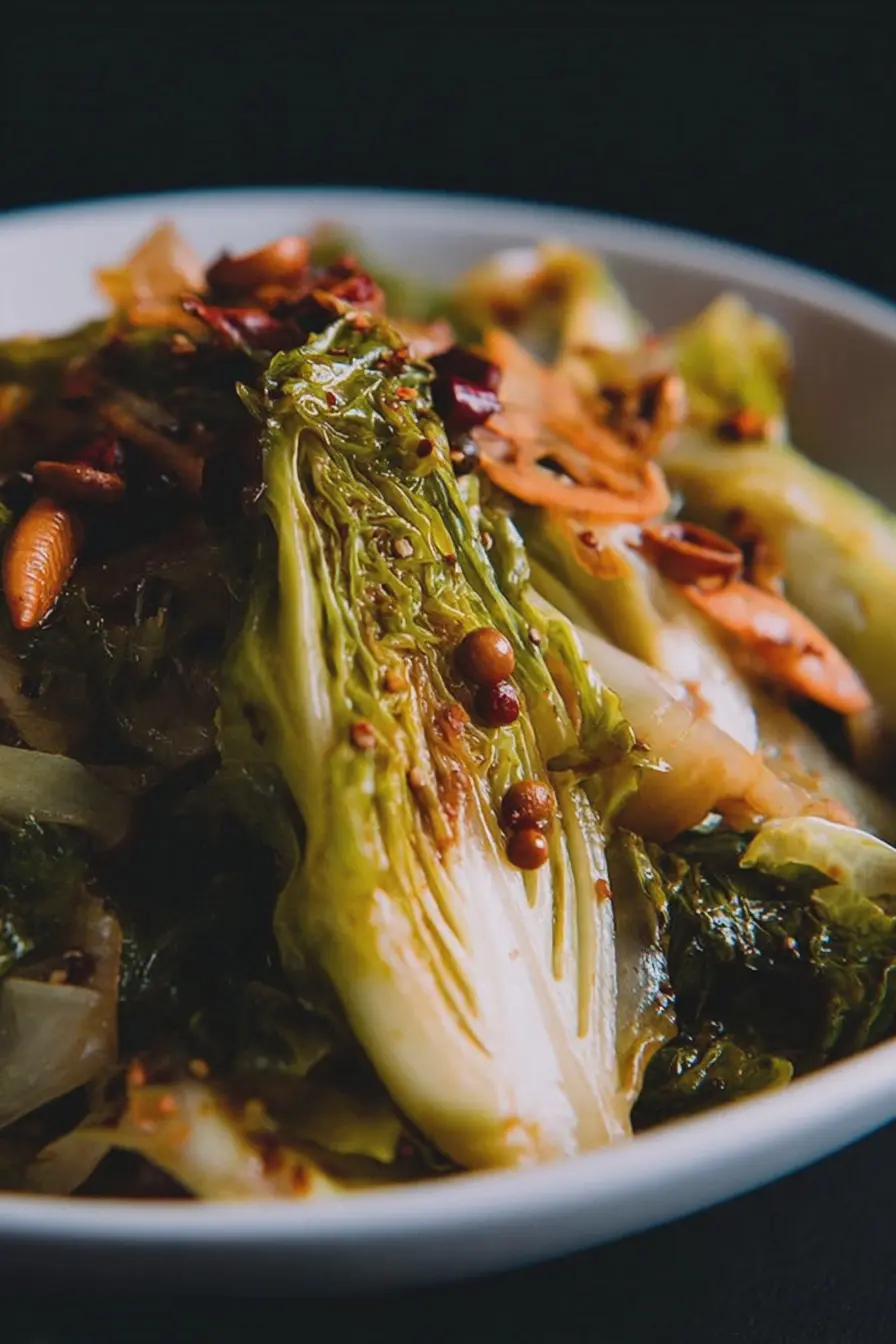
I cook this Sichuan hand-torn cabbage stir-fry when I need something fast, bright, and satisfying with a single pan. In my kitchen it’s the dish I reach for when evenings are busy but we still want something that tastes like real Chinese home cooking: crunchy-tender cabbage, toasted chilies, and that signature tingle from Sichuan pepper. The whole process is short enough to fit between the time you boil water and set the table.
I like to keep a small jar of roasted rapeseed oil and a little bag of whole Sichuan peppercorns on the shelf so I can pull this together without a trip to the store. The technique is as important as the ingredients: high heat and hand-torn leaves create those darkened, translucent edges that make the dish feel finished rather than simply wilted.
If you’re juggling work and family dinners, this recipe gives structure without fussy steps. It’s naturally vegan, flexible on spice level, and pairs with rice or a simple protein for a full meal—so you can get dinner on the table fast without compromising on flavor.
Why This Sichuan Hand-Torn Cabbage Stir-Fry Works for Busy Weeknights
Using a handful of pantry items and fresh cabbage, this dish cooks in minutes and delivers bold aromatics with minimal effort. Here’s why it’s ideal for weeknights:
- Minimal prep: Hand-tearing the cabbage is faster than precise slicing and gives a better texture.
- One pan, little cleanup: You can finish the entire dish in a single wok or skillet on high heat.
- Fast flavor payoff: Toasted oil, chilies, and Sichuan pepper infuse the cabbage quickly, so you get intense aroma and heat without a long cook time.
- Adaptable: It’s easy to adjust spice, add a protein, or swap oils and still keep the core character intact.
Everything You Need for Sichuan Hand-Torn Cabbage Stir-Fry
Quality and small details matter more than quantity. Fresh cabbage and aromatic oils will make the dish sing even when you’re short on time. If you want another quick cabbage option, try this complementary recipe:
If you love cabbage, consider trying this easy fried cabbage recipe for a quick and delicious side dish.
- Cabbage – The star: tear it by hand so the pieces have ragged edges that char slightly and stay tender in the center.
- Dried chilies – Provide direct heat and a toasted, smoky flavor; you can control heat by removing seeds.
- Sichuan pepper – Adds the numbing citrusy tingling that defines the profile; use whole and toast briefly to release aroma.
- Roasted rapeseed or neutral oil – Oil carries aroma; roasted rapeseed (caiziyou) gives an earthy, slightly nutty depth—peanut or canola work if you don’t have it.
- Garlic – Sliced thin for quick browning and a fresh allium pop.
- Soy sauce and a touch of Chinese black vinegar – Soy adds savory saltiness; vinegar brightens and volatilizes on high heat for fragrance.
- Sugar and salt – Balance flavors and help the cabbage edges caramelize.
The Secret to the Perfect Texture: Hand-Tearing and High Heat
Hand-tearing leaves instead of slicing creates uneven edges that char and crisp while the thicker midribs stay tender. High heat is non-negotiable for that contrast. Visual and tactile cues let you know when the cabbage is done: the outer edges will darken and the leaves near the edges become translucent while the thicker parts remain pale and slightly crisp.
- Tear the cabbage into irregular pieces so each bite has both tender and crispy bits.
- Preheat your pan until very hot so the oil smokes briefly—this is what promotes quick searing instead of steaming.
- Stir rapidly; you want quick contact with hot metal to get translucent edges without soggy centers.
Why the Oil and Heat Matter (Hot-Oil vs Cold-Oil Methods)
How and when you introduce oil and spices changes both aroma and texture. Heat activates essential oils in spices; too hot and they burn, too cool and they won’t bloom. The two common methods each have a purpose:
- Hot-oil method: Heat the pan until smoking then add oil and quickly fry spices and aromatics. This produces an immediate, toasted fragrance and a sharper, smokier profile.
- Cold-oil method: Start spices in cold oil and bring to temperature slowly to draw out gentle aromatics without crisping them too quickly; remove delicate aromatics if they risk burning, then crank heat for the cabbage.
- Choose hot-oil when you want a bold, toasty edge; choose cold-oil when you want a rounder, gentler spice aroma or when using a nonstick pan.
- Either way, finish on high heat so sauces volatilize and the cabbage keeps its texture rather than stewing.
Choosing Chilies, Sichuan Pepper, and Oils for Authentic Flavor
Each of these components adds a distinct layer: chilies bring color and heat, Sichuan pepper brings numbing citrus, and roasted oils add depth. Selecting them thoughtfully will change the character of the final dish.
For an authentic experience, check out our guide on how to choose Asian groceries to find the best ingredients for your stir-fry.
- Pick dried chilies by flavor: some are smoky and floral, others are bright and searing—remove seeds to tame heat.
- Sichuan pepper should be toasted briefly to release that floral-citrus aroma; use sparingly and taste as you go.
- Roasted rapeseed oil (caiziyou) gives a traditional, slightly savory backbone; peanut or neutral oil is fine if you need a milder profile.
How to Make Sichuan Hand-Torn Cabbage Stir-Fry (Step-by-Step)
- Prepare: Wash and dry the cabbage, then tear the head into uneven pieces. Slice garlic and break chilies into segments; have soy and vinegar ready.
- Choose your oil method: either heat the pan until smoking and add oil, or heat oil with Sichuan pepper from cold. If using the cold-oil approach, remove peppercorns before they darken.
- When the oil is hot, briefly flash-fry the chilies and garlic—lift the pan off heat if needed so they don’t burn—until aromatic and slightly blistered.
- Return the pan to high heat and add the shredded cabbage. Toss rapidly to coat in oil and aromatics; season with salt and a pinch of sugar as you stir.
- Stir-fry about two minutes until edges turn translucent and some pieces show light charring while the centers remain crisp.
- Pour the soy sauce down the side (the pan wall) so it runs into the hot oil and vaporizes, then toss. Do the same with a small splash of aged black vinegar and toss briefly to finish.
- Plate immediately. If you removed Sichuan pepper earlier, scatter it back on top to deliver its aroma against the hot cabbage.
Easy Variations, Pairings, and Serving Ideas
This stir-fry is a flexible base—add or pair components according to what’s on hand to make it a more substantial meal or to change the flavor direction.
For a unique take, try pairing your stir-fry with roasted cabbage with miso butter for an extra burst of flavor.
- Add-ins: toss in quick-cooking proteins like thinly sliced tofu, pre-cooked shredded chicken, or pork belly slices at the last minute to warm through.
- Vegetable swaps: napa cabbage, bok choy, or sturdy greens work if cabbage isn’t available—adjust cook time for leaf thickness.
- Serving: serve over steamed rice or alongside plain noodles; a sprinkle of toasted sesame or scallions brightens the plate.
Pro Tip for sichuan hand-torn cabbage stir-fry: Pour sauces down the pan wall and finish on high heat
- Pour soy and vinegar down the pan wall so they hit hot oil and vaporize—this prevents pooling and sogginess.
- Finish on the highest heat for a few seconds to concentrate aromas; watch for quick steam and hear a brief sizzle.
- Use visual cues: glossy, slightly blistered edges and a bright, not waterlogged, appearance mean you’ve finished correctly.
How to Store, Reheat, and Make-Ahead Sichuan Hand-Torn Cabbage
Proper storage and reheating preserve texture and avoid limp leftovers. If you plan ahead, prep steps rather than cook the whole dish in advance.
Make the most out of your dish by learning how to store, reheat, and make-ahead Sichuan hand-torn cabbage.
- Storage: cool quickly and refrigerate in an airtight container for up to three days—avoid long room-temperature sits so the cabbage keeps its crunch.
- Reheating: return to a very hot pan with a splash of oil and toss quickly—this revives texture better than microwaving.
- Make-ahead: tear cabbage and slice garlic in advance; keep aromatics separate and finish on high heat the night you serve.
Common Mistakes While Preparing This Dish and How to Avoid Them
I see the same three mistakes in home kitchens, and each one is fixable with a small adjustment.
- Overcooking the cabbage — I recommend very high heat and quick tosses; cook only until edges are translucent and slightly charred.
- Using the wrong oil or letting spices burn — if your oil smokes dark or spices blacken, lower the heat and reset; toasted rapeseed adds depth without flakiness.
- Skipping pan preheat — I always preheat the pan until hot so the cabbage sears rather than steams; cold pans yield soggy results.
- Pouring sauces directly into the pile — pour down the pan wall to volatilize aromas and prevent puddles that make the cabbage soggy.
Nutritional Benefits of Sichuan Hand-Torn Cabbage
Cabbage is low-calorie but nutrient-dense: it provides vitamins, fiber, and minerals while remaining light. The dish relies on minimal oil and lots of vegetables, which keeps it healthy and satisfying. Sichuan peppercorns are traditionally thought to aid digestion, and the combination of vinegar and aromatics can help balance a heavier meal.
- High in vitamin C and K; the quick cooking preserves many heat-sensitive nutrients.
- Fiber from the cabbage supports fullness with few calories.
- Adjust oil and salt to your dietary needs to keep the dish light.
Alternative Cooking Methods (e.g., Steaming vs. Frying)
If you prefer a less oily approach or need to adapt to dietary needs, consider these alternatives. Each method changes texture and flavor; choose based on the result you want.
- Steaming: produces uniformly tender leaves without char—season after steaming to avoid diluting flavors.
- Roasting or broiling: toss cabbage wedges with oil and roast for caramelized edges and a deeper, sweeter flavor—this takes longer but adds complexity.
- Pan-steaming: briefly sear then add a splash of water and cover for a minute to soften thicker ribs while preserving some char.
Cultural Significance and History of Hand-Torn Cabbage in Sichuan Meals
Hand-tearing vegetables is a traditional technique across Chinese home kitchens; it’s practical and creates texture. In Sichuan households, simple vegetable stir-fries like this one are everyday dishes—served as part of a shared meal alongside rice and proteins. The focus is on bold seasoning and quick cooking to respect seasonal produce and minimize waste.
- The method emphasizes efficiency: tearing is faster than fine chopping and produces uneven surfaces that hold sauce and char attractively.
- These vegetable dishes showcase regional ingredients—dried chilies and Sichuan pepper are pantry staples in the region for their preservability and strong flavor.
Frequently Asked Questions
Can I use regular green cabbage instead of flat cabbage?
Yes, regular green cabbage can be used, but flat cabbage gives a slightly different texture and flavor that is more traditional in this dish.
What type of oil should I use for this recipe?
For authentic flavor, use caiziyou (Chinese roasted rapeseed oil). If you can’t find it, peanut or canola oil can be good substitutes.
How can I make this dish less spicy?
To reduce the spice, simply use fewer dried chilies and be mindful of the Sichuan pepper quantity. You can also omit them altogether if desired.
Is there a vegan version of this stir-fry?
Yes! This recipe is naturally vegan as it uses only vegetables and seasoning, making it a perfect option for a plant-based meal.
How do I store leftovers from the stir-fry?
Store leftovers in an airtight container in the fridge for up to 3 days. To reheat, simply return to a hot pan and stir-fry until warmed through.
Sichuan Hand-Torn Cabbage Stir-Fry (Shousi Baicai, 手撕白菜)
Ingredients
Equipment
Method
- Wash and scrub any dirt off the outer leaves of the cabbage, then pat dry or set aside until dry. Tear the cabbage into about 2-inch square sections.
- Thinly slice the peeled garlic and chop the dried chilis. Set aside.
- For the hot-oil method, heat your wok or pan until smoking, add the oil, huajiao, chopped chilies, and sliced garlic, and stir-fry rapidly until fragrant.
- For the cold-oil method, add oil and huajiao to a cold pan, heat until fragrant, then remove the huajiao, increase heat and add chilies and garlic.
- Return pan to high heat, add shredded cabbage, and stir-fry until it changes color, then add salt and sugar.
- Pour soy sauce and vinegar down the pan wall and stir-fry briefly. Serve immediately.