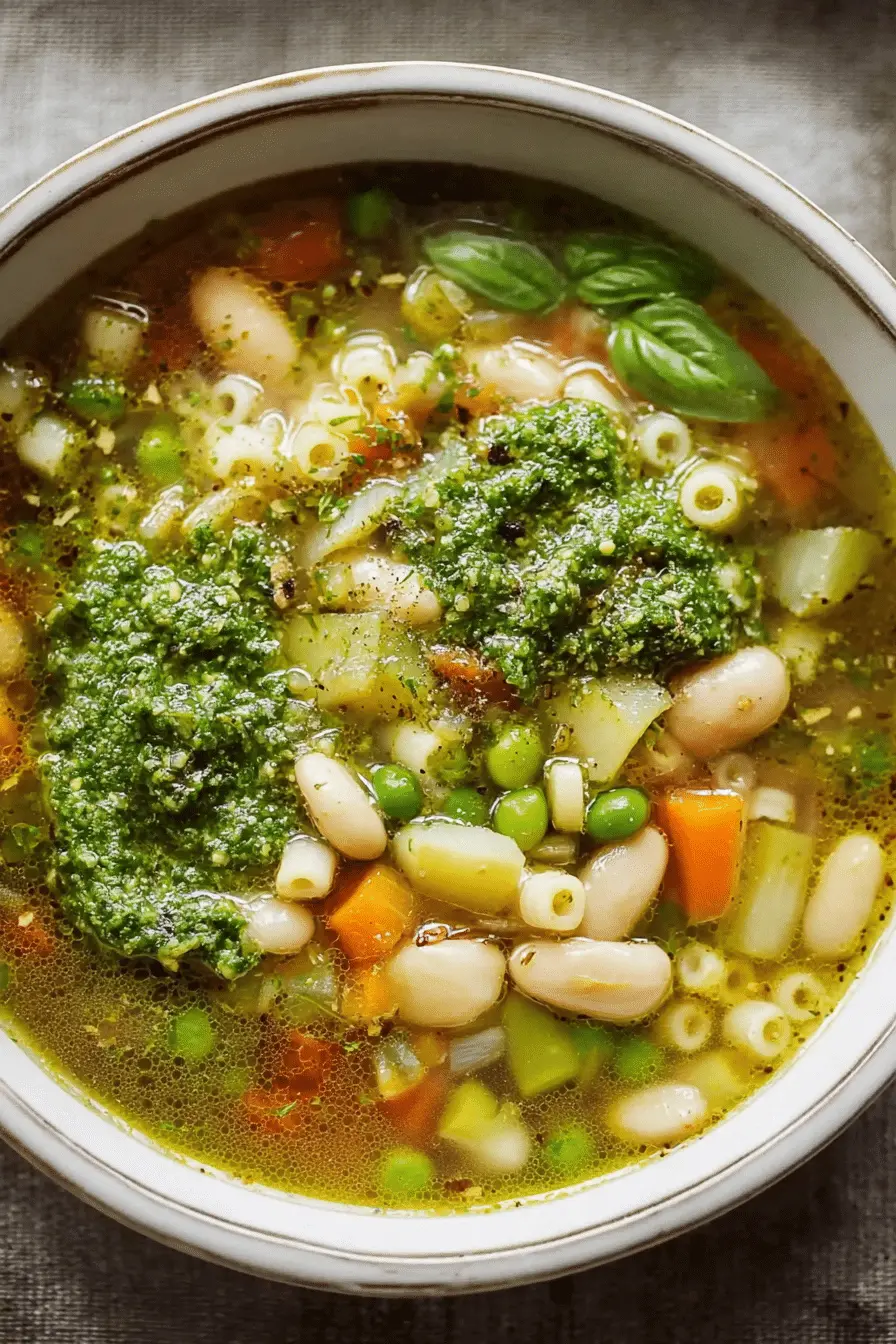
How I Finally Nailed Soupe au Pistou — A Provençal Classic
- Prep
- 30 min
- Cook
- 90 min
- Total
- 120 min
- Serves
- 10
- Calories
- 300 kcal
- Carbs
- 40.00 g
Introduction
I grew up eating soupe au pistou on long summer evenings, when the garden was generous and the basil smelled like sunshine. I still remember ladling steaming bowls into chipped earthenware and watching my family scrape up every last spoonful of pistou; it was always the thing people argued about—how much to add, who made it best. In my kitchen I chase that same honest, homey flavor every time I make it.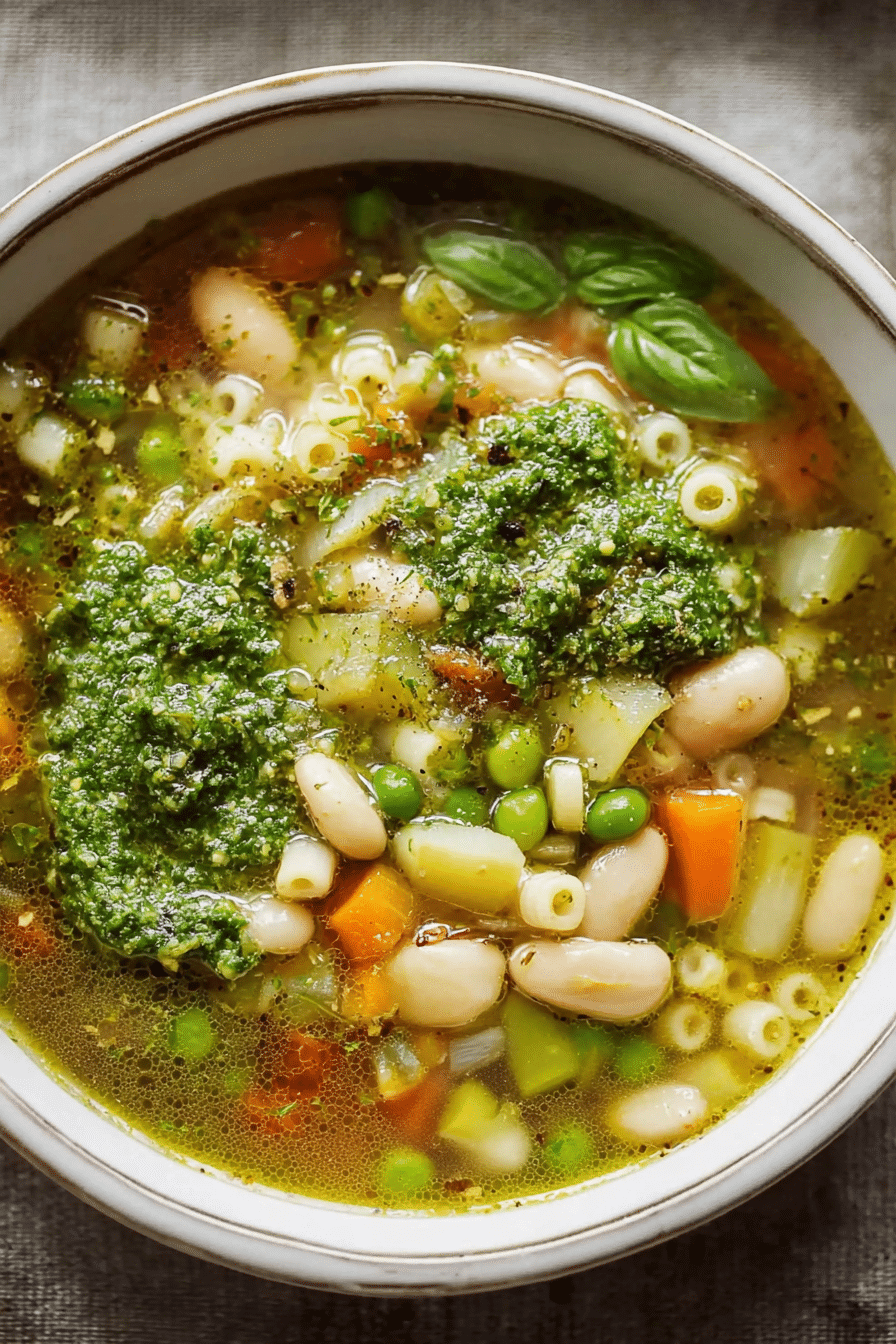
Everything You Need for Soupe au Pistou
Before you begin, gather a few simple tools and choose the freshest produce you can find. A heavy-bottomed pot helps maintain an even simmer and prevents the bottom from scorching as the vegetables and beans release their starches and sugars.- Extra-virgin olive oil – For sautéeing the aromatics and finishing the pistou; choose a fruity, balanced oil.
- Onions or leeks – Provide the sweet aromatic base; leeks give a softer, more delicate flavor.
- Carrots – Add sweetness and body to the broth.
- Zucchini – Holds shape and gives a tender bite; add later so it doesn’t disintegrate.
- Green beans – Add snap and color; trim and cut evenly for consistent cooking.
- Fresh or frozen peas – Brightness and quick-cooking sweetness.
- Dry beans or canned beans – Dried beans offer superior texture when cooked properly; canned beans are a great shortcut when time is short.
- Short pasta – Orzo, shells, or small elbows give body and make the soup feel substantial.
- Basil – The soul of the pistou; use fragrant, young leaves for the best color and aroma.
- Garlic – Raw in the pistou for bite, softened in the soup as it simmers.
- Parmesan or nutritional yeast – Parmesan lends savory depth; nutritional yeast is a satisfying vegan swap.
- Fresh tomato – Adds a touch of acid and texture to the pistou; peel and seed if you prefer a silkier sauce.
- Good-quality stock – Vegetable stock keeps the soup bright; low-sodium allows you to control seasoning.
- Bay leaf and thyme – Simple herb notes typical of Provence; add early to infuse the pot.
- Heavy-bottom pot – A Dutch oven or similar keeps heat steady and helps develop flavor without hot spots.
Soupe au Pistou — A Short History from Provence
Soupe au pistou is a country dish from Provence, born of gardens, modest pantries, and a desire to feed people well without fuss. Families would make it at the height of summer when beans and tomatoes were abundant; the pistou—fresh basil crushed with garlic and oil—was added at the table so its color and fragrance remained bright. The recipe shifted from house to house: some added more beans, others preferred more pasta, and nearly every family guarded a small secret—an extra clove of garlic, a particular herb, or the exact moment to stir in the cheese. The soup’s history is important because it explains its flexibility. In Provence, soups like this were sustenance and celebration at once: a way to use the garden produce, to warm hands and hearts, and to gather neighbors. When I make soupe au pistou now, I think about those communal moments—the clatter of bowls, the steady rhythm of spoons—and I try to honor that uncomplicated hospitality.The Secret to Perfect Pistou Sauce (and Why Simplicity Wins)
Pistou is straightforward, and its power lies in a few fresh, well-treated ingredients. Use fragrant basil and sharp garlic; both will shine if you handle them gently and season carefully. The goal is a smooth, bright-green emulsion that tastes of fresh herbs rather than oil.- Start with fresh basil leaves that are clean and dry—wet leaves dilute the sauce and make it blotchy.
- Pulse garlic with a pinch of salt to break it down before adding the basil; salt helps tear the leaf cell walls and release more aroma.
- Add tomato and a little cheese (or nutritional yeast) to round the flavor; omit the cheese for vegan pistou.
- Finish by slowly streaming oil while pulsing so the pistou emulsifies and holds together. The texture should be slightly coarse, not a fine paste—this is rustic food.
- Culture note: pistou is a Provençal expression of pesto but simpler—no pine nuts, optional cheese—so its freshness is the cultural point of pride.
Picking the Right Vegetables: Seasonal Tips for Best Flavor
Think of soupe au pistou as a summer garden in a bowl. Choose produce that is in season and ripe—ripe carrots for sweetness, young zucchini for tender flesh, and bright green beans for crunch. Buying local at a farmers’ market or pulling from your garden will reward you with aromas and textures that supermarket vegetables often lack.- Spring/early summer: young carrots, peas, early new beans; tender flavors and quick cooking.
- High summer: zucchini, ripe tomatoes (for the pistou), abundant basil—this is the classic moment for soupe au pistou.
- Late summer/early fall: you can still make a worthy soup with storage vegetables if you adjust timing—add heartier items earlier and delicate ones late.
- Choose produce that is firm to the touch, vibrant in color, and free from soft spots; the sight and feel of vegetables often tell you more than labels.
- Support sustainable farms and seasonal buying—food that’s harvested at peak flavor makes the simplest recipes sing.
How to Make Soupe au Pistou (Step-by-Step)
- Prepare the beans: if using dried beans, soak them and simmer until just tender; canned beans can be rinsed and added later as a shortcut.
- Sauté aromatics: warm oil in a heavy pot, soften onions or leeks until translucent, then add thyme and bay leaf so the aroma builds.
- Add firm vegetables first: carrots and any root vegetables go in early so they have time to tenderize without falling apart.
- Pour in stock and add the cooked beans with their cooking liquid if you have it; an even simmer allows flavors to marry without breaking down the vegetables.
- Add quick-cooking vegetables and the pasta toward the end so they stay bright and maintain texture—pasta will continue to plump as it rests in the hot soup.
- Finish with peas for a pop of color and an immediate hit of sweetness; taste and adjust seasoning with salt and pepper.
- Serve each bowl with a generous spoonful of pistou placed on top so guests can stir it in; the contrast of hot broth and cold pistou keeps the basil vivid.
- Troubleshooting (from my kitchen):
- I found the soup bland—add salt in small increments and taste between additions; a splash of lemon can brighten a flat pot.
- The pasta became mushy—reduce the cooking time by a minute and add the pasta later, or cook it separately and add at service.
- Pistou turned brown—pistou darkens if overworked or exposed to air; pulse gently and store under a thin film of oil to protect it.
- Beans too firm—simmer longer in their cooking liquid before adding to the soup so they soften without breaking apart.
Pro Tip for soupe au pistou: Make Pistou Ahead Without Losing Color
- I often make the pistou a few hours ahead; to keep it green I press a sheet of plastic directly on the surface and drizzle a thin layer of oil on top—this minimizes air exposure.
- Add a little lemon juice if you plan to store it overnight—acid slows browning and brightens the flavor without making it taste lemony.
- If you must refrigerate, bring the pistou back to room temperature and give it a quick pulse before serving to revive its texture and color.
- Do not cook the pistou into the soup; add it at the table so the basil’s aroma stays fresh and the color remains vivid against the warm broth.
How to Store, Reheat, and Make-Ahead Soupe au Pistou
Good storage preserves texture and flavor. Keep pistou separate from the soup until serving, and use containers that minimize air space.- Refrigeration: store soup in airtight containers for up to three days; store pistou separately, covered with a thin film of oil and plastic pressed to the surface.
- Freezing: soup freezes well, though soft vegetables and pasta will change texture. Freeze without pasta for best results and add cooked pasta when reheating.
- Reheating: warm gently over low heat and add a splash of stock or water if the soup looks too thick; finish with pistou fresh at the table.
- Icon guide for storage (textual): a snowflake = freezer, a jar = refrigerator up to 3 days, a clock = best eaten within 72 hours for peak texture.
Easy Variations: Vegan, Gluten-Free, and Serving Suggestions
- Vegan option – Use vegetable stock and replace parmesan with nutritional yeast or omit the cheese entirely; the pistou is still vivid and flavorful.
- Gluten-free – Swap in a gluten-free short pasta or use rice or small cooked grains to keep the texture substantial.
- Protein boost – Add extra beans or a handful of cooked lentils for a heartier bowl without changing the soul of the soup.
- Herb variations – Try mixing basil with a small amount of flat-leaf parsley or mint for a different aromatic profile.
- Serving suggestions – Serve with crusty bread or a simple green salad; a light-bodied white wine from Provence or a rosé pairs naturally with the soup’s brightness.
Nutritional Benefits of Soupe au Pistou
Soupe au pistou is vegetable-forward: it delivers fiber, vitamins, and plant-based protein when you include beans. The mix of vegetables supplies vitamin A, vitamin C, and potassium, while basil contributes antioxidants and fresh aroma. The calories and macronutrients will shift depending on your choices—pasta vs. grains, canned vs. dried beans, or whether you include cheese—so adjust portions to fit your dietary needs. For a lighter meal, use more vegetables and fewer starches; for a fuller, protein-rich dish, increase the beans or add a legume-based grain. This flexibility makes soupe au pistou easy to fit into balanced eating patterns.Frequently Asked Questions
What is soupe au pistou? Soupe au pistou is a flavorful French vegetable soup made with fresh seasonal vegetables, legumes, small pasta, and topped with a refreshing basil and garlic pistou sauce. Can I make soupe au pistou vegan? Absolutely! Simply use vegetable stock instead of chicken stock and replace the Parmesan cheese with nutritional yeast or omit it completely for a delicious vegan version. How can I store leftovers of soupe au pistou? Store leftover soupe au pistou in an airtight container in the refrigerator for up to 3 days. You can also freeze it for longer storage, just be aware that the texture of the vegetables may change slightly upon reheating. What kind of pasta should I use for soupe au pistou? You can use short dry pasta like orzo, vermicelli, elbows, or shells. Choose your favorite type to add texture to the soup! What’s the difference between pistou and pesto? The main differences are that pistou doesn't include pine nuts and the cheese is optional, while pesto typically contains both. Pistou is a simpler, fresher alternative!Recipe Card
How I Finally Nailed Soupe au Pistou — A Provençal Classic
- Prep
- 30 min
- Cook
- 90 min
- Total
- 120 min
- Serves
- 10
- Calories
- 300 kcal
- Carbs
- 40.00 g
Ingredients
- 1 cupdry white navy beans
- 2bay leaves
- 3 tbspextra-virgin olive oil
- 2 mediumonions, peeled and diced (or 4 leeks, cleaned and sliced)
- 2 tspfresh thyme leaves
- 2 mediumcarrots, peeled and diced ((6 oz/170 g))
- 2 mediumzucchini, diced ((1 lb/450 g))
- ½ lbgreen beans, tips removed and cut crosswise
- 6 clovesgarlic, peeled and minced
- 1 tbspfleur de sel (or fine sea salt)
- 2 qtlow-sodium vegetable stock (or low sodium chicken stock)
- 1 cupfresh or frozen peas
- 1 cupshort dry pasta (such as orzo, vermicelli, elbows, or shells)
- 1 large clovegarlic, peeled
- 1 tspfleur de sel (or fine sea salt)
- 2 cupspacked fresh basil leaves, chopped
- 1 smalltomato, peeled, seeded, and diced
- 1.5 ozfinely grated Parmigiano-Reggiano cheese
- ¼ cupextra-virgin olive oil
Instructions
- 1
Rinse and sort the beans. Soak the beans overnight covered in cold water. The next morning, drain the beans, rinse, and use as directed below.
- 2
Rinse and sort the beans. Transfer to a saucepan and cover with 2 inches (5 cm) of water. Bring to a boil, and keep boiling for 1 minute. Turn off the heat, cover, and let rest for 1 hour. Drain, rinse, and use as directed below.
- 3
Transfer the soaked beans to a large saucepan. Add the bay leaves and enough water to cover the beans with about 2 inches (5 cm) of water. Bring to a boil over high heat, then lower the heat and simmer gently for 15 minutes. Remove from heat and set aside.
- 4
In a Dutch oven or large stockpot, heat the olive oil. Add the onions or leeks and cook until soft and translucent. Add the thyme, carrots, zucchini, green beans, garlic, and salt. Cook for about 10 minutes. Add vegetable stock, and if using dried beans, add the cooked beans with their liquid. If using canned beans, add them now. Next, add the peas and pasta. Bring to a boil and simmer for about 5 minutes, or until the pasta is cooked.
- 5
In a food processor, pulse the garlic with a pinch of salt until finely chopped. Add basil, tomato, and parmesan, and pulse until smooth. Add olive oil to blend and emulsify. Taste and season with more salt if desired.
- 6
Ladle hot soup into bowls and add a generous spoonful of pistou to each serving. Keep extra pistou nearby for adding more as desired.
- 7
Use vegetable stock and replace parmesan cheese with nutritional yeast or omit it.
- 8
Use a gluten-free variety of short pasta.
You might also like


Reviews
Be the first to review this.