Poolside RecipeDesserts
How I Finally Nailed Strawberry Rhubarb Pie — A Classic Family Recipe
- Prep
- 180 min
- Cook
- 50 min
- Total
- 410 min
- Serves
- 8
- Calories
- 300 kcal
- Carbs
- 45.00 g
Introduction
My grandmother used to set a pie plate on the windowsill to cool while the kitchen smelled like sugared strawberries and cut rhubarb. I still remember the pink stains on her fingers and the way everyone hovered around the kitchen, waiting for a slice warm enough to make the crust flake but cool enough not to scald our tongues. Baking this strawberry rhubarb pie always takes me back to those loud family suppers and the quiet afternoons when the whole house hummed with the oven's warmth.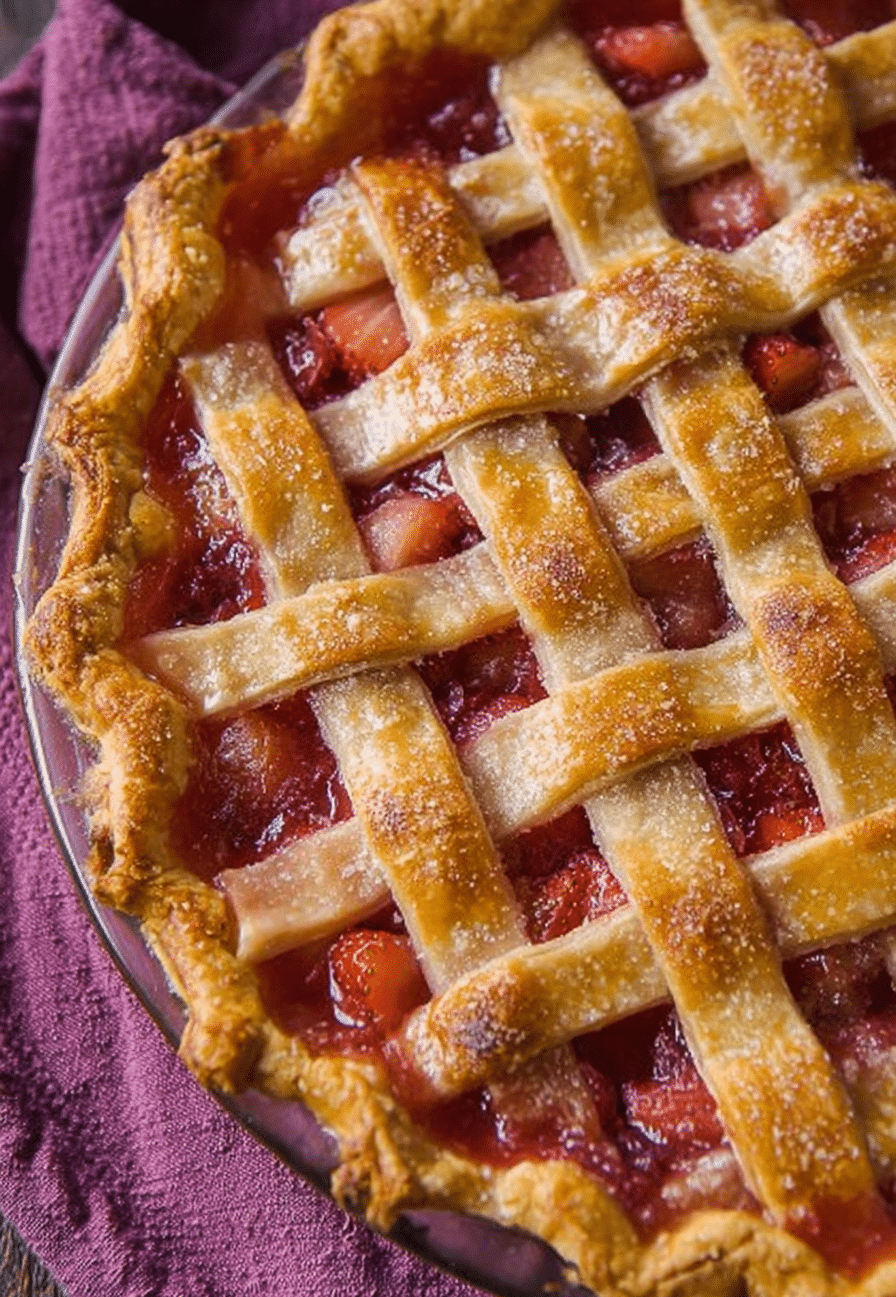
Everything You Need for Strawberry Rhubarb Pie
- Pie crust – A sturdy, flaky homemade crust makes the whole pie. A quality crust provides structure and that buttery contrast to the bright filling.
- Rhubarb – Offers the essential tart backbone. Look for firm, evenly colored stalks and trim any fibrous ends.
- Strawberries – Bring sweetness and aroma; they soften as they bake and balance the rhubarb’s tang.
- Sugars (brown and granulated) – Brown sugar adds a touch of caramel warmth while granulated sugar keeps the fruit flavors clean.
- Thickener (cornstarch or tapioca) – Thickens the juices so the filling sets while still looking glossy.
- Orange juice – A splash brightens the fruit flavors and lifts the overall profile without adding floral notes.
- Vanilla and butter – Vanilla deepens the fruit flavor; a few bits of butter dot the filling for richness as it melts.
- Egg wash – Gives the top crust a warm, golden finish when baked.
The Secret to the Perfect Sweet‑Tart Filling
The balance comes down to tasting and small adjustments. Start with the fruit and think in terms of relative sweetness rather than fixed amounts: if your strawberries are exceptionally ripe and sweet, dial back the added sugar; if the rhubarb is especially tart, allow a touch more brown sugar for warmth. The orange juice is an unsung hero—it brightens the fruit without making the filling taste citrusy.- Use a stabilizer that fits the texture you want: cornstarch gives a slightly glossy, firmer set; tapioca (small pearl or instant) keeps fruit pieces intact and produces a more forgiving gel when the pie cools.
- Let the mixed filling sit briefly before assembling so sugar can begin to draw juices—this helps you judge whether the mixture needs more thickener or a flavor tweak.
- When the pie bakes, look for the filling to bubble around the edges and develop a glossy sheen in the center—that’s your cue that the thickener has activated and the juices are properly reduced.
Why Temperature and Resting Time Matter
Temperature is everything for both crust and filling: cold fats in the dough steam during baking and create flaky layers, while a properly heated oven helps set the filling without over-browning the edges. I always chill my dough until it feels cool and firm, and I preheat the oven to a high initial temperature to give the crust a blast of heat before lowering it to finish baking.- Cold dough keeps the butter from melting too quickly, which is what gives you distinct flaky layers.
- Starting hot then reducing the temperature helps the crust brown evenly while letting the filling cook through without burning the lattice or edges.
- Let the pie rest at room temperature for several hours after baking so the thickener can finish setting; slicing too soon invites runny slices and frustration at the table.
How to Make Strawberry Rhubarb Pie (Step‑by‑Step)
- Prepare your chilled pie dough and keep one disc cold while you work with the other; roll the bottom crust out on a lightly floured surface and ease it into your pie dish without stretching.
- Combine rhubarb, strawberries, sugars, thickener, salt, orange juice, and vanilla in a bowl; let the mixture sit briefly so the sugar starts to draw juices, then drain any excess if the fruit sweats out too much liquid.
- Spoon the fruit into the prepared bottom crust, leaving excess liquid behind; dot with small pieces of butter to add richness as it melts during baking.
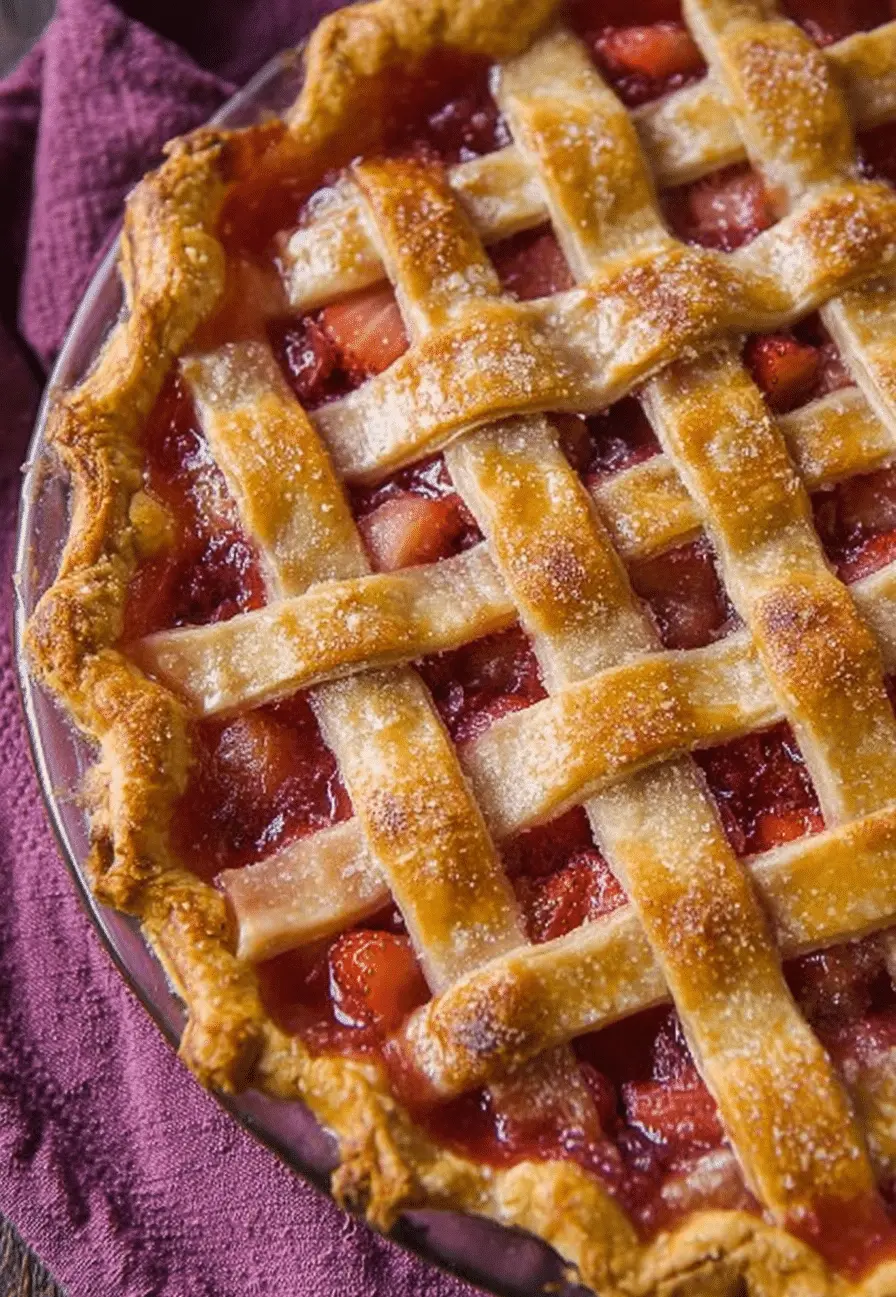
- Top with your chosen crust (lattice, full top, or streusel). If weaving a lattice, assemble strips over and under, pressing edges to seal before trimming and crimping.
- Brush the top crust with an egg wash and sprinkle coarse sugar if you like a little sparkle and extra crunch.
- Bake on a rimmed baking sheet: start at a higher temperature for the first short period to set the crust, then lower the oven to finish baking until juices bubble clearly around the edges and the crust is golden.
- Cool the pie on a rack at room temperature for several hours to let the filling set before slicing and serving.
- Troubleshooting (read these before you panic):
- If the filling looks too watery before baking, add a touch more thickener and let it sit briefly so it absorbs liquid.
- If the edges brown too fast, cover them with foil or use a pie shield after the first part of baking.
- If the crust shrinks, it was likely rolled too thin or handled too much—rest the dough longer next time and avoid stretching it into the dish.
Weaving a Lattice (or Alternatives): Top‑Crust Options
- Roll the top dough into a circle and cut even strips; aim for consistent widths so the weave looks balanced.
- Lay half the strips parallel across the pie, then weave the remaining strips perpendicular by lifting alternate strips to create the over‑under pattern.
- Trim excess dough flush with the bottom crust and crimp to seal; pressing the edges prevents juices from leaking.
- Alternative: place a full dough circle on top, cut steam vents, and crimp for a classic look that’s faster than a lattice.
- Streusel: combine butter, flour (or a gluten-free flour blend), and sugar until crumbly and sprinkle over the filling for a crunchy contrast if you prefer no top crust.
Pro Tip for strawberry rhubarb pie: Using Frozen Fruit Without a Watery Filling
- Thaw frozen fruit in a colander over a bowl and let it drain thoroughly; pressing gently with paper towels helps remove excess moisture.
- Reduce added sugar slightly if your frozen fruit tastes sweeter than fresh—taste before you assemble the pie.
- Use instant tapioca or a slightly larger amount of your chosen thickener to account for extra moisture released by frozen fruit.
- Macerating briefly with sugar and then discarding any excess liquid before mixing in the thickener helps prevent a runny filling.
Variations: Gluten‑Free, Vegan, and Streusel Toppings
- Gluten‑free crust – Use a tried-and-true blend of gluten-free flours and xanthan gum or a pre-made gluten-free pie dough; bake slightly longer at a lower temp if the crust needs more time to set.
- Vegan swaps – Replace butter with cold coconut oil or a vegan butter alternative in the crust, and use a plant-based milk wash for the top glaze; dot the filling with vegan butter substitutes.
- Streusel topping – Mix cold butter (or vegan butter), flour (or gluten-free blend), and sugar until crumbly; sprinkle over fruit before baking for a crisp, cookie-like top.
How to Store, Make‑Ahead, and Reheat Strawberry Rhubarb Pie
- Store: Cover leftovers loosely at room temperature for a few hours, then refrigerate in an airtight container or wrapped tightly for up to five days.
- Freeze: Wrap individual slices well in plastic and foil, or freeze the whole pie (well wrapped) for up to two months; thaw overnight in the refrigerator before reheating.
- Reheat: Warm slices in a low oven until heated through to revive the crust’s texture; avoid microwaving whole slices if you want to keep the crust from getting soggy.
- Make‑ahead: You can blind-bake the bottom crust and refrigerate it, or assemble the pie and freeze it unbaked; bake from frozen, adding a little extra time and keeping an eye on browning.
Frequently Asked Questions
Can I use frozen fruit for this strawberry rhubarb pie? Yes, you can use frozen fruit! Just make sure to thaw and drain any excess liquid to avoid a watery filling. What can I use as a thickener for the pie filling? Tapioca starch is a great thickener for rhubarb pie, as it helps absorb excess liquid while keeping the fruit pieces intact. How do I prevent my rhubarb pie from being runny? To keep your pie from being runny, try macerating the rhubarb with sugar before adding it to the pie. This draws out excess liquid. How long should I let the pie cool after baking? It's best to let the pie cool for at least 3 hours at room temperature to allow the filling to thicken properly before serving. What is the ideal temperature for baking this pie? Start baking at a higher temperature for a short time to set the crust, then reduce the temperature to finish baking until the filling bubbles around the edges and the crust is golden.Recipe Card
How I Finally Nailed Strawberry Rhubarb Pie — A Classic Family Recipe
- Prep
- 180 min
- Cook
- 50 min
- Total
- 410 min
- Serves
- 8
- Calories
- 300 kcal
- Carbs
- 45.00 g
Ingredients
- 3 cupssliced rhubarb ((1/2 inch pieces))
- 2.5 cupschopped strawberries
- 1/3 cuppacked light brown sugar
- 1/3 cupgranulated sugar
- 1/4 cupcornstarch
- 1/4 teaspoonsalt
- 1 Tablespoonorange juice
- 1/2 teaspoonpure vanilla extract
- 2 Tablespoonsunsalted butter ((cut into small pieces))
- 1 Tablespoonmilk
- —Coarse Sugar for Garnish ((optional))
Instructions
- 1
Prepare pie crust recipe through step 5.
- 2
Combine rhubarb, strawberries, sugars, cornstarch, salt, orange juice, and vanilla extract in a large bowl.
- 3
Preheat oven to 400°F (204°C).
- 4
Roll out one disc of dough and place it in the pie dish. Add filling and dot with butter.
- 5
Roll out second disc of dough, cut into strips, and weave over the filling.
- 6
Brush with egg/milk mixture and sprinkle with coarse sugar.
- 7
Bake for 20 minutes at 400°F, then reduce to 350°F and bake for another 30-35 minutes.
- 8
Cool for at least 3 hours before serving.
You might also like

Reviews
Be the first to review this.