


I make this artichoke and lemon linguine when I want dinner on the table fast without sacrificing flavor. In my kitchen it’s the dish I reach for when the week has been long and the family still expects something fresh — the garlic sizzles, lemon brightens, and the whole thing comes together in under half an hour. It consistently feels special while staying very doable.
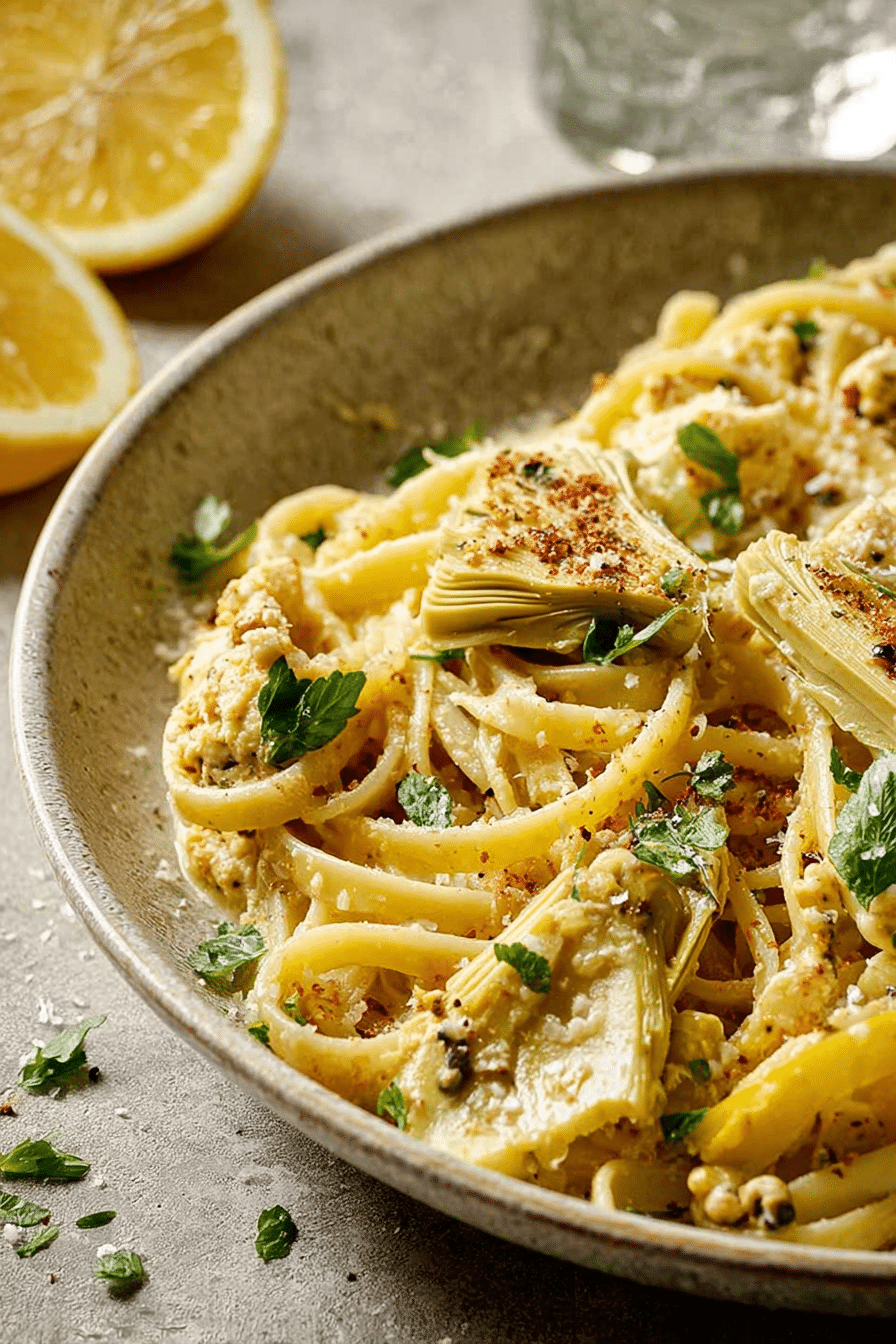
I love that this recipe uses pantry-friendly staples you can prep ahead: pasta in the pantry, a can of artichokes in the cupboard, a lemon on the counter. That means you can chop a shallot or mince garlic while the water comes to a boil and still finish quickly. The aroma of garlic and lemon hitting warm oil always makes the kitchen feel like dinner is already a success.
Because I cook this often, I’ve trimmed the steps to be efficient for busy households — a little butter and olive oil for richness, a splash of wine for depth, and saved pasta water to bring everything together. The result is light, bright, and reliably comforting with minimal cleanup.
Why This Artichoke and Lemon Linguine Works for Busy Weeknights
This recipe checks the boxes families want on a weeknight: fast, flexible, and flavorful. It finishes in under 30 minutes, uses mostly pantry items (so you’re less likely to run to the store), and balances bright citrus with silky butter and savory artichokes for a satisfying, light main. The lemon keeps the dish feeling fresh, which helps if you want something easy but not heavy.
Sensory note: imagine the bright citrus aroma cutting through warm garlic and olive oil, and the soft, slightly tangy artichoke pieces offering a pleasant contrast in texture. For busy families, the speed and simplicity are the real advantages — you can prep veg while the pasta water heats and have a hot, vibrant dinner without a mountain of dishes.
Everything You Need for Artichoke and Lemon Linguine
Below I list the ingredients conversationally so you know what purpose each serves and what you can swap in a pinch. I avoid measurements here so you can scale for your family and taste.
- Linguine – The long, thin ribbons hold the light sauce well; you can substitute another similar long pasta if that’s what you have.
- Kosher salt – Use it to season your pasta water and taste at the end; it’s essential for building flavor.
- Extra virgin olive oil – Adds fruitiness and helps carry the garlic and lemon aromatics; choose a good bottle for noticeable flavor.
- Butter – Gives silkiness and a little richness; you can use a salted or unsalted version depending on how you like to season.
- Shallot – Milder than onion and quick to cook; it gives a sweet base note without overpowering the lemon.
- Garlic – The aromatic backbone; mince it so it disperses evenly through the sauce.
- Artichoke hearts – Canned are fast and consistent; fresh are more vibrant if you have time (see below).
- Capers – Provide a salty, briny pop that plays beautifully off the lemon.
- Lemon zest – Bright, concentrated citrus oil that livens the whole dish without making it watery.
- Red pepper flakes – For a gentle heat that contrasts the citrus; optional if you prefer no spice.
- Dry white wine – Adds acidity and background depth; a splash cooks down and blends with the sauce.
- Black pepper – Freshly ground gives warmth and a subtle bite.
- Lemon juice – Adds fresh citrus acidity; add at the end so it stays bright.
- Fresh parsley – A finishing herb for color and freshness.
- Parmigiano-Reggiano – Optional, for a savory finish if everyone in your family is happy with cheese.
Fresh vs. Canned Artichokes: When to Use Each
Both options work — it just depends on time and flavor goals. Canned or jarred artichokes are a huge time-saver and have a mild, tender texture that’s ideal for fast weeknight cooking. Fresh artichokes give more earthy, complex flavor and firmer texture, but they take extra prep time to trim, de-stem, and steam or boil until tender.
- Flavor profile: fresh artichokes are more vegetal and slightly nutty; canned are mellow and tangy from their packing liquid.
- Prep tips: if you use fresh, remove tough outer leaves, trim the stem, and steam or simmer until the heart is tender; cut into wedges before finishing in the pan.
- Nutritional note: fresh artichokes retain more of their natural fiber and nutrients, but canned ones are still a healthy, convenient option.
- When to use each: reach for canned when time is short; choose fresh when you have a little more time and want a brighter, earthier artichoke note.
The Secret to Bright Lemon Flavor without Bitterness
There’s a big difference between zest and juice. Zest contains the fragrant citrus oils that smell and taste intensely lemony; juice delivers acidity. Use both, but add them at different times to avoid bitterness.
- Zest first: add lemon zest early so the oil warms in the pan and perfumes the sauce without becoming bitter.
- Juice last: add lemon juice at the end to preserve freshness and acidity; this keeps the sauce bright rather than sharp.
- Avoid the pith: when zesting, only remove the yellow skin — the white pith is bitter, so don’t over-zest.
- Balance: if the sauce tastes too sharp, a small pat of butter or a splash of reserved pasta water will mellow it while keeping the citrus forward.
How to Get Perfect Linguine Texture in Under 10 Minutes
Cooking linguine quickly is all about timing and properly salted water. The goal is a slight bite — al dente — so the pasta holds up in the sauce and gives you that satisfying chew.
- Bring a large pot of water to a rolling boil before adding pasta — this starts the pasta cooking evenly.
- Salt the water well; it should taste noticeably salty so the pasta itself is seasoned from the inside out.
- Follow package times as a guide, but start checking the pasta a minute or two earlier to achieve that perfect chew; different brands cook differently.
- Reserve a cup of pasta water before you drain — the starchy water is essential for finishing the sauce and adjusting texture.
How to Make Artichoke and Lemon Linguine (Step-by-Step)
Timing is the trick: start the pasta first, then build the sauce while it cooks so both finish together. The list below walks you through the practical steps that keep things moving and the flavors bright.
- Start the pasta water: bring a large pot of water to a boil and salt it generously, then add your linguine and cook toward al dente.
- Soften aromatics: while the pasta cooks, heat olive oil and butter in a large skillet, then add sliced shallot and minced garlic and cook gently until fragrant and just tender — don’t let the garlic brown.
- Add artichokes and capers: toss in the artichoke pieces, capers, lemon zest, and red pepper flakes; cook briefly until the artichokes warm and the flavors meld.
- Deglaze: increase heat and add the white wine, stirring to lift any flavorful bits and reduce the liquid by about half so it concentrates.
- Combine with pasta: drain the pasta (reserving some pasta water), then add the pasta to the skillet with the sauce along with salt, pepper, and lemon juice. Toss so the pasta starts to absorb the sauce.
- Finish with pasta water and parsley: add reserved pasta water gradually until the sauce becomes silky and clings to the pasta; stir in chopped parsley and adjust seasoning.
- Serve: divide among plates and offer grated Parmigiano-Reggiano at the table if desired.
Troubleshooting (short, from my kitchen):
- If the sauce seems thin, add a splash more reserved pasta water and simmer a minute — the starch will thicken it.
- If the lemon tastes bitter, you probably over-zested into the pith; finish with a touch more butter or oil to round the edges.
- If the pasta is sticking, toss it immediately in the pan with the sauce and a little reserved water — that resets the texture.
- I’ve learned that under-salting the pasta water is the most common mistake; don’t be shy with salt at that stage.
Pro Tip for Artichoke and Lemon Linguine: Save Pasta Water to Finish the Sauce
- Save about a cup of the cooking water before you drain the pasta; the exact amount you’ll need depends on how much sauce is in the pan.
- The starches in the pasta water act as a natural binder, creating a glossy, clingy sauce without needing cream.
- Add the pasta water slowly — start with a little and increase until you reach the texture you like; too much will thin the sauce.
How to Store, Reheat, and Vary Artichoke and Lemon Linguine
Leftovers can stay vibrant if you handle them right. Store in an airtight container in the fridge and use within a few days.
- Storing: Refrigerate up to three days. If you plan to freeze, omit fresh parsley and cheese until reheating for best texture.
- Reheating: Warm gently in a skillet over medium heat with a splash of water or olive oil to return moisture and loosen the sauce; finish with a squeeze of fresh lemon to revive brightness.
- Variations (bulleted for easy scanning):
- Add protein: quickly sear shrimp or sliced chicken to toss in at the end for a heartier meal.
- Make it vegetarian/vegan: swap butter for a plant-based substitute and skip (or replace) the cheese.
- Gluten-free option: use a gluten-free long pasta; adjust cooking time as needed.
- Herb swap: basil or tarragon can replace parsley for a different herbal note.
Health Benefits of Artichokes and Lemon in a Diet
Artichokes and lemons are small ingredients that add notable nutritional value. Artichokes are high in fiber, which supports digestion and helps keep you full — ideal for a light, satisfying dinner. They also contain antioxidants that support overall health. Lemons contribute vitamin C for immune support and a bright, low-calorie way to add flavor so you can use less fat if desired.
- Fiber: artichokes are a good source, which aids digestive health and satiety.
- Antioxidants: artichokes contain compounds that help protect cells from damage.
- Vitamin C: lemons supply this vitamin, supporting immunity and iron absorption when paired with plant foods.
- Balanced meal: pair this pasta with a lean protein or extra veggies to round out the plate for family nutrition goals.
In-Depth Pairing Suggestions for Wines and Side Dishes
A crisp white wine is a classic match thanks to the lemon and capers. Choose something with bright acidity that won’t overpower the delicate flavors of the dish.
- Wine pairings: a Sauvignon Blanc or Pinot Grigio works well — they offer citrus and green notes that echo the dish’s brightness.
- Side dishes: serve with a simple green salad dressed in a light vinaigrette to keep the meal fresh, or a roasted vegetable like asparagus for complementary texture.
- Texture balance: a crunchy side (toasted bread or a crisp salad) contrasts the silky linguine and makes the meal feel complete.
Frequently Asked Questions
Can I use fresh artichokes instead of canned?
Yes, fresh artichokes can be used instead of canned. Just make sure to prepare them properly by steaming or boiling until tender and removing the tough outer leaves and choke.
How can I make this dish vegetarian?
To make the Artichoke and Lemon Linguine vegetarian, simply replace the butter with a plant-based alternative. You can also skip the cheese or use a vegan cheese for serving.
What should I do with leftovers?
Store leftovers in an airtight container in the refrigerator for up to 3 days. To reheat, simply warm it in a skillet over medium heat, adding a little water or olive oil if needed to bring back moisture.
Can I add protein to this dish?
Absolutely! Grilled chicken, shrimp, or even chickpeas can be great additions to make the dish heartier while still complementing the flavors.
What type of wine pairs best with this dish?
A crisp, dry white wine like Sauvignon Blanc or Pinot Grigio pairs beautifully with the light, citrusy flavors of the dish.
Artichoke and Lemon Linguine
Ingredients
Method
- Bring a large pot of salted water to a boil. Cook the linguine until just shy of al dente according to the package directions.
- In a large skillet, heat the oil and butter over medium heat. Add shallots and garlic, cook until shallot is tender, about 2 minutes.
- Add the artichokes, capers, lemon zest, and red pepper flakes. Toss until artichokes are coated.
- Reserve 1 cup of pasta water, drain pasta, and add to the skillet with wine, salt, pepper, and lemon juice. Toss to coat.
- Add reserved pasta water as needed, tossing to combine with pasta. Stir in parsley and serve with cheese if desired.