

I grew up watching green curry simmer on the stove in a small Thai kitchen, and it took me years of cooking for my own family to get the same bright, fragrant result in my own home. I learned that the difference between a flat, canned-curry flavour and a curry that smells alive has less to do with exotic ingredients and more to do with technique, timing and a few humble additions. In my kitchen I make this version without added oil, following the traditional method that teases the paste’s oils out of the coconut milk so the curry tastes clean yet deeply layered.
I like to keep this recipe approachable: a short ingredients list, a heavy-bottomed pot, and attention to a few small steps that make a big difference. Fresh herbs—especially Thai basil and makrut lime leaves—turn a good curry into one that feels fresh and green. If you only have store-bought paste, a quick blitz with fresh basil and fingerroot (krachai) will sharpen the aroma and colour and bring back some of what industrial pastes lose during processing.
What makes this curry ideal for home cooks is that it rewards careful but simple work. Once you learn how to cook the paste until the coconut fat separates and how to handle the eggplant so it soaks up the sauce without falling apart, the rest falls into place. I’ll walk you through ingredient choices, the key technique, helpful swaps, and practical storage tips so you can make this often and feel confident doing it.
Why This Authentic Thai Green Curry Chicken Is Ideal for Home Cooks
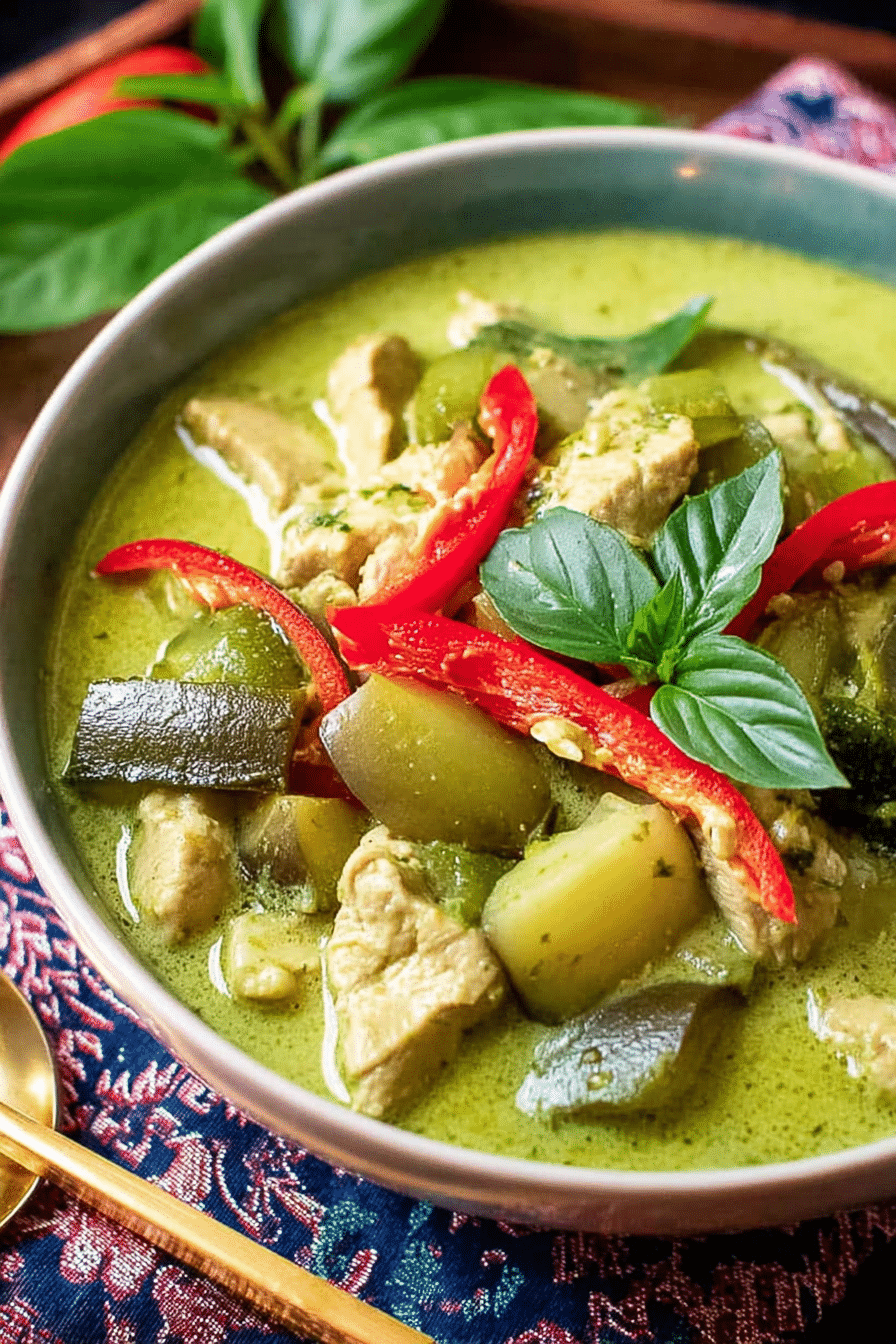
This version focuses on authenticity while keeping the process approachable. You should picture a glossy, green sauce with flecks of bright basil and torn makrut lime leaves floating on top; aromatic steam carrying citrus and roasted chile notes; and tender pieces of chicken that have absorbed the curry’s spice. The recipe uses a short list of fresh ingredients and a single traditional technique that deepens flavour dramatically without extra fat.
- Minimal ingredients: You won’t need an overflowing spice rack—fresh aromatics and a good paste are enough for complexity.
- Fresh herbs matter: Thai basil and makrut lime leaves bring lift and brightness that canned coconut milk alone can’t provide.
- Technique over tricks: Sautéing the paste in coconut milk until the oils separate gives the paste depth and intensifies colour, so you don’t rely on additives.
Everything You Need for Authentic Thai Green Curry Chicken
Below I list the ingredients and tools I use in my kitchen and why each matters. You don’t need to chase perfection—quality and freshness make the biggest impact. If you want a full meal, pair this green curry with light rolls or a salad; for a classic side, try pairing your green curry with some delicious Homemade Spring Rolls for a complete meal experience.
- Coconut milk – Provides both the cooking fat and the creamy body; using part of it first lets the paste brown correctly without adding oil.
- Green curry paste – The base flavour; choose a brand you like and plan to boost it with fresh herbs for a brighter result.
- Chicken (dark meat) – Thighs stay juicy and absorb the curry; breasts will work but handle carefully to avoid drying.
- Fish sauce – The savory backbone; it balances sweetness and acidity with umami.
- Palm sugar or light brown sugar – Softens the heat and balances the salty and sour notes.
- Makrut lime leaves – Adds citrus perfume; bruise them to release their oils before adding to the pot.
- Thai eggplant or bamboo shoots – Eggplant soaks up the sauce; bamboo shoots are a reliable substitute when eggplant isn’t available.
- Thai basil – Finishes the curry with peppery, anise-like notes; add at the end so leaves stay vibrant.
- Fermented shrimp paste (gapi) – A small amount lends deep umami; see the dedicated section below for alternatives.
- Kitchen tools – Heavy-bottomed pot, mortar and pestle or small blender for boosting paste, sharp knife and a spoon for tasting.
The One Ingredient That Changes Everything: Fermented Shrimp Paste
Shrimp paste is that concentrated, savory note you might not notice at first but will miss if it’s absent. When used sparingly and combined with basil and lime leaf, it adds depth and a savory roundness that balances the curry’s sweetness and heat. If you’re concerned about the aroma while cooking, I recommend mixing it into the paste or stock so it disperses evenly.
- Flavor impact: Adds savory umami and a fermented anchor that deepens the overall profile without tasting overtly “fishy.”
- Choosing quality: Look for a paste that is compact and slightly moist; avoid overly salty, powdery blocks.
- Plant-based alternatives: For a vegan option, use miso (preferably a darker, salty miso) or a small amount of soy sauce with a pinch of seaweed powder to mimic that oceanic umami.
- Usage tip: A little goes a long way—integrate it with the paste so it blends smoothly into the sauce.
Traditional Technique: Sautéing Curry Paste Until the Oil Releases
Cooking the paste in part of the coconut milk is a traditional step that deepens flavour and intensifies colour. This is where the paste develops a toasted, fragrant quality and the coconut’s natural fat separates to carry and distribute essential aromatics through the sauce. A heavy-bottomed pot and moderate heat are your allies here.
- Warm a portion of the coconut milk in a heavy pot over medium heat until it reaches a gentle boil—this releases the coconut’s fat naturally.
- Add the curry paste and stir constantly; you’re looking for the paste to darken slightly and for oil to begin separating from the coconut milk.
- Control the heat—too high and the paste will scorch; too low and the paste won’t bloom properly. Adjust to a steady simmer.
- Once the oil is visible and the paste smells roasted and aromatic, add the chicken and proceed with the remaining liquids and seasonings.
Picking Eggplant, Herbs and Authentic Substitutes
Choosing the right produce affects texture and how the curry presents itself on the plate. Thai eggplants are small and slightly bitter; when gently cooked they hold shape and soak up sauce. If you can’t find them, bamboo shoots add crunch and a neutral canvas for the curry flavours. Herbs like Thai basil and makrut lime leaves are more aromatic than common basil or lime zest, but practical substitutions exist.
- Thai eggplant – Small, round, slightly bitter; they keep their shape and absorb sauce. Substitute: cubed regular eggplant or canned bamboo shoots if freshness is limited.
- Makrut lime leaves – Unique citrusy oils; if unavailable, use a small strip of lime zest and a squeeze of lime at the end for brightness, but note the difference in aroma.
- Thai basil – More peppery and clove-like than sweet basil; if you must substitute, use a mix of sweet basil and a few fresh cilantro leaves for added complexity.
- Fingerroot (krachai) – Peppery and woody; if you can’t source it, fresh ginger can stand in but the flavour will be milder.
How to Make Authentic Thai Green Curry Chicken (Step-by-Step)
Follow these steps in order and watch for the visual cues I describe—colour, oil separation, and the way the eggplant responds to pressure. These are the signs that tell you the curry is progressing correctly. For another family-friendly weeknight option using similar flavors, you might like the One Pan Thai Inspired Yellow Curry Chicken.
- Prepare aromatics: Pound or briefly blitz basil, krachai (if using), shrimp paste and a portion of the curry paste together until very smooth; this boosts freshness.
- Heat coconut milk: In a heavy pot, bring a portion of the coconut milk to a full boil to release the fat used to sauté the paste.
- Sauté the paste: Add the blended paste and stir until the paste darkens slightly and coconut oil separates—this should take a few minutes and produce a fragrant, roasted aroma.
- Add protein: Stir in the chicken so pieces are coated in the paste and begin to cook on the surface.
- Add liquids and seasonings: Pour in the stock, remaining coconut milk, palm sugar and fish sauce; bruise and add makrut lime leaves.
- Simmer gently: Let the curry simmer until the chicken is tender; maintain a gentle simmer so the sauce reduces slightly without breaking.
- Add vegetables late: Push in the eggplant so it soaks up the curry for the first minute, then simmer briefly until just tender—this keeps it from falling apart.
- Finish off heat: Turn off the stove, stir in sliced red peppers and Thai basil so they soften in the residual heat and stay bright.
- Taste and adjust: Finish with extra fish sauce or a touch more sugar as needed; serve with jasmine rice and scattered julienned basil for colour and fragrance.
Pro Tip for authentic thai green curry chicken: Boost Store‑Bought Paste with Fresh Basil & Krachai
If you don’t make paste from scratch, adding fresh elements will reclaim brightness and complexity lost during processing. I often make a small paste in my mortar and pestle to mix into store-bought paste; it takes minutes and the improvement is immediate.
- Blend fresh herbs: Pound or blitz fresh Thai basil with a small amount of stock to create a vivid green slurry; add this to the store-bought paste before sautéing.
- Add krachai (fingerroot) when available: It brings peppery depth; finely chop or pound it with the basil so it integrates smoothly.
- Alternative boosts: If fresh herbs aren’t available, a splash of lime juice and a pinch of sugar added at the end brightens the paste, or add a small spoonful of green chili purée for freshness.
- Try a different protein: For a lighter or pescatarian option, consider using salmon in a coconut curry—similar techniques apply and it pairs well with boosted paste. For a related recipe idea see a Salmon Coconut Curry.
Troubleshooting
I’ve burned paste, had eggplant turn to mush, and made curries that tasted flat; these are the fixes I rely on in my kitchen.
- If the paste scorches: Lower the heat immediately, add a splash of stock and scrape gently to reincorporate the browned bits without burning the pot.
- If the curry tastes flat: Add a small amount of fish sauce (salt), a squeeze of lime (acid) or a pinch of palm sugar (sweet) and taste between additions until balanced.
- If the eggplant is too soft: Shorten the cooking time for vegetables and push them into the hot curry for the first minute, then finish in the residual heat.
- If the sauce separates too much: A gentle whisk and a little more warm coconut milk will bring it back together; avoid aggressive boiling.
Variations
- Vegetarian: Swap chicken stock for vegetable stock, omit shrimp paste and use miso for umami; replace chicken with extra-firm tofu and hearty vegetables.
- Mild heat: Reduce the amount of curry paste and add more coconut milk; finish with fresh basil to keep the aroma vivid.
- Extra-herby: Stir in a handful of julienned basil at the end and a small spoonful of chopped coriander for a greener profile.
- Alternate veg: Use zucchini, bell peppers and snap peas when Thai eggplant isn’t available; each will change texture but keep flavour intact.
How to Store, Reheat and Make-Ahead Authentic Thai Green Curry Chicken
Leftovers are a treat when stored and reheated properly. I make this curry ahead when feeding a crowd because the flavours often deepen the next day, but timing around delicate ingredients keeps texture right.
- Refrigeration: Cool quickly and store in an airtight container in the fridge for up to three days; the sauce will thicken as the coconut firms but will loosen when reheated.
- Freezing: Freeze in portions for up to one month; note that texture of some vegetables may change after freezing, so add fragile veggies fresh after reheating.
- Reheating on stovetop: Gently warm over low heat, stirring occasionally; add a splash of warm water or coconut milk if the sauce is too thick to bring it back to a glossy consistency.
- Make-ahead: Assemble through the simmer step, cool, and refrigerate. Reheat and add delicate herbs and red peppers just before serving to preserve brightness.
Cultural Context and History of Thai Green Curry Cuisine
Green curry (kaeng khiao wan) has its roots in central Thailand and is considered one of the country’s spicy, coconut-based curries. Its green colour traditionally comes from fresh green chiles and herbs, and historically the dish reflected local access to coconut, freshwater fish, and aromatic herbs. Over time regional variations appeared—sometimes milder, sometimes including different vegetables—reflecting local produce and palate. In Thai homes it’s often served family-style with rice and shared platters, a way to bring people together around bold, layered flavours. If you enjoy exploring Southeast Asian dishes, you might also like the rich spice layers of a Classic Beef Rendang.
Frequently Asked Questions
Can I use chicken breasts instead of thighs for this recipe?
Yes, you can use chicken breasts if you prefer. Just keep in mind that they may cook faster and could become dry if overcooked.
What if I can’t find Thai eggplants?
If Thai eggplants are unavailable, you can substitute them with a can of bamboo shoots or use other vegetables like zucchini.
How spicy is this green curry chicken recipe?
The spiciness largely depends on the green curry paste you use. If you prefer a milder curry, start with less paste and adjust to your taste.
Can I make this dish vegetarian?
Absolutely! You can substitute the chicken with tofu or your favorite vegetables and use vegetable stock instead of chicken stock.
How should I store leftovers?
Store leftovers in an airtight container in the fridge for up to 3 days. Reheat on the stovetop or microwave until warmed through.
Authentic Thai Green Curry Chicken
Ingredients
Method
- Pound julienned Thai basil into a fine paste with grachai and shrimp paste, or blend them in a blender with some chicken stock until smooth.
- In a heavy-bottomed pot, bring about ¾ cup of the coconut milk to a full boil and add the curry paste, sautéing for 3-5 minutes.
- Add chicken thigh and stir to mix with the paste.
- Add remaining ingredients, twist and bruise the lime leaves, then add them to the pot. Bring to a simmer for 10-15 minutes.
- Prepare eggplant if using and add to the pot, cooking until tender.
- Add red peppers and Thai basil, mix and adjust seasoning. Serve with jasmine rice.