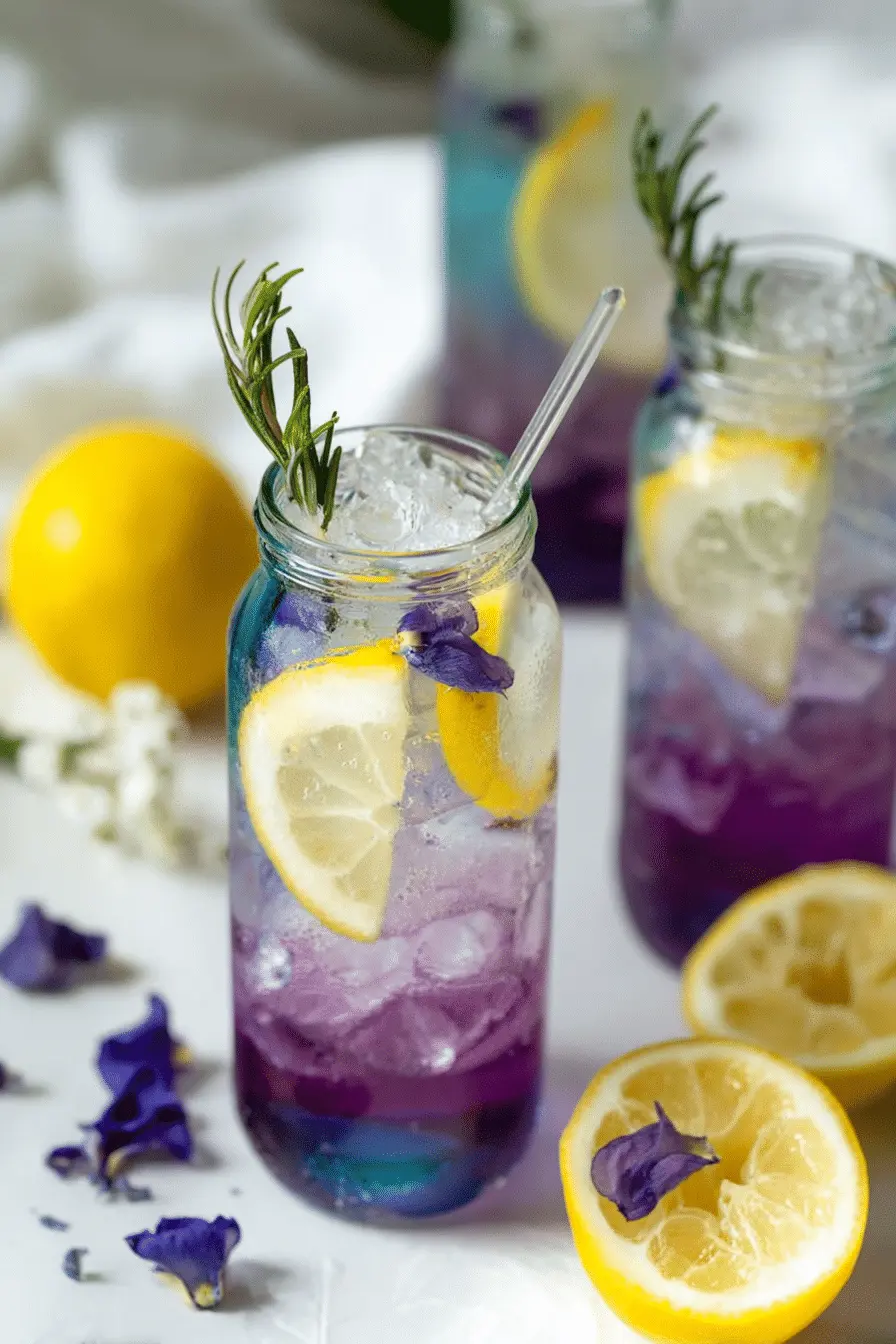
The Color-Changing Butterfly Pea Tea Lemonade My Guests Always Ask For
- Prep
- 20 min
- Total
- 20 min
- Serves
- 5
- Calories
- 55 kcal
- Protein
- 0.10 g
- Carbs
- 14.00 g
- Fat
- 0.10 g
Introduction
I fell in love with butterfly pea tea lemonade the first time I mixed the deep indigo tea with bright lemon and watched it bloom into a jewel-toned purple. I make it whenever friends drop by because it feels like a small table-side performance: a vivid blue that shifts right before everyone’s eyes. In my kitchen this drink has become my go-to party starter, equal parts show-stopping and thirst-quenching.
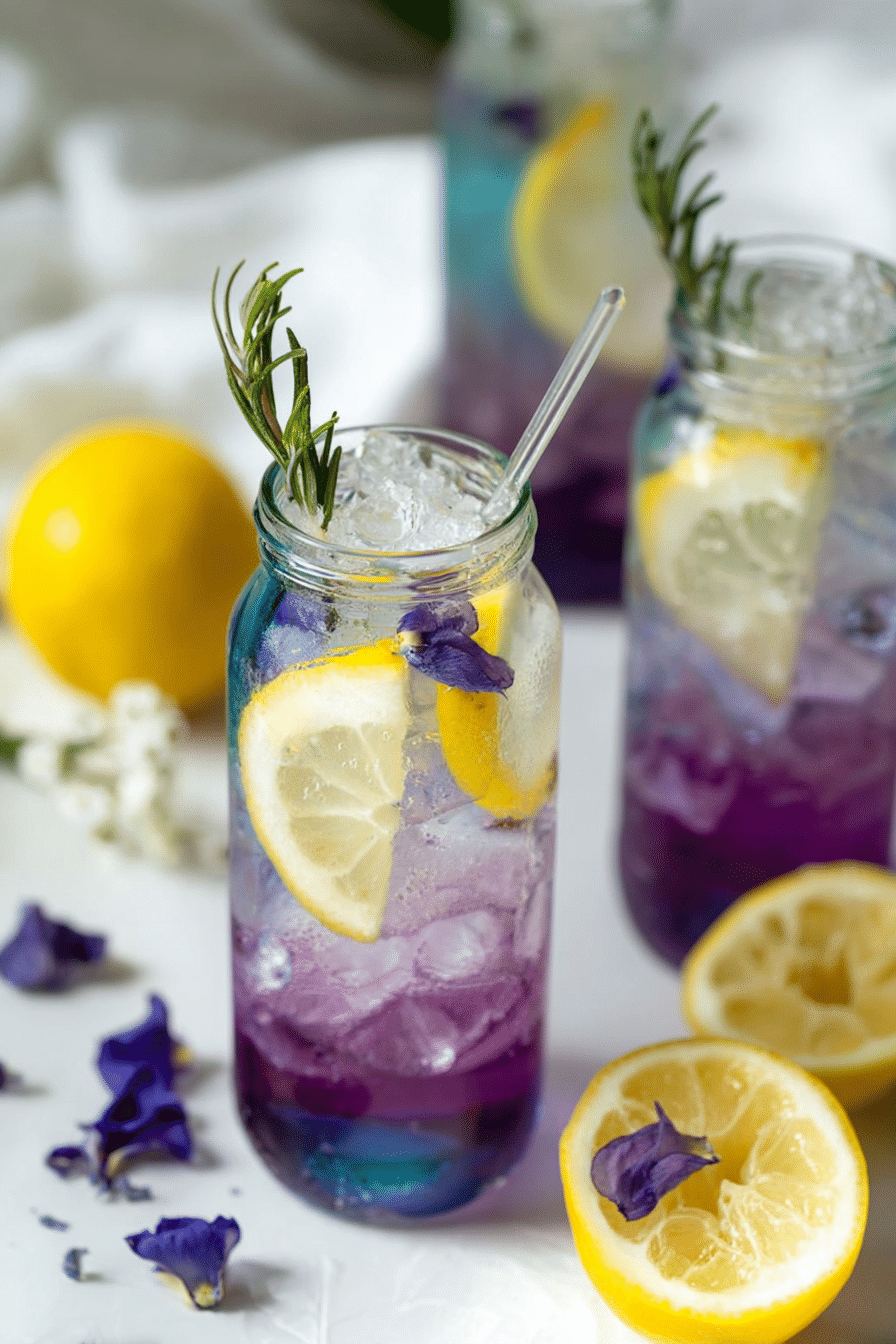
I love the way the aroma sits between floral and green—soft and fragrant rather than heavy. When chilled and lightly carbonated, the tea’s floral notes and the lemon’s bright acidity become more complex: the first sip is brisk and citrusy, then the flutter of floral sweetness lingers. Because the drink is visually arresting, it pairs easily with a variety of party foods and creates a real focal point on a drink table.
Over the years I’ve learned how to scale this for crowds, what to prepare ahead of time, and how to keep the blue intense until the moment you serve. There are also genuine health perks to mention: the tea is rich in anthocyanins (natural antioxidants) and has traditionally been used in Southeast Asia as a calming botanical. Nutritionally, a standard serving is light—around 55 kcal—so it’s a lively, lower-calorie option compared with heavier cocktails or sweet sodas.
Below I’ll walk you through everything you need, the science behind the color change, crowd-friendly variations, service tips to keep the blue bold, clear step-by-step directions for making it, and ways to store and pair the drink for events.
Why Butterfly Pea Tea Lemonade Is Perfect for Parties
The visual transformation—blue shifting to purple with acid—is the quickest way to get guests talking. That color change comes from plant pigments and creates an immediate moment of wonder; on a buffet, this drink reads like a centerpiece.
Flavor-wise, the tea’s faintly floral, slightly earthy profile balances lemon’s bright acidity and the sweetness you choose, making it a versatile match for finger foods, grilled fare, and light desserts. It’s simultaneously refreshing and fragrant, so it lifts heavier dishes without competing with them.
There are measurable health benefits associated with butterfly pea flowers. They contain anthocyanins, antioxidants that can help neutralize free radicals. Traditional herbal uses suggest mild calming effects and digestive support. In practical party terms, this means you’re serving a drink that looks festive, tastes refreshing, and offers a gentle functional boost.
Sensory note: picture the glass—ice clinking, clear bubbles rising through a delicate purple, lemon perfume on the rim—and imagine guests leaning in to ask how the color changed.
Everything You Need for Butterfly Pea Tea Lemonade
Below I list the essential ingredients and equipment you should have on hand. I’ll also call out simple substitutions so you can adapt the drink to dietary needs and the scale of your event.
- Butterfly pea flowers (dried or fresh) – The source of that brilliant blue pigment; higher-quality flowers yield cleaner color and a gentler floral note.
- Water – For steeping the tea; use filtered water for the clearest flavor and color.
- Lemon (juice) – Provides the acid that brightens flavor and triggers the color change.
- Sweetener (your choice) – Balances acidity; use whatever your guests prefer—see the variations section for options.
- Soda water or sparkling water – Adds lift and a refreshing finish; soda water keeps the drink light and party-friendly.
- Ice – Large cubes or spheres dilute more slowly and keep the color striking longer.
- Garnishes (lemon slices, mint, rosemary) – For aroma and visual polish; a sprig of rosemary or a lemon wheel makes each glass pop.
- Equipment: teapot or heatproof pitcher, fine mesh strainer, pitcher for serving – A fine strainer gives a bright, clear tea; a large pitcher helps you mix for a crowd.
If you want a complementary citrus option on your menu, consider adding a peach lemonade to your lineup for variety:
For another delicious drink idea, consider our peach lemonade recipe to complement your event's menu.
The Science Behind the Color Change: pH, Lemon, and What to Expect
Butterfly pea flowers contain anthocyanin pigments that respond to pH. In neutral or slightly alkaline water they appear deep blue; as you add acid (like lemon juice), the pigments rearrange chemically and the color shifts toward violet and pink. The result is a live chemistry demonstration you can easily stage at your party.
For presentation, small additions of acid create subtle purple tones while larger amounts shift the drink to magenta. If you want a dramatic on-the-spot change, serve the blue base and provide small carafes of lemon for guests to add themselves—watch the contented surprise when each pour alters the hue.
From a practical standpoint: avoid adding strong acids aside from citrus if you want predictable color control; acids like vinegar will produce similar pH-driven changes but bring unwanted flavors. Also note that extremely alkaline additions (baking soda) will intensify the blue but are not recommended for consumption.
Sweeteners, Mixers, and Flavor Twists for Crowd-Friendly Variations
Here are crowd-tested variations that suit different palates and dietary choices. I like to offer one sparkling and one still option at parties so guests can choose.
- Granulated sugar or simple syrup – Classic and neutral-tasting; simple syrup dissolves instantly into cold liquids, making it ideal for large batches.
- Honey or agave – Adds floral or caramel notes—use sparingly so the tea’s color and lemon shine through.
- Coconut sugar or maple syrup – For a deeper, richer sweetness that pairs well with grilled food; expect a darker hue.
- Stevia or erythritol – For sugar-free options that keep calories low without changing acidity.
- Herbal additions – Fresh mint, basil, or a thin slice of ginger can add complexity and aroma to each glass.
- Alcoholic variations – Light-bodied spirits like gin or vodka work best; add them sparingly so the tea remains the star.
If you're after a fruity twist that stays crowd-friendly, try combining blueberry tea with lemon for a summery spin:
If you're looking for a refreshing twist, try our blueberry tea lemonade for a fruity variation that's perfect for summer gatherings.
Pro Tip for Butterfly Pea Tea Lemonade: Keep the Blue Bright When Serving a Crowd
- I brew a concentrated blue tea and chill it thoroughly before adding lemon—cold tea retains color better and lets you control dilution.
- Keep citrus separate until the moment of serving if you want to preserve the pure blue; let guests add lemon themselves for a visual trick.
- Use simple syrup instead of granulated sugar when mixing a cold batch so the sweetener blends without gritty residue.
- Serve soda water on the side or add it last to each glass to keep bubbles lively and to prevent premature color shifts from moving acids into the full pitcher.
- Use large ice cubes to reduce quick dilution; if you expect long service, consider pre-chilled glasses to keep the drink colder, longer.
How to Make Butterfly Pea Tea Lemonade (Step-by-Step)
- Steep the butterfly pea flowers in warm water until the liquid reaches a deep blue. If you want a stronger color, increase the steeping time or flowers used.
- Strain the tea through a fine mesh strainer into a pitcher and cool it completely in the refrigerator before proceeding.
- Stir in your chosen sweetener while the tea is still slightly warm or use simple syrup so it dissolves evenly; adjust sweetness to taste.
- Add lemon juice to taste; for a dramatic table-side change, hold back some lemon and let guests add it themselves. After adding lemon, the color will shift toward purple.
- When serving individual glasses, fill each glass halfway with ice and pour the lemon-sweetened tea over the ice, then top with soda water for a sparkling finish.
- Garnish with lemon wheels, mint sprigs, or a small rosemary sprig for aroma and contrast.
If you want a basic lemonade foundation to build on before introducing butterfly pea tea, start here:
Start your lemonade journey with our easy homemade lemonade recipe before adding butterfly pea tea for a unique flavor experience.
- Troubleshooting I’ve used in my kitchen:
- If the color looks weak, I steep longer or add a few more flowers rather than increasing lemon—extra acid won’t deepen blue.
- If the drink tastes flat, I check acidity and sweetness balance; a little more lemon or a touch more sweetener usually fixes it.
- If the tea becomes too purple after lemon, I serve it over more ice or top with a splash of chilled soda water to lighten the hue.
How to Store, Make Ahead, and Serve Butterfly Pea Tea Lemonade
Make the blue tea base up to two days ahead and keep it refrigerated in a sealed container. Add lemon and soda just before serving to maintain the brightest possible color and the freshest fizz. If you must pre-mix for a crowd, combine tea, lemon, and sweetener and keep it chilled; store soda separately and add at service.
For a quick serving setup at parties, set up a small beverage station: chilled pitcher of blue tea, a carafe of lemon juice, a bottle of chilled soda water, ice in a separate bin, and garnishes in small bowls. This allows guests to customize and gives you control over the visual effect.
Leftovers without soda can be refrigerated for up to 48 hours—stir before serving, as some separation may occur. Don’t freeze the lemonade if you want to preserve the delicate floral notes; ice cube trays made from the tea make beautiful additions to other drinks or desserts.
Pairing Ideas and Alternative Uses for Butterfly Pea Flowers
Pair the lemonade with light, fresh foods: grilled shrimp skewers, cucumber salads, goat cheese crostini, or citrus-marinated chicken. The drink’s citrus backbone and floral undertone complement both savory and sweet hors d’oeuvres without overwhelming them. For an alternative cool pairing, serve alongside a cucumber mint cooler for contrast:
Serve your butterfly pea tea lemonade alongside a refreshing cucumber mint cooler for a delightful drink pairing.
Butterfly pea flowers are also versatile as a natural colorant in syrups, cocktails, gelées, pancakes, and rice dishes—use them wherever you want a natural blue to purple pigment. In Southeast Asia, particularly Thailand and Malaysia, the tea is part of herbal traditions and festive drinks, often enjoyed for its color and mild, calming properties.
Visualize a table: pitchers of deep blue, bowls of lemon wheels, sprigs of mint, and small signs inviting guests to pour their own citrus. It’s an attractive, interactive station that fits casual backyard gatherings and more formal receptions alike.
Frequently Asked Questions
Can I use fresh butterfly pea flowers instead of dried ones?
Absolutely! Fresh butterfly pea flowers can be used in place of dried ones. Just make sure to use a sufficient amount to achieve the desired color and flavor.
What can I use instead of granulated sugar?
You can substitute granulated sugar with honey, agave syrup, or any sweetener of your choice, adjusting the amount to taste.
How can I make this drink sugar-free?
To make a sugar-free version, use a sugar substitute like stevia or erythritol, or simply reduce the amount of sweetener to your liking.
How long can I store butterfly pea tea lemonade?
You can store the prepared butterfly pea tea lemonade in the refrigerator for up to 2 days. Just remember to stir well before serving, as some separation may occur.
What are some good garnish ideas for the drink?
You can garnish your butterfly pea tea lemonade with lemon slices, fresh mint leaves, or a sprig of rosemary for an added visual appeal and flavor!
Recipe Card
The Color-Changing Butterfly Pea Tea Lemonade My Guests Always Ask For
- Prep
- 20 min
- Total
- 20 min
- Serves
- 5
- Calories
- 55 kcal
- Protein
- 0.10 g
- Carbs
- 14.00 g
- Fat
- 0.10 g
Ingredients
- 3 cupswater ((warm))
- 1/3 cupgranulated sugar
- 1/2 cupdried butterfly pea flowers ((or fresh))
- 1/3 cuplemon juice
- 3 cupsice
- 3 cupssoda water
- —lemon and rosemary for garnishes ((optional))
Instructions
- 1
Pour the water into a cup. Add the butterfly pea flowers and stir or soak for a few minutes. If the color isn't strong enough, add more flowers.
- 2
Strain the butterfly pea tea with a mesh strainer.
- 3
Add the sugar to the butterfly tea and use a spoon to stir until fully dissolved.
- 4
Mix the lemon juice with the sweetened butterfly pea tea.
- 5
Fill glasses with ice. Pour the butterfly pea lemonade over the ice, up to about half of each glass. Fill the rest of each glass with soda water and enjoy right away.
You might also like
Reviews
Be the first to review this.