

I cook this cabbage ginger noodle bowl when the week runs long and I want something fast, warm, and reliably satisfying. In my kitchen it’s become a go-to: it takes almost no time, the cleanup is minimal, and the bright ginger aroma tells everyone dinner is ready. I like that it feels fresh without a lot of fuss — and that it stretches to feed leftovers the next day.
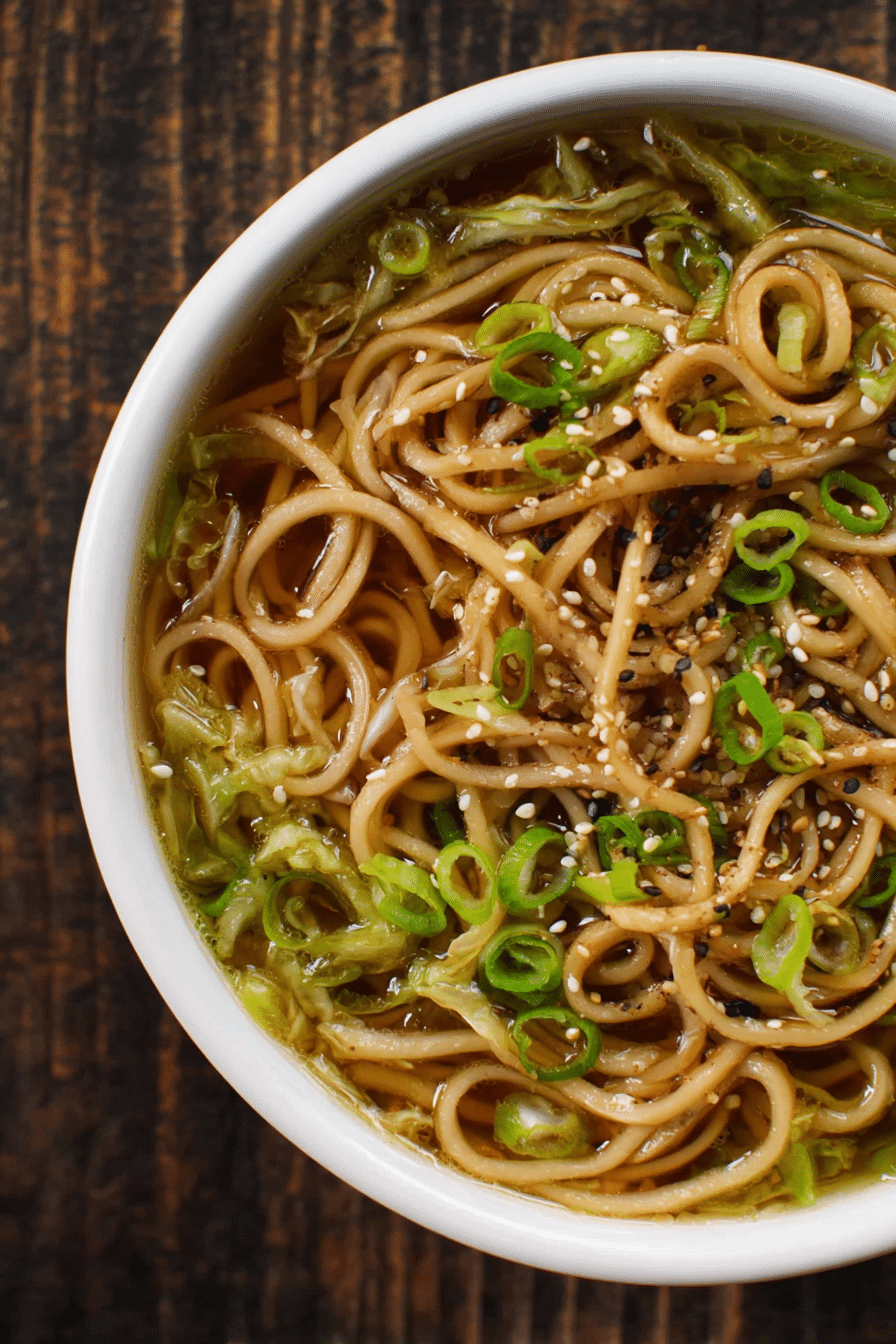
I first started making this when I had limited time and pantry staples to work with. The combination of a simple miso-soy broth, fresh ginger, shredded cabbage, and quick-cooking noodles gives me both comfort and brightness. I often keep a piece of ginger in the freezer so I can grate it straight from frozen — it saves a step on hectic nights.
One thing I learned the hard way: timing matters. The noodles should be tender but still springy and the cabbage should keep a little bite. Overcook either and the bowl loses its texture. I’ll walk you through the few timing tweaks that make this feel like dinner, not reheated takeout.
Why Cabbage Ginger Noodles Work for Busy Weeknights
This recipe is built for speed and simplicity. Prep and cook time together are about 20 minutes, so it fits into the time between getting home and getting to the table. You only need a handful of ingredients, many of which are pantry staples, so there’s little prep work and fewer trips to the store.
Visually and aromatically it punches above its weight: the pale green ribbons of cabbage, the bright flecks of scallion, and the steaming bowl scented with fresh ginger make it feel like more than a quick meal. The technique focuses on efficient layering of flavor — sauté aromatics, add miso and soy for umami, then simmer noodles and cabbage briefly — so you get great taste without fuss.
Everything You Need for Cabbage Ginger Noodles
Below are the ingredients and tools that keep this recipe accessible. I’m not listing exact measurements here — the technical recipe card will handle quantities — but I’ll explain why each item matters and what you can swap in a busy week.
- Olive oil – A neutral cooking oil for sautéing aromatics; use a neutral vegetable oil if you prefer.
- Scallions – Use both the white part for cooking and the green tops for a fresh finish.
- Garlic – Adds savory depth; minced or pressed works fine.
- Fresh ginger – The star for fragrance and sharpness; don’t substitute powdered ginger here.
- Soy sauce – Provides salty umami; swap tamari for gluten-free needs.
- Brown miso – Adds rounded, savory complexity; white miso is a milder alternative.
- Vegetable broth – Builds a flavorful base faster than water; use low-sodium if you want control over salt.
- Noodles – Quick-cooking ramen-style noodles are traditional for speed; you can use other thin noodles but adjust cooking time.
- Napa cabbage – Cabbage brings crunch and bulk; other leafy greens can be used but will change texture.
- Sesame oil and seeds – Finish the bowl with a nutty note and a bit of texture.
- Optional toppings – Chili flakes, chili paste, tofu, or cooked chicken for extra protein or heat.
- Tools – A medium stock pot or deep skillet, a sharp knife for shredding cabbage, and a grater for ginger make the job faster.
The Secret to Tender Cabbage and Springy Noodles
- Cut cabbage into thin ribbons so it softens quickly while keeping some bite. Thicker pieces need longer cooking; aim for shreds that wilt in a few minutes.
- Start aromatics (scallions, garlic, ginger) on medium-low heat so they become fragrant without browning too fast; this draws out flavor into the oil.
- Add noodles to a simmering broth rather than a rolling boil to prevent them from falling apart; stir gently right after adding to separate strands.
- Time the cabbage addition so it cooks just until tender-crisp. If you like softer cabbage, add it earlier; if you prefer crunch, add it in the last minute or two.
- Finish with a small drizzle of sesame oil off the heat to preserve its aroma and keep the noodles springy.
Why Fresh Ginger (Not Powder) Changes the Flavor
Fresh ginger delivers volatile oils and a bright, peppery edge that powdered ginger doesn’t replicate. Those fresh compounds give the broth an immediate lift and a warming, slightly spicy perfume that sits in the background as you eat.
Fresh ginger also has anti-inflammatory compounds like gingerols; while I don’t use health claims to sell a meal, it’s a nice bonus for a home-cooked bowl. To prep, score the skin with the edge of a spoon and scrape it off — it’s faster and wastes less than peeling with a knife. Then grate or mince fine so it disperses every bite.
How to Make Cabbage Ginger Noodles (Step-by-Step)
- Heat your oil over medium-low and add trimmed, chopped scallions (save the green tops) with minced garlic and grated fresh ginger. Cook, stirring occasionally, until fragrant — about a couple of minutes.
- Stir in soy sauce and miso, scraping any bits from the pan so they dissolve and flavor the base.
- Pour in broth and a splash of water, bring to a gentle boil, then reduce to a simmer. Add your quick-cook noodles to the simmering liquid and stir once to separate them.
- After the noodles have cooked most of the way, add shredded cabbage and simmer until both the noodles and cabbage reach your preferred texture; this usually takes just a few more minutes.
- Remove from heat and stir in a small amount of sesame oil. Divide into bowls and top with sesame seeds, the reserved scallion greens, and chili flakes or paste if you like heat.
Pro Tip for Cabbage Ginger Noodles: Meal-Prep & Add-Ins That Keep Well
- Make a larger batch of the broth base (ginger, garlic, miso, soy, broth) and refrigerate for up to 3 days; it speeds dinner to a five-minute assembly.
- Add quick proteins that reheat well: cubed tofu, canned chickpeas, or shredded rotisserie chicken fold into the bowl without extra hands-on time.
- Vegetables that hold up in the fridge — shredded carrots, thinly sliced bell pepper, or bok choy — work well as make-ahead add-ins.
- Pack noodles and broth separately if you’re taking this for lunch; combine and heat together to avoid soggy noodles.
- Writer note: generate the Pro-Tips, Troubleshooting, and Variations sections as bulleted lists for high scannability.
How to Store and Reheat Cabbage Ginger Noodles
Store leftovers in an airtight container in the refrigerator for up to three days. If you’ve mixed noodles with broth, expect the noodles to soak up liquid; storing components separately helps keep texture. Freezing isn’t ideal for the noodles — the texture changes when thawed, but you can freeze the broth with aromatics for later use.
To reheat, warm gently on the stovetop with a splash of water or broth to loosen the sauce, or microwave in short bursts, stirring between intervals. Add a fresh drizzle of sesame oil and fresh scallions after reheating to revive the aroma and brightness.
Health Benefits of Cabbage, Ginger, and Noodles
Cabbage is a low-calorie vegetable that’s a good source of vitamin C and vitamin K, which support immune function and bone health respectively. Ginger contains gingerols, compounds studied for anti-inflammatory and digestive-supporting properties. Choosing whole-grain or higher-fiber noodles increases the dish’s fiber and micronutrient profile compared with refined options, making it a more balanced weeknight choice.
Serving suggestions: finish bowls with sesame seeds, sliced scallion greens, and a spoonful of chili paste if you like heat. For extra protein, top with cubed tofu or shredded cooked chicken. This dish is quick, delicious, and satisfying on those busy nights when you want a warm, home-cooked meal without a lot of hands-on time.
Frequently Asked Questions
How long does it take to make cabbage ginger noodles?
This dish is quick to prepare! It takes about 20 minutes from start to finish.
Can I use another type of noodle instead of ramen?
Absolutely! Feel free to substitute with your favorite noodles, just adjust the cooking time based on the type you choose.
What can I add to cabbage ginger noodles for extra protein?
You can add tofu, chickpeas, or even cooked chicken for an extra boost of protein!
How should I store leftover cabbage ginger noodles?
Store leftovers in an airtight container in the refrigerator for up to 3 days. Reheat in the microwave or on the stovetop.
Is there a gluten-free option for cabbage ginger noodles?
Yes! You can use gluten-free noodles and ensure your soy sauce is labeled gluten-free for a delicious gluten-free dish.
Cabbage Ginger Noodles
Ingredients
Method
- In a stock pot, heat olive oil over medium-low heat. Trim the ends off the scallions and chop through the light green stem. Save the dark green tops for topping. Add the scallions to the pot with the garlic and ginger. Cook, stirring occasionally for 2 to 3 minutes until the garlic and ginger is fragrant. Add in the soy sauce and miso, stirring up any pieces of scallion stuck to the bottom.
- Measure in the vegetable broth and water. Bring to a boil, reduce to a simmer, and add in the ramen noodles. Cook for 4 minutes then add in the cabbage. Cook for another 4 to 5 minutes until the ramen and cabbage is tender. Stir in the sesame oil, remove from heat, and divide into 2 bowls. Serve with a sprinkle of sesame seeds, chili flakes (if desired), and scallions.