

I always reach for fresh cherries the moment they appear at the market, and this Cherry Tabbouleh Salad is my favorite way to use a big bowl of them. In my kitchen it brightens backyard dinners, pairs beautifully with simply grilled fish, and keeps well enough for quick lunches during busy summer weeks. The contrast of sweet cherries with parsley and mint is what keeps me coming back to this salad.
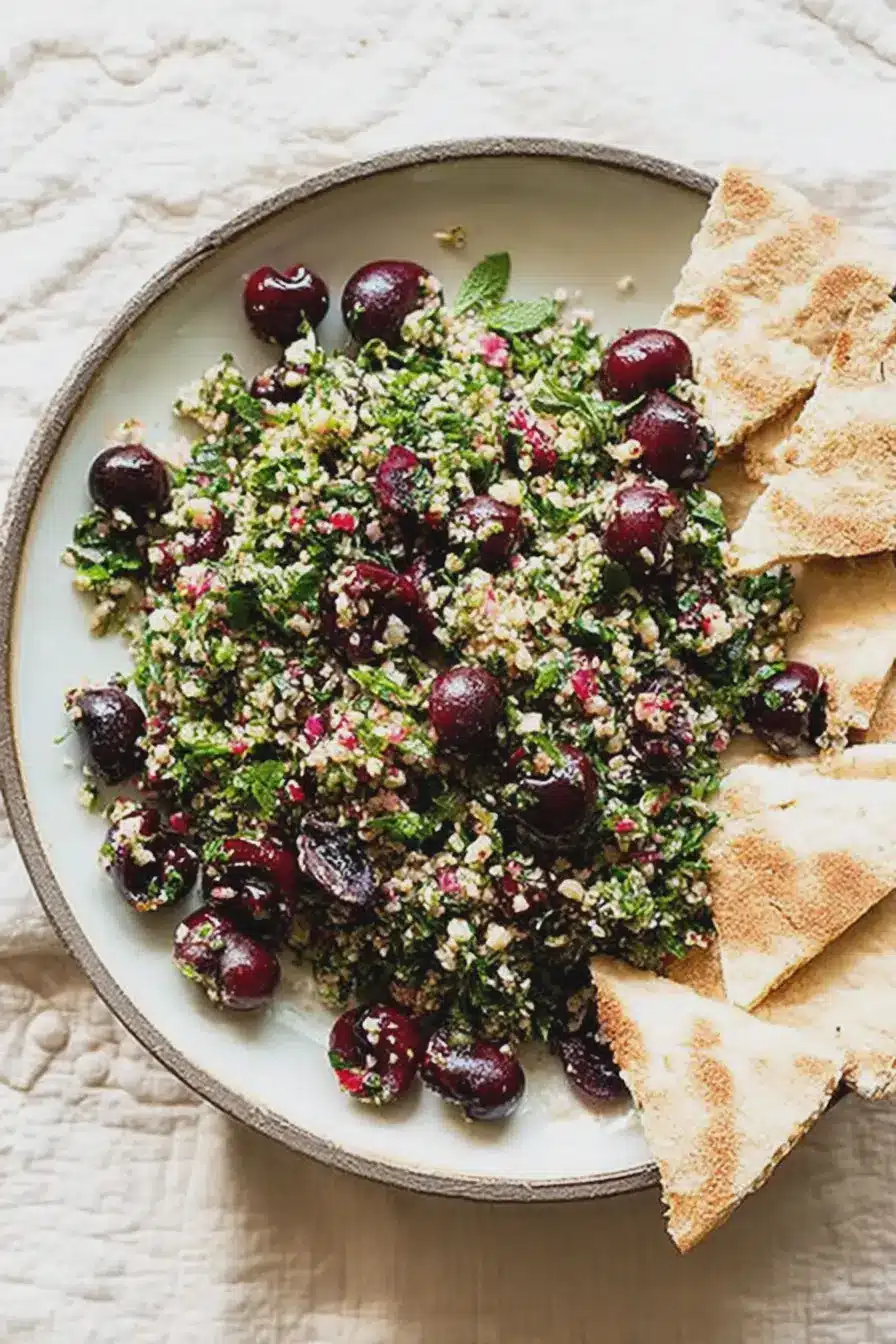
What I love about this recipe is how fast it comes together: minimal hands-on time, no complicated cooking, and a result that feels intentionally composed. The herbs should smell bright and green, the bulgur bring a gentle chew, and the cherries add pops of juicy sweetness — a combination that reads like summer on a plate.
Over the years I’ve learned small handling tricks that keep the herbs vibrant and the cherries intact — I’ll share those below so you get the texture and color I aim for every time. This salad is naturally plant-forward, nutrient-dense, and adaptable if you have dietary preferences or seasonal fruit to swap in.
Why Cherry Tabbouleh Salad Is the Summer Salad Health-Conscious Eaters Love
This salad is visually striking: bright green herbs, specks of red cherries, and the warm, nutty tone of grain. That color alone signals a variety of phytonutrients. Cherries bring natural sweetness without refined sugars, which makes this a satisfying side or light main that supports balanced eating.
Sensory notes matter here — inhale the fresh parsley and mint, feel the slight chew of the bulgur, and enjoy the gentle burst when you bite into a cherry. It’s quick to prepare, fits easily into meal prep routines, and works well for summer gatherings when you want a healthy, crowd-pleasing option.
Everything You Need for Cherry Tabbouleh Salad
Below I explain the ingredients conversationally so you understand the role each plays and how to swap things if needed. You’ll also want a large bowl for tossing and a sharp knife to get those herbs fine and even.
- * Bulgur – The chewy, slightly nutty grain base that soaks up lemon and oil; quick to hydrate and gives structure.
- * Fresh parsley – The backbone of tabbouleh; provides a bright, grassy flavor that balances the fruit.
- * Mint – Adds a cool lift; use sparingly so it complements rather than overpowers.
- * Scallions – Mild onion flavor and crunch; they blend into the salad without sharpness.
- * Lemon juice – Primary acid for brightness and to control sweetness from the fruit.
- * Extra-virgin olive oil – Provides silkiness and helps coat the grains and herbs.
- * Salt and pepper – Simple seasoning to make flavors sing; adjust to taste.
- * Fresh cherries – The seasonal star: sweet-tart fruit that offers color, moisture, and natural sugars.
Why Cherries Work in Tabbouleh — Flavor and Nutritional Benefits
Cherries contribute vitamins (notably vitamin C), antioxidants like anthocyanins, and anti-inflammatory compounds that support recovery after activity and general wellness. Their sweet-tart profile creates a pleasing counterpoint to the herb-forward flavors of classic tabbouleh.
From a flavor perspective, cherries add a bright fruity note that pairs especially well with lemon and mint; from a health perspective they increase the salad’s antioxidant density without adding processed sweeteners. If you can smell the fresh herbs mingling with the fruit before serving, you’re on the right track.
Choosing the Right Grain: Bulgur vs. Quinoa (and When to Swap)
Bulgur gives a light chew and absorbs dressing quickly without getting mushy, which is why it’s traditional here. Quinoa is a good gluten-free alternative with a slightly fluffier bite and a neutral flavor that lets the cherries and herbs stand out.
Use bulgur when you want that classic tabbouleh texture and a faster, no-cook hydration method. Choose quinoa if you need a gluten-free option or want extra protein. If you’d like further grain inspiration, consider trying a Mediterranean-style grain bowl that also showcases quinoa and bulgur for different textures and nutrition profiles.
Sensory focus: notice how bulgur’s chew contrasts with the pop of cherries versus quinoa’s delicate, springy texture.
The Secret to Bright, Herb-Forward Tabbouleh Texture
Achieving a cohesive, herb-forward tabbouleh is about knife work, timing, and gentle handling. Here’s how to keep everything bright and balanced:
- Finely chop parsley and mint so their oils disperse throughout the salad and you taste herbs in every bite.
- Hydrate the bulgur just enough so it’s tender but still has tooth; you want it to absorb lemon and oil without becoming paste-like.
- Fold cherries in at the end to preserve their shape and juices; overmixing will break them down and make the salad watery.
How to Make Cherry Tabbouleh Salad (Step-by-Step)
- Place the grain in a large bowl and add hot water to hydrate it briefly; stir in fresh lemon juice to start building flavor while the grain softens.
- While the grain rests, finely chop the parsley and mint and thinly slice the scallions — aim for an even, fine chop so the herbs distribute well.
- After the grain has softened, drain any excess if needed and return it to the bowl; add the herbs and scallions and toss to combine so the herb oils mingle with the grain.
- Drizzle in extra-virgin olive oil, season with salt and pepper, and fold the cherries in gently so they stay whole and colorful.
- Serve immediately for maximum herb brightness, or cover and chill briefly so the flavors meld; if chilling, give it a quick toss before serving to redistribute dressing.
For a complementary side at a summer meal, try serving this with a fresh summer slaw with peaches and parsley to continue the theme of seasonal fruit and bright herbs.
Pro Tip for cherry tabbouleh salad: Balancing Sweetness and Acidity
- I taste a small spoonful of the dressing with cherries before seasoning the whole bowl; if the cherries are very sweet, I add more lemon to keep the salad lively.
- If the salad tastes flat, a pinch more salt will bring out the fruit and herb flavors immediately.
- Try a splash of a mild vinegar in place of some lemon if you want a different acid profile; start small and adjust to your preference.
Troubleshooting
- If the herbs look wilted after chilling, I refresh them by folding in a handful of freshly chopped parsley just before serving.
- Too watery from broken cherries? I drain off excess liquid and add a touch more grain or extra herbs to rebalance texture.
- If the flavor is too tart, a small drizzle of honey or a sweeter fruit addition will round it out — I only do this sparingly to keep the salad light.
How to Store, Make-Ahead, and Serve Cherry Tabbouleh Salad
To keep the salad fresh, store it in an airtight container in the refrigerator and handle cherries gently to avoid bruising. This makes it easy to prepare elements in advance and assemble quickly.
- Make the grain and chop the herbs a few hours ahead and keep them separate; combine and dress just before serving for peak freshness.
- Store leftovers in a sealed container in the fridge for several days; the herbs will mellow over time but the salad remains tasty for quick lunches.
- For serving at gatherings, arrange the salad on a platter and add whole cherries and herb sprigs on top as garnish for eye appeal.
When serving, consider adding a light cucumber dill salad for extra freshness and flavor contrast to round out your spread.
Variations and Dietary Swaps
- Swap bulgur for quinoa to make the salad gluten-free and slightly higher in protein; the texture will be softer and more delicate.
- Add chopped toasted nuts (almonds or pistachios) for crunch and healthy fats.
- Substitute cherries with diced peaches or sliced plums if cherries aren’t in season — both keep the sweet-tart balance.
- For more ideas that echo this fresh Mediterranean profile, try a Mediterranean chickpea salad that offers similar bright flavors and hearty texture.
Cultural Background of Tabbouleh and Cherries’ Innovative Twist
Tabbouleh originates from Levantine cuisine and traditionally emphasizes parsley, bulgur, and lemon. My version keeps the spirit of tabbouleh — herb-forward and grain-based — while adding seasonal fruit to introduce a modern, summer-ready twist.
I respect the dish’s origins by maintaining its core techniques (fine chopping, balanced acid, simple oil) while using cherries as a way to refresh the salad for contemporary palates and seasonal availability. It’s a respectful update that celebrates both tradition and seasonality.
Frequently Asked Questions
Can I use another grain instead of bulgur for this recipe?
Absolutely! You can substitute bulgur with quinoa or couscous. Just keep in mind the cooking times and to adjust the water accordingly.
How long will leftovers last in the fridge?
Leftovers can be stored in your refrigerator for about 3-4 days. Just make sure to keep it in an airtight container.
Can I prepare Cherry Tabbouleh Salad in advance?
Yes, you can make it a few hours ahead of time. Just cover and chill it in the refrigerator to allow the flavors to meld beautifully.
What can I use if I don’t have fresh cherries?
If cherries aren’t available, you can substitute them with other fruits like diced peaches or pitted sliced plums for a similar sweet and tart flavor.
Is this salad suitable for vegans?
Yes, Cherry Tabbouleh Salad is completely vegan! It’s made with fresh vegetables and fruit, making it a healthy option for everyone.
Cherry Tabbouleh Salad
Ingredients
Method
- Place the bulgur in a large bowl. Add the hot water and stir to combine. Then stir in the lemon juice. Let stand for about 10 minutes.
- Add the parsley, scallions, and mint to the bowl with the bulgur and stir to combine. Drizzle in the olive oil and add the salt and black pepper, stirring to combine. Fold in the cherries.
- The tabbouleh can be served immediately. Or covered and chilled in your refrigerator for several hours before serving.
- Leftovers can be stored in your refrigerator for 3-4 days.