

I make this couscous on nights when I want something fast, flavorful, and a little bit special without spending much time in the kitchen. The mix of glossy dried apricots and peppery pistachios always looks pretty on the plate, and the lemon zest keeps it bright so it never feels heavy.
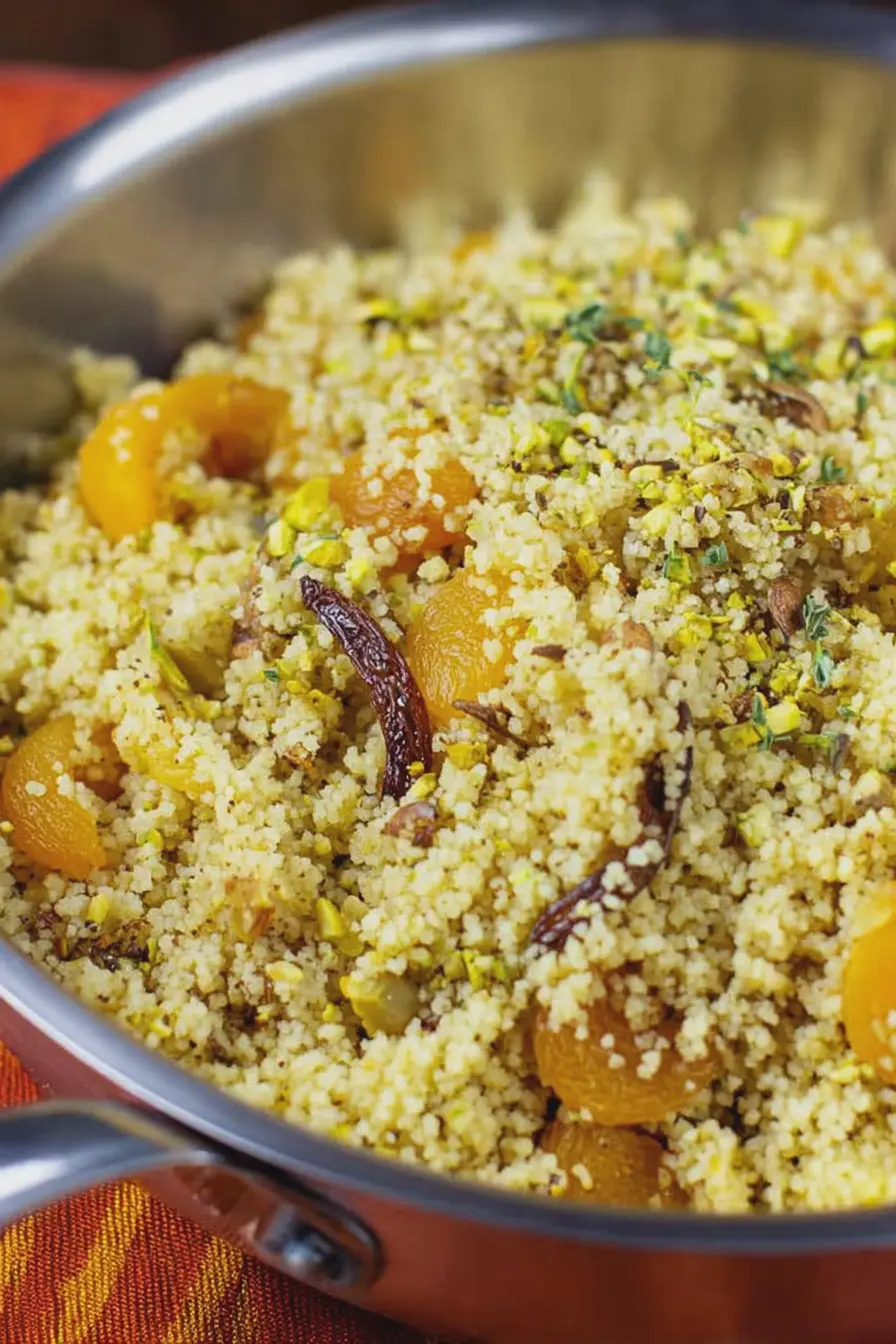
It’s also a practical choice: quick enough for a weeknight but pretty enough for guests. I often toss leftovers with a handful of greens and a squeeze of lemon for an easy lunch the next day.
In my kitchen this recipe lives in rotation because it’s forgiving. You can swap the broth, the nuts, or the fruit and still end up with something satisfying. The smell while it cooks—warm toasted nuts and a bright lemon scent—signals that dinner is nearly ready.
Why this couscous with apricots and pistachios is perfect for busy cooks
Why this couscous with apricots and pistachios is perfect for busy cooks
This dish takes about twenty minutes from start to finish, which makes it ideal when you need a fast side that still looks like effort. The ingredients are common pantry items, and timing is forgiving so you can pay attention to your main course without babysitting the grain.
It’s versatile: serve it as a side with grilled meat or fish, or bulk it up into a main by adding chickpeas, roasted vegetables, or shredded chicken. The glossy apricots and bright lemon zest make it look festive on the plate, so you can bring it to a potluck or weeknight table with equal ease.
Everything You Need for Couscous with Apricots and Pistachios
Keep these staples on hand and you’ll be able to make this any night. I explain purpose and substitutions so you can adapt based on what you have.
- * Oil – Used to sauté the onion and toast the couscous and nuts; olive oil or a neutral oil both work.
- * Onion – Adds a sweet-savory base; shallots work too for a milder flavor.
- * Pistachios – Provide crunch and color; swap for almonds, walnuts, or sunflower seeds if needed.
- * Dried apricots – Give sweet, chewy pops; dried cranberries or chopped dried figs are good alternatives.
- * Couscous – The main grain; if you need gluten-free, use a certified gluten-free rice or millet pilaf instead.
- * Broth or water – Adds moisture and depth; use vegetable broth to keep it vegetarian or water if you prefer a lighter base.
- * Lemon zest – Brightens the whole dish; lemon juice can be added at the end for extra tang.
The Secret to Light, Fluffy Couscous
Texture comes down to three simple things: the right amount of hot liquid, a short rest, and a gentle fluff. When the liquid hits the toasted couscous it steams the grains rather than boiling them into mush. Letting it sit covered gives the steam time to finish cooking each grain evenly.
Once the resting time is over, use a fork to separate the grains. I like to fluff by lifting and turning rather than stirring vigorously—this preserves the airy texture. If the couscous feels sticky, a small splash of neutral oil or a tiny pat of butter stirred in helps separate the grains without making it greasy.
Why Toasting the Couscous and Nuts Makes a Big Difference
Toasting brings out the natural oils in the nuts and gives the couscous a faintly nutty, toasty backdrop. The Maillard reaction—the same browning that happens when you sear meat—creates deeper, more complex flavors in both the nuts and the grain.
The aroma while toasting is warm and nutty; it’s one of those smells that makes the kitchen feel cozy. Toasting also helps prevent clumping: dry-toasted couscous absorbs liquid more evenly, which gives you a lighter final texture.
Best Ingredient Swaps for Allergies, Diets, and Seasonal Produce
- Gluten-free option: use a cooked grain blend like quinoa, millet, or a pre-cooked gluten-free couscous alternative.
- Nut-free option: swap pistachios for toasted pumpkin seeds or toasted sunflower seeds for crunch.
- Vegan option: replace chicken broth with vegetable broth or water.
- Fruit swaps: use dried cranberries, cherries, or chopped dried figs depending on season and sweetness preference.
- Seasonal fresh additions: stir in chopped cucumber, cherry tomatoes, or fresh herbs just before serving for brightness and texture.
How to Make Couscous with Apricots and Pistachios (Step-by-Step)
- Heat oil in a large skillet or saucepan over medium heat. Add thinly sliced onion and cook, stirring often, until translucent and just starting to brown.
- Add roughly chopped pistachios and cook a couple more minutes until they smell toasty and take on a bit of color.
- Stir in the dry couscous and diced dried apricots. Toast the couscous, stirring almost constantly for a few minutes so the grains don’t burn—this builds flavor and helps prevent clumping later.
- Pour in hot broth or water and add lemon zest. The mixture will steam immediately; give it a quick stir to distribute everything, then cover the pan and remove it from heat.
- Let the pan sit, covered, for about five minutes. Remove the lid and fluff the couscous gently with a fork to separate the grains. Taste and adjust salt, or add a squeeze of lemon juice if you want more brightness.
For a delicious main course to pair with your couscous, try our easy apricot glazed chicken.
Pro Tip for couscous with apricots and pistachios: Toast then Rest for Fluffiness
Pro Tips:
- Toast the couscous and nuts in the pan before adding liquid—this adds flavor and reduces clumping.
- Use hot broth or water so the pan seals and the steam cooks the grains evenly.
- Allow the couscous to rest, covered, off the heat for the full resting time—rushing this step makes it gluey.
Troubleshooting (from my kitchen):
- If the couscous is gummy, it was likely stirred too much while steaming; next time, let it rest untouched and then fluff once.
- If it’s underdone, add a small splash of hot water, cover briefly, then fluff again.
- If the nuts burn, lower the heat and toast in smaller batches or remove them a touch earlier—they continue to color in the hot pan.
How to Store, Reheat, and Turn This Side into a Main
- Storage: Cool to room temperature, then transfer to an airtight container and refrigerate. It keeps well for up to four days.
- Reheating: Warm gently in a skillet with a splash of water or broth, stirring briefly to revive the grains; avoid the microwave for best texture, or use short bursts and fluff between cycles.
- Turn into a main: Add roasted vegetables, canned chickpeas or white beans, or shredded leftover roasted chicken. Stir in fresh herbs and a drizzle of olive oil just before serving.
If you’re looking for more ideas on how to use couscous, check out our Mediterranean-style grain bowls for inspiration.
Nutritional Information for Health-Conscious Consumers
A typical portion of this couscous dish is moderate in calories and offers a balance of carbohydrates, plant-based protein, and healthy fats from the nuts. For a rough guideline, one serving is around 328 kcal with a mix of carbohydrates and protein that keeps the dish satisfying without being heavy.
Pistachios contribute heart-healthy monounsaturated fats, protein, and minerals like potassium and magnesium. Dried apricots add fiber, potassium, and small amounts of vitamin A. Using broth instead of plain water increases savory depth without many extra calories, and finishing with lemon zest adds Vitamin C and a bright lift.
To make it lighter, increase the proportion of vegetables (like roasted zucchini, bell peppers, or greens) and reduce the grain portion. To boost protein and make it a full meal, mix in beans, lentils, or shredded cooked poultry.
For detailed insights into the health benefits of this dish, refer to our Nutritional Information for Health-Conscious Consumers.
Frequently Asked Questions
Can I use a different type of nut instead of pistachios?
Absolutely! You can swap pistachios for almonds, walnuts, or even pecans based on your preference or availability.
How can I make this recipe vegan?
To make it vegan, simply replace the chicken broth with vegetable broth or water and ensure you are using oil that fits your dietary preferences.
What can I serve with couscous as a main dish?
This couscous pairs wonderfully with grilled chicken, fish, or roasted vegetables. It also works well as a base for a salad or bowl.
How long will leftovers last in the fridge?
Leftover couscous can be stored in an airtight container in the fridge for up to 4 days. Just reheat it gently before serving.
Can I add fresh fruits or vegetables to this dish?
Yes! Fresh herbs, diced cucumbers, or cherry tomatoes can add a refreshing touch. Feel free to experiment based on what you like.
Couscous with Apricots and Pistachios
Ingredients
Method
- In a large skillet or saucepan, heat oil on medium heat. Add sliced onions and cook, stirring often, until they are transparent and begin to brown.
- Stir in the chopped pistachios and continue to cook for a few minutes.
- Add the couscous and dried apricots. This will toast the couscous which adds to the flavor and prevents it from being clumpy when done. Stir almost constantly for a few minutes so that the couscous grains do not burn on the bottom of the pan.
- Add the broth/water and lemon zest. Since the couscous is hot, the broth will start to boil immediately. Give it a quick stir and put the cover on the pan.
- Remove from the heat and let stand for 5 minutes. After the 5 minutes, fluff the couscous with a fork.