
The Game-Day Wings I Make: Crispy Korean Gochujang Honey Wings
- Prep
- 60 min
- Cook
- 30 min
- Total
- 100 min
- Serves
- 4
- Calories
- 710 kcal
- Carbs
- 86.00 g
Introduction
I’ve cooked these gochujang honey wings more times than I can count for parties and game nights — they’re the dish people fight over at the end of the night. In my kitchen they consistently disappear first because the exterior crunch gives way to a juicy interior, and the sauce balances sweet, tangy, and a steady background heat that pulls guests back for one more wing. I love that you can prep most of the work ahead of time, which keeps the entertaining stress-free.
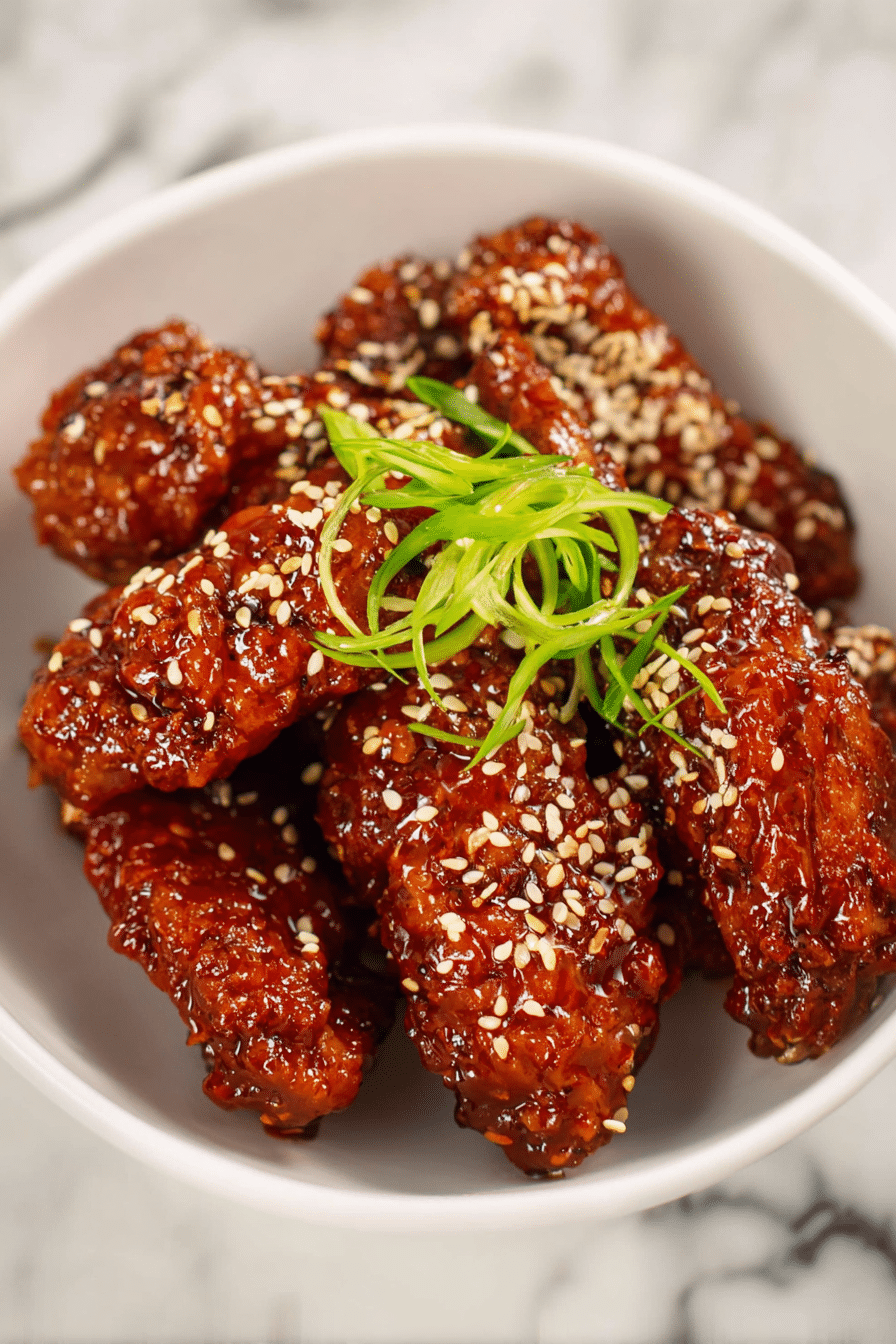
One time I made a double-batch for a house full of friends and still ran out — that’s how reliably crowd-pleasing these are. I’ve learned the small things that make a big difference: a short salty-marinate, a textured dredge that creates craggy bits, and a quick second fry to turn the coating brittle in the best way. The aroma of garlic and toasted gochujang hitting hot oil is one of my favorite party smells.
These wings travel well from prep to service: you can marinate ahead, dredge and rest until it’s time to fry, and finish them hot right before serving. If you want a lighter option or a gluten-free version for guests, I include swaps below so everyone at your gathering gets to dig in.
Everything You Need for Crispy Korean Gochujang Honey Wings
Below I list what I keep on hand for these wings — tools and pantry staples that make consistent results easy. I also point out sensible swaps for dietary needs and ways to prep efficiently. If you're looking for more ways to enjoy wings, check out our grilled chicken wings recipe for delicious alternatives.
- Chicken wings – Choose fresh wings with skin on for the best texture; split into drumettes and flats if not pre-cut.
- Salt & pepper – Simple seasoning to draw moisture out briefly and build flavor into the skin.
- Fresh garlic & ginger – Grated or minced for the marinade and again in the glaze; they provide aromatic depth.
- Soy sauce (or tamari) – Adds savory umami; use tamari for a gluten-free option.
- Sesame oil – For a hint of toasted, nutty flavor in the marinade.
- Flour & cornstarch – The combination creates a light, shatter-crisp coating; swap the flour with a gluten-free flour blend as needed.
- Baking powder – Small amount helps puff and crisp the coating.
- Gochujang – The spicy-salty backbone of the sauce; if you can’t find it, a mix of miso and chili paste works in a pinch.
- Honey & brown sugar – Provide sticky sweetness that balances the chili heat; maple or agave can replace honey for different sweetness profiles.
- Rice vinegar – Gives the glaze a bright counterpoint to the sugar and chili.
- Neutral frying oil – For deep frying; use a high smoke-point oil like canola, peanut, or sunflower.
- Essential equipment – A deep pot or deep-fryer with a thermometer, a wire rack for draining, a rimmed sheet pan for resting, and a wide sauté pan for glazing.
The Secret to the Perfect Crispy Texture
- Use a dual-dry mix (flour plus cornstarch) — the flour gives structure while cornstarch yields a glassy, crisp finish.
- Add a small amount of baking powder to the dredge to promote tiny bubbles in the coating that crisp up in the oil.
- Work any leftover marinade into the dry mix so you create clumps and craggly bits that fry into extra crunchy nooks; those little ridges hold sauce beautifully.
- Let the coated wings rest on a rack for a few minutes before frying so the coating sets — this helps prevent slippage in the hot oil.
- Maintain steady oil temperature. If the oil is too cool, the coating absorbs oil and goes greasy; too hot and the exterior burns before the inside cooks. Aim for a consistent frying range and use a thermometer and visual cues (golden color, steady bubbling) to know when to pull the wings.
- When you bite into the finished wing, you should hear a crisp snap and see the glaze cling to the ridges — that’s the texture goal.
Why Double-Frying Works (and How to Do It Safely)
- First fry cooks the meat through at a moderate temperature and renders fat from under the skin; this builds the base structure.
- After a brief rest, the second, shorter fry at similar or slightly higher temperature rapidly dries and crisps the exterior without overcooking the meat.
- Safety tips: never overcrowd the pot (it drops oil temperature), use a long-handled spider or tongs, and keep a thermometer in the oil. Have a fire extinguisher rated for grease fires nearby and never use water on oil.
- Timing cues: the first fry ends when the surface is pale golden and the meat registers done; the second fry is done when the coating is deeply golden and brittle—typically a minute or two. Let wings drain on a rack so they stay airy and crisp.
Simple Sauce Tweaks to Dial Sweetness and Heat
I list variations as bulleted items below so you can quickly choose the direction you want the glaze to go. For a delightful twist, consider adding flavors from our honey garlic chicken to your sauce!
- More heat: increase gochujang or add a pinch of red pepper flakes or a dash of toasted chili oil.
- Less heat: reduce gochujang and up the honey slightly to balance the spice without losing depth.
- Swap sweeteners: maple syrup or agave bring a different floral note compared to honey.
- More tang: add a splash more rice vinegar or a little lime juice to brighten the glaze.
- Deeper umami: stir in a small spoonful of dark miso or a little fish sauce to make the glaze richer.
- Texture play: finish with toasted sesame seeds and thinly sliced green onions for a fresh color contrast and crunch.
How to Make Crispy Korean Gochujang Honey Wings (Step-by-Step)
- Marinate the wings in salt, white pepper, grated garlic and ginger, soy sauce, and sesame oil. I let them sit at least an hour — overnight if I have time — to let the flavors sink in.
- In a large bowl combine your flour, cornstarch, kosher salt, white pepper, and baking powder. Add a touch of the leftover marinade or a splash of water and rub together until you form craggly bits in the mix that will cling to the wings.
- Coat each wing thoroughly in the dredge, packing the mixture onto the skin and leaving no dry spots. Shake off excess and let the wings rest on a rack for about 5–10 minutes to set the coating.
- Heat frying oil to the recommended mid-range temperature for frying. Fry wings in batches so the oil temperature holds steady. The first fry cooks through and should take several minutes until the wings are lightly golden and cooked internally.
- Drain wings briefly on a rack, then return to the hot oil for a quick second fry to crisp the exterior; this step is short — just long enough for the coating to blister and become very crunchy.
- While the wings finish, heat neutral oil in a wide pan over medium heat and sauté garlic, ginger, and gochujang until fragrant. Add soy sauce, brown sugar, honey, rice vinegar, and a splash of water, stirring until the sauce bubbles and the sugar has dissolved into a glossy glaze.
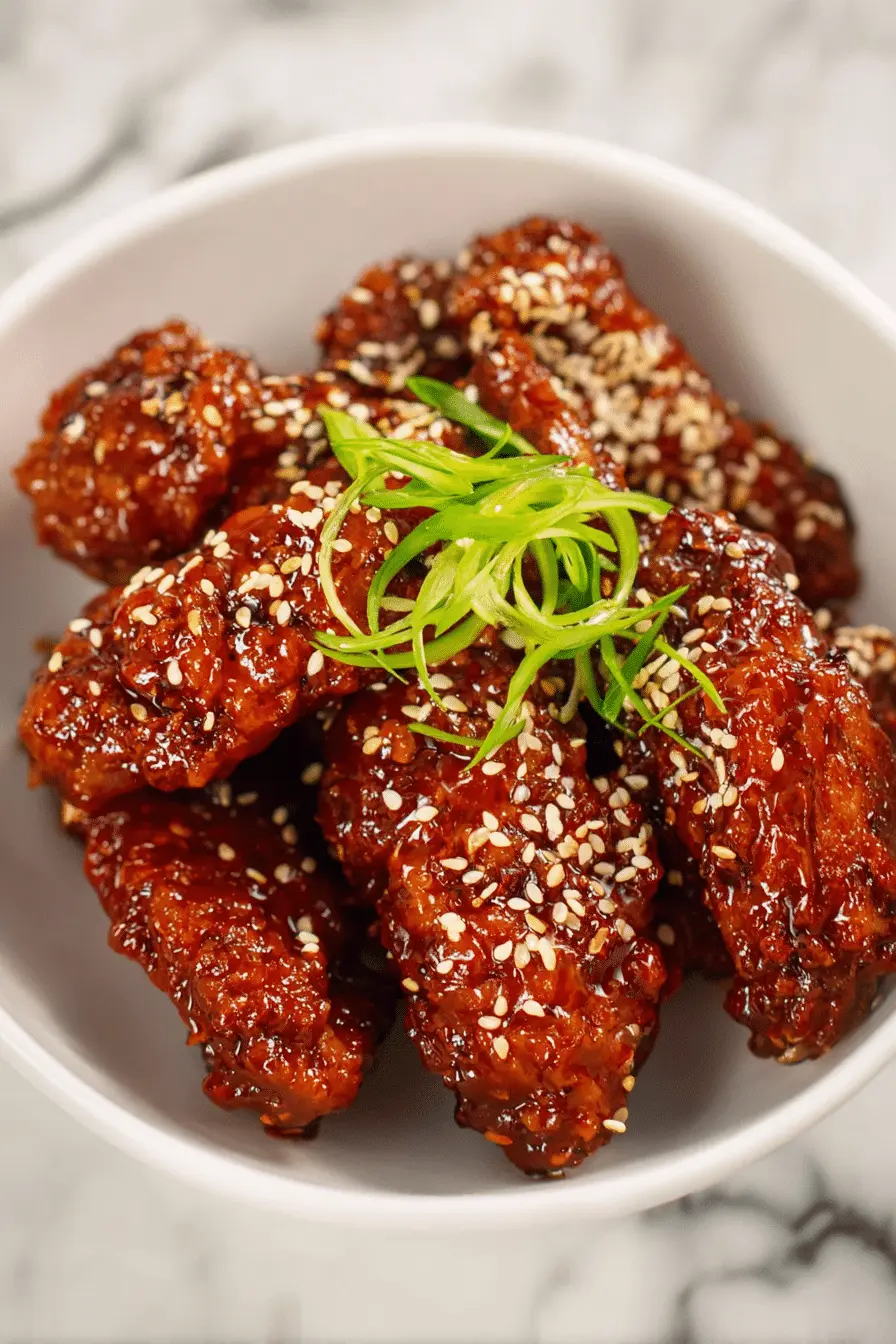
- Toss the hot wings in the glaze until every piece is coated, then serve immediately with sesame seeds and sliced green onion if desired.
Troubleshooting
- If the coating slips off during frying, your dredge was too wet or the oil was not hot enough; let coated wings rest longer and ensure oil reaches the correct temperature before adding wings.
- If wings taste greasy, the oil temperature was too low or the pan was overcrowded; fry in smaller batches and let oil return to temp between batches.
- If the glaze separates or becomes syrupy, lower the heat and whisk — add a little water to loosen if necessary and remove from high heat once glossy.
- If wings are dry inside, shorten the first fry slightly and rely more on the second, quick high-temp crisp to finish exterior without overcooking.
I list Pro-Tips, Troubleshooting, and Variations as bulleted lists above for quick scanning while you're prepping.
Pro Tip for Crispy Korean Gochujang Honey Wings: Oven, Air-Fryer & Gluten-Free Swaps
- Oven method: Roast on a wire rack set inside a rimmed sheet pan at a high temperature until the skin is deeply golden and crisp, flipping halfway; finish under the broiler if you need extra color.
- Air-fryer method: Lightly oil the coated wings and air-fry in a single layer, turning once, until crisp — you’ll get great results without deep frying.
- Gluten-free swaps: Replace regular flour with a 1:1 gluten-free blend and use tamari instead of soy sauce; ensure your cornstarch is pure and not cross-contaminated if cooking for strict gluten-free guests.
- Make-ahead tip: Marinate and dredge the wings the day before, then refrigerate on a rack; bring to near room temperature before frying to avoid temperature shock in the oil.
How to Store, Reheat, and Scale These Wings for a Crowd
These wings are ideal for parties because they scale easily and you can stagger work so you're not cooking everything at once. Pair these wings with classic game day snacks like buffalo chicken dip for an ultimate feast!
- Storage: Cool wings completely, then store in an airtight container in the refrigerator for up to three days. For longer storage, freeze on a sheet tray then transfer to freezer bags.
- Reheating: To bring back crispiness, reheat in a preheated oven on a wire rack at a moderate temperature until warm and the coating is refreshed; avoid microwaving if you want to keep them crunchy.
- Scaling: Multiply the recipe in batches for frying, and stage the finishing — fry, hold briefly on a rack in a low oven to keep warm while you finish remaining wings, then toss everything in the glaze just before serving.
- Make-ahead strategy: Prepare the sauce ahead and reheat gently; you can also par-cook (first fry) wings, chill, then finish fry and glaze near serving time to minimize last-minute work.
Frequently Asked Questions
Can I use frozen chicken wings for this recipe? Yes, you can use frozen chicken wings! Just make sure to thaw them completely before marinating and cooking.
What can I substitute for gochujang if I can't find it? If you can't find gochujang, you can substitute it with a mix of miso paste and chili paste, or use a different hot sauce for a similar flavor profile.
How can I make these wings less spicy? To reduce the spiciness, you can use less gochujang in the sauce, or mix it with some honey to balance the heat.
Can I bake these wings instead of frying? Yes! To bake, preheat your oven to 425°F (220°C) and bake the coated wings for about 40-45 minutes, flipping halfway through, until they are crispy.
What is the best way to store and reheat leftovers? Store leftovers in an airtight container in the fridge for up to 3 days. To reheat, place them on a baking sheet and heat in a 350°F (175°C) oven for about 10-15 minutes.
Recipe Card
The Game-Day Wings I Make: Crispy Korean Gochujang Honey Wings
- Prep
- 60 min
- Cook
- 30 min
- Total
- 100 min
- Serves
- 4
- Calories
- 710 kcal
- Carbs
- 86.00 g
Ingredients
- 2 lbschicken wings
- 1 tspsalt
- 1/2 tspwhite pepper
- 4 clovesgarlic (grated)
- 1 inchginger (grated)
- 2 tbspsoy sauce
- 1 tspsesame oil
- 1 cupflour
- 1 cupcornstarch
- 1/2 tbspkosher salt
- 1/2 tbspwhite pepper
- 1/2 tbspbaking powder
- 2 tbspneutral oil
- 1/4 cuphoney
- 1/4 cupgochujang
- 2 tbspbrown sugar
- 2 tbspsoy sauce
- 3 clovesgarlic (grated)
- 1/2 tbspginger (grated)
- 2 tbsprice vinegar
- 2 tbspwater
Instructions
- 1
Marinate chicken wings in salt, white pepper, garlic, ginger, soy sauce, and sesame oil for 1-2 hours or overnight for best results.
- 2
In a large bowl, add flour, cornstarch, kosher salt, white pepper, and baking powder. Mix until combined, then add marinade or 1-2 tbsp of water into the seasoning mix. Rub the mix together with the liquid to create craggily bits.
- 3
Coat your wings into the seasoning mix, packing it well. Shake off excess and let rest on a sheet pan for 5-10 minutes while heating oil.
- 4
Fry the wings in batches at 350°F for 6-8 minutes. Remove and set on a rack or paper towel to drain.
- 5
Fry the wings a second time at 350°F for 1-2 minutes for extra crispiness.
- 6
In a large pan, heat 2 tbsp of neutral oil. Add garlic, ginger, and gochujang. Fry for 30-45 seconds until fragrant. Add soy sauce, brown sugar, honey, rice vinegar, and water. Cook until bubbling and sugar is dissolved.
- 7
Add wings to the sauce and toss to coat. Serve immediately & enjoy!
You might also like
Reviews
Be the first to review this.