

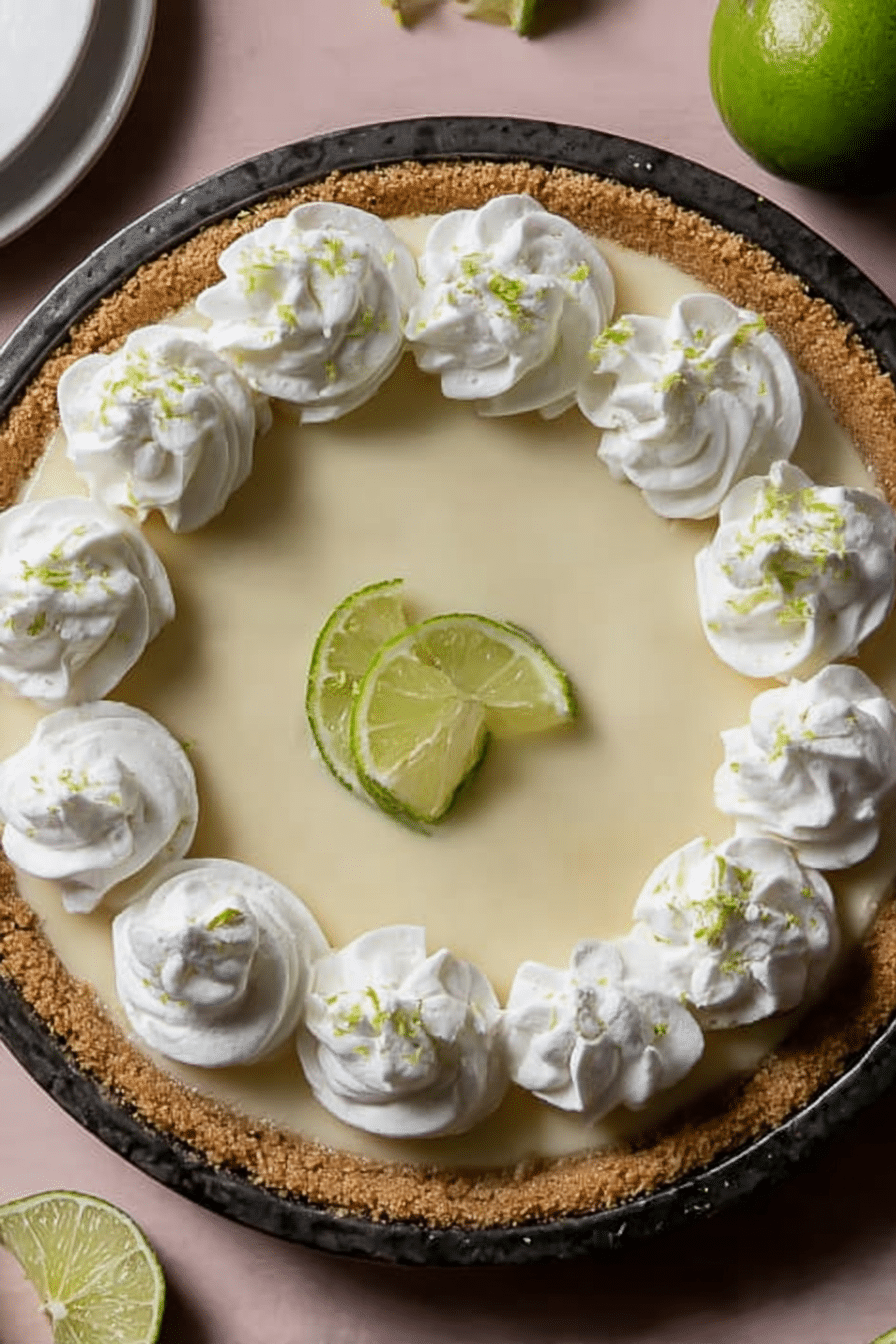
I fell in love with key lime pie the first time I sat at a sun-bleached counter in a small coastal café and watched a server bring out a slice that smelled like citrus and salt air. In my kitchen, that memory guided every tweak I made—more zest for brightness, gentler mixing to keep the filling silken, and careful chilling so each slice holds its shape but still melts on the tongue.
I like to think of this recipe as a little piece of Key West that you can make any afternoon. The bright, tart aroma of fresh limes fills the kitchen as you zest and squeeze; the warm, buttery scent of a baked graham crust follows shortly after. These are small, sensory rites that turn simple pantry ingredients into a dessert that feels like a slow, sunlit afternoon.
Over the years I learned which shortcuts leave the pie flat and which small rituals make it sing: use fresh juice and zest when you can, handle the egg yolks with a light touch, and give the pie plenty of time to cool and chill. Below I walk through the why and how—history, tools, technique, and a handful of practical tips I use in my kitchen to get the texture just right.
Why This Traditional Key Lime Pie Recipe Feels Like Key West
Key lime pie is rooted in the Florida Keys, where small, tart key limes once grew in abundance and home cooks turned simple provisions into a bright, celebratory dessert. Driving that connection is the specific acidity and floral nose of key limes; they are thinner-skinned and more aromatic than the common Persian lime. In a coastal setting, a slice of pie carries more than flavor—it carries a memory of heat on your skin, the sound of gulls, and the slow pace of life by the water.
When you make this pie in your kitchen, aim to recreate that sense of place: zest the limes over the mixing bowl so the oils fall into the filling, and let the aroma lift as you fold the custard. I often think of the first time I tasted a truly classic slice and try to honor that balance of tang and creaminess—bright but not sharp, velvety but not heavy.
Everything You Need for Traditional Key Lime Pie
Use fresh ingredients where they make the biggest difference: fresh lime juice and zest for flavor, chilled cream for whipped cream stability, and a good-quality graham crumb for the backbone. Also line up a few simple tools so the process is easy and relaxed.
- Fresh key limes (or regular limes if needed) – For the truest aroma and acidity; bottled juice won’t offer the same floral top notes.
- Egg yolks – The richness and structure of the custard come from yolks; gentle handling keeps the texture smooth.
- Sweetened condensed milk – Sweetness and silk without long cooking; it interacts with lime juice to thicken the filling.
- Graham cracker crumbs and butter – The crust provides contrast: buttery, toasty, and slightly crunchy.
- Heavy cream – Chilled for a stable, airy whipped topping that tames the tartness of the filling.
- Citrus zester – A fine zester preserves the oils in the peel for aroma; larger graters pull bitter pith.
- 9-inch pie plate and a rack – Even heat and a cool resting spot help the filling set properly.
- Electric mixer or whisk – For smooth yolks and stable whipped cream; a whisk works if you prefer a more hands-on rhythm.
If you’re also a fan of citrus desserts, check out our delicious Lemon Bars for another refreshing option, or try the bright contrast of a Lemon Blueberry Tart for a slightly different take.
The Story Behind Key Lime Pie: From Key West to Your Kitchen
Key lime pie’s origins are part folklore and part practical cooking: early Keys cooks relied on canned milk, portable lemons and limes, and eggs to fashion a no-fuss dessert that kept in a warm climate. As tourism grew, the pie moved from local tables to diners and restaurants, becoming a symbol of the region’s hospitality. Several small eateries and bakeries in the Keys built reputations around their version of the pie—some thicker and custard-like, others lighter and more tart.
The recipe evolved as ingredients and techniques became more widely available, but the heart of the dish remains the same: a nod to a place where citrus meets sea salt, and home cooks turned simplicity into something that felt celebratory. When I serve this pie, I imagine that connection—people laughing at a picnic table with a slice and a cold drink nearby.
The Secret to the Perfect Silky Filling
I learned early on that the texture of the filling comes from temperament: gentle mixing, respect for acidity, and careful temperature control. I personally avoid vigorous beating once the lime juice meets the condensed milk and yolks; that keeps the custard smooth and prevents it from curdling.
- Whisk the lime zest into the yolks first so the zest oils become integrated and fragrant.
- Add the sweetened condensed milk slowly and whisk just until combined—overworking creates air bubbles that can change the set.
- Pour in lime juice gradually while stirring; the acid reacts with the condensed milk to thicken the mixture, so steady, gentle motion keeps the texture glossy.
- Bake at a moderate temperature and watch for visual cues: the edges should be set and the center slightly wobbly; the filling will firm as it cools. I avoid high heat to prevent curdling or cracking.
- Let the pie cool completely at room temperature before chilling; abrupt temperature changes can weep moisture or create a rubbery mouthfeel.
How to Get a Crisp, Tender Graham Cracker Crust
Small decisions in the crust make a big difference: the temperature of the butter you add, how firmly you pack the crumbs, and the bake time all determine whether the crust is pleasantly crisp or disappointingly soggy.
- Use melted but not smoking-hot butter so the crumbs absorb evenly; if the butter is too cool the crust can be dry and crumbly, too hot and it becomes greasy.
- Combine crumbs and sugar thoroughly so there are no lumps; even distribution means even browning.
- Press the crumbs firmly into the pie plate—use the bottom of a measuring cup or a flat object to compact the crust into the sides and bottom for structural integrity.
- Par-bake the crust until it’s golden and fragrant; this step helps the crust resist becoming soggy once the filling is added.
- Cool the crust completely before adding the filling so the custard isn’t subjected to extra steam that softens the crumb.
How to Make Traditional Key Lime Pie (Step-by-Step)
- Preheat the oven so it reaches temperature before the crust goes in; consistent heat gives the best bake.
- Whisk lime zest and egg yolks until slightly thickened and fragrant—this releases citrus oils into the yolks.
- Fold in the sweetened condensed milk gently, then add fresh lime juice while stirring until the mixture looks glossy and slightly thickened; set aside briefly.
- Make the crust by combining graham crumbs, brown sugar, and a pinch of salt; stir in melted butter until the mixture holds when pinched and press into a 9-inch pie plate.
- Bake the crust until golden, then cool to room temperature before pouring in the filling.
- Pour filling into the cooled crust and bake until the edges are set and the center still jiggles slightly; residual heat finishes the set as it cools.
- Cool the pie on a wire rack to room temperature, then refrigerate for at least several hours (overnight is best) before topping with whipped cream and serving.
Pro Tip for Traditional Key Lime Pie Recipe: Chill Before Serving for Best Texture
Pro-Tips, Troubleshooting, and Variations are presented as bulleted lists for quick reference.
- Chill the pie for a minimum of three hours; overnight gives the creamiest, most sliceable texture. Pair this pie with a refreshing glass of homemade lemonade for the ultimate dessert experience.
- For clean slices, run a knife under hot water, dry it, then slice; wipe between cuts.
- Top the pie shortly before serving—if left uncovered in the fridge, whipped cream can weep and lose volume.
How to Store, Make-Ahead, and Easy Variations (GF & Vegan Options)
Plan ahead: this pie is forgiving to make a day early and keeps well with proper chilling. Below are practical storage tips and accessible swaps for dietary needs.
- Storage: Cover the pie loosely with plastic wrap and refrigerate for up to three days to preserve texture and flavor. If you need longer storage, freeze unadorned slices in airtight containers and thaw in the refrigerator before serving.
- Make-ahead: The pie can be completed a day ahead; add whipped cream just before serving to keep it fresh and airy.
- Gluten-free crust: Substitute graham crumbs with crushed gluten-free cookies or gluten-free graham-style crackers and proceed the same way for texture and toasty flavor.
- Vegan option: Use a vegan butter substitute in the crust and a thick, canned coconut cream base in place of sweetened condensed milk—note the flavor will shift toward coconut but the acid of lime still helps the filling set.
- Flavor variation: Add a touch more lime zest to the filling for extra brightness, or fold finely grated lime peel into the whipped cream for a layered citrus aroma.
- If you’re a fan of key lime flavors, try our Key Lime White Chocolate Macadamia Nut Cookies for a delightful twist on dessert.
Frequently Asked Questions
What can I substitute for key lime juice if I can’t find it?
If you can’t find key lime juice, you can use regular lime juice as a substitute. Though the flavor will be slightly different, it will still work well in the recipe.
How long should I chill the pie before serving?
It’s best to chill the pie for at least 3 hours, but refrigerating it overnight will give you the best texture and flavor.
Can I make this key lime pie gluten-free?
Absolutely! Simply replace the graham cracker crumbs with a gluten-free alternative, like crushed gluten-free cookies or crackers.
How do I know when the filling is set?
The filling is set when the edges are firm but the center still has a slight jiggle. It will continue to set as it cools.
Can I make this pie in advance?
Yes! You can make the pie a day or two ahead of time. Just be sure to store it in the refrigerator until you’re ready to serve.
Traditional Key Lime Pie Recipe
Ingredients
Method
- Preheat oven to 350 degrees F.
- Make the Filling: Whisk the lime zest and egg yolks in a medium bowl for 2 minutes. Whisk in the sweetened condensed milk, then the lime juice. Set aside at room temperature to thicken while you prepare the crust.
- Make the Crust: Stir together the graham cracker crumbs, brown sugar, and salt. Drizzle the melted butter over the mixture and toss to combine. Press into a 9-inch pie plate and bake for 10 minutes. Cool.
- Pour the lime filling into the cooled crust and bake until the center is set yet wiggly, about 15-17 minutes. Cool to room temperature, then refrigerate for at least 3 hours or overnight.
- Make the Whipped Cream: Whip the chilled cream until soft peaks form, add the powdered sugar, and vanilla, then whip to stiff peaks. Pipe or spread over the chilled pie.
- Garnish with lime slices and serve. Cover leftovers with plastic wrap and refrigerate for up to 3 days.