
How I Make Roasted Cabbage Wedges with Miso Ginger Scallion Butter
- Prep
- 10 min
- Cook
- 20 min
- Total
- 30 min
- Serves
- 4
- Calories
- 150 kcal
Introduction
I fell for roasted cabbage the first time I let it sit long enough in a hot oven to form true caramelized edges. In my kitchen a modest head of cabbage becomes an elegant side: glossy along the cut faces, tender at the core and edged with a toasty, almost nutty crunch. I love how a simple miso‑ginger scallion butter makes the whole thing sing—an umami wash that feels luxurious without being fussy.
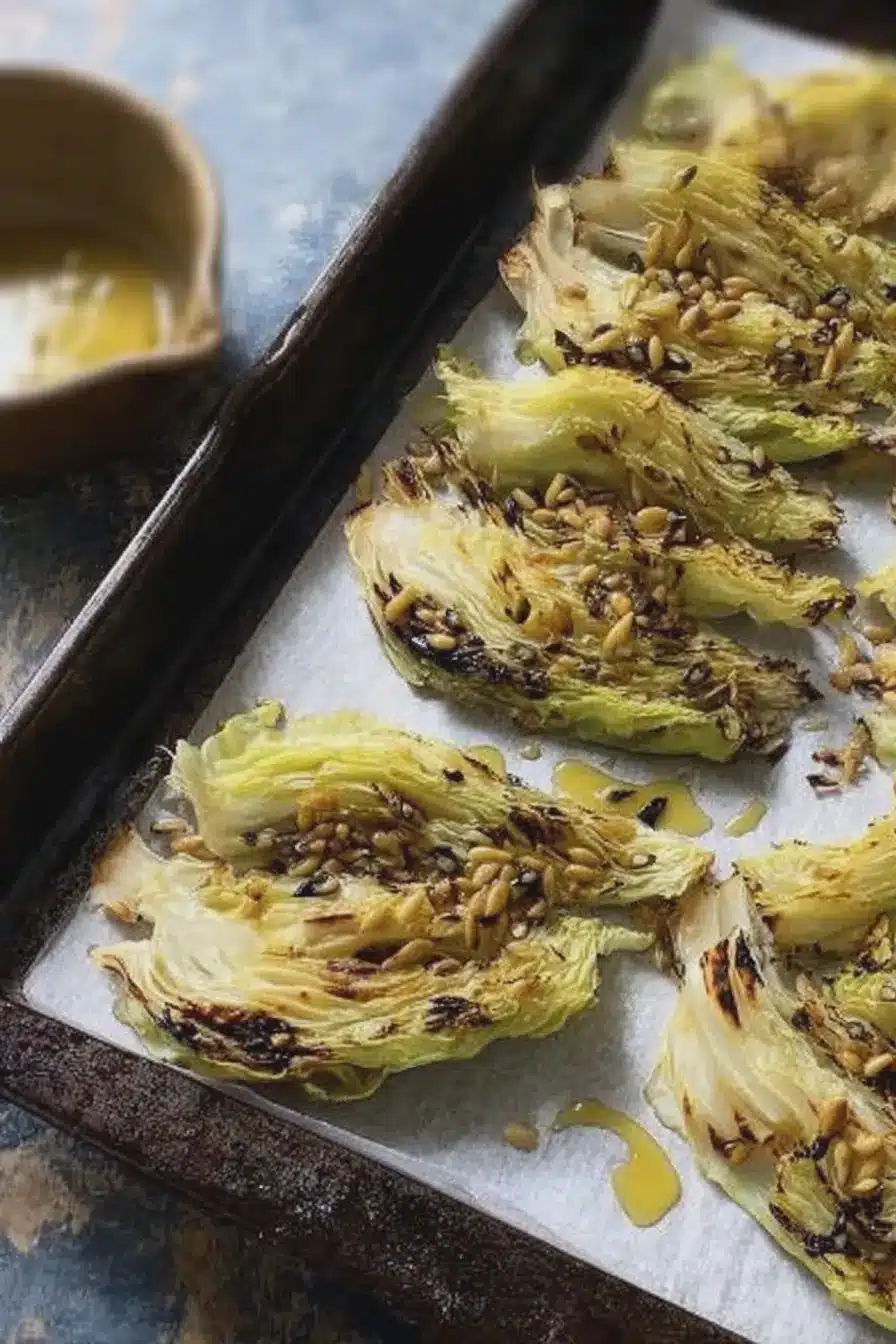
I learned the hard way that the difference between steamed cabbage and beautifully roasted wedges is heat and patience. Once you give the wedges space on a hot pan and leave them alone, the oven does the work: the layers separate just enough to brown while the interior stays silky. While the cabbage roasts, the miso butter comes together in a skillet—scallions soften, ginger brightens, and a little water and vinegar smooth everything into a glossy sauce.
Over the years I’ve refined the components so each element has a job: the oil and high heat coax browning, a touch of sugar (or naturally sweet scallions) balances the miso’s depth, and chopped nuts provide final textural punctuation. Serve these wedges as a striking side with simply grilled fish or as part of a composed vegetable plate—people always notice the color and the aroma before the first bite.
Below I’ll walk through why this dish stands out, the equipment and ingredients I reach for, and precise techniques I use to get reliably crisp, golden edges and a silky miso‑ginger‑scallion drizzle.
Why this Roasted Cabbage Wedges with Miso Ginger Scallion Butter is the Vegetable Side You Should Master
This recipe is more than a way to cook a humble vegetable; it’s a technique that elevates cabbage from supporting actor to centerpiece. Roasted cabbage wedges pair beautifully with roasted or grilled proteins, grain bowls, and bolder sauces because the caramelized sweetness and toasty edges balance richer flavors. Miso and ginger add layered umami and a citrusy warmth that cuts through fat, making the wedges versatile for many cuisines.
Visually, the wedges are striking: the bright interior green softens to a translucent, honeyed hue where the oven has kissed it, while the exposed layers take on a deep bronze. Aromatically, expect a warm, savory perfume—ginger and scallion softened in butter and oil, miso’s savory backbone, and that unmistakable roasted vegetable scent that signals successful browning.
Everything You Need for Roasted Cabbage Wedges with Miso Ginger Scallion Butter
Below I describe each ingredient and how it contributes. I also list the tools that make the technique easier—no fancy equipment required, just choices that help the cabbage brown properly and the butter emulsify.
- Green cabbage – The sturdy head holds its shape through roasting; Savoy or Napa offer more delicate texture if you prefer softer leaves.
- Extra‑virgin olive oil – Coats the wedges to encourage browning and prevent sticking; a neutral oil can be used if you want less olive aroma.
- Kosher salt – Enhances the cabbage’s natural sweetness and helps draw moisture from the surface for better caramelization.
- Scallions – Provide aromatic allium sweetness; the whites soften in the skillet while the greens keep a bright note.
- Butter – Adds creaminess and helps carry the scallion and ginger flavors; use salted if you prefer a finished seasoning lift.
- Fresh ginger – Grated ginger brings a lively, peppery brightness that cuts through the butter and miso.
- Brown sugar – A small touch nudges the Maillard reactions and balances miso’s savory depth; honey or maple work in a pinch.
- Rice vinegar – Brightens and balances the richness of butter and miso, preventing the sauce from feeling flat.
- Water – Smooths the sauce to a spoonable consistency; added gradually to control thickness.
- White or mellow miso paste – The umami backbone that turns butter into a savory sauce; use mellow varieties for subtler saltiness.
- Chopped nuts (pistachios or walnuts) – For crunch and a toasty finish; toasted sesame seeds are a fine alternative.
Equipment that simplifies the process:
- A heavy baking sheet or rimmed sheet pan so wedges get full contact with the hot metal for browning.
- Parchment or a silicone mat to reduce sticking and make cleanup easier.
- A medium skillet for sautéing scallions and finishing the miso butter.
- A sharp chef’s knife to cut uniform wedges so they cook evenly.
If you enjoy other cabbage preparations, you might also like cabbage steaks for a different presentation and texture: cabbage steaks.
The Secret to Perfectly Caramelized, Crisp Edges
- Preheat the oven and the baking surface so the cabbage hits a hot metal; immediate searing prevents steaming and encourages a deep, even brown.
- Cut wedges of uniform thickness so they finish at the same time; leave a bit of core to hold each wedge together but remove excess to avoid a raw center.
- Pat the cut faces dry if the cabbage is wet—moisture on the surface will slow browning and create steam.
- Oil the wedges lightly and rub the oil into the cut faces; this creates a thin film that browns and crisps without frying the cabbage.
- Give each wedge plenty of space on the sheet—crowding causes steam and defeats crisping.
- Leave the wedges alone for most of the roast time; minimal turning lets the Maillard reaction progress uninterrupted and produces reliable crust.
Why High Heat and Minimal Turning Matter for Texture
- High heat intensifies the Maillard reaction—the chemistry that produces toasty, savory compounds and that characteristic browned color.
- When you avoid turning the wedges repeatedly you reduce moisture loss and give the cut surface time to form a sealed, caramelized layer while the interior softens gently.
- The result is a contrast: tender, slightly sweet interiors and crisp, golden exteriors that provide textural interest on the plate and a more concentrated flavor on the browned surfaces.
- Listen for a steady sizzle when the wedges first go in; that sound is a useful cue that you’ve achieved the right surface temperature for browning.
How the Miso‑Ginger‑Scallion Butter Builds Deep Umami in Minutes
The miso butter comes together quickly but there are a few details that determine whether it feels glossy and cohesive or separated and dull. I keep the heat moderate so the scallions soften without burning and the butter melts into a silky base. Adding a little water and rice vinegar loosens the mixture and creates an emulsion when whisked—this keeps the miso integrated and gives the sauce a light, spoonable texture that clings to the cabbage.
- Sauté the scallions briefly in oil until just tender to release their sweetness and aromatics.
- Add butter and grated ginger, allowing the butter to melt and the ginger to bloom in the fat for a minute—this deepens the flavor.
- Whisk in sugar, rice vinegar, and water to adjust balance and consistency; remove from heat before adding miso so the paste doesn’t overcook.
- Finish by whisking the miso into the warm butter off the heat until the sauce is smooth and glossy—this gentle approach preserves miso’s subtleties while creating a cohesive drizzle.
How to Make Roasted Cabbage Wedges with Miso Ginger Scallion Butter (Step‑by‑Step)
- Preheat your oven and position a sheet pan so it becomes very hot; this ensures the cabbage starts browning on contact.
- Trim the cabbage and cut it into even wedges, leaving just enough core to hold each piece together; pat the faces dry so they brown rather than steam.
- Arrange the wedges on the prepared pan in a single layer, rub the cut faces with oil, and season lightly with salt so the surface flavor concentrates as they roast.
- Roast the wedges until edges are deeply browned and the interior yields to a knife—resist the urge to flip often; minimal handling produces the best crust.
- While the cabbage roasts, heat oil in a skillet and soften scallions; add butter and grated ginger, then whisk in brown sugar, rice vinegar, and a little water to create a smooth base.
- Remove the pan from the heat and whisk the miso into the warm butter until silky; keep the sauce warm but not boiling so it coats the cabbage without separating.
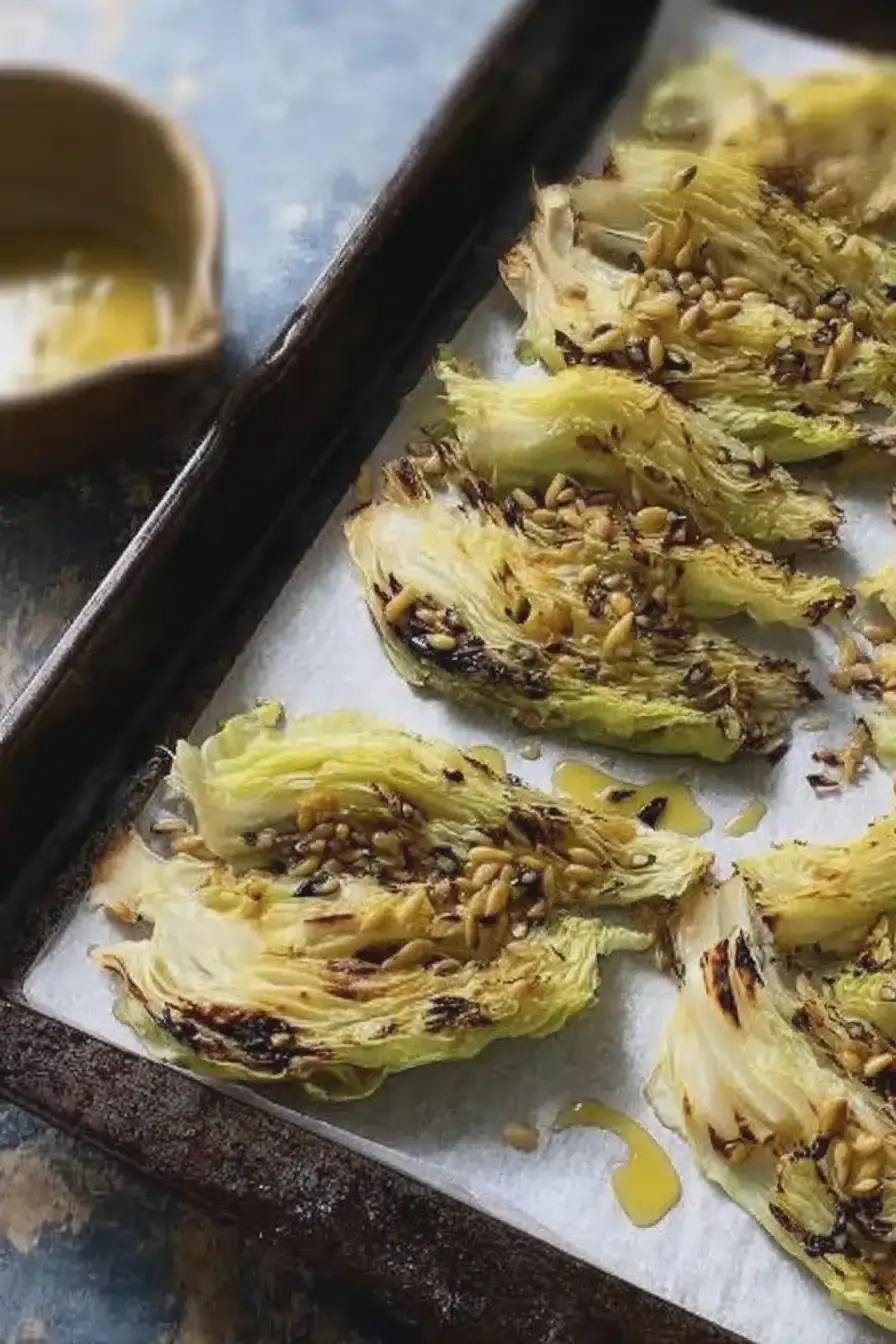
- When the wedges are done, transfer them to a serving platter, spoon the warm miso‑ginger‑scallion butter over the cut faces, and scatter chopped nuts for crunch.
If you're interested in different variations, try our Miso Butter Roasted Cabbage Wedges for another flavorful option.
Pro Tip for roasted cabbage wedges with miso ginger scallion butter: Reheating to Keep Edges Crisp
- I reheat leftovers in a hot oven or under the broiler for a few minutes—this restores crisp edges far better than the microwave.
- If the wedges feel dry, rewarm the miso butter gently and spoon a small amount over them after reheating so the sauce is fresh and glossy.
- For an easy vegetable pairing at dinner, consider serving these wedges with honey roasted carrots— the sweet root notes complement the savory miso beautifully: honey roasted carrots.
- Troubleshooting: If your wedges are steaming instead of browning, I check for crowding, excess moisture on the cut faces, or a baking sheet that isn’t hot enough—correct those and the browning returns.
How to Store, Reheat, and Try Easy Variations
- Storage: Cool wedges completely and store in an airtight container in the refrigerator for up to three days to keep flavors fresh.
- Reheating: Re-crisp in a hot oven on a rimmed sheet or finish briefly under the broiler; warm the miso butter separately and spoon over before serving.
- Variations (bulleted for quick scanning):
- Use Savoy or Napa cabbage for a softer, more delicate texture that roasts faster.
- Swap pistachios or walnuts for toasted sesame seeds or sliced almonds for a different crunch profile.
- For a vegan option, replace butter with a neutral oil and use tahini blended with a splash of soy sauce as a miso substitute.
- If you want a quicker weeknight method, try our simple sautéed cabbage instead— it’s faster but shares many of the same flavor building blocks.
Frequently Asked Questions
Can I use a different type of cabbage for this recipe?
Absolutely! While green cabbage is recommended, you can also use Savoy or Napa cabbage for a different flavor and texture.
Is there a substitute for miso paste?
If you don't have miso paste, you can use tahini or a blend of soy sauce and almond butter for a similar umami flavor.
How do I store leftovers?
Store any leftovers in an airtight container in the refrigerator for up to 3 days. Reheat in the oven for the best texture.
Can I make the miso ginger scallion butter ahead of time?
Yes! You can prepare the miso ginger scallion butter in advance and store it in the fridge. Just warm it slightly before drizzling it over the cabbage.
What can I serve with roasted cabbage wedges?
These roasted cabbage wedges pair well with grilled meats, rice dishes, or as part of a robust vegetable platter.
Recipe Card
How I Make Roasted Cabbage Wedges with Miso Ginger Scallion Butter
- Prep
- 10 min
- Cook
- 20 min
- Total
- 30 min
- Serves
- 4
- Calories
- 150 kcal
Ingredients
- 1 medium headgreen cabbage
- 2 tablespoonsextra-virgin olive oil ((divided))
- 1/2 teaspoonkosher salt (heaping)
- 4scallions ((white and light green parts thinly sliced))
- 1 tablespoonsalted butter
- 2 teaspoonsfinely grated fresh ginger
- 1 teaspoonbrown sugar
- 1 tablespoonrice vinegar
- 3 tablespoonswater
- 1 tablespoonwhite or mellow miso paste
- 3 tablespoonspistachios or walnuts (chopped)
Instructions
- 1
Pre-heat oven to 450 degrees F.
- 2
Cut the cabbage in half through the core. Cut each half into 4 wedges that are about 1 to 1 1/2-inches each. It's ok to leave some core to hold the wedges together, but if there is an excess, just trim it away. Lay the wedges on a baking sheet lined with parchment paper or a silicone baking mat. Drizzle 1 tablespoon olive oil over the cabbage and use your hands to rub it over the surface. Sprinkle the salt over the top.
- 3
Roast until the cabbage is just tender with edges that are browned and a little crispy, 20-25 minutes.
- 4
While the cabbage roasts, heat 1 tablespoon olive oil in a medium skillet over medium heat. Add the scallions and sauté until a little tender, 2 minutes. Add the butter, ginger, brown sugar, vinegar, and water and whisk until the butter melts. Remove from heat, add the miso, and whisk just until creamy.
- 5
When the cabbage is done, drizzle the warm miso butter over the cabbage. Scatter the nuts over the top. Serve immediately.
You might also like
Reviews
Be the first to review this.