

I started making this roasted red cabbage years ago when I wanted a vegetable side that looked special but didn’t demand attention. What I love is how a few minutes of prep and a good oven turn an ordinary cabbage into glossy, tender wedges with pockets of sweet-tart balsamic. It’s one of those recipes I reach for when the week is full and I still want something bright and nutritious on the table.
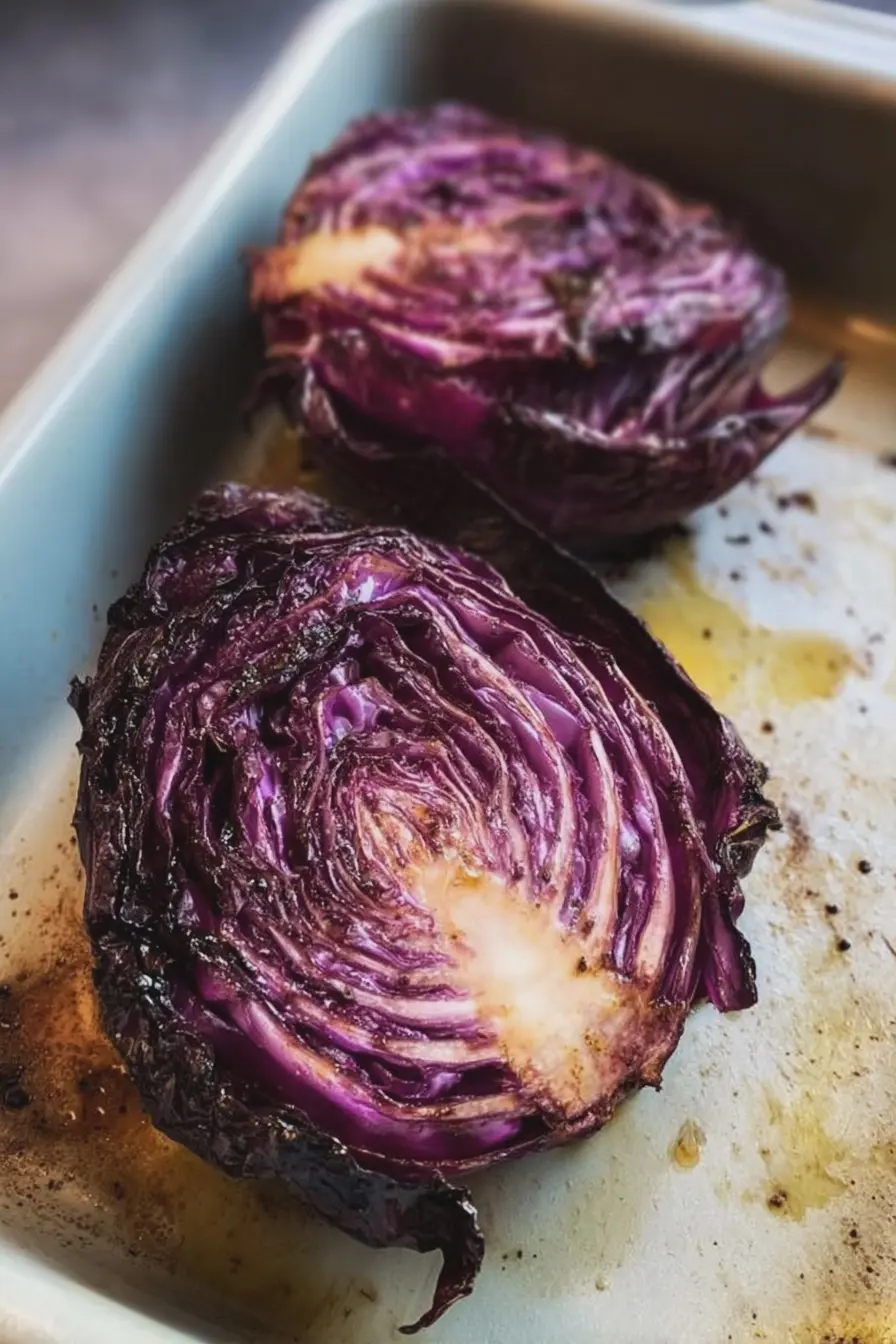
I make a point of using a good-quality balsamic and plenty of olive oil so the edges caramelize while the core becomes meltingly tender. The aroma of reduced balsamic and roasted cabbage fills my kitchen in the last 30 minutes — it’s comforting and a little unexpected for such a simple dish.
Because the roasting is mostly hands-off, I often prepare this ahead: roast it on Sunday, reheat for a quick weeknight dinner, or serve cold in a composed salad. The color stays gorgeous and the texture holds up, which makes it ideal for meal prep and last-minute entertaining in my kitchen.
Why this roasted red cabbage in balsamic vinegar is perfect for busy weeknights
This recipe is low-effort and high-return: you spend minutes rubbing oil and seasoning the cabbage, then the oven does the rest. It uses simple pantry staples and a sturdy vegetable that keeps well, so you can plan meals without extra shopping trips. Roasted red cabbage is also nutrient-dense — it brings fiber, vitamin C, and antioxidants to the plate with almost no fuss.
Visually, the deep purple lacquered by balsamic makes for a striking side; aromatically, the kitchen fills with a sweet-savory tang as the vinegar reduces and caramelizes. If you want another easy way to enjoy cabbage, try our oven baked cabbage recipe for a different but equally simple approach.
Everything You Need for Roasted Red Cabbage in Balsamic Vinegar
Use fresh, firm cabbage and a sharp knife — the better your starting ingredients and tools, the better the final result. You don’t need fancy gear, just a sturdy roasting pan and an oven that holds steady heat.
- Red cabbage – The star of the dish; choose a firm head with tightly packed leaves for the best texture.
- Olive oil – Coats and protects the cabbage while helping edges caramelize; use a neutral extra-virgin for flavor you like.
- Balsamic vinegar – Adds sweet-tart depth when drizzled into the layers before the long roast.
- Kosher salt – Enhances sweetness and balances the balsamic.
- Roasting pan or rimmed baking sheet – A shallow pan works well; it lets air circulate and encourages caramelized edges.
- Sharp chef’s knife – For clean halving and to avoid ragged edges that won’t brown as nicely.
- Optional tools – Tongs for flipping, a pastry brush to spread oil, and foil for resting make the process tidier and faster.
If you enjoy this roasted red cabbage, check out our oven baked cabbage recipe for another delicious way to prepare cabbage.
The Secret to Tender, Caramelized Edges
The magic is simple: enough oil for contact browning, an exposed cut surface for direct heat, and time. The Maillard reaction at the edges creates that deep, slightly sweet crust while the low-and-slow center softens into a buttery texture. A higher temperature will brown faster but risks drying the interior; a gentler long roast gives you both caramelized edges and a melting core.
- Place the cabbage cut side down at the start so the exposed surface gets direct heat and forms a caramelized crust.
- Coat the cut faces and rounded sides with oil so the heat can promote Maillard browning where the leaves separate.
- Be patient: give the cabbage a longer roast at moderate heat to let the core soften without burning the outside.
- If edges brown too quickly, tent loosely with foil for part of the roast to protect them while the center continues to soften.
For more techniques on achieving tender, caramelized edges, check out our recipe for roasted cabbage wedges with miso ginger.
Choosing the Best Balsamic (and Simple Alternatives)
Not all balsamics are created equal. Look for a balanced flavor: enough sweetness to caramelize but not so syrupy that it overpowers the cabbage. Traditional aged balsamics are concentrated and complex; cheaper balsamic-style condiments are fine if you want a lighter tang. If you don’t have balsamic on hand, apple cider vinegar or a milder red wine vinegar can provide the bright acidity without masking the cabbage.
- Traditional aged balsamic – Rich, slightly sweet, and complex; a little goes a long way.
- Everyday balsamic – Good for regular cooking; look for one labeled balsamic vinegar of Modena for balanced flavor.
- Apple cider vinegar – Bright and fruity as a substitute; use if you want a fresher tang.
- Red wine vinegar – Clean acidity with less sweetness; pair with a touch of honey if you miss the balsamic’s roundness.
- Shopping tips – Read labels: avoid vinegars with a long list of additives; price usually reflects aging and depth.
Looking for inspiration? Try our balsamic glazed roasted vegetables to understand how to best pair balsamic vinegar with various dishes.
Timing & Temperature: Hands-Off Roasting Tips
Oven temperature controls how fast the surface browns versus how slowly the center softens. A moderate setting promotes both caramelization and tenderness without constant babysitting. Resting after roasting lets juices redistribute so slices hold together when served.
- Use a moderate oven so the edges caramelize while the heart becomes tender — don’t rush the process with very high heat.
- Start the cabbage cut side down to encourage browning, then flip partway through so the balsamic can penetrate the layers.
- Allow a short rest, tented, after roasting so the cabbage firms slightly and is easier to slice or serve.
- If your cabbage is especially large or small, adjust total roast time up or down; the test is tenderness at the center with a paring knife.
How to Make Roasted Red Cabbage in Balsamic Vinegar (Step-by-Step)
- Preheat your oven to a moderate temperature and lightly grease a roasting pan so the cabbage won’t stick.
- Cut the cabbage in half lengthwise. Rub the cut surfaces with olive oil and sprinkle with salt so the leaves brown evenly.
- Place the cabbage cut side down in the pan and oil the rounded outsides as well; this protects the tips and encourages even color.
- Roast the cabbage for an initial period to begin softening and building color on the exposed surfaces.
- Remove the pan, flip the cabbage so the cut side faces up, then drizzle more oil and tuck balsamic vinegar into the layers so it seeps inward.
- Return to the oven and continue roasting until a knife slips into the center easily and the outer leaves have deep, caramelized edges.
- Let the cabbage rest briefly, tented with foil, so it firms and the balsamic finishes reducing in the layers.
- Serve warm or at room temperature as a colorful side; the glossy balsamic pockets make each slice flavorful.
Pro Tip for roasted red cabbage in balsamic vinegar: Maximize Flavor with Minimal Effort
Pro Tips
- I like to season in layers — a little salt at first, then more after the first roast so the flavor builds without drawing out too much moisture early on.
- Adding a small splash of balsamic before the final roast concentrates its flavor in the cabbage layers without burning on the surface.
- Use a shallow pan for better browning; a very deep pan steams the cabbage instead of roasting it.
Troubleshooting
- If the center is still firm but the edges are very dark, reduce the oven temperature slightly and extend the roast time so the interior softens without burning.
- If the cabbage looks dry, brush a little more oil on the rounded sides halfway through the roast to preserve shine and prevent burning.
- If balsamic puddles and burns, drizzle it more sparingly between the layers rather than all over the surface, or add it later in the roast.
Variations
- Add sliced garlic or a few sprigs of thyme between the layers before roasting for aromatic depth.
- Sprinkle red pepper flakes or smoked paprika for a warm, spicy finish.
- Finish with a handful of toasted nuts or crumbled cheese at service for texture contrast.
How to Store, Reheat, and Make-Ahead Roasted Red Cabbage (Plus Easy Variations)
This dish is work-friendly: roast it ahead and refrigerate in an airtight container for several days. Reheat gently so the cabbage doesn’t lose texture — a short time in a warm oven or quick pan sauté restores crisped edges better than the microwave. For make-ahead dinners, this pairs well with grains and roasted proteins, and it keeps happily as part of packed lunches.
- Storage – Cool completely and refrigerate in a sealed container; it stays good for several days.
- Reheating – Warm in a moderate oven or briefly in a skillet to regain some of the caramelized texture; avoid long microwave reheats that make leaves soggy.
- Make-ahead – Roast a day or two ahead and finish with a quick reheat to serve; the flavor often improves after a day as the balsamic melds with the cabbage.
- Serving suggestions – Serve alongside roasted chicken or grilled sausages, or pair with a simple grain bowl; for a complete make-ahead meal, serve with an easy Greek pasta salad.
- Easy swaps – Swap balsamic for apple cider vinegar plus a touch of honey for a lighter, fruitier finish.
For a complete meal, serve your roasted red cabbage alongside an easy Greek pasta salad, which makes for a great make-ahead option.
Frequently Asked Questions
- Can I cook red cabbage in balsamic vinegar? Absolutely! Cooking red cabbage in balsamic vinegar adds a delicious tangy flavor. Just ensure to simmer or roast gently until tender.
- How long does it take to roast red cabbage? Roasting red cabbage typically takes about 2 hours in total — an initial roast followed by a longer finish — to reach perfect tenderness, though times can vary with cabbage size and oven.
- What is the best way to achieve caramelized edges on roasted cabbage? To achieve beautifully caramelized edges, make sure to roast the cabbage cut side down at first and use enough olive oil to coat it well.
- Can I make this recipe ahead of time? Yes! You can prepare the roasted red cabbage in advance. Store it in the refrigerator and reheat when ready to serve.
- What type of balsamic vinegar should I use? Using a high-quality balsamic vinegar makes a difference in flavor, but if you’re looking for alternatives, apple cider vinegar can work well too!
Roasted Red Cabbage in Balsamic Vinegar
Ingredients
Equipment
Method
- Preheat oven to 350 degrees. Grease a roasting pan.
- Cut cabbage in half lengthwise and drizzle ½ tablespoon olive oil on each cut side, spread it all over, and sprinkle a little salt. Put cabbage cut side down on the roasting pan.
- Drizzle another ½ tablespoon oil on each round side and sprinkle a little salt.
- Roast cabbage for 30 minutes.
- Take cabbage out of the oven, flip so the cut side is up, drizzle 1 tablespoon oil and 1-2 tablespoons balsamic vinegar into the layers of the cut side, sprinkle with a little more salt, and put back in the oven for another 90 minutes until very tender.
- Let cabbage stand for 10 minutes, covered lightly with aluminum foil, and serve.