

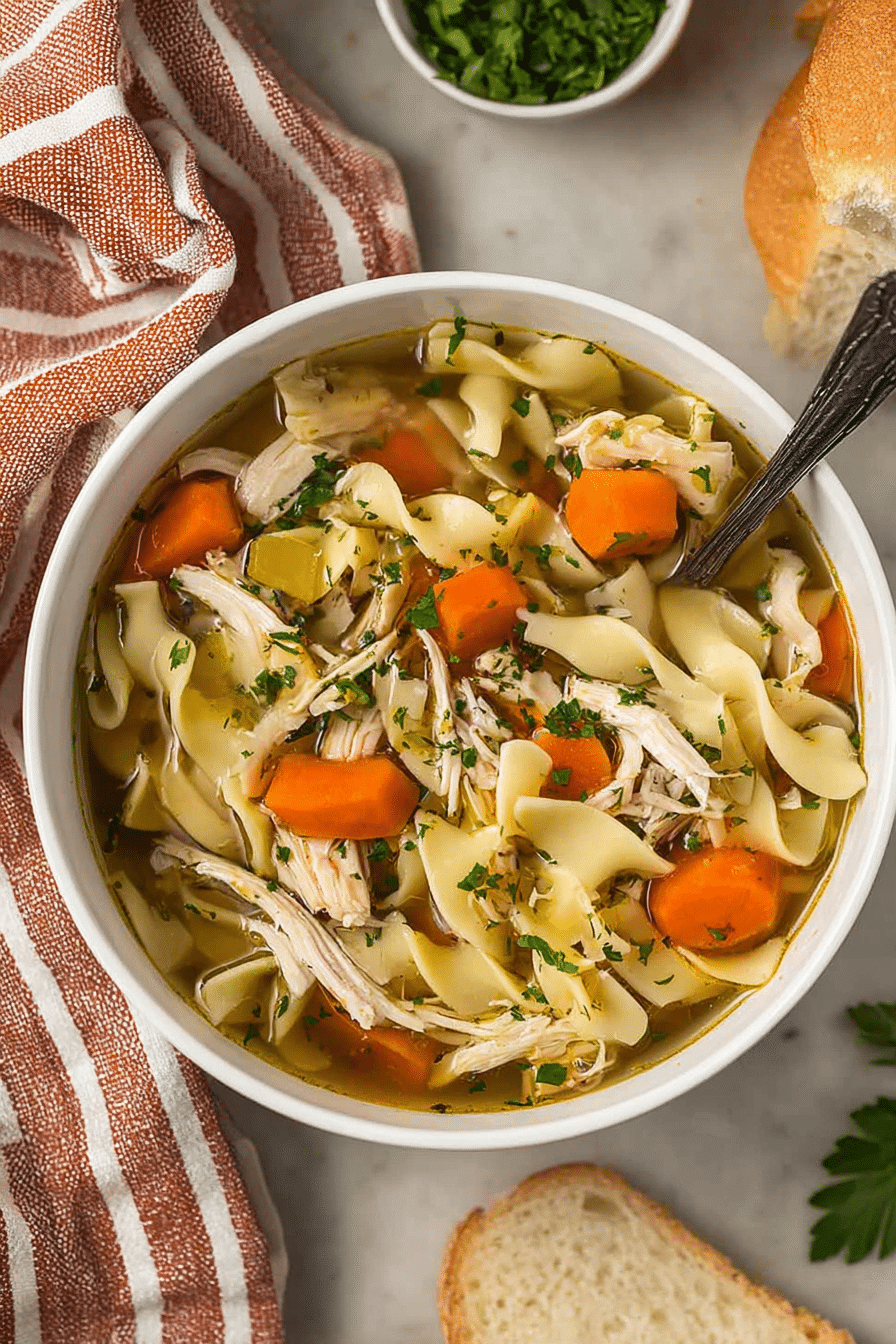
This rotisserie chicken noodle soup is one of those weeknight lifelines I come back to over and over — the kind of recipe I make when I want something comforting, fast, and honest. It’s thick, hearty, and uses a whole rotisserie chicken to give the broth a deep, savory backbone without hours of simmering. The smell as it simmers will fill your kitchen: savory chicken, softened onion, anise-like thyme and bay leaf, and the sweet, earthy scent of carrots melting into the stock.
If you love chicken-based soups, you might also enjoy our ultimate chicken soup for a warm, flavorful meal.
Why Use Rotisserie Chicken?
Using a rotisserie chicken isn’t cheating — it’s smart. I started doing this when I had less time between work and dinner, and immediately noticed two things: the soup took a fraction of the time and the broth tasted richer than a plain poached raw chicken. The rotisserie bird brings in caramelized skin flavors and the seasoning rub from the store chicken adds subtle depth. Also, because the meat is already cooked, you can focus on coaxing flavors out of the vegetables and simmering enough to meld everything, rather than babysitting raw poultry.
What can go wrong? If you just toss the whole bird in without checking for excess salt or skin rubs, you might end up with an overly salty soup, especially if the store-roasted chicken was seasoned heavily. Taste the broth as it simmers and adjust with water if it’s too intense. Another trap is shredding the meat too small — the larger pieces stay juicier and give a better mouthfeel in the finished bowl.
Ingredients You’ll Need
- Rotisserie chicken – a whole cooked bird (about 2½ pounds); provides the primary protein and backbone for the broth; you can include the carcass for extra stockiness.
- Chicken broth – several cups to make the base (use low-sodium if the rotisserie chicken is salty); concentrates the soup’s savory flavor.
- Carrots – sliced or coins; add sweetness and body when simmered until tender.
- Celery – chopped stalks; give aromatic crunch and classic chicken-soup flavor.
- Onion – diced; becomes sweet and translucent when sautéed, building the foundation of flavor.
- Garlic powder – a quick way to add garlic flavor; fresh garlic is fine if you prefer a brighter note.
- Dried parsley, oregano, thyme – a blend of these adds herbaceous warmth; use fresh if you have it and add late for brightness.
- Bay leaf – for background savory complexity; remove before serving.
- Sea salt & cracked pepper – seasoning; add in stages and taste as you go.
- Dry pasta – egg noodles or any short pasta; cooks in the broth and gives the soup chew and comfort.
- Corn starch (or arrowroot) – for a thicker, slightly silky broth if you like it that way; whisk into hot liquid first to prevent lumps.
- Olive oil – a drizzle to sautée vegetables and build flavor without making them greasy.
Substitutions and dietary swaps: for gluten-free, swap the pasta for certified gluten-free noodles and verify your broth label; for low-carb, replace pasta with spiralized vegetables; for vegetarian, skip the chicken and use a robust vegetable stock with mushrooms and white beans for protein.
Simple Cooking Instructions
Below is the straightforward, tested method I use. I’ve made this version dozens of times and find the rhythm of sauté, simmer, remove bones, then finish with noodles gives the best texture and flavor every time.
For another quick chicken soup recipe, check out our chicken taco soup that’s packed with flavor and very easy to make.
- Chop the vegetables. Remove chicken breast meat and shred if desired. In a large pot, heat olive oil over medium-high heat. Add celery, carrots, and onion, and sauté until onions are translucent. Include broth, salt, pepper, garlic, bay leaf, thyme, oregano, parsley, and chicken (including the whole chicken carcass). You may add a few larger bones and omit smaller ones, or place them in a cheesecloth bag to keep out of the soup.
- Change heat to medium and bring the soup to a low boil for about 30 minutes or until carrots are tender. At this point, it is easiest to remove the chicken bones (using tongs can help with this).
- Once the bones are taken out, add the dry pasta and cook for about 10-15 minutes, or until al dente. Take about 1 ½ to 2 cups of the soup into a small bowl and whisk in the corn starch until it dissolves. Return this mixture to the soup and stir well.
- Serve and enjoy! Store any leftovers in an airtight container in the fridge.
Notes from my stove: when I sauté the onions and carrots, I watch for the moment the onions turn glossy — that’s when the sugars have released and the soup builds real sweetness. The first 20 minutes of simmer are mainly about extracting flavor from the carcass and softening the vegetables; you’ll notice the broth darken and smell more chicken-forward the longer it simmers. If the broth seems cloudy after adding shredded meat, it’s often because the pot was at too high a boil — keep it at a gentle simmer to stay clear.
Variations for Dietary Preferences
There are lots of easy swaps to adapt this soup to your needs without losing the soul of the dish.
For a different twist, try our creamy slow cooker tomato tortellini soup, which is vegetarian-friendly.
- Gluten-free – use certified gluten-free pasta and check broth labels; gluten-free noodles often cook faster, so add them later to avoid mush.
- Dairy-free – this recipe is naturally dairy-free unless you finish with cream; avoid adding dairy to keep it light.
- Vegetarian – swap the rotisserie chicken for firm tofu, white beans, or seared mushrooms and use a rich vegetable stock; add umami boosters like soy sauce or miso paste to replicate depth.
- Low-carb – replace pasta with spiralized zucchini or cabbage ribbons and add the noodles near the end for 2–3 minutes so they don’t overcook.
Meal Prep and Storage Tips
This soup is excellent for batch cooking. I often make a big pot on Sunday and portion it into single-serving containers for quick lunches the rest of the week. The noodles will soak up liquid over time, so here are a few notes to keep the texture right.
Consider making a batch of spring vegetable soup as a vibrant and healthy option to accompany your meals.
- Refrigerating – cool the soup completely before sealing; store in the fridge for up to 3 days. The flavors actually mellow and marry overnight.
- Freezing – freeze without the pasta if possible; cooked pasta becomes very soft after freezing and thawing. Freeze up to three months. When reheating frozen soup, add fresh pasta or reheat gently and check seasoning.
- Batch prep – if planning lunches, keep the broth and veggies together and store pasta separately. Reheat the broth and add freshly cooked pasta when ready to eat for best texture.
- Reheating – warm slowly over low heat; if the soup tastes flat after reheating, a small squeeze of lemon or a pinch of salt brightens it immediately.
Enhancing Flavor with Herbs and Spices
Herbs and spices make a huge difference — they should be used thoughtfully, not in random handfuls. I usually add dried herbs early in the simmer so they soften and release flavor, and reserve a bit of fresh parsley or dill to sprinkle on at the end for brightness.
- Thyme – adds an earthy, slightly floral note; add early so it infuses the broth.
- Parsley – dried in the pot for background flavor and fresh at the end for color and lift.
- Dill – optional but wonderful with chicken, add a little fresh dill when serving for a Scandinavian twist.
- Paprika – a pinch gives warmth and subtle sweetness; smoked paprika can add a faint barbecue-like depth if you’re feeling adventurous.
- Cracked black pepper – adds bite; grind fresh right before serving for the best aroma.
- Garlic – powdered garlic is in the base recipe, but a crushed clove sautéed with the vegetables will give a fresher, brighter garlic profile.
Timing tip: bay leaves and dried herbs are best in the simmer; fresh herbs should be added at the end or used as garnish so they retain color and fragrance.
Serving Suggestions and Pairings
How I serve this depends on the day. During a busy weeknight I keep it simple — a big bowl with a lemon wedge and some crusty bread to dunk. When guests are over, I add a scattering of chopped parsley, a little grated Parmesan at the table, and set out warm rolls.
- Garnishes – chopped parsley, sliced green onions, a squeeze of lemon, or a light drizzle of olive oil.
- Sides – a crisp green salad, roasted root vegetables, or buttered crusty bread work beautifully.
- Beverages – for a cozy dinner, a light-bodied white wine or a herbal tea pairs nicely; for kids, a glass of milk or apple juice is classic and comforting.
Conclusion and Call to Action
If you’re looking for a dependable, cozy meal that’s forgiving and fast, this rotisserie chicken noodle soup is a go-to. I’ve tested it several times, tweaked the timing, and landed on a version that balances speed with deep flavor. The rotisserie chicken gives you delicious results without fuss, and the finishing touches — a scatter of fresh herbs, a squeeze of lemon, or freshly cracked pepper — make the bowl sing.
Give it a try this week. Make a pot, take note of how salty your store-bought chicken is, and experiment with adding fresh herbs at the end. If you make it, I’d love to see your variations — share a photo or tell me what you swapped in. Small tweaks can go a long way, and hearing what worked for you helps me keep improving my own kitchen habits.
Frequently Asked Questions
Can I use raw chicken instead of rotisserie chicken?
While you can use raw chicken, rotisserie chicken adds rich flavor and saves you time. If you decide to go with raw chicken, cook it thoroughly in the broth before adding other ingredients.
How do I make this soup gluten-free?
To make the soup gluten-free, simply substitute regular pasta with gluten-free noodles. Additionally, ensure that your chicken broth is labeled gluten-free.
Can I freeze leftover soup?
Yes! Just allow the soup to cool completely, then transfer it to an airtight container. It can be stored in the freezer for up to three months. Just remember to leave some space at the top of the container for expansion.
What can I use instead of cornstarch to thicken the soup?
You can use arrowroot powder as a substitute for cornstarch, or for a low-carb option, try using xanthan gum or simply blend some of the cooked vegetables into the broth.
What are some good side dishes to serve with this soup?
Pair this hearty soup with a fresh salad, crusty bread, or a side of roasted vegetables for a complete meal that everyone will love!
Easy Rotisserie Chicken Noodle Soup
Ingredients
Method
- Chop the vegetables. Remove chicken breast meat and shred if desired. In a large pot, heat olive oil over medium-high heat. Add celery, carrots, and onion, and sauté until onions are translucent.12 cups chicken broth, 4-5 pieces carrots, 1 whole onion, 1 teaspoon garlic powder, ½ teaspoon thyme, 1 leaf bay leaf, ½ teaspoon sea salt, 1 teaspoon cracked pepper
- Include broth, salt, pepper, garlic, bay leaf, thyme, oregano, parsley, and chicken (including the whole chicken carcass). You may add a few larger bones and omit smaller ones, or place them in a cheesecloth bag to keep out of the soup.4 stalks celery, 1 leaf bay leaf, ½ teaspoon sea salt, ¼ cup corn starch
- Change heat to medium and bring the soup to a low boil for about 30 minutes or until carrots are tender. At this point, it is easiest to remove the chicken bones (using tongs can help with this).
- Once the bones are taken out, add the dry pasta and cook for about 10-15 minutes, or until al dente. Take about 1 ½ to 2 cups of the soup into a small bowl and whisk in the corn starch until it dissolves. Return this mixture to the soup and stir well.2 cups dry pasta, ¼ cup corn starch
- Serve and enjoy! Store any leftovers in an airtight container in the fridge.