

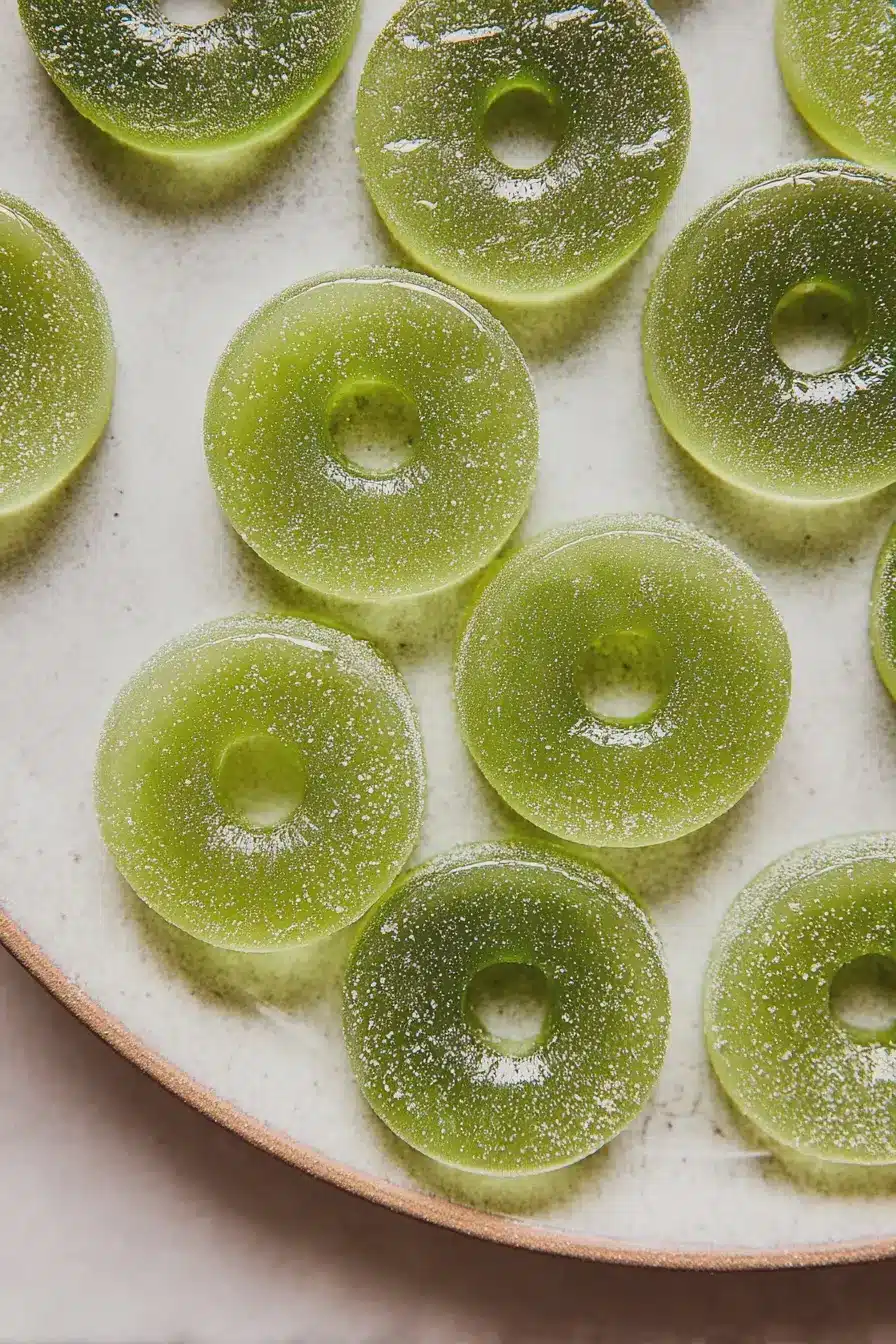
As a parent who has spent more afternoons than I can count making snacks with sticky little helpers, I can tell you these sour apple ring gummies are one of my go-to projects. They feel like candy, but the ingredient list is simple and recognizable — which is a huge relief when you’re packing lunchboxes or offering an after-school treat. The bright green color comes from spirulina, not artificial dyes, and that makes them feel like a win every time I hand one to my kids.
I started playing with this recipe because store-bought sour rings contain a long list of ingredients I don’t want in my pantry. After a few experiments I landed on a simple formula that gives the chew, the tang, and a little sparkle on the sugar edge if you want it. Making these with kids is a sensory joy: the tang of fresh lemon, the clean apple scent as the juices warm, and the soft wobble of the finished rings.
Beyond being fun to make, these gummies are a practical snack. They’re easy to portion, store well, and are perfect for trying different natural flavors and sweeteners depending on what you have on hand. If you want a different fruity profile down the road, you might also try homemade sour watermelon gummies for another kid-friendly flavor.
Why These Sour Apple Ring Gummies Are Perfect for Health-Conscious Parents
These gummies remove a lot of the things parents often worry about: no artificial colors, no synthetic flavors, and no mysterious additives. Instead, you get recognizable ingredients that you can explain to your kids — and that matters when you’re teaching them healthy eating habits.
They’re also a gentle way to increase fruit exposure: real apple juice provides flavor and natural sweetness while lemon juice gives the bright, tart note that makes these feel authentically sour. You can control the sweetness and sodium yourself, and that means a better-for-you snack that still feels like a treat.
Make this with your child and it becomes an education as much as a snack: measuring (if you choose to), watching the gelatin bloom, and seeing liquid turn into a chewy gummy is an excellent, hands-on lesson about food. Visually, the rings pop — bright green without dyes — and they carry a fresh apple aroma with a hint of citrus that’s irresistible to kids.
Everything You Need for Sour Apple Ring Gummies
Below I walk you through the ingredients and tools in conversational detail so you understand each item’s role and what to swap if needed.
- Apple juice – The base flavor and natural sweetness; choose a clear, unsweetened variety for the cleanest apple taste. You can also use fresh-pressed apple juice for a brighter, more complex profile.
- Lemon juice – Provides the sour edge that balances the sweetness and gives the gummies their signature bite. Lime or citric acid are possible substitutes if you want a sharper acidity.
- Honey (optional) – A natural sweetener that deepens flavor; you can swap for maple syrup or a granulated natural sweetener depending on dietary preferences.
- Spirulina powder – A plant-based pigment that creates the green hue without food dyes. If spirulina’s flavor is too vegetal for your taste, reduce the amount or try a tiny pinch of matcha for milder color.
- Gelatin – The structural backbone that creates the chewy texture. If you need a vegan option, agar-agar is a common substitute (see the vegan tips later).
- Granulated sweetener (optional) – Used to coat the finished rings for a sour-sugar finish; choose a natural granulated sweetener if you want to avoid refined sugar.
- Tools – A small pot for warming the juices, a dropper or piping tool for filling molds, silicone ring molds (or a shallow tray if you’ll cut shapes), and a fine sieve if you want the smoothest texture.
Why Gelatin and Real Apple Juice Support Gut Health
Gelatin is more than a texture agent — it’s a source of amino acids like glycine and proline that support the lining of the gut and may help digestion. For many people, including easily digestible proteins in snacks can be a helpful complement to a balanced diet. Real apple juice contributes polyphenols and natural sugars rather than isolated sweeteners, and that makes the snack feel more whole-food based than many commercial candies.
Research and traditional use suggest that gelatin can be supportive for digestive comfort and tissue repair, and the simple composition of these gummies means less inflammation-prone food additives for sensitive kids. If you want to read more about using gelatin in homemade gummies and its benefits, I recommend this resource on gelatin in recipes for a deeper dive.
The Secret to the Perfect Chewy, Sour Texture
The texture comes down to two technical details: properly blooming the gelatin and gently warming rather than boiling the mixture. Blooming hydrates the gelatin so it disperses evenly, and overheating breaks down the gelatin’s gelling ability — that’s why temperature control matters.
- Bloom the gelatin first so the granules fully absorb liquid; it should look puffed and slightly thickened before you heat.
- Warm the mixture slowly over low heat just until the gelatin dissolves and the liquid is smooth; avoid boiling to keep the chew resilient.
- Let the mixture cool slightly before filling molds to reduce bubbles and improve clarity, but don’t let it begin to set — you want it pourable.
- For that sour edge, balance lemon juice with a touch of natural sweetener; too much acidity can taste sharp, but a small, measured amount creates a pleasant tang that mimics commercial sour candy without harsh preservatives.
How to Adjust Sweetness and Sourness Without Food Dye
Adjusting flavor is simple: swap sweeteners, move citrus ratios, and experiment with complementary juices. Here are practical, kid-friendly suggestions to help you tailor the gummies to your household’s taste.
- Use milder sweeteners like maple syrup or honey for rounder sweetness, or a granulated natural sweetener if you want a sugar-like finish on the rings.
- Swap lemon for a mix of lemon and a splash of white grape juice to soften the tartness without losing acidity.
- Add a touch more apple juice for sweetness and color intensity, or try pear juice for a subtler floral note that pairs well with green colorings.
Variations (presented as a bulleted list for quick scanning):
- Mint-Apple: Add a small steep of fresh mint to the warm juice for a cool aftertaste.
- Ginger-Apple: A little grated ginger warmed with the juice adds warmth and digestive support.
- Herbal Twist: Steep chamomile or lemongrass briefly in the warmed juice for a calming flavor perfect for evening snacks.
How to Make Sour Apple Ring Gummies (Step-by-Step)
Follow these steps carefully; timing and gentle heat are key. Use a dropper or silicone molds for neat rings. Take care when handling hot liquids.
- Combine apple juice, lemon juice, honey (if using), and spirulina powder in a small pot and whisk to incorporate the color evenly.
- Sprinkle the gelatin evenly over the surface of the cold juice mixture to bloom it and let it sit until it thickens and swells.
- Place the pot over low heat and stir gently until the gelatin fully dissolves and the mixture is smooth; do not let it boil.
- Remove from heat, allow to cool slightly, then use a dropper to fill silicone ring molds or pour into a shallow tray if you plan to cut shapes later.
- Chill in the fridge until fully set — several hours works best for firm, chewy gummies.
- Carefully unmold and, if desired, toss lightly in a granulated sweetener for a sour-sugar finish.
If you enjoy these gummies, you might also want to try making homemade sour watermelon gummies for a different fruity flavor.
Pro Tip for Sour Apple Ring Gummies: Vegan & Probiotic Alternatives
Below are practical pro tips I use when adapting this recipe for different diets or to add functional benefits. These are presented as bulleted tips so you can scan quickly and try the ones that fit your goals.
- Vegan gelatin swaps – Agar-agar can set gummies but behaves differently: it needs boiling to activate and makes a firmer, sometimes brittle texture. Test small batches and adjust concentration until you get a pleasant chew.
- Probiotic additions – If you want to add probiotics, wait until the mixture has cooled to lukewarm before stirring them in to preserve live cultures. This keeps texture intact and retains probiotic viability.
- Flavor fortification – Use concentrated fruit reductions or natural extracts to intensify flavor without extra sugar.
- Recipe inspiration – For a different health-forward gummy, try a black elderberry version that adds immune-supporting benefits to a similar gummy format.
How to Store, Make-Ahead, and Serve Your Gummies
These gummies are easy to store and travel well in lunchboxes if kept cool. Here’s how I keep them fresh and what to do if something goes slightly off.
- Store in an airtight container in the fridge; they keep best chilled and will maintain texture for up to two weeks.
- For make-ahead needs, set them in the mold, unmold when firm, and separate layers with parchment paper to prevent sticking.
- Serve them chilled or at cool room temperature for the best chew — very warm gummies become sticky and soft.
Troubleshooting (presented as a bulleted list for clarity; I use these notes often in my kitchen):
- If gummies are too soft, you probably didn’t bloom the gelatin long enough or the gelatin-to-liquid ratio was low; try blooming longer or increasing gelatin slightly in your next batch.
- If they’re grainy or have bubbles, strain the warm mixture through a fine sieve before pouring to remove undissolved bits and to deflate air pockets.
- If they’re rubbery (too firm), you likely overheated the gelatin or used too much — lower the heat next time and reduce setting agent a touch.
For tips on preserving freshness, read our guide on how to store gummies properly.
Pro-Tips, Troubleshooting, and Variations are presented as bulleted lists above for quick scanning and easy reference when you’re in the kitchen.
Frequently Asked Questions
Are these sour apple ring gummies healthy for kids? Absolutely! These gummies are made with real apple juice and gelatin, making them a healthier alternative to store-bought gummy candies that often contain artificial ingredients and food dyes.
Can I make these gummies vegan? Yes! You can substitute gelatin with agar-agar as a plant-based alternative to create vegan gummies.
How do I adjust the sweetness of the gummies? You can easily adjust the sweetness by adding more or less honey or a granulated sweetener of your choice. Just keep in mind that the flavor may vary depending on the amount you use.
How long do these gummies last in the fridge? These sour apple ring gummies can last up to two weeks when stored in an airtight container in the fridge, but they’re so delicious they might not last that long!
What tools do I need to make these sour apple ring gummies? You’ll need a pot for mixing ingredients, a dropper or a mold for shaping the gummies, and a fridge for setting them. Simple kitchen tools will do the job!
Sour Apple Ring Gummies
Ingredients
Method
- Pour the apple juice, lemon juice, honey, and spirulina powder into a pot and stir well to combine.
- Sprinkle the gelatin over the juice mixture and allow to bloom for 5 minutes. The mixture should thicken.
- Transfer the pot to the stove and heat over low heat for 3-4 minutes or until fully liquid.
- Use a dropper to carefully transfer the liquid into the mold. Alternatively, you can use a large glass container.
- Transfer to the fridge for 4 hours or until fully set.
- Carefully remove from the mold. Add the sweetener to a bowl and carefully toss the gummies. Store in the fridge!